Timeless Time and Placeless Place (Yom Kippur 5787)

Timeless Time and Placeless Place (Yom Kippur 5787)

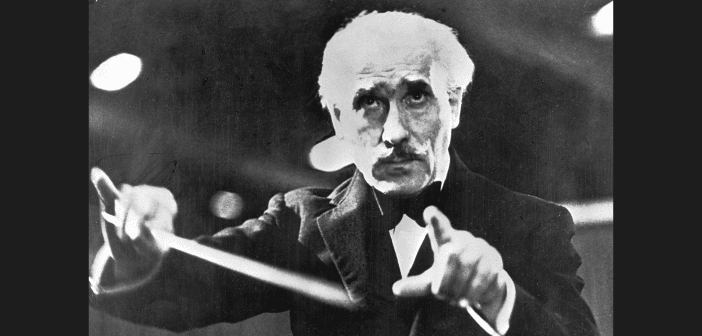
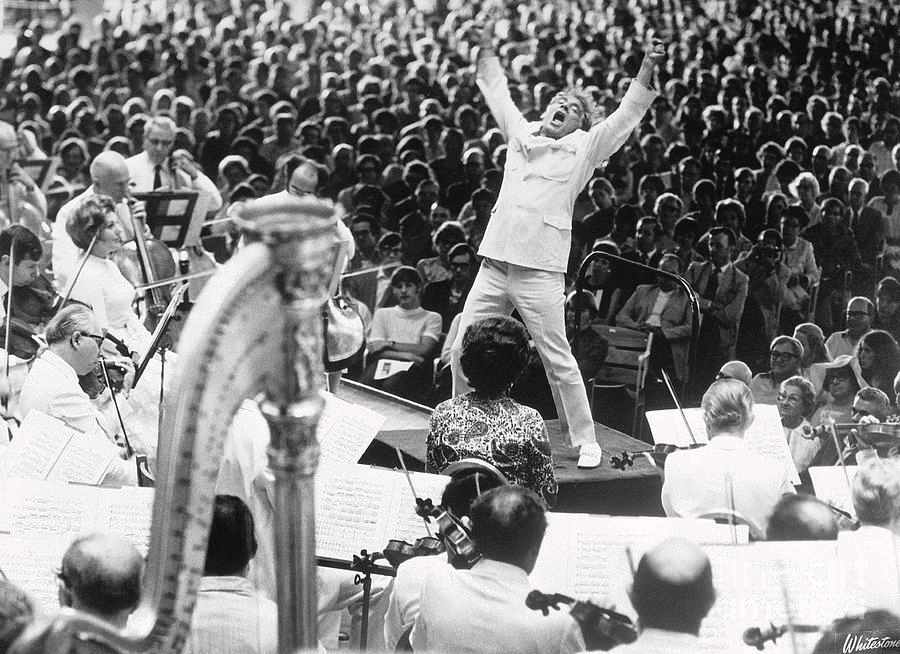
Over the summer I sat my eldest son down for an important conversation. “Listen,” I said, and proceeded to play a recording of Leonard Bernstein conducting the closing section of Mahler’s Symphony No. 3.

Jonah was a film major in college and, former music major that I am, I have taken it upon myself to ensure that he knows something about the classical roots on which movie composers like John Williams and Hans Zimmer draw. In addition to that, I had made a summer project for myself of listening to the complete Mahler symphony recordings that Bernstein made in the last decade of his life, which are among the cultural treasures of the late twentieth century.

In case you don’t know Mahler’s Third (or even if you do), listen here starting about 1:37:00. (Still Bernstein conducting, but a different recording.) It’s gorgeous. Mahler described it as the song of divine love. And if you listen starting at 1:43:30, over the next 30 seconds you’ll hear just about the most beautiful, full resolution of anything in your life. The music comes home, emphatically, to a D-Major chord that just goes on and on, reinforced by thumping timpani. This is a triumphant homecoming into a divine embrace. If you experience tears, they are likely tears of joy at the magnificence of the sound.

In the years after he composed the Third, Mahler suffered quite a bit: a near-death illness, the loss of a child, and continuing health problems. All of that affected his music. By the time he composed his Ninth Symphony a decade or so later, he was acutely aware of his mortality (and, in fact, he died the following year). If you listen to the final minutes (here’s Bernstein again; start around 1:18:00), you may find it conveys a kind of homecoming into a divine embrace, but in a very different way.

Mahler referred to this adagio movement as his farewell to the world, and thus there is nothing grand or triumphant here. No brass or timpani, just the faint sound of small gestures in the strings, the last gentle breaths of a human life. And there’s only the subtlest of resolutions: the violins end on an A-flat, part of the final D-flat Major chord but markedly not its home note, as though they are hanging in the ether. When performed live, the ending is one of the most magical moments in a concert hall, as thousands of people—including the musicians and the conductor—are in a netherworld, not knowing whether the music is still going or whether it has ended. If tears come, they are tears of a sadder, wiser sort.

Mahler famously observed, “I am thrice homeless: as a native of Bohemia in Austria, as an Austrian among Germans, and as a Jew throughout the world. Everywhere an intruder, never welcomed.” Yet he wrote these symphonies in which homecoming is such a profound theme. In this season of teshuva—returning to our deepest sense of home—I find myself reflecting on him, on the contrasting endings of these two symphonies, and what they might help us understand about our own experience of finding our way home.

“The paths of teshuva,” writes Maimonides (Laws of Repentance 2:4), include calling out to God, giving charity, changing our actions, and changing our names (“as if to say, ‘I am a different person’”). Finally, and perhaps summarily, one may “exile oneself from one’s home. Exile atones for sin because it causes a person to be submissive, humble, and meek of spirit.”

While the first part of the Rambam’s list is drawn from one Talmudic passage (Rosh Hashanah 16b), the last part quotes another (Sanhedrin 37b), which records three opinions about the efficacy of exile: The first says it atones for half a sin, the second for a whole sin, and the third, attributed to Rabbi Yochanan, says “exile atones for all transgressions.” Rabbi Adin Steinsaltz, perhaps with Maimonides in mind, explains Rabbi Yochanan to mean that exile “renders the sinner like a new person.”

Exile is the polar opposite of being at home. Yet, the Rambam teaches, it is potentially a necessary part of the spiritual journey of homecoming. Part of the task of this season between Rosh Hashanah and Yom Kippur, is to discern whether we are at home—and if not, what, if any, forms of exile the route home might entail.

“Where penitents (ba’alei teshuva) stand, the completely righteous cannot stand” (Brachot 34b). Rabbi Simcha Bunim of Peshischa comments: “A completely righteous person—that is, one who sees themselves as entirely complete and perfect in their words and actions—such a person is at a lower level than a penitent whose heart is broken within them.”

While Reb Simcha Bunim doesn’t use the words exile and home here, I think we can hear him playing in a similar key: If we are so sure that we are at home—in control of our lives and thus happy and satisfied with our own goodness—it could well be that we’re fooling ourselves. Look a little harder, perhaps. There is always more teshuva to do.

And yet we also need that self-assurance. We need to know we’re at home. As the Mishnah says about the search for chametz in our homes on the night before Pesach, we have to draw a line somewhere, otherwise ein l’davar sof, there would be no end.

In the conclusion of Mahler’s Third, I hear a homecoming that is strong and sturdy, a sense of home that doesn’t second-guess itself. At times we need that sense of at-homeness. Yet the end of Mahler’s Ninth offers a softer, subtler, perhaps more mature kind of homecoming, one that is sure of itself but doesn’t broadcast it, something more akin to the words of Rabbi Shefa Gold’s classic chant: “I am resting in this Divine embrace, timeless time and placeless place.”

Among the opportunities Yom Kippur invites us into is a rehearsal of our own death. That is one of the ways to understand abstaining from the quintessential physical behaviors that make us human: eating and drinking, wearing shoes, bathing, having sex, on top of the observances of Shabbat. On one level, that prefiguring of death is an experience of exile from our regular lives. On another, the exile opens up a path to come home—reborn, renewed, and capable of allowing our lives to be a sukkat shalom: a home gently holding and held in a Divine embrace. May we find our way to that home this year.

For Reflection & Conversation:

  • As you listen to the endings of Mahler’s Third and Ninth Symphonies, what do you hear in them? If you hear a kind of homecoming, what does that evoke for you—and how might it inform your experience of Yom Kippur?


A Broken Heart, A Stable Home (Rosh Hashanah 5787)

A Broken Heart, A Stable Home (Rosh Hashanah 5787)

In recent days, several friends have forwarded me an article from The Atlantic. It’s by Olga Khazan and it highlights the work of Willoughby Britton, a former academic researcher who has raised questions about potential negative health effects of meditation in some individuals. For Britton herself, and it would appear for some other folks too, meditation—most often in large doses of hours a day, as is often done on retreat—has contributed to difficulty sleeping, increased anxiety, and even psychosis, i.e. really serious stuff.

To me, the article read as more than a bit tendentious (In non-academese: it felt like Khazan had an ax to grind). Britton’s data set is, by her own admission, astonishingly small, yet the article implied broad conclusions from it, despite a requisite nod to the overwhelming number of studies demonstrating the positive effects of meditation practice. Choice quotes seemed to be deployed to make major meditation teachers look bad. Some who were left unnamed were quoted as telling participants suffering negative experiences on retreat to “just keep meditating,” advice which may have been normative a couple of decades ago but which, at least at IJS and among the folks I know, would not be given now.

(Indeed, one of the ironies here is that our faculty at IJS, along with many other teachers in the mindfulness meditation world, have worked hard to learn about and use trauma-informed pedagogies—including through training with Cheetah House, the organization that Britton founded and leads.)

But my point in bringing this up is not to offer a defensive rejoinder to the Atlantic article. It is rather to observe the process that followed the stimulus of encountering it. Because, as we observe Rosh Hashanah, I think it’s a great opportunity for some reflection.

I’m going to go out on a limb and conjecture at part of the dynamic in this case. It involves encountering a story in the news media—particularly in a publication that codes as college educated, politically liberal, smart, and yes, to many Jews, Jewish (the New York Times and The New Yorker are neighbors to The Atlantic in this media zip code). For not a few folks, if a claim is printed in one of these publications, then it takes on a kind of weight or truth. We instinctively give it the benefit of the doubt, before our minds have even had a chance to decide.

But in a case like this, that process collides with another belief: We trust meditation. We know from our own experience that it has been helpful in our lives. And, if you’re reading this, it might also be that you believe in IJS, you trust our teachers, you might even contribute to us (it’s never too late, btw). So there’s some motivated reasoning already churning in the background, and that can lead to a feeling of internal destabilization and conflict: We want to believe both of these things, but they seem to be diametrically opposed, and holding two truths can feel like it will break us apart on some level.

As my colleague Rabbi Marc Margolius might say, “What an opportunity for practice!”

Regular readers will know that I’ve intentionally been writing about the experience of feeling at home for the last several months. (We also just wrapped up a 10-part miniseries on this topic over at the Soulful Jewish Living podcast.)

Regular readers may also know that one of my longstanding Elul practices is listening to a recording of the poet David Whyte. On this year’s encounter with it, my ear alit on a line in the final poem on the album, which is called Coleman’s Bed, in reference to a cave in the Burren region of County Clare. After inviting the reader/listener to “make a nest now” like Saint Kevin, who is said to have held his hands up long enough for a mother bird to have laid her egg and for the offspring to have hatched and flown away, Whyte writes:

and then bring in from those horizons
all discordant elements that seek a home.

Home, in this rendering, is a place or state of being in which “discordant elements” can reside together. That is different from the idea of home as a place of uniformity or homogeneity. In fact, it might even be a near total inversion: When we are at home, we feel strong and secure enough to contain multitudes (to quote another poet). Or, to turn it one more time, if we are able to hold contradictions, that’s a good sign we’re feeling at home.

Whyte continues:

Be taught now, among the trees and rocks,
how the discarded is woven into shelter,
learn the way things hidden and unspoken
slowly proclaim their voice in the world.
Find that far inward symmetry
to all outward appearances, apprentice
yourself to yourself, begin to welcome back
all you sent away, be a new annunciation,
make yourself a door through which
to be hospitable, even to the stranger in you.

Another definition of home here, though very much related to the first: Home is a state of being in which we can welcome guests—even, as Rumi might suggest, parts of ourselves. It is a place in which we can hold separation and brokenness within a larger frame of wholeness.

On Rosh Hashanah, that inevitably brings us to the shofar and the brokenness-inside-wholeness of the shofar blasts. The fact that the middle blasts are called shevarim, broken, has been the genesis of many a sermon. It connects us to the midrashic story that the broken first set of tablets were placed inside the Ark along with the whole ones, which the Talmud then connects to the way we continue to honor sages even when, in old age, they have forgotten their Torah (a poignant note for those of us caring for elders with dementia). And, of course, it can take us to the Kotzker Rebbe’s classic teaching: There is nothing so whole as a broken heart.

Rebbe Nachman of Bratslav had his own Torah of brokenness. One of his stories, quoted in the Itturei Torah of Rabbi Aharon Greenberg (an indispensable resource I refer to weekly), comments on the verse that introduces the shofar service: “Happy is the people that knows the teruah” (Psalms 89:16). Rebbe Nachman glosses: That is, “Who know the wisdom of a broken heart (shevirat ha-lev).”

He offers a parable:

A king sent his son far away to learn the seven wisdoms of the world. When the son returned full and filled with wisdom, the father wished to test him. He commanded him to lift a large stone to the top of the mountain. The son mustered all his strength and rolled the stone up the slope of the mountain, and after great effort, brought it up to the peak.

When he came to his father and recounted his immense toil in rolling the stone, the father shook his head and said: “Is this your wisdom? What entered your mind to carry a stone so hard and heavy to the top of the mountain? You should have broken it into small pieces, and then it would have been easy for you to carry it to its place.

Rebbe Nachman concludes: “The Holy One commanded us to lift our heart—which is hard and heavy like stone—and the best advice is to break the heart of stone and shatter it into fragments (shevarim).”

This is the anti-Sisyphus: There is no nobility in the endless struggle to exert brute force to move the boulder up the mountain. Rather, genuine wisdom comes through what Whyte might refer to as a “robust vulnerability”: Allowing the heart to break open, not expecting perfection. It is precisely in the letting go, the seeming surrender, the brokenness, that we can encounter a greater wholeness, a deeper experience of home.

“Above all, be alone with it all,” continues David Whyte, “a hiving off, a corner of silence amidst the noise.” The silence, perhaps, between the blasts of the shofar. (To you shofar-blowers out there: perhaps there’s no need to rush. The silence has as much to offer as the sound.) He concludes with an image that, to me, evokes our ritual of Tashlikh, when we cast our sins into a moving body of water:

Become the source that makes
the river flow, and then the sea
beyond.

The sea is distinguished in being both container and that which we aim to contain. Which perhaps makes it a metaphor for the mind, or for our very sense of self (Spelled in reverse, yam, sea in Hebrew, is mi, who—as in, Who are you?)

To return to where we started: Of course meditation can have a shadow side. Everything can. That is one way to understand the story of eating from the Tree of Knowledge, which our progenitors did within moments of their creation, on Rosh Hashanah. As a result, multiplicity, contradiction, paradox, and the challenges—and opportunities—of living with them are hard-wired into the human condition.

On balance, there is little question in my mind that practicing to live with mindful awareness brings far more good into the world than not doing so. So as we begin this new year, I bless us all with the ability to allow our hearts to break open, to hold the pieces lightly and with care, to lovingly support each other on the journey up the mountain and toward the sea.

Teshuva Is a Compassionate Heart (Nitzavim-Vayelekh 5786)

Teshuva Is a Compassionate Heart (Nitzavim-Vayelekh 5786)

I had a couple hours between the end of a senior staff offsite meeting in Atlanta and my flight home to Chicago. My colleague Firkins wanted to visit the National Center for Civil and Human Rights before, so we went together and spent 90 minutes there on the way to the airport.

This was my second trip to the museum. My first visit was eight years ago, before I began a regular meditation practice. Of the many powerful exhibits, the one I remembered the most was a simulation of the 1960 Woolworth’s lunch counter sit-ins, which the museum’s website describes thus: “Visitors are invited to participate in a lunch counter sit-in simulation and place themselves in the shoes of non-violent protestors in 1960.”

What does that mean? You put on a pair of headphones and listen as an angry mob yells at you, pushes you (the chair vibrates), and makes you feel increasingly unsafe. Though the simulation lasts 85 seconds, many visitors take off their headphones before that because it’s frankly really intense. There’s even a space with comfy chairs and kleenex to decompress after you’re done.

On my first visit, I definitely didn’t make it through the full time (which, of course, is a fraction of what the activists themselves endured). But on this visit, I sat through the whole thing, buoyed both by my knowledge of what was coming and also by preparing myself with a short meditation before putting on the headphones, which I continued as the simulated violence got more intense.

On a wall near the lunch counter were some notes from a CORE training session on nonviolence. There is so much wisdom here:

I was particularly intrigued by two items here. The first was the attitude the protesters were trained to adopt: “Serious. Committed. Believe. Passion (for the issue, not against other people). Calm confidence.” As much as anything, that reflects a profound and mature spirituality, what Rabbi Mordechai Yosef Leiner of Izhbitz referred to as the yishuv hada’at, or calm, settled mind, of the Hebrew midwives who defied Pharaoh’s decree.

The second thing that grabbed me was the emphasis on song: “Creating unity, easing fear, establishing moral superiority, forcing attackers to deal with demonstrators as a group rather than focus on an individual… Everyone sings, no exceptions. If you can’t sing, sing louder.” This reminded me of Moses’s words in Parashat Vayelekh: “And when many evils and troubles have come upon them, this song shall confront them as a witness, for it will live unforgotten in the mouths of their offspring” (Deuteronomy 31:21). Rebbe Nachman of Bratslav comments, “By means of this song one can awaken goodness from wherever one finds oneself, even at the end of these many generations, such that one can remember their inherent virtue and return to their deep spiritual roots.”

Another exhibit about Martin Luther King’s antipoverty work featured a quote from his 1964 Nobel Peace Prize lecture: “Ultimately a great nation is a compassionate nation.” That brought to mind another powerful teaching, from the early Hasidic master Rabbi Shmelke Halevi Horowitz of Nikolsburg (1726-1778). It comes on the verse, “Then YHVH your God will return your captivity and have compassion upon you…” (Deuteronomy 30:3). The rebbe comments, “A sign of a person’s teshuva (repentance/return) is whether they conduct themselves with the attribute of compassion (midat harachamim). For transgressions generate cruelty in a person’s heart, whereas it is written: “Then YHVH your God will return your captivity—and compassion will come upon you.”

I love that this teaching brings the question of teshuva out of the theological realm and into the profoundly personal. How do we know if we’ve done genuine teshuva, if we’ve really returned to the paths of peace that are the paths of Torah? One good indication is whether our hearts are soft, open, and compassionate, or hard, closed, and angry. If we’ve really done the work of teshuva, then we should be able to feel it in our hearts. If we can’t, then there is probably still more work to do.

In that spirit, one final item at the museum spoke to me on this visit. It was a video of President Lyndon Johnson’s 1965 speech to Congress advocating for passage of the Voting Rights Act. One of the most moving parts of that speech was when Johnson said this: “Their cause must be our cause, too. Because it is not just Negroes, but really it’s all of us who must overcome the crippling legacy of bigotry and injustice. And we shall overcome.” As the exhibit at the museum reminds viewers, Martin Luther King was said to have been moved to tears when he heard the President say these words.

“You stand this day, all of you, before YHVH your God,” says Moses, “your tribal heads, your elders, and your officials—the entire body of Israel—your children, your wives, even the stranger within your camp, from woodchopper to waterdrawer” (Deuteronomy 29:9-10). In other words, it takes all of us. No group of people—not African-Americans, not Jews, not Muslims, not anyone—should be made to sacrifice themselves for another. Rather, as the phrase goes, none of us is free until all of us is free.

It can sometimes feel like we’re a long way from that: When politicians call for Jews to sacrifice our own safety for the greater good, when our fellow Jews wantonly assault Palestinians in a warped and dangerous perversion of Torah, when we’re reminded of how long and how much the struggle for human dignity and equality can take.

Yet, as Rebbe Nachman teaches, it is precisely in such moments that we can turn to “this song”—the song of Torah, the song of our tradition, the song of our spiritual practice, to help us reconnect with our spiritual roots. That is the essence of teshuva, the essence of this season.

For Reflection & Conversation

      • What do you make of Rabbi Shmelke of Nikolsburg’s teaching that a sign of teshuva is behaving with more compassion? Is that a helpful approach to the idea of spiritual returning and repentance? How, if at all, does it differ from other conceptions you’ve encountered?
You Can’t Take It With You (Ki Tavo 5786)

You Can’t Take It With You (Ki Tavo 5786)

Two decades ago, after leaving the Wall Street Journal, one of my wife Natalie’s first jobs in the Jewish world was working for a nascent project at the Harold Grinspoon Foundation to send Jewish children’s books to families every month.

The idea was brilliantly simple: Children want their parents to read to them at bedtime. If they get a book in the mail with their name on it, they’ll run to their parent and beg/demand for them to read it. Fertile soil. Now plant the seed of a story about Shabbat, Jewish holidays, or the like, and you’ve created a moment of Jewish education that may not have existed before.

For its first five years, Natalie led the book selection committee. She worked with authors and illustrators and publishers. It wasn’t a simple process (and still isn’t), and she certainly learned that you can’t satisfy everyone.

Natalie eventually went on to other work. But over the last 21 years, the PJ Library has reached 670,000 Jewish families and shipped over 50 million books. And evaluation research has shown that many of them are significantly more engaged in Jewish life and Jewish education as a result. Pretty amazing.

Harold Grinspoon has long shared that the idea for PJ came from Dolly Parton, who passed away this week. In case you missed it, one of Dolly’s most significant legacies is her Imagination Library, a program that sends over 3 million children’s books every month to kids who might not have them otherwise. And that’s just part of her philanthropic legacy, which has included education, direct aid to people in poverty, medical research, and disaster recovery. I kind of wish that one of the many headlines about her this week had read, “Major philanthropist and humanitarian, who was also a great songwriter, entertainer, and feminist, dies at age 80.”

“And all these blessings shall come upon you and overtake you” (Deuteronomy 28:2). So says Moses as he sums up his second major address in the final book of the torah. Rabbi Shaul Yedidya Elazar Taub, the second Modzitzer Rebbe (1886-1947), observes that the word v’hisigucha, “overtake you,” seems redundant: if the blessings come upon you, isn’t it obvious that they will reach you?

“Rather,” he says, “there are those whom the Ineffable has blessed with fortune, wealth, and abundant blessings, but who lack the proper understanding (hasaga) of how to use their wealth and goodness. In that case, their wealth it is not a blessing to them. Therefore, the Torah says v’hisigucha from the language of hasaga: that you should also possess the understanding of how to conduct yourself properly with your wealth. This understanding itself is one of the blessings.”

Wealth, and knowing what to do with it, has long been a challenge of human life, and it remains so today. The Wall Street Journal, my wife’s old employer, recently ran an article about “landmaxxing,” with the opening line: “It is no longer enough for the superrich to own one mansion on a street. Now, they want two or three—and sometimes the entire block.” From Orson Welles’s Charles Foster Kane to the billionaires of today, it seems that in every generation we humans have to re-learn Hillel’s maxim, “The greater your possessions, the greater your worry.” Or, in the words of Notorious B.I.G., “Mo Money, Mo Problems.”

Why, despite all the blessings that wealth might bring, does it take an extra blessing of insight to live well with it? Perhaps because wealth is just like everything else in life: You can’t take it with you. “Every moment of our lives, our suffering, our clinging to our lives, drives us out of our lives—away from home,” writes Rabbi Alan Lew. Wealth, the desire for it and the fear of losing it once we have it, is one of those things a lot of human beings cling to. More than the wealth itself, it’s that clinging that’s the real problem.

It takes spiritual effort to recognize that the clinging is even going on. As Alan Lew continues, “Every moment, our awareness brings us back—returns us to ourselves, because we need to return, need to come back.” Perhaps that’s why we read this verse just before Rosh Hashanah, to help us discern what we’re clinging to and the ways we’re clinging to it.

My friend David Geller, a retired wealth advisor and alum of our Kivvun program, asks wealthy people to imagine their funeral. One version of the funeral is that people give the usual eulogies about what an accomplished person the departed was. Some family members speak. It’s lovely and touching.

The other version of the funeral includes not only the family, but the director of the local food pantry, who talks about the thousands of people the deceased helped to feed, or the principal of the school who shares how many children their wealth helped to teach, or the rabbi (or head of a Jewish mindfulness organization?) who lovingly remembers how their financial gifts helped so many people connect with their roots and live meaningful lives. (David has a terrific blog on this stuff that you should subscribe to.)

My grandfather Hymie used to say, “Rich or poor, it’s good to have money.” That’s true. It’s also true that money can’t buy happiness (or love, per the Beatles). For that, spiritual practice is required, no matter how much or how little we might imagine we possess.

For Reflection & Conversation

  • How do you feel about your relationship with money? Do you feel a sense of clinging when money comes up? Or perhaps security, openness, or generosity? As we move towards Rosh Hashanah, how might you want to improve your relationship with wealth and money in the coming year? How might your spiritual practice help you do so?
Not Yet Home (Ki Tetzei 5786)

Not Yet Home (Ki Tetzei 5786)

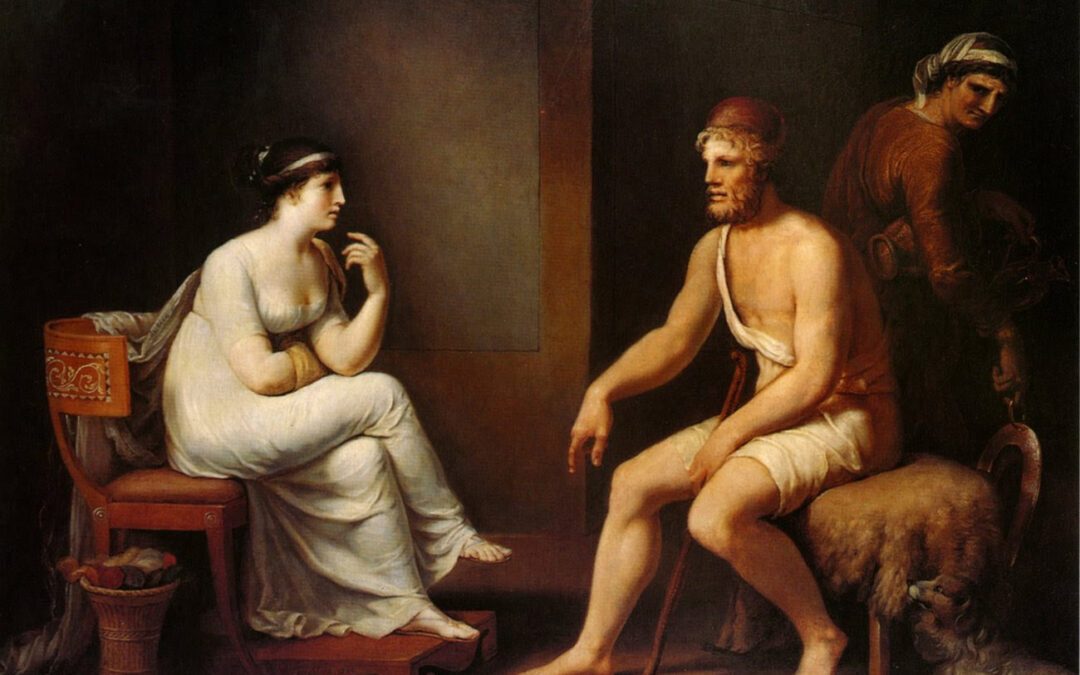
The dramatic high point of Christopher Nolan’s version of The Odyssey comes when, after 20 years, Odysseus speaks to his wife Penelope while disguised as a traveler. He does not reveal himself—not openly, anyway—but, after three hours of movie-watching, he finally opens up about what has kept him from coming home all these years.

I was so struck by this scene that I bought the screenplay when I got home, because I think what Nolan does here is really significant.

PENELOPE How did you make it home, when Odysseus could not?

ODYSSEUS I’m not home. Not yet.

PENELOPE Why not?

ODYSSEUS It’s not always an easy thing, a homecoming. That’s as true for Odysseus as for me.

PENELOPE The Odysseus I knew would’ve found or fought his way back to me no matter what.

ODYSSEUS What if the Odysseus you knew lost his way? What if, one night in a strange city, he saw things that made him think the home he knew couldn’t possibly be there anymore?

Matt Damon’s Odysseus goes on to tell the story of what happened after he led a group of Greek soldiers out of the belly of the Trojan Horse and opened the gates for Agamemnon’s army. He describes it as witnessing “ten years of rage” pouring into the city in one night.

ODYSSEUS We left them a gift. An offering of peace that they took into their home. [Emphasis in original] We violated all that’s ever sacred between people.

“To burn the walls of Troy,” Odysseus concludes, “was to burn the world entire… Including his home.”

It goes without saying that The Odyssey is about home and homecoming. Homer locates home not only in the place of Ithaca, but also in the relationship between Odysseus and Penelope (not unlike Rabbi Yehudah in the first Mishnah of Tractate Yoma: beito zo ishto, ‘his home refers to his wife’). But Nolan brings a contemporary psychological take in his telling: At-homeness is also a state of being. While Odysseus may be physically back in his place and even reunited with his family, he is struggling mightily to be at home with himself—all as a result of his treacherous violation of the ethic of hospitality: “We left them a gift, an offering of peace they took into their home.” Middah k’neged middah, as we might say (or, colloquially, karma): By violating the ethics of home, Odysseus loses his own ability to be at home.

Home is meant to be a peaceful place. That’s why shalom bayit, peace in the home, is such a virtue—because a violent home is anathema. While the word bayit actually doesn’t occur much in the traditional liturgy, the place where its sensibility is most profound is probably in the prayer for peace with which we conclude the Amidah. Notice the things we mention here: “peace, goodness, blessing, favor, kindness and compassion.” We remind ourselves that Torah is about “life and the love of kindliness, righteousness, blessing, compassion, life and peace.” And we conclude the prayer with that same word, shalom—peace, peacefulness, being at home with ourselves, the Holy One, and one another.

The opposite of both peace and home is war, the subject with which Parashat Ki Tetzei opens: “When you go out to war against your enemies” (Deut. 21:10). This continues a section that started in the previous chapter in which we find going to war positioned as the polar opposite of being at home. The officials are instructed to speak to the troops before they enter battle and ask a series of questions: “Is there anyone who has built a new house but has not dedicated it? Is there anyone who has planted a vineyard but has never harvested it? Is there anyone who has betrothed a wife, but who has not yet taken her into his household?” And finally, as a summation, “Is there anyone fearful or fainthearted?” If the answer to any of these questions is “yes,” then the order is, “Let him go back to his home.” You can be on the battlefield, or you can be at home—but you can’t be both.

The Seer of Lublin quotes the Talmud (Sotah 44a): “Is there anyone fearful or fainthearted—this refers to one who is afraid because of the sins they have committed.” From here, the Seer concludes, we can understand that “anyone who went out to war was certain of himself that he had no sin.” After all, self-confidence would seem to be a virtue in an army. And yet, the Seer concludes, such self-confidence carries a significant shadow side: “One who lacks any sensation of sin is liable to stumble at the first opportunity.”

I have not been a soldier—nor, as far as I’m aware, was the Seer of Lublin. So I cannot claim any insight into the experience of ancient soldiers like Odysseus or my own namesake, Joshua, and I will not offer commentary on the soldiers of today. What interests me in this discussion is what, if anything, it can tell us about the condition of being at home—in the literal sense and in a more psychological and spiritual sense as well.

In my view, one important idea is that home is not an idealized, fixed place. In a world of constant change and instability, we might want home to be someplace that never changes. But home does change, as do we. A yearning for an unchanging home is nostalgia—which has its place but is its own form of dodging reality.

Instead, I would offer that at-homeness is a state of mind and spirit in which we can look at ourselves—in the singular and the plural—critically but non-judgmentally. To be at home is to be at peace, which on the most basic level means to feel safe from violence. When we can inhabit such a place physically, mentally, and spiritually, then we actually can engage in discernment, judgment, and healthy conflict. That is a healthy kind of faith, the kind Rabbi Jonathan Sacks described as “like being secure in one’s home, yet moved by the beauty of foreign places, knowing that they are someone else’s home, not mine, but still part of the glory of the world that is ours.”

Sacks wrote those words in the wake of 9/11. A quarter-century later, his conclusion rings true, even if the work seems just as daunting: “Those who are confident in their faith,” what I would call at home with themselves, “are not threatened but enlarged by the different faith of others. In the midst of our multiple insecurities, we need that confidence now.”

Holding Lightly (Shoftim 5786)

Holding Lightly (Shoftim 5786)

Before anything else, I want to say thank you to the many readers who wrote last week to offer their condolences on the loss of my cousin Julian. My family and I have been surrounded in love and support. It means the world to all of us. Thank you.

Among the reasons I wish my father was still alive is that I know how much he would delight in observing me coming to appreciate lessons he offered—and that I resisted in my youth, when, like plenty of others, I was convinced I knew everything better than he did. There are small things, like waiting to run the dishwasher until you have a full load. There are bigger things, like the chart he once drew for me plotting left- and right-wing political views on the horizontal axis, and democracy and autocracy on the vertical—a reminder of the limitations and imperfections of political parties, political systems, and human beings.

While my dad wasn’t one to say, “I told you so,” he did like quoting a line from Mel Brooks and Carl Reiner’s “The Two Thousand- and Thirteen-Year-Old Man” (sequel to the original and a favorite in our home): “We mock the thing we are to be.” Yep.

In my teaching these days, I find the phrase “hold it lightly” coming up a lot. A classic image in Buddhist teaching is holding a quail: if you hold the bird too tightly in your hands, you’ll crush it. If you open your hands too much, it will fly away. So, be like Goldilocks: Hold it just right. That is, hold it, but hold it lightly. Don’t cling—but also, don’t necessarily fully let go either.

I find that image applicable in so many realms. It’s helpful in my meditation practice, where my aim is to be gentle with my mind, body, feelings, and sensations. It’s helpful in relationships of all kinds, from family to customer service reps. It’s helpful in text study (which is, after all, another kind of relationship) where I find it reflects another image I’ve long taught, that of a game of tetherball: If the text is the pole and the reader is the ball, then you want to stay tethered, but you also want some dynamic tension in the rope—otherwise there’s no game.

Two Hasidic teachings on one of Parashat Shoftim’s most famous lines, “Justice, justice shall you pursue,” (Deuteronomy 16:18) reflect this sensibility of holding lightly. First, the Sefat Emet:

“The Torah writes ‘pursue’ (tirdof). This is because it is impossible to arrive fully at the ultimate reality of truth within this world of falsehood (Alma D’Shikra). Therefore, one must always pursue justice—to know that one has not yet reached perfect truth. Rather, when one pursues justice in this world, one attains it in its complete perfection in the World to Come. And this is what is written: ‘…so that you may live and inherit [the land]’—which gestures at the World to Come, a world that is entirely life.”

The Sefat Emet reminds us, first of all, that while truth is indeed the ground of reality, it’s also impossible to arrive at fully in this world. Thus, the Torah tells us to pursue justice—which is founded on truth—so as to help us remember that truth is ever-elusive. So, hold it, but hold it lightly. Keep some healthy humility even as you pursue what is true and right.

Which brings us to Rabbi Zev Wolf of Zbarazh (d. 1822), a student of the Ba’al Shem Tov, who offers a related teaching on this verse:

“The Evil Inclination (Yetzer Hara) has many ways to trap a person in its net. Just as it uses schemes to entice the human heart toward wickedness, so too does it sometimes entice a person toward excessive righteousness—so that one will try to be an absolute tzaddik. Against this, the Torah warns us: ‘Justice, justice’—justice in moderation— ‘shall you pursue.’ Do not practice excessive piety, for sometimes this too is among the tactics of the Evil Inclination. ‘Do not be overly righteous’ (Ecclesiastes 7:16).”

Both of these teachings emphasize the point of holding, but holding lightly: pursuing truth, but recognizing that we can never fully grasp it; judging but not becoming judgmental. In this season of Elul, we might extend it: Holding ourselves and others accountable, while also making room for grace and forgiveness. And in this increasingly violent world of political and cultural polarization, we might also apply it to our bigger conflicts.

All of that work begins in our own hearts and minds. May our preparation for the coming New Year help us do it together.

For Reflection & Conversation

  • How easy or hard do you find it to hold things lightly? Are there certain things that are easier or harder for you to hold lightly? If so, why? What might it feel like to soften your grip? What might it feel like to hold on a little tighter?
For My Cousin Julian z”l (Re’eh 5786)

For My Cousin Julian z”l (Re’eh 5786)

My cousin Julian Newman died tragically last week after a long battle with depression. He was a young 30 years old.

Julian and his sibling Rena Yehuda are the two children of my first cousin Heidi and her husband Dave. As a child, I remember my mom talking to her older sister Judy Goldfein, Heidi’s mom, at least once a day—and that was back in the days when you had to pay for long-distance calls on your landline. They were very close, which probably led to the Goldfein girls being the cousins we were closest with.

That became even truer when Heidi’s family and mine wound up living walking distance from one another in Skokie/Evanston. Dave gave my kids music lessons. Our families, including Heidi’s sister Natalie, who also lives in Chicago, often have Shabbat dinner together. And our extended family managed to draw closer during and after the pandemic with the advent of “Zoom Kiddush,” a Friday afternoon gathering that has continued all these years later.

All of which is to say, this is a really heavy loss.

As it is customary and appropriate to teach Torah in memory of the deceased, both in their honor and for the comfort of the mourners, here are, as our grandfather Hymie might have put it, some words about Julian, some words of memory, and some words of Torah.

Julian was a devoted son, sibling, nephew, family member, friend, neighbor, and citizen. He loved languages and travel to foreign countries. He was fluent in Russian, which he studied as an undergraduate at the University of Wisconsin-Madison. He earned a master’s degree in international relations in 2025 and had hoped to work in government or an NGO, but the timing didn’t work out (see: Trump Administration). He played chess competitively—and one of the best moments of shiva has been seeing a group of his chess buddies share stories about him with his parents. He was a cyclist, a gardener, and a cook. He tutored immigrants in English.

Julian loved learning. As I have heard more stories about his curiosity and intellectual appetites, I found myself reminded of a teaching of Rabbi Simcha Bunim of Peshischa on this week’s Torah portion, which includes the words, “In order that you may learn to live in awe of YHVH your God all of your days” (Deuteronomy 14:23). Simcha Bunim teaches: “‘In order that you may learn’—this, the study of Torah, is the foundation and essence of a person’s tikkun, their refinement. By means of this study one can arrive at awe of the Divine, and from there one can ascend to the level of completion—the understanding that ‘the whole Earth is filled with the Divine Presence’ (Isaiah 6:3), that the spark of life in every single thing is from divinity.”

This kind of consciousness reflects an understanding that everything is interconnected. As Marge Piercy puts it in ‘The Seven of Pentacles,’ one of my favorite poems of hers:

Connections are made slowly, sometimes they grow underground.
You cannot tell always by looking what is happening.
More than half the tree is spread out in the soil under your feet.

And, a little later:

a thicket and bramble wilderness to the outside but to us
interconnected with rabbit runs and burrows and lairs.

When they were little, I remember visiting Julian and Rena’s house and meeting “Archie, the Hamster of Joy.” He lived in a cage in the kitchen, burrowing away like a hamster does. Today, outside the kitchen window is a garden that Julian planted with his sibling and brother-in-law, Ed. We’ve all been marveling this week at “Julian’s sunflower” that has grown to be over six feet tall.

This sense of interconnection is maybe what I’m finding most pervasive: More hugs, more hand-holding, more expressions of love than we probably made last week. If Julian’s death leads us to be more loving, it might be a small measure of tikkun for all the pain and heartache.

Another teaching:

The parasha opens with the words, “See, I place before you today blessing and curse” (Deuteronomy 11:26). Rabbi Baruch of Mezhibezh comments: “‘Anokhi, I’ — it’s as if the Holy One were saying, ‘I give myself into your hands.’ As the Sages said (Shabbat 105a): Anokhi is an abbreviation for ‘I wrote and gave myself.’ Thus the blessing and curse are in your hands… This is also found in the Midrash: “The Holy Blessed One said to Israel, ‘I have sold my Torah to you—and, as it were, I have sold myself over to you;’ this is implied from the verse, ‘And they shall take [literally ‘acquire’] for Me an offering’ (Exodus 25:2).”

In moments of tragedy, those of us raised with a dualistic notion of God (e.g. old man in the sky who rewards and punishes) can quickly find ourselves in a theological cul-de-sac as we try to explain the unexplainable. “Why would God do this?” or “Where was God?” One of the many virtues of the less dualistic approach of Hasidism is that it reorients us away from this impossible, painful question. The Holy One is here and always has been, with us in our joy and our suffering, in our strength and our weakness, in our communal moments and our loneliness. When we perform acts of compassion, love, and healing, we reveal more of the Holy One in the world. I’m pretty sure Julian knew that, and I’m quite sure he’s teaching us that now.

Which brings me to a final teaching on the parasha. It comes as a comment on one of the Torah’s stirring verses about giving tzedakah: “You are to give, yes, give to the poor person; your heart is not to be ill-disposed in your giving to them, for on account of this matter YHWH your God will bless you in all your doings and in all the enterprises of your hand.” (Deut. 15:10)

The Maggid of Dubno comments: “This is the meaning of ‘your heart is not to be ill-disposed in your giving to him’: Do not investigate after him with a bitter or begrudging heart to see if he is worthy, or whether it is impossible for him to earn a living in another way. For regarding this too, let your heart not be grieved, and say: It is worth it for this alone—that you are not acting as a fault-finder—so that Hashem will also bless you without inspecting your actions. For if the Holy One were to scrutinize strictly according to the attribute of justice, who could stand justified?”

Naton titen lo— “Give, give,” says the verse, parallelling the words “patoach tiftach et yadcha,” “Open, open your hand” two verses earlier. The spiritual motion of tzedakah mirrors that of prayer or Torah study—open, giving, generous, flowing, loving. Far too often, the natural font of hesed, love, within us is choked off. The world and its forces of separation have a way of making that happen, even as deep down we all know that everyone is fighting a battle we know nothing about. So we have to work at it, opening our hearts, our hands, our mouths, to allow love to flow. Among all the many reasons we practice, that may be the most essential.

Marge Piercy puts it best:

Weave real connections, create real nodes, build real houses.
Live a life you can endure: Make love that is loving.
Keep tangling and interweaving and taking more in,
a thicket and bramble wilderness to the outside but to us
interconnected with rabbit runs and burrows and lairs.

Live as if you liked yourself, and it may happen:
reach out, keep reaching out, keep bringing in.
This is how we are going to live for a long time: not always,
for every gardener knows that after the digging, after the planting,
after the long season of tending and growth, the harvest comes.

May we love and support one another to make it so.

Forgotten but in the End Remembered (Ekev 5786)

Forgotten but in the End Remembered (Ekev 5786)

When folks ask me these days, “How’s your mom?” my answer is still, “She’s the world’s best Alzheimer’s patient.” But her world definitely feels like it’s shrinking. We’re approaching a decade since she was diagnosed. While she has blessedly been spared the kind of major personality change many dementia patients can experience, our conversations don’t have much room to roam. We stay close to talking about the meal that will be served next on her floor, what I’m up to today, and, when I visit, listening to music together.

At this stage I often get the question, “Does she still recognize you?” That’s hard to answer. She definitely doesn’t recognize most people, though she is totally friendly to them and excited to welcome guests. She can still access key conversational scripts like, “Where did you grow up?” or “What do you do for a living?” And she answers most statements with something like, “Oh, that’s terrific!” or “Isn’t that great?!” (You can take Happy largely out of the world, but you can’t take the happy out of Happy.)

As for whether she recognizes me in particular, I’ve concluded that we’re in this kind of nether zone where it’s just kind of hazy. She knows that if she presses a button on her speed dial, she can find a person on the other end of the line whose name is Josh, and she can tell me that that person is her son. But it’s not always clear when I visit that, in her mind, the person visiting (me) is the same person as on the phone a few minutes before.

For me, by far the most important practice has been letting go of expectations. I just try to follow her lead and respond with what I sense she needs and not get caught on what logic might be operating in my brain. Once I’ve let go of the idea that she thinks of me as “my son Josh” in the same way you or I might utter that phrase, I find it’s much easier to focus and do the mitzvah I’m here to do. It’s not about me—it’s about her.

All of that has led me to reflect more on the nature of memory and consciousness. We know these days that, even in healthy folks, memory is a really tricky thing. In its own way, this part of my life seems like it’s commenting on some of the questions swirling around AI: What is hallucination, what’s true, and when does that matter?

Anyone who has tried to sit with mindful awareness of their thoughts for even a few minutes will likely agree that consciousness is quite a mystery. What is it to be lucid? What does a healthy memory or consciousness look like? It’s not so simple.

A story is told of Rabbi Yaakov Yitzchak Rabinowicz of Peshischa (1766-1813), “Hayehudi Hakadosh,” the “Holy Jew,” when he went to visit his teacher, Yaakov Yitzchak of Lublin. He found the rebbe distraught and asked why he was so low. “I have transgressed the negative commandment, ‘Be careful lest you forget YHVH your God’ (Deut. 8:11),” he answered. “For one brief moment I allowed my attention to slip and didn’t give my full consciousness to the existence of the Holy One.”

The Yehudi Hakadosh responded, “We find taught in the Mishnah (Peah 6:6) that if one forgot a sheaf of wheat in the field, it is normally considered to be lost—the owner can’t go back to get it but rather has to leave it in the field. But if it is so large as to be two seahs [about 24 liters], it is not considered forgotten. Why? Because something that is good is not forgotten—if one forgets it, they will immediately remember it. ‘Forgotten but in the end remembered’ is not considered forgotten. So too in your case: You have not transgressed the commandment, for you immediately remembered.”

The rebbe replied, “You have brought me back to life.”

Perhaps the most basic gesture of mindfulness meditation is this: Set an intention, e.g. to be mindfully aware of your breathing. Try to do that. And then, when you inevitably notice that your attention has wandered, gently bring your attention back to your intention. Rinse and repeat.

Years ago, my friend and colleague, Rabbi Jordan Bendat-Appell, changed my life when he pointed out (in our online Gift of Awareness introduction to Jewish mindfulness meditation course) that this process is the very same one we practice during the High Holidays: it’s teshuva. We set a kavana, an intention. We miss the mark (chet, sin, literally means missing the mark, as in archery). We become aware of that and remember our intention (zekhira—remembering). At that moment, we have the opportunity to return to our intention (teshuva means return).

Like I said, a life-changing teaching.

Making such a choice is often lubricated by an underlying posture of hesed, compassionate love, for ourselves—or for whoever we may seek to be in relationship with. That is what I hear in the Yehudi Hakadosh’s words to his rebbe: Your intention is to be present and aware at all times. Inevitably, you will miss the mark. Given that this is hardwired into our human system, I think we can understand the teaching to be that it is neither possible nor healthy to imagine that inevitable human forgetfulness is outside the scope of Divine compassion.

Maybe it’s not an accident that my own mindfulness practice has deepened so much precisely in these years of my mother’s dementia. On pretty much a daily basis, I find myself living in that basic teshuva pattern: intention, miss the mark, notice, return. For her and for me, I find that holding it all lightly is essential. I try to notice and let go of impulses to judge either of us harshly or reactively. In doing so, hopefully I help make room for both of us to remember the love and compassion that’s never forgotten.

For Reflection & Conversation

  • What does this reflection evoke for you? Are there relationships or aspects of yourself to which you’d like to bring more compassion? What, if anything, gets in the way of doing so? Who or what might help you to soften or dissolve those barriers?
Crisis of Faith (Vaetchanan 5786)

Crisis of Faith (Vaetchanan 5786)

Years ago, when I was a rabbi on a college campus, I found that one of the most wonderful parts of my job was when a student would come to me with a crisis of faith. “College costs so much,” I would tell them. “If it doesn’t provoke at least one serious crisis of faith, you should ask for your money back.”

I said this, in part, because of my own experience as a student. In college, I lived across the street from the Hillel building. I have always been an early riser. Put those two facts together and it was easy for me to be a mainstay at morning minyan. I went dutifully every day for my first three years.

But in the fall of my senior year, in a moment I can still feel in my kishkes, I found myself davening, reciting the shemona esrei, the central prayer of the service, and I felt the bottom fall out from underneath me. Whoosh. Like Diana Morales trying to be an ice cream cone in Mr. Karp’s class in “A Chorus Line,” I realized that I felt nothing. With the passionate morality of a college student, I judged myself a hypocrite, put down my siddur, wrapped up my tefillin, turned and walked out of the room. I didn’t come back for weeks.

Decades later, I can still remember the profound feeling of estrangement of that moment. This practice, which had been such a home to me for years, suddenly felt foreign, and I felt out of place.

Eventually, I would come to recognize that experience through the work of the scholar Sharon Parks, whose book Big Questions, Worthy Dreams was and remains enormously influential to me. “To become a young adult in faith,” Parks writes, “is to discover in a critically aware, self-conscious manner the limits of inherited or otherwise socially received assumptions about how life works—what is ultimately true and trustworthy, and what counts—and to recompose meaning and faith on the other side of that discovery.” Emerging adulthood, she suggests, is a period marked by “transformations by which we may become fittingly at home in the universe.” (I note here that in both the phrases Big Questions and “at home in the universe,” Sharon seems to have seeded ideas that would become quite central to my own meaning-making and work in subsequent years—for which I am grateful.)

As I have gotten older, I have also come recognize that this cycle continues. While the stage of young adulthood might have its own particular contours, we continue to recompose our experience of home—what Parks and I would both characterize as faith—at every stage of life.

The Ninth of Av is centrally about the loss of home. Eicha, “Alas, lonely sits the city once full of people,” opens the Book of Lamentations. Jerusalem is described as “without ones to comfort her,” Judah “gone into exile,” the Jewish people “without a resting place.” Where once they—we—had experienced these dimensions of home, the profound destruction of this day has shattered that to pieces.

Rebuilding, reconstituting home, is a physical act, of course. The return described by the Psalmist, “When YHVH brought back those who returned to Zion” (Psalm 126), which we traditionally sing every Shabbat—that is undoubtedly a physical return, a geographic and material recomposition of home.

But/and: It is a spiritual return as well.

In Parashat Vaetchanan, Moses forecasts that “YHVH will scatter you among the peoples.” But, he says, “from there you will seek, and you will find YHVH your God, if only you search with all your heart and soul.” (Deuteronomy 4:27-29). Rabbi Simcha Bunim of Peshischa comments, “This is finding yourself. For you should know that you do not need to search for YHVH anywhere except inside your own heart, for divinity is within it. ‘And from there you will seek’—first, search there, in all of Creation, and you will find that the Holy One is in your heart, if only you will refine the traits of your character.”

One of the lessons of Tisha B’Av, perhaps, is that if we don’t pay attention to the home for divinity within our hearts, our physical homes can become empty, something like an idol. A synagogue without a soul is just a building. Jerusalem without life-affirming character traits is a hollow shell. A Jewish body mouthing words without feeling or connection is unfulfilled.

Which brings me back to my story. How did I find my way back to minyan—and start to recompose that sense of home? I tried studying Maimonides’s 13 Principles of Faith with a rabbi, but that didn’t really help. I read books, to no avail. Ultimately it was a conversation with a friend who wasn’t actively Jewish. “You know where you come from,” he said to me. “That is an amazing inheritance.”

What he was really saying to me was this: Focus less on the externalities for a minute and listen to your heart, and you’ll recognize you have a home. You might need to change things a bit—some rearranging, some redecorating, maybe even moving to a different house or a different neighborhood—but you have a home.

On the Jewish calendar, we’ve begun our ascent from this low point of dislocation and homelessness towards the renewed relationship with home we are to experience in the sukkah. May these weeks be ones of reflection, repair, relationship, and renewal—for each of us individually, and for all of us together.

For Reflection & Conversation

  • When, if ever, have you felt your faith really challenged? What did it feel like? Who or what helped you navigate it? How, if at all, did it lead to a different understanding of home for you?
In God We Trust (Devarim 5786)

In God We Trust (Devarim 5786)

Like me, one of my childhood rabbis, Rob Dobrusin, is a baseball fan. In addition to teaching me Torah as a young person, he also taught me to appreciate the writing of Bart Giamatti, the late Commissioner of the MLB. So the other day, when he posted this meme about the Pittsburgh Pirates on Facebook, I was, like him, rather amazed:
 

The Pirates are, as my kids might say, notoriously “mid” as a team. Despite the fact that they have boasted some exceptional talent over the years—pictured here is Paul Skenes, arguably the best pitcher in the National League for the last couple of seasons—they have made just seven World Series appearances since 1909, the last one coming nearly half a century ago in 1979. The stats here bear that out: a perfectly balanced, ho-hum record.

But of course, this is the age of fake news. So at first I was like, “Come on, that has to be an AI-generated piece of spammy clickbait.” Which is to say, I distrusted the information. Which further implied that I subtly thought Rabbi Dobrusin had fallen for it. Which felt icky. Not until I checked with my oldest son (the one with encyclopedic baseball knowledge and the wariness of a kid growing up in the AI age) did I confirm that this was, in fact, real (“Yeah, WTF Stats is reliable.” Good to know.) and my faith in the sagacity of my childhood rabbi was restored.

Hang out on social media, or really anywhere these days, and I feel like you’re likely to run into this experience of kneejerk distrust. This is the age of conspiracy theories about everything from the health of Senator Mitch McConnell to the death of Senator Lindsey Graham to the alleged rigging of the World Cup in favor of Argentina because Lionel Messi is allegedly Jewish and Jews, because we “run the world,” can of course rig the World Cup (yet somehow we can’t manage to create decent pizza cheese that bears a kosher certification—whatever).

Distrust is rampant. According to the General Social Survey (if you believe those guys), the percentage of Americans who say that other people can generally be trusted has declined from 46 percent in 1972 to 32 percent in 2018. Trust in government has plunged even further, from 77 percent in 1964 to 20 percent in 2022. Likewise for journalism, health care, and educational institutions.

All of that is toxic not only for the body politic, but for our own lives and experience. Like I said, to me it feels icky not to trust.

As he does throughout Deuteronomy, Moses opens the book with some tough love for the Israelites. “May YHVH, the God of your ancestors, increase your numbers a thousandfold, and bless you as promised,” he says lovingly, and then immediately adds, “Eicha—How can I bear unaided the trouble of you, and the burden, and the bickering!” (Deut. 1:11-12)

Rashi, quoting the Midrash Sifrei, comments on each of these descriptors. In particular, he notes that “the burden” here means, “they were Apikorsim [i.e. they were faithless doubters]: if Moses went forth early from his tent they said, ‘Why does the son of Amram leave so early? Perhaps he is not at ease at home?’ If he left late, they said, ‘What do you think? He is sitting and devising evil schemes against you and is plotting against you.’”

In his Itturei Torah, Rabbi Yaakov Greenberg quotes Rabbi Nachman of Bratslav as developing this idea further: “Apikorsut—faithless doubt—is a heavy burden upon a person and a harsh form of suffering. Whereas a believer has a strong and solid support—making the burden of their life much lighter, because everything for them is anchored in a firm faith (emunat omen)—the doubter is weighed down by constant doubts and obsessive thoughts that plague and oppress them without end.”

I’m particularly struck by the phrase emunat omen, rendered here as firm faith, but also gesturing at other images: an uman is a craftsperson or artist (one who practices omanut); a nursing mother or nursemaid is an omenet; and Moses himself at one point strikingly refers to himself as an omen, or male wetnurse, to the Israelites (Numbers 11:12). On this last passage, Avivah Zornberg suggests, “Motherhood is the human reality that offers a vision of recovery from skepticism’s annihilation of the world. Motherhood is an encounter with an other, who is both part of oneself and deeply unknown.” Moses can thus be understood as asking, “Could he be the constant, dependable source of trust for his people?” (Bewilderments, xxxii-xxxiv)

Every year, we read Parashat Devarim immediately before the 9th of Av. Among the many things we commemorate and re-experience on this holiday is the complete breakdown of trust that lays the spiritual groundwork for the physical destruction of the Beit Hamikdash, the divine home on Earth, and the physical and spiritual homelessness that follows. These days, swimming in this sea of distrust, it sometimes feels like we are closer to that reality than to redemption.

So perhaps over this Shabbat and the coming week, including the day of Tisha B’Av itself, we might engage in some of our own spiritual work to understand where doubt and distrust work in our own minds, hearts, and neshamot. In that reflection, we might scratch the surface of the wells of faith and trust that still live within us, cisterns of healing waters that our souls are desperate to drink from.

For Reflection & Conversation

  • Where do you experience trust these days? What do you find makes it easier or harder to trust someone or something? What does it feel like to be distrustful? How might your spiritual practice support you in cultivating more trust in your life?
At Home Everywhere? (Matot-Masei 5786)

At Home Everywhere? (Matot-Masei 5786)

A few months ago, after I shared that I would be devoting more of these reflections to the topic of home and at-homeness, a package arrived in the mail. I opened it to discover a book I hadn’t ordered, The Longing for Home (University of Notre Dame Press, 1996). Included was a note from one of the contributors, Werner Gundersheimer, a retired academic and former director of the Folger Shakespeare Library. Dr. Gundersheimer, it turns out, is a regular reader, and upon reading of my project he thought of this volume.

It has turned out to be quite a wonderful and unexpected gift, full of (mostly) accessible academic essays on a range of aspects of home. Gundersheimer’s own contribution is a moving reflection on his experience as a child fleeing Nazi Germany and being raised for a year by the family of a Presbyterian minister in New Hampshire. There are other essays by legends like Martin Marty and Wendy Doniger (with whom I can claim to have exchanged emails and a few pleasantries while working at the University of Chicago Divinity School), as well as physicians, activists, and fiction writers. Bottom line: If you like this topic, highly recommended.

Among the luminaries featured here is Elie Wiesel, whose essay opens the volume. Unsurprisingly, he has what to say about home. “[Children] know where home begins—inside certain gates—and where it ends: outside familiar doors. Children know that beyond home lies the frontier.” But adults, he notes, love to complicate things. Striking a characteristically dialectical tone born of his own personal history, Wiesel observes that “to some, home means an infinite capacity to dream; to others, it is a peculiar attraction to nightmares.” Ultimately, he says, “the opposite of home is not the prison—which may, eventually, become home—but exile. More than prison, exile suggests uncertainty, anguish, solitude, suspicion, hunger, thirst, and a constant feeling of guilt.”

“Only mystics draw their strength from exile,” Wiesel writes. “Yet even they experience nostalgia. Even they one day hope to return home. But where is home for them? God. Always God. God everywhere. For mystics, nothing is worse than to be exiled from God.” In this, Wiesel evokes the Hasidic tradition from which he emerged, which so often spiritualizes what at first blush appears to be physical or historical statements in the Jewish textual tradition.

The opening words of Parashat Masei provide a classic example: “These are the stages of the journey of the children of Israel,” says the Torah (Numbers 33:1), before enumerating 42 stops between Egypt and the banks of the Jordan River. The Ba’al Shem Tov immediately makes his move: “All 42 of these stages of the Israelites are likewise found in each individual, from the day they are born until the day they arrive in the world to come.” As my friend Yiscah Smith, drawing from her book Planting Seeds of the Divine, pointed out on our Daily Sit this week, the teaching here equates the historical event of leaving Egypt (Mitzrayim = the place of constriction) to the human experience of passing from the womb into the world, and the event of arriving into the Promised Land with the ultimate spiritual homecoming at the moment our soul departs the world.

Where is home in this spiritualized understanding? Is it in the physical place of Eretz Yisrael? Is it in communion with the Divine Presence—which is potentially available anywhere?

“When we are mindful, fully living each moment of our daily lives,” writes Thich Nhat Hanh, who, like Wiesel, survived tremendous loss and exile and became a spiritual teacher and peace activist, “we may realize that everyone and everything around us is our home… Sometimes we have a feeling of alienation. We ⁠feel lonely and as if we are cut off from everything. We have been a wanderer and have tried hard but have never been able to reach our true home. However, we all have a home, and this is our practice, the practice of going home.”

This feels close to the aphorism attributed to the Besh”t: “Wherever your mind is, there you are.” But I’m not sure it’s actually the same. Because as much as Judaism maintains that the Shekhinah is indeed present with us everywhere—including, amazingly, in exile—we don’t abandon the reality of a particular place as being our historical and physical home and homeland. “The Jewish soul,” writes Wiesel, “is open to only one influence and knows only one home: Jerusalem.” He unpacks this powerfully towards the end of his essay:

“Wherever I go, said Rabbi Nahman, my steps lead me to Jerusalem. It was the dream of my dreams. No city, no landscape nourished my dreams with as much passion and fire. In Sighet, I knew Jerusalem better than Sighet. I knew how to go to the Temple, at what time, with whom. I could easily describe the color of its dawn, the density of its dusk. I heard the prayers of the priests and the songs of the Levites. I was there in spirit.”

Yet, Wiesel writes, the physical reality of Jerusalem, miraculously made possible to him in the years after his liberation, wasn’t a full homecoming. “Having longed for Jerusalem since the beginning of our life in exile, why aren’t all Diaspora Jews going there? Is it that, for my part, I prefer the longing over reality? Years ago, I was asked by a reporter where I felt most at home. I answered: ‘In Jerusalem … when I am not in Jerusalem.’”

One of the superpowers of the Jewish people, developed over millennia of exile punctuated by moments of sovereignty, would seem to be this capacity for both being at home and not quite being at home at the same time, to be fully present while also dreaming, to approach life—experiences, places, sensations, texts, ideas—with a firm caress. Grasping too tightly can lead to a kind of certainty that begins to resemble idolatry; letting go completely can lead to physical danger and spiritual exile. Perhaps, at least for us, this dialectic, this paradox, is the essence of what it means to be at home.

For Reflection & Conversation

Reading Elie Wiesel’s concluding words, that he feels most at home “in Jerusalem… when I am not in Jerusalem,” how would you paraphrase this? What do you think he means? What might it mean for you—in physical/historical terms? In spiritual terms?

Okay (Pinchas 5786)

Okay (Pinchas 5786)

When my youngest child was four years old, our local movie theater had a special showing of the original Lion King movie (not to be confused with the star-studded remake from a few years ago). It started at 7 pm, so I knew we’d be pushing the limits of his bedtime, but this seemed like an important special opportunity, so off we went. The movie was great.

As we pulled out of the parking lot, I felt some trouble with our minivan’s engine. By a few blocks later, the transmission was kaput. We were stuck at a traffic light. At 9 pm on a Sunday evening, I started looking for a tow truck. When I finally found one, they told me it would be 45 minutes until they could fetch us.

Toby had always been an easy child. I remember one day when he was 2 or 3 years old and said, “I’m tired. I’m going to go take a nap.” (If you haven’t been around a toddler recently, this is, in my experience, highly unusual.) As long as he had his thumb to suck and a tag on the back of his shirt to play with, he was comfortable pretty much anywhere.

So, when I turned around and said, “Hey kiddo, they say it’ll be 45 minutes,” he just said, “Okay,” stuck his thumb in his mouth, and went to sleep in his car seat.

For that and many other reasons, Toby has been one of my great teachers in equanimity.

Earlier this week I was listening to a Dharma talk about equanimity (Upekka in Pali) by Gil Fronsdal, who discussed this particular quality as the fourth in the series of the Brahmaviharas, four particular kinds of love in Buddhism. The other three are: Metta (lovingkindness), karuna (compassion), and mudita (sympathetic or appreciative joy). Equanimity, Gil pointed out, is the kind of love that’s useful when the other three are not:

“Goodwill or loving‑kindness… wants the best for people. Compassion wants suffering to end. Appreciative joy wants other people’s joy and success to be celebrated… But there are times when those three are not really called for. So, equanimity… is less complicated. It doesn’t involve any desire, any wish that something continue, or someone be better, or may they be happy. It kind of leaves the situation, leaves the person, much more alone, but we stay present with love.”

It’s important to point out that this is different from indifference. As Gil summarized it, the posture here, at least when applied to other people, is one of, “You make your choices, and I’ll love you anyway.” The point of the practice is to avoid becoming agitated into anger or other afflictive states, which would only obscure the basic form of love and care with which we aim to approach other people and situations—and often lead us into unhelpful responses born of reactivity. For a young child, that might involve sucking a thumb, saying “okay,” and taking a nap. For grownups, it could mean lovingly practicing the Serenity Prayer: “God, grant me the serenity to accept the things I cannot change the courage to change the things I can and the wisdom to know the difference.”

This is also an essential element of leadership, as Parashat Pinchas reminds us. After Moses is told he will not enter the Promised Land, he implores the Holy One, “Let YHVH, Source of the spirit of all flesh, appoint someone over the community who shall go out before them and come in before them, and who shall take them out and bring them in, so that YHVH’s community may not be like sheep that have no shepherd” (Numbers 27:16-17).

Rashi, following Midrash Tanhuma, comments on the unusual reference to the Divine here as the source of the spirit of all flesh: “Moses said, ‘Lord of the Universe! the personality of each person is revealed to you, and no two are alike. Appoint over them a leader who will tolerate each person according to their individual character.’”

Rabbi Menachem Mendel of Kotzk adds, “When Moses saw the immense significance of Pinchas’s zealotry, he became deeply concerned. He feared that perhaps a zealous person would be chosen to lead Israel next, and Moses did not believe it was a good thing for Israel to have a zealot as a leader. Therefore, he requested of the Holy Blessed One that the leader of Israel should be someone who can tolerate and bear each individual—meaning, a leader who is patient and understanding, and not a leader who is a zealot.”

While Pinchas’s bold, perhaps reactive, action may have been important in the moment, this interpretive tradition points to an overriding general preference for leadership that is more equanimous: patient, understanding, able to bear—that is, to hold—the reality, the suffering, and the fullness of each member of the community, and the community as a whole.

This weekend the United States celebrates 250 years of independence. As I’ve been exploring on the Soulful Jewish Living podcast for the last six weeks, I think this is an opportunity for all of us who live here to do some serious reflection on not only our independence, but our interdependence. I think equanimity is foundational to the ability to live together in peace—which is perhaps, ironically, why the Holy One grants Pinchas a brit shalom, a covenant of peace: it is in the prayer that our reactivity give way to spaciousness, that we might be able to receive and hold one another with loving hearts.

For Reflection & Conversation

Do you find it easy or difficult to maintain equanimity? What supports you? What hinders you? How might your spiritual practice help you increase your capacity to do so?

Safe at Home (Huqat-Balak 5786)

Safe at Home (Huqat-Balak 5786)

There is a serious debate among knowledgeable people about a very important question: What is the best baseball movie of all time? In my experience the choices often come down to Field of Dreams (starring Kevin Costner and featuring an immortal monologue by James Earl Jones that is guaranteed to bring the hardest-edged person to tears) and Bull Durham (also starring Kevin Costner—I know, I know—and featuring an immortal dialogue with Tim Robbins about the effective use of platitudes in press conferences). 

In my own humble opinion, both of these views are misguided. The best baseball movie of all time, hands down, is The Natural, a 1984 adaptation (well, a transformation) of Bernard Malamud’s 1952 debut novel of the same name, starring Robert Redford as the aging wunderkind Roy Hobbs, with an incredible orchestral score by Randy Newman. 

My family got our first VCR (that’s video cassette recorder for those who may not remember or never heard of it) when I was seven years old, and I watched The Natural many, many, many times. I probably don’t really need to watch the movie anymore, because the whole thing seems like it lives in my memory. I can see young Roy playing catch at home with his father on their family farm, with Newman’s Coplandesque clarinet playing underneath them. I can visualize the scene in the hospital where Roy tells his childhood sweetheart Iris (Glenn Close) that he’s glad she never sold their family farm down the road from his, because “It’s home.” And (spoiler alert) I can picture Roy rounding the bases towards home after his final, dramatic home run to win the pennant for the New York Knights, the exploding stadium lights raining down on the infield.

In that final scene, the picture actually fades out just after we catch a glimpse of a happily weepy Iris as Roy approaches home plate to the embrace of his ecstatic teammates. The screen fades to black and then reemerges with Roy standing in the fields of Iris’s family farm, playing catch with their son (also spoiler alert), Iris looking on—a family that is, after a long odyssey, at home.

Bart Giamatti, the late Commissioner of Major League baseball, was a professor of English Literature at Yale before his career change. He is among the best baseball writers I know of, and he was fond of pointing out the Hero’s Journey that baseball enacts in every at-bat. “Baseball is… entirely about going home,” he once said. “It is the only game you ever heard of where you want to get back to where you started (all the other games are territorial; you want to get his or her territory; not baseball). Baseball simply wants to get you from here back around to here.” Roy coming to home plate and coming back home on the farm—these are one in the same.

Yet in the same talk, Giamatti observed that “Home is a concept, not a place; [it is] a state of mind.” If that’s the case, then the journey home is not only about reaching the physical destination of home plate or the farm, but also about arriving at—or perhaps simply realizing—the sense that one is at-home right here and now.

“No harm is in sight for Jacob, no woe in view for Israel. YHVH their God is with them, and their Sovereign’s acclaim in their midst,” says Balaam in one of his curses-turned-blessings (Num. 23:21). Rabbi Avraham Bornsztain (1838–1910), the Sokotchover Rebbe, comments that as long as we have the symbols of holiness—among them Shabbat, tzitzit, tefillin—then, like lost sheep finding our way home, we can sense that the Holy One is always with us. Or, as the Ba’al Shem Tov put it, we are never alone: “In every place we travel, and in every place we stand, YHVH is with us.” 

The story of our ancestor Jacob tells us as much. On his journey away from home he stops for the night to sleep and has his famous dream of a ladder ascending to heaven. The spot where his head rested is, according to tradition, the very same location as the Holy of Holies. Jacob calls this place—or is it a state of mind?—beit Elohim, the home of the Divine (Gen. 28:17) “God was in this place, and I did not know it”—that is, our awareness of the Divine, which is perhaps our deepest sense of feeling at home, is potentially available to us at all times, but we have to attune ourselves to be aware of it.

We always read Parashat Balak (or the double parasha of Huqat-Balak) just before the fast of the 17th of Tammuz, which Rabbi Alan Lew noted is the beginning of our journey through the fall holidays. In historical terms, it is the anniversary of the breaching of the walls of Jerusalem by the ancient Babylonians, culminating three weeks later with the destruction of the Beit Hamikdash—the sanctified spiritual home of the Holy One and the Jewish people—on Tisha b’Av. From that low point we rebuild our sense of home through Elul and Tishrei, ultimately experiencing a reimagined and renewed homecoming sitting in the sukkah. 

“The dream of the lost home must be one of the deepest of all human dreams,” Lew writes in a chapter entitled, Everywhere He Went, He Was Heading for Home. “Certainly it is the most ancient dream of the Jewish people, embodied in our national resolve to someday rebuild the Bayit—the Home—the Great Temple in Jerusalem. And,” he adds, “this dream is the basis of that most profound expression of the American psyche, the game of baseball, a game whose object is to leave home in order to return to it again, transformed by the time spent circling the bases.” Lew concludes the chapter by noting, “If you open yourself to them, these Holy Days carry you home.”

For Reflection & Conversation

  • Do you associate feeling at home with a certain place? Certain people? To what extent do you feel you can be at home anywhere? What enables that? What prevents it? How, if at all, does your spiritual practice help?


The Book and the Sword (Huqat 5786)

The Book and the Sword (Huqat 5786)

The other night I had dinner with a dear old friend and colleague. After catching up about our families and personal lives, the conversation moved, inevitably, to the state of the Jewish people.

My friend, an astute observer of history, offered that our generation experienced a unique set of circumstances in the life of the Jews: We were born in America the wake of World War II. Having vanquished Germany and Japan, the United States made them and much of the rest of the world into markets and trading partners, leading to an unprecedently long economic boom. And, in the shadow of the Shoah, antisemitism was banished from polite society. American Jews flooded into universities and rapidly ascended in the economy and general society. A Jewish state was founded, largely underwritten by American support.

American Jewish life, which for so long had focused on basic survival, now shifted in large measure to focus on thriving: The question now was less how to ensure safety and physical wellbeing than how to convince Jews to remain identified as Jews when society no longer forced it up on them.

That was the social context in which the two of us, both born in the 1970s, came of age. In the long history of the Jewish people, it was a phenomenally rare moment. In many ways, we might say it was a luxurious one. Until the last decade or so, it was the world we thought we were operating in.  And, it turns out, we were probably naïve to think that it would last, that history wouldn’t revert toward the mean.

I have no idea what the events of recent days and years will mean for the Jewish people. What I do know is that I feel fear and anxiety rising, as I expect many other Jews do too. (I’m reminded of the old Jewish telegram: “Start worrying, details to follow.”) I also know that my mindfulness practice is indispensable in such moments, and I’m grateful for it. It helps me to notice that fear and anxiety—and not be trapped by it.

On another evening this week, I had occasion to wander in a bookstore. Unsurprisingly, I found myself in the religion and spirituality section. And I noticed that it comprised two bookcases. One of them was called, “World Religions” and had books on Christianity, Islam, Buddhism, and so forth. The other bookcase was labeled, “Judaism.” There it was: our tiny but ancient people, representing one five-hundredth of the world’s population today, producing ideas and wisdom far out of proportion to our size.

I smiled and remembered a teaching of Rabbi Meir Shapiro of Lublin (1887-1933). He comments on the phrase, “Thus it is written in the Book of the Wars of YHVH” (Numbers 21:14): “The nations of the world triumph by means of good weaponry and sophisticated armaments… But the people of Israel have a completely different weapon—the Book… As the verse states: ‘Not by military might, nor by power, but by My spirit, says YHVH (Zechariah 4:6).”

That is certainly true, and certainly an aspiration I share. But as Rabbi Shapiro witnessed in his own lifetime and would have beheld at even greater scale had he lived just a few more years, spiritual strength alone was not enough to save Jewish lives in the face of violent actors committed to our destruction. That realization, as much as anything, has driven much of Jewish life for the last 80 years—and it is at the heart of an increasingly violent debate in Israel over military service among Haredim.

A popular theory has it that the Magen David (Star of David) can be understood as two triangles. One of them points up, symbolizing transcendence: ultimate reality is not in that which we experience, but in something beyond this world. The other points down, symbolizing immanence, the very opposite: The Divine dwells here in the world in which we live. The two triangles together embody a paradox at the heart of Jewish life, namely that we live both in the world and apart from it, in our bodies and in our books, in the workweek and in Shabbat, in our will to survive and our aspiration to flourish.

I don’t know what the coming days and months will bring. But I do know I will be meditating, praying, and acting as wisely and mindfully as I can to bring about a world in which Jews and all people can be safe, free, and at peace. I hope you will too.


Kissing Contest (Korach 5786)

Kissing Contest (Korach 5786)

One of the best pieces of advice I ever received was from a high school girlfriend. Like many hormone-filled teenagers (which is to say, teenagers), I was trying to figure out in my mind how she and I might eventually kiss. And, like many teenagers, I was having an awkward go of it.

I had probably learned too many unrealistic lessons from watching fake romance in the movies. I was waiting for the dramatic scene where we would look at each other, the camera would zoom in and, as we inched closer, the magic would happen as the music swelled in the background.

Needless to say, that’s not generally how it works in real life.

Luckily for me, this young woman a) felt similarly about kissing, but b) had a wiser head on her shoulders. Thus, the advice: “Josh, if you want to know whether someone wants to kiss you, the best way is probably just to ask.” I did, she did, it was nice.

It turns out the lesson isn’t only applicable in romantic contexts. As the famed philosopher Big Bird puts it: “Asking questions is a good way to find things out.” Yet so many times, I find that I, and other people I know, forget it.

Our base condition feels like it’s been exacerbated in recent years by our technologies. Any number of studies have demonstrated an enormous rise in social anxiety disorders in the last 30 years. And anyone who has been around teenagers today (like this guy) is likely to have witnessed a general discomfort with the idea of talking to a stranger to schedule a doctor’s appointment or handle customer service—much less ask if their date would like to kiss.

But if this situation has gotten worse in recent decades, that’s perhaps because it’s building on how we human beings arrive from the factory. Our minds are generally lousy at living in the unknown. They’re hungry to establish a narrative to fill the space. As the science of confirmation bias has shown, we often wind up constructing a story before we’ve done our homework. Our minds, desperate to get a foothold, form an opinion and then push us to understand the facts in a way that fits.

That, in turn, makes us uncomfortable with the idea of even doing the homework—talking to the stranger, making the ask. Many of us are far more comfortable living in our wonderful little mental world of assumptions. And it seems like that’s not a recent phenomenon. (Look no further than another example of teenage love, 16th-century style: Romeo and Juliet, which is based on a chain of false assumptions and un-had conversations.)

It could be that not even Moshe Rabbeinu is beyond this basic challenge of assumptions and communication. Rabbi Simcha Bunim of Peshischa comments on the verse, “And Moses sent to call Dathan and Abiram” (Numbers 16:12), which comes in the midst of their rebellion alongside Korach. He asks, “Why was it that Moses our Teacher did not succeed in establishing peace within the camp of Israel?” He answers: “Because Moses did not trouble himself to personally go to them and persuade them with words of appeasement and reconciliation. Instead, he sat in his tent and sent [messengers] to call them to come to him. Therefore, the path to peace failed.”

According to Rabbi Simcha Bunim, while Korach and his band hold their share of responsibility for the rebellion, Moses failed significantly in this episode. He was unwilling to make himself personally vulnerable and instead hides behind his office and works only through emissaries. Had he personally engaged, the rebbe suggests, peace would have had a greater chance.

Where does Moses’s reluctance come from? My own sense is that it’s rooted in the basic human impulses we’ve described. For whatever reason, Moses, in Reb Simcha Bunim’s reading, closes himself off from a genuine encounter with the unknown. He thus sends the message that he isn’t really open and listening. That, in turn, exacerbates a loss of trust, the result of which is a deadly uprising.

Our spiritual practices are intended to support us in living mindfully in the space of the unknown. We seek to be at home in our own lives such that we can confidently, openly, genuinely engage with the lives of others. As Rabbi Jonathan Sacks puts it, our aim is “being secure in one’s home, yet moved by the beauty of foreign places, knowing that they are someone else’s home, not mine, but still part of the glory of the world that is ours… In the midst of our multiple insecurities, we need that confidence now.”

While Rabbi Sacks wrote those words in the wake of 9/11, they ring just as true a quarter century later. And they were probably true 3,000 years ago too.

For Reflection & Conversation

  • In general, how do you feel about asking questions of others? Does the prospect excite you? Scare you? Something else? Why?
  • How, if at all, does your spiritual practice support you in engaging with the unknown, especially when it comes to human interactions?
Full House (Shelach 5786)

Full House (Shelach 5786)

The Feigelson-Blitt house is a bit of a physical mess right now. Our eldest graduated from college and brought all his stuff home. Our middle child finished his first year of college and brought a lot of his stuff home. And both of them have had a lot of laundry to do. The effulgence of stuff—sheets, blankets, towels, winter coats, phone charging cables, electronic devices, assorted college tchotchkes—has been oozing out into the hallway. Conversations have been had, but it’s a challenge.

Plus, having five people in the house, including three who qualify as teenage boy or young adult man, means we need to have approximately seventeen times as much food in the house as normal. The fridge is jammed with leftovers, a round-the-clock supply of schnitzel at the ready, and the various condiments each seems to require. The shelves are bulging with boxes of protein bars, bananas, and Trader Joe’s dried mango (my God, our capacity to eat that stuff).

First-world problems, 100%. We are fortunate to be able to afford to feed everyone, especially with prices soaring the way they have in recent months. I recently read that a food bank in New Mexico used to have a monthly fuel bill of $10,000. Since the latest war began, that has increased to $22,000, which ultimately impacts the increasing number of people who need to use the food bank. As I’ve grown used to saying when people ask how I’m doing, “Thank God for the problems I have.”

Despite that awareness, I find my attention still tends to focus on the mess. Why can’t everything be neat and tidy? (Which is to say nothing of my wife’s attention—she has a higher standard than me.) Why can’t we figure out a storage solution so that we don’t have a box of protein drinks sitting on the floor? And why are there clothes on the floor of the kids’ bathroom—what happened to the laundry hamper?

Rabbi Moshe Chaim Ephraim of Sudilkov (1748-1800) was the grandson of the Ba’al Shem Tov and author of the Degel Machane Ephraim. He offers an apt comment on God’s commandment to Moses to assemble a band of people to reconnoiter the land of Canaan: “Send someone from each of their ancestral tribes, each one a nasi, a chieftain, among them” (Numbers 13:2). The word nasi in Hebrew is spelled nun-shin/sin-yod-aleph. Thus, the Degel points out, “it includes within it the letters of the words ‘ayin’ (nothing) and ‘yesh’ (something). A nasi, a leader, who thinks of themselves as ayin is ultimately a yesh; while one who thinks of themselves as a yesh is ultimately an ayin.”

On one level, there’s a simple message here about literal selflessness, particularly in leadership (though, following my teacher Parker Palmer, I would argue nearly of us exercise leadership much of the time). When spiritual or psychological myopia takes hold, it is possible to perceive oneself as yesh, that which is, while perceiving others as ayin, nothing. In such a view, other people become instruments to us while we live out our egoistic fantasy. Ultimately, that’s a path to a broader ayin, nothingness—not in the transcendent spiritual sense, but quite plainly: under such circumstances, it doesn’t take long for relationships and communities to fall apart.

But I think the Degel is also saying something deeper about our perceptions. So often, our evaluation of a situation rests on how we answer the questions, “What is yesh—what’s here? And what is ayin—what’s not here?” Consciously or subconsciously, our minds are making this evaluation all the time. We can bring our attention to what is true now, or to what we wish were true instead. We can focus on that which we perceive to be present, or that which we perceive to be absent. And when we do so, we might actually find that things aren’t quite what they seem.

Yes, the house is full of clutter right now. Yes, I’m making a lot of trips to the grocery store and spending more on food and running the dishwasher more frequently with all these people home. There’s messiness and complexity and a lot more laundry to do. It might be nice not to have to do all that.

And: the house is full. All my kids are home for a few weeks—a rare and precious event. The chessboard is out on the coffee table because they’re playing each other in the evenings. The house is noisier—and it’s a good kind of noise.

Famously, the Torah portion that begins with a charge to the spies latur, to scout out and perceive the land ends with the mitzvah of tzitzit—to make, and then look at, the fringes on our four-cornered garments, so that lo toturu, we will not follow after only our hearts and eyes. “Do not form judgments by following the impulses of your hearts and eyes,” explains Rabbi Samson Raphael Hirsch. “Do not rely on them in deciding what to accept or reject. Do not call anything ‘good’ merely because your hearts are drawn to it and your eyes yearn for it. Do not call anything ‘evil’ merely because it is distasteful to your hearts and eyes.”

A key aim of our spiritual practice is to help us hold these questions, to create space within our heart-minds in which we can perceive clearly, discern, and make wise judgments. On a fundamental level, those judgments center around the questions, what is present and what is absent? What might it be that we think is absent but is actually present? What is yesh and what is ayin?

For Reflection & Conversation

  • When have you held one reflexive view of a situation that, upon further reflection, turned out to be quite different than you assumed? What supported you in coming to a new understanding? What, if any, was the role of your spiritual practice in that change?
Letting It Out (Beha’alotcha 5786)

Letting It Out (Beha’alotcha 5786)

My wife Natalie is a woman of many talents, and she always has a craft project of one variety or another that she’s working on. At one point she made beautiful cloth banners with Hebrew letters that still adorn our home at Jewish holidays. For the last few years, she’s been working on a special kind of embroidery in which she overlays black and white photos with splotches of color.

About a decade ago, she was also doing embroidery, but of a different kind: funny/ironic takes on what you might find more traditionally on a throw pillow in an antique store. (I know this was around 2016, as one of them said, in traditional black serif letters on a white background, “A woman’s place is in the White House.”)

Chip off the old block that he is, my youngest child, who is also our most artistically inclined, recently redecorated his room and included a small black felt board with white plastic letters that were arranged to read: “Home is where people don’t judge you if you fart.” To quote Homer Simpson, it’s funny because it’s true (at least in our home).

Why is that? Probably for the same reason that home is a place where we might be known by a special nickname, or we can recite merely the punchline to a joke and elicit a knowing chuckle. As the queer literary theorist Michael Warner puts it in Publics and Counterpublics, “The difference between genres of private and public speech anchors the sense of home and intimacy, on one hand, and social personality, on the other.” Home, we might like to imagine, is the ultimate shared private space, connoting a place and time in which we are known and accepted for who we are, without performing in the ways we do in public (e.g. holding a fart in).

Drawing on earlier feminist theory, however, Warner goes on to upend this notion of home. He points out how the concept of home, with its very strong protections for privacy, has also been deployed a shield for oppressive behavior: domestic (i.e. in the home) abuse, child abuse, and domination rooted in a concept of dominion that gives nearly absolute power to a man in his castle (i.e. his home). That critique, in turn, surfaces a truth about home, which is that, like all concepts, it is subject to multiple meanings and a variety of experience.

This is, in part, why I like to talk about the feeling or sensation of being-at-home, because I think it provides some more flexibility. Warner himself argues that for groups who may have historically experienced “home” as an oppressive place—he writes particularly about queer folks—the creation of alternative, sub-public spaces (think of bars, bookstores, or the shared readership of a magazine or digital space) has been essential for cultivating a feeling of being-at-home. In such cases, it’s less about holding it in when one needs to pass gas, and more about being able to let out the tension of holding in one’s essence.

“Now I take the Levites instead of every first-born of the Israelites; and from among the Israelites I formally assign the Levites to Aaron and his sons, to perform the service for the Israelites in the Tent of Meeting and to make expiation for the Israelites, so that no plague may afflict the Israelites for coming too near the sanctuary” (Numbers 8:18-19).

Like you, I expect, Rashi observes the surfeit of “the children of Israel” in this passage: Why five times when one would do? He responds: “In order to show in what affection they are held by the Holy One: the mention of them is repeated five times in one verse, corresponding in number to the Five Books of the Torah.” Rabbi Dovid Morgenstern, the second Kotzker Rebbe, adds: “This is to teach that even though each one of them was a book unto themselves, nevertheless together they constituted one Torah.”

We might hear in this a variation on the foundational Hasidic teaching that each of us has a soul-root (shoresh haneshamah) in a letter in the Torah. That is, each of us has a spiritual home in which we can experience the reality that we belong.

“Vayehi binsoa ha-aron, When the Ark would begin to travel” (Num. 10:35): I would suggest that our work to find and make home in our bodies, minds and hearts, within and among one another, is our ongoing avodah. It is our personal craft project whereby we aim to craft our person and shape a home. “Uvenucho yomar, When the Ark would come to rest” (10:36): The moments we can experience profound at-homeness individually and collectively are precisely those in which we might sense the divine Presence in our midst.

For Reflection & Conversation

  • When, where, or with whom do you feel particularly at home (i.e. able to let it out)? What makes those times, places, or relationships different from others?
  • Does your spiritual practice help you to experience being-at-home on a regular basis? If so, why? If not, why not?
Roots & Shoots (Bamidbar 5786)

Roots & Shoots (Bamidbar 5786)

Like many other people, the Covid pandemic brought my extended family a bit closer. Like many Jewish families, that happened as a result of “Zoom kiddush,” a Friday afternoon gathering of first cousins, aunts and uncles, that included some catching up, some reminiscing, and a performance of a few Shabbat rituals.

Six years later, our family’s Zoom kiddush is still going. Every Friday afternoon I go over to my mom’s place and the two of us get on the call together. At this point in her Alzheimer’s journey, she doesn’t have all that much to say, but she’s very happy to be there. Yet when the time comes and she sings the Shabbat evening kiddush, it’s as though a light switch has flipped, and she is, for a moment, the same Happy we have long known and loved.

These days I also try to visit her on Sunday afternoons. While I usually bring a treat to snack on, the main event is when I get out my iPhone and call up a playlist entitled, “Happy’s Tunes:” Rogers and Hammerstein, Lerner & Loewe, Peter, Paul and Mary. Last Sunday my eldest son, a freshly minted college graduate as of this weekend, came with me. We put on Fiddler on the Roof. As Zero Mostel sang “Tradition” through the phone’s speaker, my mom’s face lit up in a smile: “This is such a good one,” she said.

Another metaphor I often hear to describe the effect of familiar music on dementia patients is a thirsty plant coming back to life after watering. The blank look disappears, the disorientation gives way to a sense that, for a moment, the patient knows, in the words of Tevye, “who they are and where they come from”—and, on an even deeper level, “what God expects them to do.” It’s like you’re witnessing the regrowth of roots that have been severed in mind, body, and soul, the momentary returning home of a being that, most of the time, is somewhere else these days.

The Book of Numbers, which we begin reading this week, is starkly different from its predecessors. From the get-go, it is concerned less with individuals than with the corporate identity of the Israelites. Hence its emphasis on counting—the men of fighting age in each tribe and the people as a whole and, later, the gifts brought by the head of each tribe for the dedication of the Tabernacle. The lives of individuals are, seemingly, a secondary concern for much of this book.

Yet the Jewish interpretive tradition has long understood this shift as an invitation to explore questions of individual and group identity. Or, put differently, the shared project of making a home together. In a teaching from 1872, the Sefat Emet offers a psycho-spiritual reading of the second verse of the book: “‘Take a census of the whole Israelite community according to their families, according to their ancestral houses” (Num. 1:2). “Even though the Children of Israel changed, increased, and spread out until they reached six hundred thousand,” he says, “they remained attached to the root of their birth—’And they established their genealogy according to their families.’

“This is the meaning of the verse (Psalms 131:2): ‘Surely I have stilled and quieted my soul; like a weaned child with his mother.’ A person must be connected to their source, for that is their essential point, like an infant clinging to its mother.

“And so,” continues the Sefat Emet, “Rabbi Bunim [Rabbi Simcha Bunim of Peshischa (1765–1827)] explained the words of our Sages: ‘A person must always say: When will my actions reach the actions of my ancestors, Abraham, Isaac, and Jacob [Sarah, Rebecca, Rachel and Leah]?’ Seemingly, who is foolish enough to seek to equate their own actions to the actions of the Patriarchs [and Matriarchs]? Rather, the intention is: When will my actions reach (touch) their actions? Meaning, that they should be a continuation of them. For surely the actions of the generations are not equal, but through the attachment to the root—meaning, to the Patriarchs [and Matriarchs]—we bring all of our actions close to their root: ‘to their ancestors’ houses.’”

I hear in the Sefat Emet’s reading an affirmation of a truth that psychologists have rediscovered in recent years: the fundamental importance of rootedness and connection. While a particular thrust in Western society came about through the assertion of our rugged individualism, Jewish life, like many other traditions, has long understood that we are profoundly connected and interconnected. Rootlessness is not really an option. Our bodies and spirits know it, even if our minds might try to think otherwise.

Reflecting on his novel Roots after it became a massive television event in 1977, Alex Haley observed, “In all of us there is a hunger, marrow-deep, to know our heritage—to know who we are and where we have come from. Without this enriching knowledge, there is a hollow yearning. No matter what our attainments in life, there is still a vacuum, an emptiness, and the most disquieting loneliness.”

I would only add to that the connection with roots is not only a matter of intellectual knowledge. The kind of knowledge Haley is talking about is, in my experience, one that lives in our bodies and hearts, as well as our minds. Our rootedness, and our desire for that rootedness, is something that lives deep inside, ever ready to be reawakened and reconnected through the songs and words, laughter and tears, we share with our spiritual ancestors.

For Reflection & Conversation

  • How connected do you feel to your spiritual roots? If you feel connected, what has supported that connection? If you don’t, what has inhibited it?
  • Is there anything you wish you knew that would help you feel more connected to your roots? If so, what? If not, why not?
Turning 50 (Behar-Bechukotai 5786)

Turning 50 (Behar-Bechukotai 5786)

Happy birthday to me! I’m in the midst of turning 50. My birthday on the Jewish calendar was last week, my birthday on the Gregorian calendar is next week. As my teacher Rabbi Dov Linzer remarked when I saw him the other day, “Some people refer to that as chol hamoed,” the intermediate days of the festival. Thank you in advance for all your good wishes.

Having a birthday in mid-May has long meant that I grow a year older in the midst of an emotionally rich time. Spring is in full bloom. Walking to elementary school in my neighborhood growing up, I would pass the flowering crabapple trees that always blossomed this week, loudly displaying their pink petals and spraying their sweet fragrance into the air.

When I arrived at school, there was a sense of wistfulness as the academic year was about to end and no one, not even the teachers, really wanted to be inside. The environment was one of end-of-year ceremonies, concerts, proms and their attendant angst about romantic relationships, graduations, and the mad dash to summer and its seeming liberation—along with, in high school, the anxiety of final exams.

All of that is part of my personal coding around my birthday.

So, it’s probably not surprising that I’ve found myself daydreaming about my childhood home more frequently in recent weeks. Images of those crabapple trees and their scent have been wafting through my mind. In meditation I’ve found my memory calling up unbidden the aroma of our family’s house, the smell of my dad’s pipe, the feel of our living room’s pea soup green shag carpet on my bare feet.

That has led me to wonder, what’s going on here? Is this nostalgia operating? I remembered a quotation from the scholar Svetlana Boym in her book, The Future of Nostalgia (2001): “At first glance, nostalgia is a longing for a place, but actually it is a yearning for a different time—the time of our childhood, the slower rhythms of our dreams.” But don’t get too comfortable, because Boym critiques that: “In a broader sense, nostalgia is rebellion against the modern idea of time, the time of history and progress. The nostalgic desires to obliterate history and turn it into private or collective mythology, to revisit time like space, refusing to surrender to the irreversibility of time that plagues the human condition.”

Maybe. But I don’t think this is me mounting resistance, at least not actively. It’s something else, perhaps closer to Maya Angelou in A Letter to My Daughter: “Thomas Wolfe warned in the title of America’s great novel that ‘you can’t go home again.’ I enjoyed the book, but I never agreed with the title. I believe that one can never leave home. I believe that one carries the shadows, the dreams, the fears and dragons of home under one’s skin, at the extreme corners of one’s eyes and possibly in the gristle of the earlobe.”

As I ride the carousel for my fiftieth turn about the sun, I find Angelou’s words more resonant. These sensory images of home—not only or even primarily visual, but aural, tactile, and especially olfactory—are finding their way to the surface, seemingly beckoning me to revisit them. Or, perhaps, more emphatically reminding me of the incessant demand to reckon with home and my experience of being at-home.

“You shall count off seven weeks of years—seven times seven years—so that the period of seven weeks of years gives you a total of forty-nine years,” the Torah commands. “Then you shall sound the shofar; in the seventh month, on the tenth day of the month—the Day of Atonement—you shall have the shofar sounded throughout your land and you shall hallow the fiftieth year. You shall proclaim release throughout the land for all its inhabitants. It shall be a jubilee for you: each of you shall return to your holding and each of you shall return to your family. (Leviticus 25:8-10)

I wrote about this passage last fall as I prepared to encounter my fiftieth High Holidays. I quoted then Rabbi Judah Loew of Prague (d. 1609), who explains why the shofar for the Jubilee year is sounded on Yom Kippur rather than Rosh Hashanah, as we might have expected: “The Jubilee and Yom Kippur—the two are really one. For the Jubilee is the return of each individual to their original place of security, to be as it was in the beginning. And so too with Yom Kippur: everyone returns to their original place of security as the Holy Blessed One atones for them.” (Gur Aryeh Behar, s.v. “Mimashma”)

“Everyone returns to their original place of security.” Or, as Angelou might have put it, home: “The ache for home lives in all of us, the safe place where we can go as we are and not be questioned.” While the Jubilee envisions this, perhaps in the Torah’s own daydream, as a physical return home, the Yom Kippur dimension makes clear that, as in my own experience, home is not only or perhaps even primarily a place, but a state of being. Again, Angelou articulates it best: “I believe we feel safest when we go inside ourselves and find home, a place where we belong and maybe the only place we really do.”

“The land must not be sold in perpetuity,” cautions the Holy One, “for the land is Mine, and you are strangers and sojourners with Me” (Leviticus 25:23). I hear in Angelou an evocation of the Sefat Emet, who interprets this passage to mean that “in this world, we must be like strangers—we must know that our essence is from something beyond only the physicality of this world… ‘The land must not be sold in perpetuity’ suggests that we must not become fully estranged and removed from our supernatural roots.”

There is much more to say, of course, which is why I’m turning to this theme repeatedly in these writings. But it’s time to sum up this piece, and I cannot do so without expressing my profound gratitude to the many people who have aided and supported me for this first half-century, and the Source of Life. I have been blessed in far too many ways to count. I pray that the coming years will enable me to repay the many extraordinary gifts I have received—and to help us all to be and feel more truly, deeply at home.

For Reflection & Conversation

  • When you think of positive sensory images from home, what comes to mind? What do you notice about how you feel?

  • How does the idea of returning to home, physically or spiritually, feel in your body and mind?

I Have Some Feedback (Emor 5786)

I Have Some Feedback (Emor 5786)

One of the challenges of writing a weekly essay on the Torah portion along with a weekly podcast script while also serving as the CEO of a growing organization is that there’s not much time for other writing. My first—and to date, only—book came about entirely because I wrote each chapter for IJS’s annual Text Study program in 2020-21 (and I wasn’t yet writing these weekly reflections).

In recent months I’ve gotten some new inspiration for a larger project, which I’m hoping can become a book and which would focus on the idea of home and, even more, on the experience of at-homeness.

Regular readers will recognize that this is a theme I come back to regularly, and it feels to me like there’s something deeper going on here. Yes, clearly there’s something in the topic that animates me personally. But I also sense that questions of at-homeness underlie many of our collective questions and challenges, from borders and migration to Israel and the Jewish Diaspora, to AI and climate change. At the heart of many of these profoundly challenging issues is a deeply personal yet profoundly collective question: How do we feel at home?

I have explored these themes in many of these reflections already (you can look as recently as last week), but I share this preamble to tell you that, in service of this larger writing project, I’d like to use this frame for these reflections for the next little while. And: I hope you’ll write back with your own thoughts and experiences about not only what I have to say, but also where you might suggest we explore in this journey together.

The opening words of Parashat Emor are directed at the main characters of the book of Leviticus, the kohanim (priests): “And YHVH said to Moses, ‘Speak to the priests, the sons of Aaron, and say to them, ‘Let none [of you] defile himself for a dead person among his people’’” (Lev. 21:1). The Midrashic and Talmudic tradition reads this and the verses that follow as the basis for Jewish mourning customs, particularly in defining for whom one is required to mourn. That, in itself, teaches us something about our concept of home: Home is closely associated with the familiar and familial. Thus, who we define as a relative can inform our experience of being at home—particularly with whom we experience being at home.

Yet the verse itself uses neither the words home nor family. The key word for many commentators is the word am, “people.” Rashi, following the Midrash, comments that amav, “his people,” comes to teach that as long as someone from the Israelite people—i.e. the deceased’s extended family—is available to tend to the burial, then the priest should maintain his ritual purity and not become involved in tending to the dead. But, in the case of a met mitzvah, in which there’s no one else to do it, then the priest must become involved.

Rashi invites us to anchor the question of at-homeness in the relationship and status of the priest, who is both of the larger people but also apart from it—itself a key tension underlying the experience of being at home. What does it feel like, and what does it mean, to be at home with one’s immediate relatives? And how does that compare and contrast with being at home within a people, language, culture, civilization?

A Hasidic commentary can help us explore these questions further by interpreting the verse not merely as a commentary on the obligation of burial, but on the ethics of civic life. It comes from Rabbi Dov Ber, the Maggid of Mezritch (d. 1772): “‘Speak to the priests, the sons of Aaron…’ Those who rebuke the people and strive to return them to the good are in the category of ‘Priests, the sons of Aaron.’ And behold, the Torah says to each one of them: ‘Let none defile himself for a dead person among his people.’ At the time when one stands and rebukes the people, one must be careful and cautious not to defile or ruin their own soul through arrogance or ulterior motives.”

The Maggid, following his teacher the Ba’al Shem Tov, interprets the verse as a warning about the dangers inherent in the practice of tochacha, offering rebuke (or, perhaps, negative feedback), particularly by leaders of the people. This is not to say that leaders should avoid tochacha—the Torah just told us it’s a mitzvah in last week’s Torah portion! But, suggests the Maggid, leaders have to do real spiritual discernment to know where our tochacha is coming from: Is it pure? Or are there impure motivations? Is the leader uttering their words of rebuke from a place of genuine love and care for their fellows, or, perhaps, are their words more an expression of their own personal resentment, frustration, and even subtle (or not so subtle) desire for power and position?

While the Maggid seemingly confines his question to religious leaders in positions of authority, I think the rest of us can read ourselves into these questions too. Anyone who has ever lived in relationship with another—in a friendship, a marriage, as a parent or a child—can probably feel some resonance with this teaching. When do we speak up, and how? How do we discern our own motivations? These are intimate questions at the heart of familial relationships (and, perhaps, not a small number of hours in therapist’s office).

Read in the context of the question of at-homeness, I might therefore suggest the Maggid is extending the notion of shalom bayit, peace in the home, well beyond the confines of one’s immediate family—and thus inviting us to play with extending our notion of home as well. Indeed, he’s picking up that idea from the Torah itself. If one way of experiencing at-homeness is through a feeling of kinship and mutual responsibility, then the Maggid and the Torah are inviting us to reflect on whether we feel at home with a larger community—the Jewish people, other collectivities—and, if we do, what responsibilities and ethics might emerge as a result.

For Reflection & Conversation

  • How, if at all, do you discern whether to offer tochacha/rebuke? What, if anything, motivates you to speak up? What, if anything, keeps you from doing so?
  • How do you relate to Am Yisrael/the Jewish People? Is it a home for you? If so, why? If not, why not? Are there other larger collective groups in which you feel at home?
Home & Interdependence (Acharei Mot-Kedoshim 5786)

Home & Interdependence (Acharei Mot-Kedoshim 5786)

If you haven’t yet listened to the recent two-part debate between Rabbis Sharon Brous and David Ingber on the podcast “Being Jewish with Jonah Platt,” I want to suggest that you do. In addition to being a model of civil disagreement, their dialogue also expresses a debate taking place within much of the American Jewish community, particularly about our individual and collective relationships with Israel, our sense of and response to anti-Jewish rhetoric and actions, and our political affiliations and alliances.

One of the terms mentioned on the podcast is one I hear frequently these days: a sense of political homelessness. While I will leave the political part to my esteemed colleagues, I want to focus on the second half of that phrase: homelessness—or its inverse, at-homeness. Because the question of where and when we feel at home—or whether we do at all—matters profoundly. One could argue that it’s a throughline, perhaps the throughline, of Jewish life.

Home is not only a place, of course. It’s a place that enables a condition: a sense of safety, ease, agency. To quote Billy Joel in what I would argue is one of his most Jewish lyrics, home is when we feel that “I’ll never be a stranger, and I’ll never be alone.”

If that condition were easy to access and maintain, my guess is that Billy Joel, like so many other songwriters, wouldn’t have been inspired to write about it, and their songs wouldn’t have resonated with so many listeners. At-homeness seems to have a perpetually elusive quality. For so many of us, sensing it, being inside it, requires continual practice.

As my friend Rabbi Zvika Kriger observed in a conversation on this topic this week, being not-at-home seems like an underlying theme of the Torah. From the very first humans, who are expelled from their home in the Garden of Eden moments after their creation, to the Israelites, who, as the Torah ends, have not yet crossed the Jordan River into their promised homeland, the Torah repeatedly invites us to question what it means to be at home—to recognize, in God’s words, that “you are strangers and sojourners with Me.”

We, of course, live in an unusual moment in history. For most of our lifetimes, Jews have had a political and cultural home in the state of Israel. And, at the same time, many or most of us in North America have also experienced a sense of political, and often cultural, at-homeness too. Whether and how one can be at home in multiple places, multiple languages, multiple cultures—that is both a question of much of the contemporary, globalized world, and a primary question for the Jewish people collectively and many of us individually.

Parashat Kedoshim, the second half of the double Torah portion we read this week, includes one of the most famous lines of the Torah: “Do not seek vengeance or bear a grudge against anyone of your people; you shall love your neighbor as yourself” (Leviticus 19:18). Rabbi Akiva taught that the second half of this verse is klal gadol baTorah, the great principle of our tradition. Yet one of the most pressing questions of recent decades, and certainly of our moment, is, Who do we understand to be our neighbors? Who do we understand to be our people?

Underlying that question, I believe, is the question of home: Do we share and experience a collective sense of home with our people, with our neighbors? I think we certainly aspire to do so. Must we? What happens if we don’t? Do we still feel at home?

When asked by a prospective convert to summarize the entire Torah while the convert stood on one foot, Hillel the Elder famously inverted Rabbi Akiva’s dictum: “That which is hateful to you do not do unto others—this is the entire Torah, the rest is commentary. Go and study.” Rabbi Yitzchak Meir Rotenberg Alter (1799-1866), the founder of the Ger Hasidic dynasty, asks, “Why didn’t Hillel simply quote the verse in Leviticus?” He answers:

“Hillel recognized that the convert wanted to learn the principles of Judaism in an easy and accessible way. He understood that the convert’s perception was limited/fragile at that moment, and that he could only grasp the negative side—namely, not doing evil to others (refraining from what would cause himself pain).”

“However,” continues the rebbe, “to achieve the positive side of love—the level of ‘And you shall love your neighbor as yourself’—would have been beyond his capacity to understand at that time. Therefore, in his desire to bring him closer and bring him under the wings of the Divine Presence (Shekhinah), Hillel used a form of speech that the convert could understand” [in that moment].

I find I’m frequently drawn back to the story of Hillel and the convert (actually there are a few stories in the same place in the Talmud). Perhaps that’s because it’s so deeply about this threshold of at-homeness. The convert—ger, a stranger—is seeking home, which the Talmud describes as coming “under the wings of the Divine Presence.” On so many levels, that’s not a simple thing. Home is complicated (what would therapists do without it?!). And yet, the experience of at-homeness is also uncomplicated: It’s the basic yet deep feeling of welcome, embrace, safety.

While loving our neighbors, and feeling that our neighbors love us, may be the highest expression of that, the essential, irreplaceable ingredient is being able to trust that our neighbors do not seek to do us harm. For too many people—Jews and people who aren’t Jews, in Israel, in America, and around the world—that has become hard to do.

I’ll close with a final observation. This week marked Israel’s 78th Independence Day. In preparation for our 250th Independence Day here in the United States this summer, I recently read Jeremy David Engels’s wonderful little new book, On Mindful Democracy: A Declaration of Interdependence to Mend a Fractured World (Parallax Press, 2026). “To declare interdependence,” Engels writes, “is to acknowledge and celebrate a basic and inescapable fact of human existence: each of us is interwoven with other people, other beings, and this beautiful blue orb we call home.”

In my view, the project of collective self-governance is ultimately about enabling each and all of us to feel genuinely at home—on the planet, in our lives, in our languages, cultures, and traditions. Engels writes, and I agree, that awareness of our interdependence is a natural outgrowth of mindfulness, “the practice of being aware of what is going on inside of and around us.” Mindfulness, whether expressed Jewishly or in any other idiom, helps us nurture the habits of the heart that are fundamental to democratic life—and to allowing each and every one of us to be truly, genuinely at home.

For Reflection & Conversation

  • When, if ever, have you felt politically at home in a country? What contributed to that?

  • When, if ever, have you felt politically homeless? What contributed to that?

  • How easy or difficult do you find it to trust that your neighbors don’t seek to do you harm? How do you imagine they feel about you? What, if anything, might you do to promote greater trust between you?

Carpe Diem—or Not (Tazria-Metzora 5786)

Carpe Diem—or Not (Tazria-Metzora 5786)

One of the most enduring Torah lessons I ever learned came from a 19-year-old college student named Joey. He was interviewing for a campus “engagement” (i.e. outreach) internship when I was the Hillel rabbi at Northwestern. As part of the interview, we asked the applicants to read Hillel’s famous three questions (in English) and comment on them: “If I am not for myself, who will be for me? When I am for myself, what am I? And, if not now, when?”

It was Joey’s response to the third question that stuck with me the most. I had always read that question as a Jewish version of carpe diem—seize the day, which my generation learned from Robin Williams in Dead Poets Society. But Joey looked at the text, paused, and said: “Yeah, if now’s not the right time, you really gotta know when the right time is.”

It was a total 180, completely changing my understanding: Life isn’t always about seizing the moment; it’s also about recognizing what the moment is, and what it needs from us. To this day it remains one of the most beautiful moments of Torah learning I can remember.

Ever since, I have found that I often have two voices in my head. One says, “Do it now, why wait?” But another reminds me of Joey, saying, “Now may not be the right moment. Pause and consider.” A paradox, not unlike the two slips of paper that Reb Simcha Bunim taught us to carry in our pockets: one that says, “the world was created for me,” and the other that reads, “I am but dust and ashes.”

We can find a parallel dialectic in two comments on Parashat Tazria-Metzora.

While on its face this double-portion deals with the ritual laws surrounding skin diseases and impurities in the walls of the home, the Midrashic tradition has long read them as instructing us about the ethics of speech. Rabbi Jacob Kranz, the Maggid of Dubnow (1741–1804), illustrates this approach in a comment on Leviticus 14:2, the opening verse of Metzora:

“‘And the afflicted person shall be brought to the Priest.’ People treat lashon hara (evil speech) lightly because they do not know the severity of the matter or the crushing power of the mouth. They do not know how to evaluate the negative influence of evil speech. People think: ‘What have I done? I only uttered a sound from my mouth; these are just mere words.’ Therefore, ‘that person shall be brought to the Priest’ so they may see that the speech of the Priest decides their fate, for better or for worse. By the Priest’s utterance of ‘Pure,’ the person becomes pure; by saying ‘Impure,’ they become impure. From this, the person will learn to value the immense power within speech for both good and evil—’Life and death are in the power of the tongue.'”

In the Maggid’s reading, the point of the procedures outlined in the Torah is to teach us humility. Why do we engage in lashon hara, mindless speech, in the first place? Because we aren’t sufficiently humble, and thus we don’t recognize the damage our words can do. By submitting to the word of the Priest, who will pronounce the person pure or impure, the Torah teaches us to remember the power of speech and treat it with the proper care and respect.

Yet we find a different, seemingly contradictory, understanding from Rabbi Meir Simcha HaKohen Dvinsk (1843-1926) in his commentary Meshekh Chokhma. For him, the lesson here is not only about teaching humility but also reminding us that each situation has its own context, and that one rule should not necessarily apply in all situations. Here is what he says:

“‘And the Priest shall see the affliction… and the Priest shall see the afflicted person…’ Why the repetition? One can say that this speaks of two types of perception: ‘The Priest shall see the affliction’: This is according to its plain meaning—that he should look at the affliction to see if it contains signs of impurity, such as white hair and so on. ‘And he shall see the afflicted person’: There is another type of ‘seeing,’ or perception, regarding whether it is appropriate to declare the person impure, which is not connected to the affliction itself but rather to the person and the timing. For example: A newlywed is given all seven days of the wedding feast [before being inspected]. Similarly, on a Festival, a person is given all the days of the festival so as not to disturb their joy. The ways of the Torah are ‘ways of pleasantness’ (Proverbs 3:17), and this second ‘seeing’ refers to the Priest truly perceiving the person—their quality and situation—to determine if the timing and circumstances make it appropriate to declare them impure.”

While these are two divergent readings, they share an emphasis on mindful awareness of our speech. The Maggid of Dubnow invites us to be aware of the power of even the smallest speech acts, words we think are meaningless, and recognize the power they hold. If nothing else, the words we tell ourselves have the power to shape our experience of the world—and that’s before we get to how they can affect others. In many ways the Meshekh Chokhma is saying something similar: the Priest has enormous power in his hands. With his words he will create a ritual and social reality for the afflicted person. Thus, he is exhorted to be mindful before speaking, and to truly perceive the situation of the person before him.

Which brings us back to Hillel’s “If not now, when?” A core mindfulness teaching, of course, is that we can only know the present moment. That could lead us to a kind of carpe diem (or, in more contemporary parlance, YOLO) orientation. Yet mindfulness also counsels us to be fully present in the moment we’re living in. That requires taking the time to really perceive and understand the context in which the present moment is occurring. On the deepest levels, the discipline of spiritual practice is about living both of these truths simultaneously.

For Reflection & Conversation

  • If you had to put yourself on a spectrum between “seize the day” (1) and “wait for the right moment,” (5) where would you put yourself? When, if ever, have you wished you were more one or the other?
  • As you think about your life right now in the world that we live in, how might you want to strengthen either or both ends of this spectrum for yourself?
Home (In)Security (Shemini 5786)

Home (In)Security (Shemini 5786)

In a normal week, I typically send these reflections to Andrew, our wonderful senior operations associate here at IJS, on Wednesdays. Andrew formats them and gets them all set to arrive in your inbox Friday morning (hence the name, “Josh’s Friday Reflections”). Natalie, one of our other wonderful team members, puts them on our blog. And then our communications & marketing team puts them out on social media.

In a normal week, that works pretty well. Sometimes, when things in the world are a little more uncertain, I’ll wait until Thursday morning to send my piece to Andrew.

This is a particularly abnormal week. As I write, it’s Tuesday. Wednesday and Thursday for me are yom tov, the last days of Passover, when writing (even on a computer) is prohibited. And on top of that, on this particular Tuesday, the President of the United States has threatened the death of “a whole civilization” unless the leadership of the Islamic Republic of Iran opens the Strait of Hormuz.

While mindfulness practice reminds us that we never truly know what the world will look like in a few days, or even in the next moment, in some moments that truth is more acute than others. This is one such moment. I feel like I’m writing a message in a bottle. Yet I think it also reflects a deeper paradox, which is that we can never be fully secure—in our knowledge, in frankly just about anything—and yet must find a way to live with a profound sense of security. This, in so many words, is the conundrum of home.

Regular readers will know that, after years of thinking about it, I developed my bumper sticker definition of the word spirituality: It’s our capacity to feel truly, deeply at home in the world. That can be in nature. It can be with loved ones. It could be at particular moments, in particular places, performing particular rituals. It could be when we’re able to be simply and truly at home in this body, with this breath, right now.

Whatever the experience, I think a through-line is this profound sensation of being at home: Safe, held, embraced, grounded, connected, loved and able to love.

And yet, home can also be profoundly fraught. It is not necessarily always pleasant. Precisely because home should be a place we can trust, the moments when that trust is betrayed can be among the most harmful and painful in our lives.

Parashat Shemini marks the fulfillment of a homecoming. For weeks now we have read of our ancestors’ labor to build a home for the Divine Presence. Finally, the moment comes: “The Presence of YHVH appeared to all the people… And all the people saw, and shouted, and fell on their faces” (Leviticus 9:23-24). The Holy One and the Israelites are at home with one another.

And then disaster strikes, as Nadav and Avihu offer a “strange fire which was not commanded,” and are consumed by a Divine fire. All the promise and hope of that feeling of at-homeness is betrayed in an instant.

The tradition chose a fitting portion of the Prophets to pair with this portion as the haftarah this week: the story of King David bringing the holy ark to Jerusalem in II Samuel 6-7. While the two stories would seem most linked by the death of Uzzah, who is struck down by God for touching the ark, I would suggest that there are other deep connections. In particular, I think both stories are fundamentally about home.

We see this most explicitly in the second half of the haftarah, when David says to the prophet Nathan, “Here I am dwelling in a house of cedar, while the Ark of YHVH abides in a tent!” Yet the Holy One’s response is not straightforward: “From the day that I brought the people of Israel out of Egypt to this day I have not dwelt in a house, but have moved about in Tent and Tabernacle. As I moved about wherever the Israelites went, did I ever reproach any of the tribal leaders whom I appointed to care for My people Israel: Why have you not built Me a house of cedar?”

Commenting on this passage, Rabbi Meir Leibush Wisser (Malbim, 1809-1879) suggests that God’s words to David can be understood as a kind of rebuke. He reminds us of the Rabbis’ understanding that a final resting place for the Divine Presence could only be established when the people of Israel a) had a clear and fully legitimized government, and b) were finally, truly at rest from their journeys and persecutions. While David may have felt that his dynasty was now secure and that the people were finally at rest, the Holy One calls that into question (at least momentarily—the text goes on to promise that David’s son, Solomon, will indeed build the Temple).

I think it’s worth lingering on the Malbim’s interrogating impulse. I hear in his comment some deep questions about what it means to be truly at home: What does it feel like to be provisionally at home—in a tent, on the move, going from place to place, yet still somehow abiding? What does it feel like to be permanently at home? Can we ever really know that our security is finalized and guaranteed? If so, what might be the effects on our spiritual practice, our ethics—and are those effects all desirable ones? If not, what does it mean to live a life in which we never feel truly, deeply at home?

These are some of the most ancient of Jewish questions and we are, of course, asking them in our own way right now—in how we think about land of Israel, and how we inhabit our sense of citizenship in the countries in which we live. But also on more day-to-day levels, as we yearn to feel safe and secure in our homes and our bodies, while also knowing that, on some level, no safety is ever truly guaranteed. How we hold that holy fire, that space of existential insecurity, is our perpetual spiritual task.

For Reflection & Conversation

  • Where, when, or with whom do you feel truly, deeply at home? What do you think enables or supports that feeling?

  • Have you ever had to assemble or reconstruct a new home or a new life—after a move, a life event, an accident? How, if at all, did your sense of home change?

Gametime (Shabbat Hagadol 5786)

Gametime (Shabbat Hagadol 5786)

My youngest child recently celebrated his bar mitzvah and thereby became an adult in the eyes of Jewish tradition. And, right on cue, he has also hit his developmental stride as a teenager: he is much more interested in hanging out with his friends than with his parents. (As a dear family friend once put it, the essence of parenting at this stage might be described as being around so your child can ignore you—which, in my experience, is both true and important.)

Yet, miracle of miracles, Toby still likes us to read to him before bed. And before the window on childhood closes completely (which I presume will likely happen when he comes home from camp this summer), this year we’ve been reading C.S. Lewis’s Narnia books together. We’re up to number six, The Silver Chair, which (spoiler alert) tells the story of two children on a mission to rescue a prince from his imprisonment by an enchanting witch deep in the underground.

The climactic moment of the book comes when the witch is about to successfully enchant the children and their guide, a “marsh-wiggle” (frog-like human creature) named Puddleglum. As the witch strums on her magic stringed instrument and hypnotizes the heroes, she gradually gaslights them into believing there is no world above: there is no sun, there are no trees, there is only this world below the surface.

Just when the light of their consciousness is about to be fully extinguished, however, Puddleglum accesses some inner psycho-spiritual strength, sticks his foot in the fire burning in the witch’s fireplace, and makes a rousing speech that turns the tide:

Suppose we have only dreamed, or made up, all those things—trees and grass and sun and moon and stars and Aslan himself. Suppose we have. Then all I can say is that, in that case, the made-up things seem a good deal more important than the real ones. Suppose this black pit of a kingdom of yours is the only world. Well, it strikes me as a pretty poor one. And that’s a funny thing, when you come to think of it. We’re just babies making up a game, if you’re right. But four babies playing a game can make a play-world which licks your real world hollow. That’s why I’m going to stand by the play world. I’m on Aslan’s side even if there isn’t any Aslan to lead it. I’m going to live as like a Narnian as I can even if there isn’t any Narnia. So, thanking you kindly for our supper, if these two gentlemen and the young lady are ready, we’re leaving your court at once and setting out in the dark to spend our lives looking for Overland. Not that our lives will be very long, I should think; but that’s a small loss if the world’s as dull a place as you say.

C.S. Lewis was, of course, a believing Christian, and Puddleglum’s speech is a thinly veiled sermon about religious belief. Aslan, the lion of witch and wardrobe fame, is meant to be a Christ-like figure. So when Puddleglum says, “I’m on Aslan’s side even if there isn’t any Aslan to lead it. I’m going to live as like a Narnian as I can even if there isn’t any Narnia,” he is clearly not just talking about Aslan or Narnia.

Yet just as important in this speech is a related word, the capacity upon which Puddleglum’s belief rests: play. “Four babies playing a game can make a play-world which licks your real world hollow. That’s why I’m going to stand by the play world.” Lewis isn’t only making a case for religious belief, he’s trying to rouse his readers to imagination. And in this, he’s espousing something deeply Jewish—and deeply woven into Passover.

One of the very first things we do during the Seder is initiate a game. During the yachatz step of the Seder, we break the middle matzah and hide away the larger half—the afikomen. This kicks off a game of hide and seek that concludes at the end of the Seder meal, with the tzafun step (tzafun means “hidden”).

Commenting on yachatz, Rabbi Marc-Alain Ouaknin observes: “The Haggadah allows us to discover an essential dimension of humanity. A human being is not defined, as Descartes thought, by his or her capacity to think (“I think, therefore I am”). A human being is not “homo cogitans” (a thinking being), but rather “humo ludens” (a playing being).” Ouaknin goes on to describe the dual relationship between order (“seder”), which is embodied in ritual, and play: “Ritual establishes and creates structure; play, by contrast, changes and destroys structure.”

Further on, commenting on the Maggid section of the Seder, Ouaknin describes the Haggadah as “playful,” particularly in the way it approaches text, language, and history. “At any time,” he observes, “one may compose an astonishing diversity of interpretations… of any single event.” This is an essential, even foundational aspect of freedom in Jewish life: the freedom to think, to imagine, to play. And in marking the Festival of Freedom, the Haggadah reflects this all over: In its multiple answers to the Four Questions, its meandering and tangential stories, and perhaps most obviously in the Mishnaic imperative lidrosh, to make midrash on the Torah text. “In this interpretive pluralism,” Ouaknin concludes, “no interpretation is rejected.”

No interpretation, that is, “except those resulting from violence or that produce violence.” In Ouaknin’s commentary, this line almost comes across as an afterthought. I mean, obviously, right?! And yet, reading it this year (and I read Ouaknin’s Haggadah every year), I find myself caught on the sentence. Because we live in violent times, and words—including words of Torah—are being used to underwrite violence: towards human beings, towards Jews, and by Jews towards other human beings, by Jews towards other Jews.

The Exodus, of course, is not a non-violent series of events. Moses’s own story is born in violence, and his adult life commences with his killing of an Egyptian taskmaster. When we gather together on Seder night, we are re-enacting an historical memory of our people trusting in divine protection from the Angel of Death unleashed upon Egypt. And we justify that violence by saying it was necessary for the cause of our liberation. Similarly, the Rabbinic tradition tells us explicitly that if someone seeks to kill us—i.e. do violence to us—then we are authorized to commit violence to defend ourselves. The Torah should not be misunderstood as a pacifist document, or our tradition as a pacifist tradition.

But that brings me back to Ouaknin’s line about violence and interpretations. In its local context, I understand Ouaknin to mean that there are limits to how far we can massage the text. Returning to the idea of play: A game requires rules, a theater production depends on the imaginary fourth wall. An interpretation must be plausible to be legitimate, i.e. within the play space, and is unacceptable if it is so forced as to be violent. Yet I also understand Ouaknin, who is a student of Levinas, to be evoking the history of twentieth century wars. Which suggests to me that the violence of which he speaks is not only rhetorical or aesthetic, but embodied and political.

The stakes here are high. On Seder night, Ouaknin observes, “everyone has the obligation to tell. What is at stake in this telling is the creation of a narrative identity in every participant, reader, or simple listener to the text.” In other words, on Pesach we encounter the opportunity—and the requirement—to narrate ourselves into and within the story of the Jewish people. It’s gametime.

Fundamentally, we aspire for our story and our play to be peaceful and non-violent: “Her ways are pleasant ways, and all her paths are peace” (Proverbs 3:17). This is Torah in its ideal state, the Jewish life we sing of every time we return the Torah scroll to the ark. Perhaps that’s a reason that children, and their capacity for imagination, are so central on this holiday—because in our tradition children are, by definition, incapable of willful violence. What makes this night different from all others, perhaps, is that we are invited, and even required, to re-enter a state of nonviolent play—and thereby to re-member ourselves within our story and our people.

For Reflection & Conversation

  • What do you remember about playing as a child? When, if ever, have you experienced that kind of playfulness as an adult?

  • What does it mean to you to play with a text or an idea? Who or what sets the limits to that play?

P.S. I will be taking time off next week for Pesach and won’t be sending a Friday Reflection email on April 3. The next one will be sent on Friday, April 10.

The Speed of Trust (Vayikra 5786)

The Speed of Trust (Vayikra 5786)

Thirty years ago, in my junior year of college, I fulfilled a childhood dream: not only to conduct an orchestra one time, but to be the orchestra’s regular conductor. It wasn’t the Chicago Symphony or the New York Philharmonic, of course—it was a student ensemble, the Berkeley College Orchestra (Berkeley is one of the residential colleges at Yale). At the time, Yale boasted more than half a dozen such student-led orchestras, which was one of the major reasons I wanted to go there. And while many of those other ensembles have faded away, I’m delighted that that BCO is celebrating its 50th anniversary this spring.

The summer before that year, I spent a lot of time ruminating about how I wanted to show up with the orchestra. I watched lots of videos of conductors like Riccardo Muti and Herbert von Karajan and Leonard Bernstein. I remember watching one interview with the great violinist Isaac Stern in which he said that a conductor needed to know more about the score in his pinkie fingernail than the rest of the orchestra combined. On the other end of the spectrum, I had experienced conductors who were so deferential to the orchestra that during rehearsal they had asked the players, “Well what do you all think we should do?” 

Through Scouting and student government, I had already had a lot of leadership training experience by this point in my life. Because of that, I knew in my gut that neither of these approaches were the ones I wanted to take. Even if I wanted to, there was no way I could pull off Stern’s dominating authority because, while I was a good musician and leader, I was no genius. There were people in the orchestra with stronger musical chops than me. So that just wasn’t going to fly, and I didn’t like the idea of that kind of dominance. Conversely, my experience of playing tuba in an orchestra for a conductor who opened up rehearsal for group discussion about the music was also unsatisfying. I knew firsthand that I and most others functioned best when the conductor created a sturdy container with clear expectations. The orchestras I played in weren’t set up to be true democracies. It was better for everyone if I could bring a clear vision and then help us all collectively to share it—adapting as we went, noting things that needed adjustment, making way for better ideas when they arose. It wasn’t about me being stronger than the orchestra; it was about serving in the way that all of us needed.

Today I can see that what I was working out in those rehearsals was a way of cultivating and maintaining trust among a community of people to help them do their work. At its essence, that’s what conducting is—and it’s what good leadership is in general. As the leadership theorist Stephen Covey taught, organizations “move at the speed of trust.” When trust is high, groups of people can do extraordinary things. When it’s low, the absence of trust weighs on the group’s ability to move ahead. In families, workplaces, classrooms, legislatures, theaters, synagogues—in my experience, wherever groups of human beings are involved, trust is the most important ingredient. 

If trust is the most important ingredient in the healthy functioning of groups of human beings, then the ability to admit error is among the most important things for a leader to demonstrate. This isn’t rocket science. When leaders have led a group in the wrong direction, or when they have, wittingly or unwittingly, violated the rules that create the trust container itself, then they’re eroding the group’s trust, depleting its trust account. This has the ultimate effect of making it harder if not impossible for the group to do its work—a leader’s fundamental job. Given that mistakes are a built-in feature of being human, a leader’s ability to publicly admit error to the group they lead is essential.

Perhaps this is why Parashat Vayikra seemingly goes out of its way to enumerate the hatat sacrifices that leaders need to bring when they unintentionally mess up. When the Torah comes to the case of a nasi, or head of a tribe, it begins the verse with the word asher. Rashi, quoting the midrash, notes that asher is related to ashrei, happy: “Happy is the generation whose leader takes care to bring an atonement sacrifice even for an inadvertent act—because it is even more certain it is that such a leader will repent for their willful sins” (Rashi on Leviticus 4:22). Rabbi Menahem David Kalish of Amshinov (1860–1918) comments, “Wouldn’t it have been better if the leader hadn’t erred in the first place? Not so, for a leader who has not tasted sin lacks the capacity to forgive another. Such a one does not understand or feel in their heart the brokenness of the sinner and will wind up distancing and pushing away anyone who they perceive as not perfect like them.”

I don’t understand the rebbe to be arguing that leaders should try to make mistakes. Rather, I take him to mean that leaders—even saintly ones—are human beings, and thus imperfect. Leaders make mistakes, just like all humans. They, and the systems they serve, need a mechanism for doing teshuva. The Torah recognizes that and makes room for it. The leader’s hatat sacrifice exists because, on the one hand, the community needs to maintain a category of leadership so it can authorize leaders to help it do its work; and, on the other, it enables leaders and the communities they serve to repair breaches and harm when they happen, and restore the trust on which the life of the community depends.

This isn’t just for orchestra conductors or CEOs, though. While some may serve as leaders with authority, all of us exercise leadership all the time. One of my favorite expressions from this comes in an introductory essay by Parker Palmer to a wonderful poetry anthology called Leading From Within, with which I’ll close: “With every act of leadership, large and small, we help co-create the reality in which we live, from the microcosm of personal relationships to the macrocosm of war and peace… What does it take to qualify as a leader? Being human and being here. As long as I am here, doing whatever I am doing, I am leading, for better or for worse. And, if I may say so, so are you.” 

For Reflection & Conversation

How easy or difficult is it for you to admit you’ve made a mistake? What makes it easier or harder? How might your spiritual practice support you in doing teshuva you need to do?

Making Plans (Vayakhel-Pikudei 5786)

Making Plans (Vayakhel-Pikudei 5786)

“It’s hard to make plans these days.” In the years preceding her Alzheimer’s diagnosis (perhaps in a sign of things to come) I remember my mother saying these words regularly. I’m sure there was truth to it: the effects of aging on the body made it harder to know how she or my father would feel about traveling, or even just going someplace, when the time came. It was harder to make plans.

I’ve been hearing my mother saying these words in my mind recently as we’ve begun a new strategic planning effort at IJS—because it does, indeed, feel hard to make plans these days. We had a quarterly board meeting this week and I thought about so many big things that have changed in the world just since our last meeting three months ago: the return of the last of the Israeli hostages from Gaza; the violence in Minneapolis; US military action in Venezuela, and now a bona fide campaign against Iran; saber rattling about Greenland; not to mention the continuing saga of the Epstein files, the latest advances in AI and increasing worries about its effects on employment; the Supreme Court ruling the President’s tariffs illegal, and uncertainty about what happens next; oil at $120 a barrel and concomitant economic effects. Oh, and ever-present and seemingly increasing worries about threats to Jewish safety, whether in the form of missiles in Israel or violence directed at synagogues, including yesterday’s events in West Bloomfield, not far from my home town of Ann Arbor.

That’s just a partial list, yet reading it I can’t help but hear my mom: It’s hard to make plans. As a not-for-profit, we rely on fundraising for about 40 percent of our revenue. A lot of that depends on the economy. The more volatility there is in the market, the harder it is for us to plan. Likewise, as a Jewish organization serving a broad range of folks, we have to be mindful of the assumptions we bring into our work: about what Jewishness means to our participants, about whether and how they relate to Israel or experience antisemitism. And as an organization serving human beings, we have to be aware of AI, and other technologies, and the effects they have—and might have—on those we aim to serve and support, as well as how safe they feel: physically, emotionally, intellectually, or otherwise. All of that is churning amidst this typhoon of change.

I’ll add one more wrinkle to all this. Our organizational tagline is, “Grounded in mindfulness. Guided by wisdom.” Mindfulness, of course, invites us to let go of planning. The only thing we can really know in any given moment is our experience of that moment. When I’m meditating and notice my mind starting to plan, I’ll often say to myself, “Oh, planning is arising. Got it. Let me set that aside for the moment and return my attention to my breath.”

That can perhaps lead to the mistaken notion that mindfulness eschews planning—or its twin, thinking about the past. I don’t think that’s right. It’s mindless not to plan—whether we’re going to the grocery store or going to war (though it goes without saying that the stakes of one of those are immeasurably higher than the other). It’s also less than mindful to overinvest our plans with a feeling of firm knowledge. The problem is not planning per se; the problem is when we allow planning to become an escape from this moment, which is the only thing we can genuinely know.

Parashat Vayakhel opens with a final mention of Shabbat in the context of building the Mishkan: “On six days work may be done, but on the seventh day you shall have a Shabbat Shabbaton, a sabbath of complete rest, holy to YHVH” (Exodus 35:2). Throughout this series of Torah portions, the text has consistently juxtaposed the workweek activities of building the Tabernacle with the sacred rest of Shabbat. This impresses upon us the inverse relationship of the two: Not only is the specific labor involved in constructing the Mishkan prohibited on Shabbat, but Shabbat in its fullest manifestation is the absence of that labor.

“When Shabbat arrived, rest arrived,” says the Midrash. Building on this, Rabbi Mordechai Twersky of Chernobyl (1770-1837) observes, “Rest is an aspect of wholeness, of completion—which one arrives at after much effort. And so too the opposite: Something that requires effort reflects an element of lack. Thus, those things which we regularly experience as missing in our lives, like money or personal honor, are spiritually akin to the workweek. But not so Shabbat, which instructs us about wholeness.”

The six days of the workweek are not just a time. Like Shabbat, they are a mindset—and the two mindsets exist in relation with each other. Or, better yet, they are two parts of a single mindset. Just as on Shabbat the Torah prohibits us from planning or preparing (hachana), during the workweek we invest our planning and preparation with an awareness of Shabbat, with purpose and intention (melechet machshevet). In an ideal world, the rhythm of planning and pausing, doing and resting, helps us invest whatever moment we’re in with awareness and presence. When we can live in that way, our planning and our doing become our own versions of the sacred service to build a home for the Divine in the world.

For Reflection & Conversation

How do you experience planning? Is it easy or hard, enjoyable or unpleasant? Why? Has your relationship with planning changed over time? If so, why? How might your Shabbat practice support a healthier relationship with planning?

Limitless (Ki Tissa 5786)

Limitless (Ki Tissa 5786)

I can remember a period of my life when the melancholy of a waning Shabbat afternoon really hit me hard. This was in my early twenties. I was single, just back from a year studying in yeshiva in Israel, and most often spending Shabbat with friends on the Upper West Side (in a desire to end my singlehood and find a partner). As the sun would sink into the western sky and the shadows of those Manhattan apartment buildings would grow longer, I would often feel a kind of heartache, some combination of yearning to be elsewhere (back in Israel, perhaps) and longing for Shabbat not to end.

While not as intense and qualitatively different, I still feel a bit of creeping wistfulness late on Shabbat afternoons. I often find myself drawn to our family photo albums (among the gifts of finding that partner many years ago: she is a scrapbooker by nature). Or I’ll go find a book from the shelves that store the books of my younger years—sometimes that even results in taking out an old orchestral score from my musician days and mentally working my way through it. But the impulse is most often the same: a desire for this not to end, a reluctance to confront what I sense awaits me the moment I dip the havdallah candle into the kiddush cup and listen as the flame sizzles out.

In recent years, I feel like that anxiety has taken on a new, more urgent color, as coming out of my Shabbat cocoon has thrust me into a world turned upside down. October 7, of course, was Shabbat. The assassination attempt against Donald Trump happened on Shabbat. Just two months ago, the U.S. military went into Venezuela and took its president on Shabbat. And, of course, just last week the United States and Israel began a massive air campaign against Iran on Shabbat.

There are practical issues for those of us who don’t use our phones and computers or watch TV on Shabbat: how to get caught up, for instance. (There’s a niche market for a news summary just for shomer Shabbat people.) But, more seriously, I find that the increasing feeling that big things are happening in the world over Shabbat has an effect on my experience of Shabbat itself. I feel a greater urge to check the news. I find it harder to access the feeling that Shabbat is the sacred island that I’ve long known it to be.

And, of course, these are a version of “First World problems.” To my relatives and friends in Israel, for instance, this is not some aesthetic question of the flavor of Shabbat—it’s about running from missiles and reporting for army service, about life and death. As Maimonides teaches, Shabbat is pushed aside (dechuya) in the face of danger to life, i.e. physical existence, just as all other mitzvot (Laws of Shabbat 2:1). The very fact of my reflecting about Shabbat in this way, worrying about… worrying, is a reminder of my privilege of living in a nuclear armed superpower bounded on either coast by an enormous ocean. But still, it has an effect.

Parashat Ki Tissa mentions Shabbat in the midst of the instructions for building the Mishkan. Rashi offers a reason: “Even though you may be bound up in the mitzvot of building the Tabernacle, do not push away (al tidacheh) Shabbat” (Rashi on Exodus 31:13). That’s a remarkable statement, actually. Because building the Mishkan is not, I imagine, work we would wish to escape from. It’s holy, sacred service, work with purpose that connects us to the Divine and one another—an ideal form of labor. And yet, the Torah comes to tell us that even then, or perhaps especially then, we can’t push away Shabbat.

In an 1886 homily, the Sefat Emet infers a lesson from Rashi: “So great is the spiritual level of Shabbat that it exceeds even the six days of God’s original Creation.” And, he adds, “The ideal form of Shabbat has no limit,” a mystical, poetic comment which I register as an invitation to ground ourselves in the infinite through Shabbat, even as we are limited, material beings in a limited, material world. Shabbat, the Sefat Emet repeats so many times in his writings, is the means by which we experience, and even prepare ourselves for, the limitlessness of the World to Come. In the midst of these Torah portions devoted to the paradoxical, profoundly challenging idea that the Infinite could be at home in the finite, of course Shabbat must be at the center.

The world is heavy these days. There’s yet another war on (or perhaps it’s really just one long war). Institutions, our repositories of trust, are fraying and breaking. As are the boundaries that many of us have come to take for granted: between nations, between home and street, between land and sea, between Shabbat and the workweek. All of which makes practicing Shabbat feel like an even greater act of resistance.

Many Buddhist teachers I know will conclude a meditation sit with some version of the blessing, “May all beings be happy, safe, peaceful and free.” There are a lot of ways I might translate that in the language of Torah, but the simplest might be: May it be that our world allows all of us to practice Shabbat. Or, even shorter: Shabbat shalom.

For Reflection & Conversation:

Our tradition describes Shabbat as “a taste of the world to come.” What does that mean to you? Does your Shabbat practice help you experience it? Why or why not? What might you want to adjust in your Shabbat practice to strengthen it?

Role Playing (Tetzaveh 5786)

Role Playing (Tetzaveh 5786)

Three of my happiest moments as a parent have come at our local men’s clothing store, as I have taken each of my sons to find a suit for his bar mitzvah. For starters, the trip strikes a deep chord of familiarity, as I remember shopping for a suit or a sport coat with my own father at the long since closed Ann Arbor Clothing. That’s a warm memory. For another, it has generally marked a milestone, as we don’t live in a community in which kids (or even adults) are expected to wear fancy clothes to shul. Thus, in all three cases, this was the first time they had worn something more upscale than an oxford and khakis. 

That’s seemingly part of a generational shift (likely multi-generational) away from formal dress. These days my youngest will sometimes wear pajamas to school, and when I protest he just gives me the side eye. It’s as though asking him to put on a pair of jeans and a t-shirt was the equivalent of ordering up a top hat and tails.

And yet clothing still makes a difference. Developing a wardrobe has been part of the young adulthood of each of my older children, and while my youngest is only 13, he is now equipped with a full line of t-shirts, sweatshirts, and sweatpants, courtesy of his friends’ b’nai mitzvah. In my own life, I find that, even when we’re not going out or having company over for Shabbat dinner, I still feel a need to put on bigdei shabbat, clothes that remind me—or, even better, help me inhabit—the spiritual zone of Shabbos. (In my case that means a white button-down shirt and dark trousers. A suit is still reserved for more rarified occasions.) To me, that’s an interesting marker, because it signifies that my clothing isn’t only about performing a role for others, but also about performing for myself and/or for the Holy One—which is a fascinating idea.

Commenting on Parashat Tetzaveh, Rabbi Avrohom Bornsztain of Sokochov (1838–1910) observes, “The priests require their special clothes, and if they aren’t wearing their holy garments then their sacred service is invalid.” Yet the Levites have no such special requirement. Why so? Because unlike the Levites, whose service was externalized through song, the spiritual work of the kohanim was penimit, internal. “For everything which is internal requires covering: The soul, when it comes into this world, requires a covering—the body. An angel that is sent to this world likewise needs to wear bodily garments.” And, he continues, this is the very notion of wearing special Shabbat clothes, “for Shabbat is itself internality.” He cites the midrash’s gloss on the story in which Naomi tells Ruth, “Wash and anoint yourself, place your garment upon you, and descend to the threshing floor” (Ruth 3:3). “Was she not already wearing clothes?” asks the Midrash. “Rather this is to tell you that she put on Shabbat clothes.” At this moment of her spiritual conversion, the Sokochover teaches, Ruth accessed a new inner life and thus required new clothing—not just physical garments, but spiritual covering. So, too, with the priests—and with all of us (“You shall be unto me a kingdom of priests and a holy nation,” as God says in Exodus 19:6).

At the same time, we can’t ignore the social dynamics of clothing. Rashi (on Exodus 28:3) notes that Aaron becomes the High Priest by virtue of the clothing he wears, i.e. if he doesn’t wear the uniform, he simply can’t inhabit the role. With spring training underway, Rule 3.03(c) of Major League Baseball comes to mind: “No player whose uniform does not conform to that of his teammates shall be permitted to participate in a game.” If a player refuses to wear the “garment,” even if it’s Shohei Ohtani hitting a 500-foot home run, they essentially cease to exist in the eyes of the game. 

All of which raises questions about authenticity and a critique we hear invoked frequently these days, performativity. These questions are present for anyone, but they are more acute in the age of social media, in which it’s not always clear—even to the person posting—whether and how these dynamics are at play. Am I sharing this beautiful photo of my family because I feel good and warm and want to invite others into that sensation, or am I not so subtly saying, Look at me and my wonderful family (which, as Tolstoy reminds us, is either just like every other happy family or unhappy in its own special way)? Or, if I’m making a political statement, am I doing that because I genuinely believe it, or to conform to some expectation I sense from others to say something? (And, I might add, we can add an additional layer of questions: What, if anything, is wrong or right in either of those?)

Purim, which always follows Parashat Tetzaveh, invites us even further into these questions not only with its tradition of costumes, but in the deep ways in which Esther’s story plays with dynamics of concealment and revelation, authenticity and role-playing. Those dynamics are perhaps embodied in Mordechai’s pivotal question to Esther, “Who knows if it was not for just such a moment as this that you became Queen?” (Esther 4:14) In response, Esther not only musters her courage—that is, tends to her inner life—but, critically, puts on her royal clothing to plead for her people before the king (5:1). She would seem to be both authentic and performing at the same time, a model for all of us to study.

For Reflection & Conversation

  • Noting that this can be a very intimate question for some folks, please handle it with care: When, if ever, have clothes helped you feel more “like yourself?” What changed about you as wore those clothes? How did it affect your sense of yourself?
  • When, if ever, do you think about being authentic or genuine versus being performative? What, if anything, helps you to stay grounded and true to yourself?
Making Space (Terumah 5786)

Making Space (Terumah 5786)

Conventional wisdom tells us you shouldn’t make too many big life changes at once. Two weeks after I finished rabbinical school in the summer of 2005, Natalie and I welcomed our second child. And two weeks later we moved halfway across the country so I could start a new job. We bought our first home, we bought a new car. All to say that we made a lot of big life changes all at once. Sometimes, it seems, you just can’t abide by conventional wisdom.

A lot goes into furnishing a new place. Up until that time, we had eaten our Shabbat meals at a desk-cum-table from Ikea that could seat six in small folding chairs if you really smushed. But knowing that we’d be hosting students from campus, and generally just feeling like it was time, we splurged and purchased a beautiful chocolate brown dining room table and eight chairs (with leaves in, it seats 12). Over two decades later, it’s still the table we gather around for Shabbat and holiday dinners, for playing board games and making craft projects, and, in the age of Zoom, for a good chunk of my workday. 

Yet of all the memories that have been formed around our table, the most lasting one is the earliest: when we sat down to our first Shabbat meal there and I looked around at everything—our family, this new place that was ours, this life that now felt less precarious and more secure, and this table that felt solid and real and lasting. I sighed, and said out loud, “Now I feel at home.” (My mother-in-law, who was there, likes to remind me of this story whenever she visits. I can’t blame her.)

Beginning with Parashat Terumah, the Torah invites us into an extended reflection on many of these same themes: furniture, yes, but more generally objects, place, the material world, home. Numerous commentators point out the significance of the verse, “And they shall make me a sanctuary, that I may dwell among them” (Exodus 25:8)—among them, not it. From the very outset, the Torah is clear that we avoid the delusion that the Holy One resides inside the Mishkan or the objects within it. Its ultimate purpose is to help us recognize and manifest the Divine in our midst—something, perhaps, like my experience with our Shabbat table.

This meta issue of spiritual orientation reflects the story hovering in the background, namely that of the Golden Calf. While Nachmanides and many others follow the chronological order of events and thus understand the Mishkan as God’s original plan, Rashi draws on a midrashic tradition that inverts the sequence. This sees the Golden Calf as having taken place before the commandment to construct the Mishkan. If that’s the case, then the Mishkan can be understood more as a concession to our human need for physical places and objects through which to experience the divine Presence. 

Yet according to either reading, the calf represents a profound warning about the spiritual and moral dangers that lurk in our relationship with material things. Rabbi Marc-Alain Ouaknin writes, “The temptation of idolatry is strong—one need only remember the golden calf, made right after the Revelation; it is the temptation of appearances, of Presence… The idol… reassures; the idol brings things closer.” In a similar vein, Avivah Zornberg quotes Jacques Derrida, who writes about the notion of caressing, i.e. holding neither too tightly nor too loosely, somewhere between seizing and letting go: “The caress, like contact, is sensibility. But the caress transcends the sensible… The caress consists in seizing upon nothing, in soliciting what ceaselessly escapes its form… in soliciting what slips away as though it were not yet. It searches, it forages. It is not an intentionality of disclosure but of search: a movement unto the invisible.” 

There is a profound seductiveness at either end of the spectrum: The seeming permanence of physical objects can offer the reassurance of presence in a world in which presence is fleeting; the non-physical nature of an entirely spiritual life can offer transcendence from a world mired in physicality. Zornberg rightly suggests that this registers the depth of the human struggle. Reminding us of the Israelites’ cry at Massah (Ex. 17:17), “Is there (yesh) God in our midst or not?” (literally, “or else nothingness [ayin]“), she writes, “Beneath all the fluctuations, the myriad shapes of desire, this is the radical question.” At root, she suggests, it is our desire to both hold the Divine and be held in the Divine embrace that drives us—and, potentially, consumes us.

My last two reflections have named specific issues and people in the news. Regular readers will know that that’s a bit unusual for me. Following the halakhic principle that three times makes a hazakah, i.e. a presumption, I’m going to avoid directly commenting on current events this week for fear that that will become my default M.O. But I would certainly suggest that we can and should read current events through this lens. Because I think Zornberg, and our larger tradition of Torah, are so profoundly helpful in offering this understanding. She writes that we seek lives of density or meaning; I say something similar, that we seek to feel profoundly at home in the universe. Given that we are this glorious and messy combination of both bodies and heart-mind-spirits, we engage in spiritual practices to help us do that—to avoid desecrating our “home” through our need to seize and hold, and simultaneously to avoid escaping the demands and joys of “home” through not engaging in the housework. 

For Reflection & Conversation

When, if ever, have you felt a profound sense of being spiritually at home? Do you feel that way in a place that’s also a physical home for you? Why or why not?

Common Decency Comes Before Religious Law (Mishpatim 5786)

Common Decency Comes Before Religious Law (Mishpatim 5786)

This week I remembered an event from many years ago when I was a young Hillel rabbi. I was in a session at the annual Hillel staff conference led by Rabbi Jim Diamond z”l, the sagely longtime Hillel director at Princeton. Jim was sharing some of his war stories, one of which went like this:

One year, the president of the student body turned out to be Jewish. Jim didn’t know this student, but he managed to get word to him that he would love to meet him. The student got word back to Jim that he had no interest in meeting. (It happens.) The student, unsurprisingly, went on to an illustrious career in state politics. But ultimately, he resigned in scandal. “And so,” Jim said, “I’ve been wondering whether history might have been different had Elliot Spitzer said yes to my offer to meet.”

I’ve been thinking about that story this week as more and more of the Epstein files are revealed to us. Not so much because I think meeting with the Hillel rabbi at Cooper Union or NYU would have changed history (Epstein attended both but didn’t graduate from either), but because I find it hard to ignore the Jews involved in the story, from Epstein himself and Ghislaine Maxwell to Howard Lutnick, Leslie Wexner, Ehud Barak, Noam Chomsky, and countless others. While Epstein and Maxwell’s crimes are horrific on their own, the presence of so many prominent Jews in the story compounds my sense of revulsion.

In the case of Wexner, I experience a deep personal sense of implication. Like over a thousand other Jewish professional leaders, it was the Wexner Graduate Fellowship that put food on my family’s table while I was in rabbinical school. The fellowship community has been an enormously important source of wisdom, companionship, and professional support throughout my career—as it has been for two generations of Jewish professional and volunteer leaders. The idea that all of that was, in significant measure, built on a core of moral rot is nauseating.

But for the moment, what most preoccupies me is this deep feeling of offense, anger, sadness, and even shame at the reality that so many Jews were, knowingly or unknowingly, part of this horrific web of rape, abuse, and dehumanization. Last fall I wrote about the culture of detachment and rootlessness described in the Epstein files. But this week I’m really feeling a sense of disgust at the idea that so many landsmen, fellow Jews, were not only part of that jet-setting culture, but seemingly turned a blind eye to profound injustice in their midst.

Because I feel like we all know we’re supposed to be better than this. “These are the laws which you shall place before them,” begins Parashat Mishpatim (Exodus 21:1). “Just as the preceding words [i.e. the Ten Commandments] were given at Sinai, so too were all of these laws given at Sinai.” So says Rashi, quoting the Mechilta. Rabbi Simcha Bunim of Peshischa adds, emphatically: “before them—the Torah teaches here that the civil laws, the commandments about how we treat fellow human beings, come before everything else, including the commandments about our relationship with God. Derekh eretz kadma latorah: Common decency comes before religious law.”

In another comment, Simcha Bunim goes further: “Mishpat tzedek, our basic sense of fairness and justice, must precede everything: every thought, every discernment.” And, he adds, this is foundational to what it means to be Jewish: “The rest of the world may teach that all law is established by human beings and thus may be changed, depending on the time and place, in response to various pressures. But we are taught, ‘Justice is the Lord’s’ (Deut. 1:17)… Just as we don’t change the Ten Commandments in response to the contingencies of our time, we also don’t change the fundamental laws of how to treat human beings.”

I hear this voice in my kishkes crying out: Even if one doesn’t know Reb Simcha Bunim or Rashi or the name of this Torah portion; even if one hasn’t been to shul in decades; even if you’ve eaten a ham sandwich on Yom Kippur every year, how is it possible that you don’t know the most fundamental elements of goodness and decency?! “You shall not oppress the stranger, as you know the heart of the stranger because you were strangers in the land of Egypt” (Ex. 23:9), or “Stay far from falsehood” (23:7), or “Do not pervert justice” (23:6), and “Don’t take bribes (23:8).” Beyond the horror of the crimes themselves, the seeming absence of these most basic elements of ethics from the hearts and minds of so many Jews in this story leaves me speechless.

Of course, these are not the first nor the last Jews to seemingly suffer from this moral malady. The violent abuse of Palestinian Arabs in the West Bank by Jewish Israelis, too often with a similar lack of disapproval or enforcement by the authorities as in the Epstein case, is yet another moral stain on our people. And again, my heart is a jumble of anger, sadness, and shame.

We can, of course add to that list. While Reb Simcha Bunim’s teachings may reflect a centrality of ethics that we like to think of as a distinguishing feature of Torah and Jewish life, our tradition is replete with counterexamples: Abraham allowing Sarah to be taken into Pharaoh’s harem; Shimon and Levi murdering the defenseless men of Shechem; King David abusing his office to bring about the death of Batsheva’s husband so he could marry her. When we recite the confessional at Yom Kippur (whether we ate that ham sandwich or not), we join a long list of Jews who have come up short—some of whom have been held to account in court, many of whom have not.

That is not an excuse, it’s an essential reminder. The emotions surrounding the Epstein case are powerful. To me, that makes it all the more important to rely on our spiritual practices grounded in mindfulness: so we can be aware of how those emotions may be activated within us; so we can look clearly at the wrongs and injustices; so we can have the clarity and courage to offer healing to the victims and rectify the harm; and so we can try to avoid falling into the same morally and spiritually vacuous pits ourselves.

For Reflection & Conversation

  • In your own life, who is a model of a person with a strong ethical core? What lessons of theirs have you tried to embody?
  • How, if at all, does your Jewish spiritual practice support your ethical life?