A Special Message from IJS

A Special Message from IJS

Dear friends,

Like so many others, I awoke this past Shabbat morning to the heart-rending news from Israel. And like so many others, as the hours and days have unfolded, I have struggled to contain all the emotions: fear, grief, anger, confusion, gratitude for those who are keeping others safe and bringing healing to those in need. As I danced with my community on Simchat Torah–somberly, with tears in my eyes–I felt a new appreciation for Rabbi Abraham Joshua Heschel’s famous words about praying with his feet.

Like so many others, I am praying for the well-being of my own family, friends, and loved ones, including nieces and nephews who have been called back to active duty, a brother and sister-in-law and many good friends who, like millions of others–Israelis and Palestinians–must now seek shelter from bombs and missiles. These prayers come alongside our collective prayers for the safe return of those taken captive, healing for the injured, safety for innocents, and a peaceful resolution to the war as soon as possible.

And, perhaps like you, I find that in these times, I lean on my spiritual practice as much as ever. I find comfort and insight arising from meditation. I find healing in prayer, chant, and song. I find wisdom and depth in the words of Torah.

But most important, I find that now is when community matters most to me. It is in that spirit that I write today to say: the IJS community is here for you. Now, as ever, we are here for you with all of our resources: Our daily Jewish meditation sit at 12:30 pm ET or on demand; our weekly Jewish yoga studio at 11:00 am ET on Mondays; our podcasts and courses; our teachings and our teachers. We are here for you, we are here for one another, day in and day out.

These are hard days, and hard days are why we practice–together. As the Jewish people and the world make our way through this profoundly difficult time, I invite you both to lean on this community and to join in so that others may lean on you.

With blessings for well-being and prayers for peace,

Rabbi Josh Feigelson, PhD
President & CEO

A Special Message from IJS

Shemini Atzeret 5784: Being There

Like many people, I grew up with a beautiful Yom Kippur break-fast. Immediately after the end of services, my family would drive over to our family friends, the Rubinfelds. Rivka, the matriarch, always had out a delicious spread of bagels and lox and whitefish and rugelach. I remember the acidic sting of orange juice in my parched mouth, and the sensation of it landing at the bottom of my empty stomach. (I also remember that the radio was always on during the day at the Rubinfeld house, ever since 1973. Rivka is Israeli.)

My own children haven’t grown up with this ritual, which I regret. A big reason why is that in the early years of our family life, I was a rabbi with institutional responsibilities. I oversaw three simultaneous services on campus at Northwestern University. And, being a younger man than I am now, not only did I give sermons at all of them and co-lead the Reform service, I also timed things such that I could lead Musaf and Ne’ilah myself at the Orthodox service, my home base. By the end of it all, I was so exhausted that I could barely move. The kids were little, and it became easiest for them to just go home and for me to make my way there eventually. Break-fast became a bowl of cereal.

But like most things, there was a silver lining. After everyone had hurried out to go to their break-fasts, I remember lingering in the room that served as our little shul. It was just me and the room. I still had on my kittel, the white robe I had worn for most of the last 25 hours. And in that empty room, I could still sense the energy and life force we had generated and shared, the songs we had sung, the heartfelt prayers we had offered. The room was empty, and yet it was full—not in a nostalgic way, but in some way that was both present and absent at the same time. 

My podcast this week, devoted to the holiday of Shemini Atzeret that we observe this Shabbat, is about lingering. The Talmud imagines the Holy One saying to the people of Israel something to the effect of, “We’ve had such a wonderful time together these last weeks. Stay one more day.” Hence Shemini Atzeret has no particular mitzvot: no sukkah or lulav, no matzah, no shofar. Just being. Or, perhaps, lingering—just as I was somehow moved to do at the end of Yom Kippur years ago.

The way the calendar works out this year, Shemini Atzeret is the day on which we read the book of Kohelet (Ecclesiastes, also sometimes spelled Qohelet). One of the reasons we read this book at this time of year, I believe, is that it reflects this mood—a combination of spiritual groundedness, wistfulness at the passage of time, the sensibility of taking it all in after “the long season of tending and growth” in the words of Marge Piercy, aware that it will fade and pass and arise again. In this, Kohelet’s mood is not unlike a kind of posture we cultivate in mindfulness meditation as we bring awareness to the life-giving sensation of breath entering our nostrils and lungs, and then fading as we breathe back out into the world.

Breath, one way to translate the word hevel in Hebrew, is a—perhaps the—central metaphor in Qohelet. As Rabbi Audbrey Glazer writes in the introduction to the stunning new translation and commentary of Qohelet he developed with Rabbi Martin Cohen, “Hevel… manifests a ‘qualified optimism’ such that awareness of the evanescent feeling of life as vapor enables a deeper cultivation of joy! ‘Enjoy life, for not only injustice, but everything, is contingent.’ By enjoying the passing pleasures from moment to moment, we can deepen our appreciation of the nature of being amidst its evanescence. Such awareness then further reveals its own glimmers of deeper light that wash over the present.”

We have traveled a long journey these last months—in fact, this entire last year: A journey through Torah (we start all over this week!), through the holiday cycle, through the seasons, through natural rhythms of birth, growth, and life, dying, death, and decay. Shemini Atzeret, this final moment on the journey, invites us to breathe, to delight in our awareness, and to start the cycle anew with, hopefully, a deeper sense of loving interconnection (hesed), a greater capacity for compassion (rachamim), a refined attunement to true joy (simcha), and an expanded quality of wholeness and peace (shalom) within, between, and all around us. May it be so.

Sukkot 5784: The Embrace of the Sukkah

Sukkot 5784: The Embrace of the Sukkah

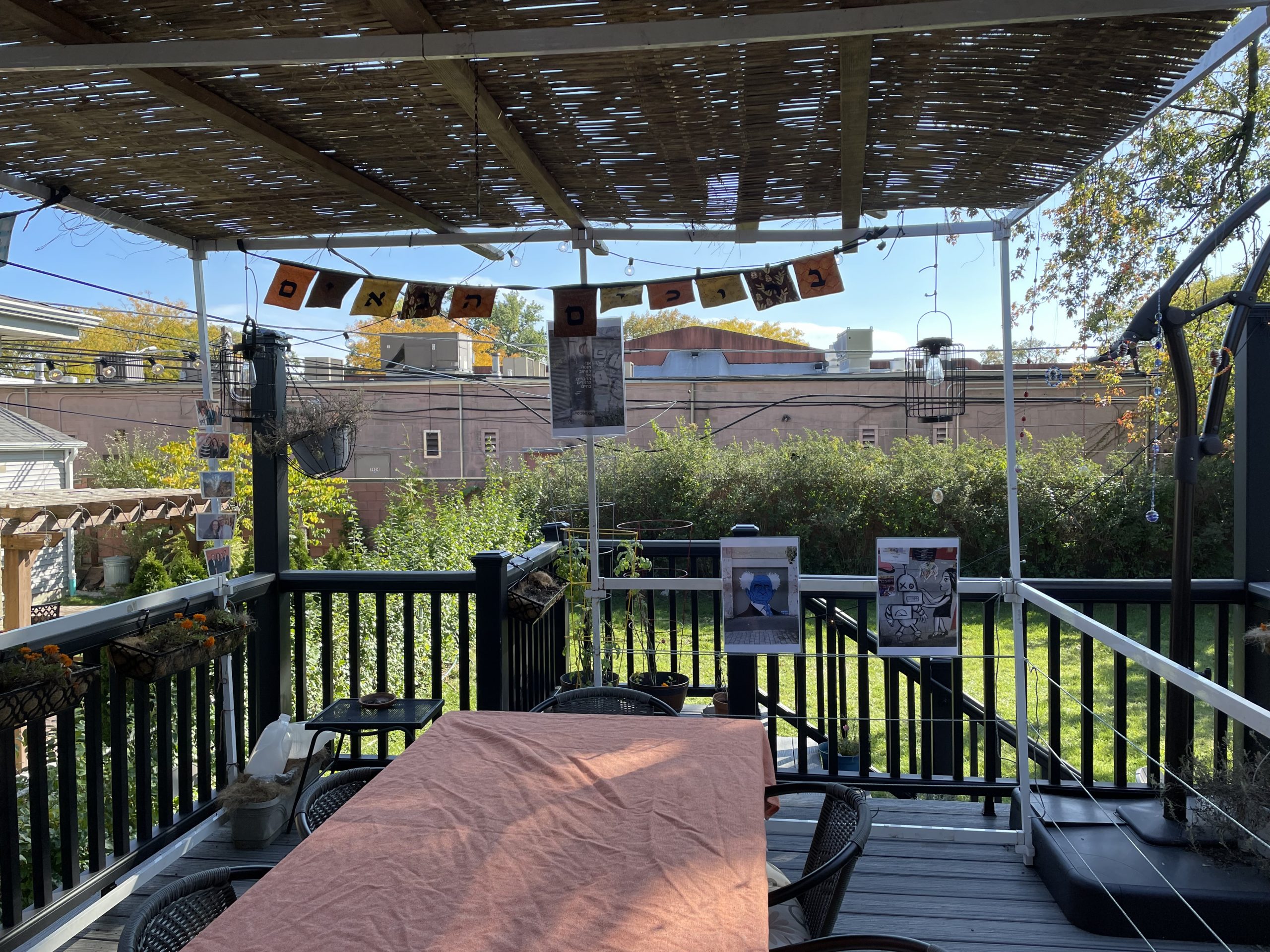
One of the many emotional moments of my year of mourning for my father came when I was building our sukkah. Sukkah-building is often a family affair, because it’s so hard to do alone and it’s something kids generally love to do. That was true for me growing up, and it has been true with my own children. While so many other Jewish rituals involve putting away and cleaning up, sukkah-building is creating something where nothing existed before. Unlike cooking, a sukkah doesn’t get consumed but lasts. It lives in space. And you can decorate it. What’s not to love?

But what also usually happens in our family is that the kids get tired after the initial phase. So after my children had helped put together the poles and put up the canvas tarp (the skhach—a bamboo mat in our case—would go on top much closer to the holiday), I was left alone to do some of the last touches. That year, I decided to secure the sukkah to a railing so that it wouldn’t blow around too much, as it had the year before. I took out some rope and began tying knots and hitches I had learned in the Boy Scouts.

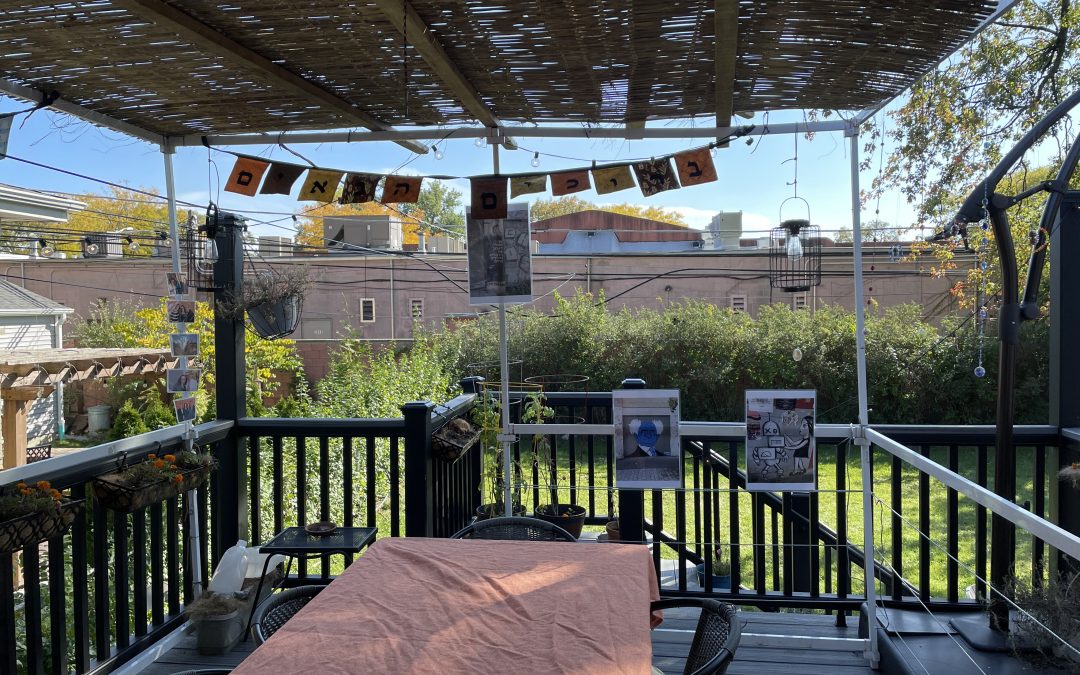
And that’s when I thought of my Dad, who had been our Scoutmaster growing up and who taught me not only how to do the actions I was performing with my hands, but the context in which I was doing them. As I wrote in a letter to him that I posted on Facebook, “I would have loved to call you to tell you about it, because I know you would have schepped a lot of nachas. I’m sure you’re enjoying a wonderful sukkah up there. We have a picture of you in ours, and we miss you.” (Picture of our family sukkah is above.)

There’s something in this story that gets at the heart of what Sukkot can be: a time of visceral, embodied, felt openness and flow—between the natural world and the world of civilization we construct that, in our minds at least, separates us from it; between people past and future who are with us here in the present, guiding our hands and visiting us as ushpizin; between our own hearts, minds, and bodies, which, in this uniquely physical, spatial ritual, flow through one another.

Yet for all that, the act of sukkah-building and sukkah-dwelling depends on letting go (something I explored last week). The sukkah is meant to be a temporary dwelling, and this particularly comes through in the requirements for the roof. As the Mishnah teaches, the skhach or roof of the sukkah must be made of formerly living material. If one had a grape vine and wove it on top of the sukkah in order to serve as skhach, the sukkah would not be a sukkah until the vine was cut. As long as it’s still attached to the earth, still holding on and still able to grow later, it can’t serve as skhach. The message would seem to be: We can’t hold on. We have to let go.

In that letting go, of course, we find possibilities for different forms of embrace—with neighbors, loved ones, ourselves, the world, the Holy One. By opening the walls and doors of our homes, by venturing outside, we bring down the baffles of our regular homes and can enter the embrace of a less secure yet more expansive sense of home.

Haazinu 5784: Let It Go

Haazinu 5784: Let It Go

Earlier this year, my youngest son, Toby, and I watched The Lord of the Rings trilogy together. He is a fantasy genre lover, and, true to form, fell in love with the story of Frodo Baggins’s long journey to Mount Doom, his struggle to carry the Ring of Power along the way, and his mission to throw the ring into the lava inside the mountain and destroy the ring once and for all.

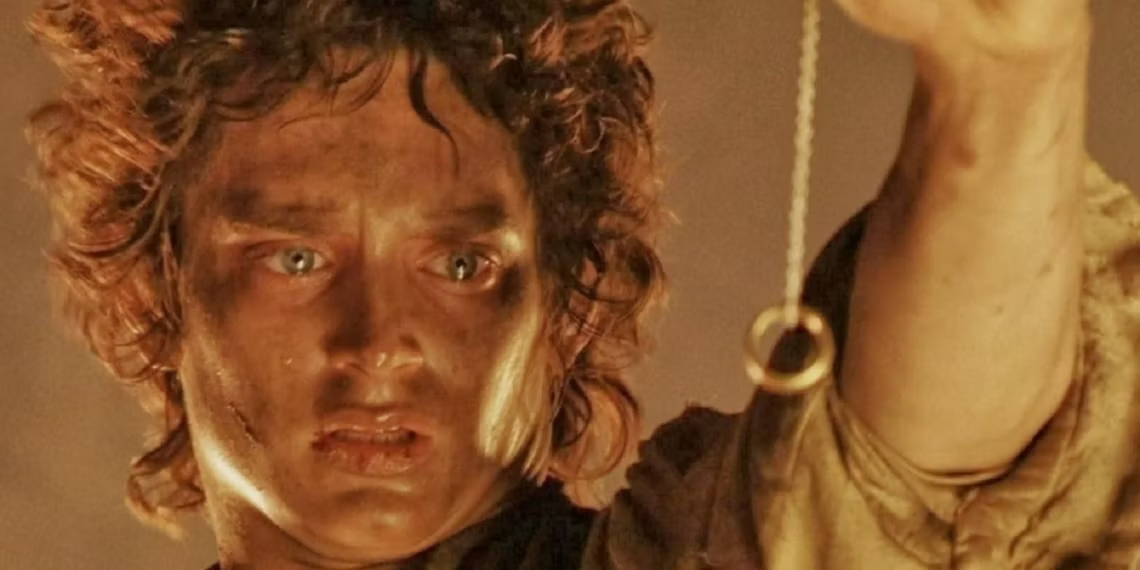
Of course, Frodo doesn’t do this alone. He has the help and support of a whole fellowship (the titular “Fellowship of the Ring” of the first of the three books/films). And in particular, he has the help of his closest friend, Sam, who is always looking out for him. In the climactic scene of the film, Frodo stands inside the volcano, holding the ring out over the lava. All he has to do is drop it. But the Ring of Power, as it has done throughout his journey, beckons him with a seductive call, and he can’t manage to do this one simple final act—the act that will stop a war and save the world. Sam calls out, “Just let it go!” But Frodo can’t.

In case you haven’t seen it, I won’t spoil what happens next. Suffice it to say the ring does ultimately wind up in the lava—but Frodo is left hanging from a rock above the molten lava, clinging on for dear life. He has no strength left. His mission is accomplished. He contemplates letting his life end. But Sam reaches out to him and, in the first words spoken since his last exhortation, he now says, “Don’t you let go!”

I had never noticed this parallelism before, the “Just let it go” and “Don’t you let go” of Sam in this scene. But it struck a deep chord in me on this viewing and I’ve been coming back to it frequently in the months since. Because it encapsulates so simply one of the fundamental discernments we constantly have to make: When do we hold on? And when do we let go?

On deep level, human development can be summarized as living these two questions: From the holding on/clinging that characterizes the relationship between a parent and an infant, to the letting go that happens at the moment of death, grief, and mourning. Like a heartbeat, the stages in between are full of grasping and relaxing, closing and opening our grip, in real and metaphorical ways: in relation to people, things, places, ideas, identities. What do we hold on to? What do we let go? The question pulsates, returning again and again.

One of my favorite prayers in the Yom Kippur liturgy comes in the evening service: Ki Hinei kaChomer, “Like Simple Clay.” The poem, from 12th century France, compares the Jews gathered to pray to raw material in the hands of various tradespeople: clay in the hands of the potter, uncut stone in the hands of the mason, silver in the hands of the smith, etc. The craftsperson chooses what to do: to shape gently, to stretch and mold, to smash, to melt, to crush. “So too are we in Your hand,” the poem says of the Holy One, with a plea to “look to Your Covenant,” remember our relationship, and not give in to baser inclinations.

Many folks, including, most likely, the author of the poem, understand the theology here as something roughly like, “We deserve to be destroyed, but please forgive us and let us live.” If that works for you, abi gezunt as we might say in Yiddish—great! I’ll confess that it doesn’t work so well for me and, if you’re reading this, I expect it might not work so well for you either. So let me offer another way to read it, influenced by the example of Sam and Frodo.

It is not only the Holy One who is the potter holding clay or the ship captain steering the rudder. We are also those people. In every moment, we hold in our hands the raw material of life: our breath, our awareness, our presence. When we “look to the Covenant” and remember the virtues of lovingkindness and compassion—the essence of the 13 Attributes of Mercy which form the core of Yom Kippur—we have the opportunity to adjust our grip: To loosen it where we are holding too tightly, to strengthen it where it has become slack. That invitation/demand is available in every moment, with every breath. It is even more available on Shabbat. And it is especially available on Yom Kippur, Shabbat Shabbaton—an ultimate Shabbat in which we set aside the cares of the world for a day and so that we may abide in our individual and collective presence, and the Divine Presence.

My blessing and prayer for you and all of us, then, is that Yom Kippur be a moment–or, really, a long series of moments–of letting go of what needs to be let go, and holding on to what needs holding. May we emerge from this day rebalanced and renewed in our embrace of life, the world, one another, and the Divine Presence.


Rosh Hashanah 5784: Homeward Bound

Rosh Hashanah 5784: Homeward Bound

Dear friends,

My Elul practices for the last decade or so have included listening to an album recorded by the poet David Whyte called Solace: The Art of Asking the Beautiful Question (also available here on iTunes). I generally listen to 10 or 15 minutes at a time as I walk the dog in the morning after I drop off my youngest son at the bus. Listening to Whyte’s beautiful and penetrating language, recited in his unique English-Irish brogue, has become one of my favorite parts of Elul.

Over the years I’ve become familiar with the album and the poems and stories Whyte recites and tells. Yet, like a good work of Torah that one revisits year after year, I find that on each listening a different part emerges to speak to me. Without fail, each year there’s a point at which I have to stop because I’m struck by a passage and by the need to note the time on the recording so I can come back to it.

This year, that happened when I listened to this little bit:

One of the great tenets of a beautiful question is that it brings you to ground in your life as it is now. And in some ways, along with the amnesia of what we’ve forgotten, we step into a sense of having forgotten something which needs to be remembered and which is foundational to our future. And one of the remarkable things, I think, about being human, one of the incredible things about being human is, you only have to articulate exactly the measure of your exile, exactly the way you feel far from yourself, exactly the way you feel as if you don’t belong—and as soon as you’ve said it, exactly as it feels, you’re on your way home. You’ve started the journey back, just by describing the way you feel imprisoned, or the way you feel far from yourself, or far from life.

The closing Torah portions of Deuteronomy—which is to say, the closing Torah portions of the Torah—are suffused with the language of exile and homecoming. Here is one characteristic passage from last week’s Torah portion:

When all these things befall you—the blessing and the curse that I have set before you—and you take them to heart amidst the various nations to which YHVH your God has banished you, and you return to YHVH your God, and you and your children heed God’s command with all your heart and soul, just as I enjoin upon you this day, then YHVH your God will return with you and take you back in love. [God] will bring you together again from all the peoples where YHVH your God has scattered you. Even if your outcasts are at the ends of the world, from there YHVH your God will gather you, from there [God] will fetch you. And YHVH your God will bring you to the land that your ancestors possessed, and you shall possess it; and [God] will make you more prosperous and more numerous than your ancestors. Then YHVH your God will open up your heart and the hearts of your offspring—to love YHVH your God with all your heart and soul, in order that you may live. (Deut. 30:1-6)

One of the remarkable things about this passage is the way it fuses teshuva, spiritual returning and renewal, with the end of bodily and political exile. In this passage, to be far from the Divine is to be far from not only our spiritual sense of at-homeness, but also from the more literal sense of at-homeness in the land where our ancestors lived. Yet the vast majority of Jewish history has been lived in a state of political and geographic exile. Thus Rashi, quoting the Rabbis of the Talmud, parses verse 3: “Our Rabbis learned from this that, if one can say so of the Holy One, the Divine presence dwells with Israel in all the misery of their exile, so that when they are redeemed, the Ineffable makes Scripture write ‘Redemption’ of Godself that the Divine will return with them.”

There is a paradox here: The Divine is with us in exile and estrangement, even as our returning to home—in all its senses, physical and spiritual—is also a returning to the Holy One. All, it seems, we have to do is make an internal move—in David Whyte’s language, articulate exactly the measure of our exile—and we’re on our way home. Yet that “all we have to do” is, of course, no simple thing. Again, Rashi: “The day of the gathering of the exiles is so important and is attended with such difficulty that it is as though the Holy One must actually seize hold of each individual’s hands dragging them from their place.”

There is a reason we read these Torah portions in the weeks before Rosh Hashanah. Confronting the reality of our various exiles—whether they take the form of estrangement from our own bodies, our identities, our families, communities, societies, geographies—is the work of this season. Wherever we are this New Year, in any of these dimensions, the sound of the shofar beckons us to wake up and see, courageously and clearly, who we are and where we stand right now, in the totality of our wholeness and our brokenness. It invites us to gaze, with genuine honesty, within ourselves and discover that access to the Creator is not in heaven or across the sea, but on our lips and in our hearts. And in that recognition, we might experience that we are already on the way home.

Shanah tovah, Blessings for a sweet and joyous New Year,
Rabbi Josh Feigelson, PhD
President & CEO

Return to the Land of Your Soul: Nitzavim-Vayelekh 5783

I recently went on a wonderful five-day silent meditation retreat in the Pacific Northwest. On the final morning, I found myself with about 45 minutes of unscheduled time. It was after breakfast and before our final session, and the light drizzle that had sprinkled the landscape had given way to a patchy sunshine. As I discerned where my feet would take me, I found myself walking—mindfully, with awareness—toward the forest. There was a short trail there I had hiked each day after lunch. And there was a particular spot I knew I wanted to go to—a spot where I really just wanted to say thank you and goodbye.

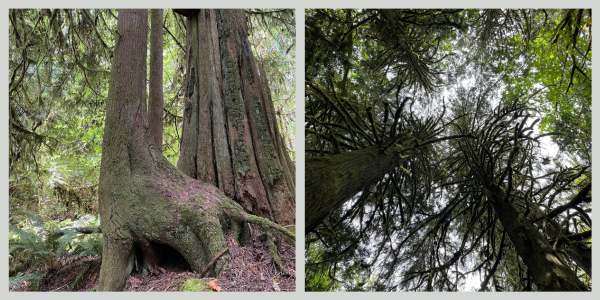
My destination was a part of the trail dominated by a cluster of five great Western Cedars. These are enormous, ancient conifers that shoot up 150 feet or more in the sky. Their trunks are massive. They tell you, with a great quiet majesty, that they’ve been around a lot longer than you have. And in a number of cases, they have formed in such a way that parts of their enormous roots are visible above the land, almost as though they’ve grown a neck. (One of them, pictured above, reminded me of a giant giraffe.) These trees grow on the edge of a babbling brook, standing watch over the maples and birches, the ferns and the mosses, that grow beneath them.

What led me to this spot? I’m not entirely sure. But at the end of five days of silence, filled with sitting and walking meditation and silent meals in this vibrant ecosystem, I could discern something tugging at me to go here and connect with its vitality, its quiet, its timelessness. I stood there for a while in silent meditation, and then found myself slowly and lovingly singing Shlomo Carlebach’s song for this season of Elul:

Return again
Return again
Return to the land of your soul

Return to who you are
Return to what you are
Return to where you are born and reborn again

I said goodbye to the trees and headed back towards the meditation hall. And then something amazing happened: I encountered three banana slugs on the trail. I had been told that these creatures were a special feature of this landscape, but only now, with barely an hour left in the retreat, did I find them—a blessing brought about by the rains that had softened up the ground overnight.

If you’ve never seen a banana slug, you should look one up on google. They’re not big (in this case, they were more the size of a small pickle than a banana). They’re gooey and slimy. But most notably, they move verrrry slooowwwly. I mean, really, really slow. And here, after five days and a resultant slowness and fluidity in my own breath and being, I found myself enraptured at these tiny little creatures who embody taking your time. Our instructor on the retreat saw me squatting down to behold them and aptly said, “I think you’ve found your teacher.” I stayed there for about fifteen minutes just marveling at them and keeping them off the path (so as not to get squashed by people).

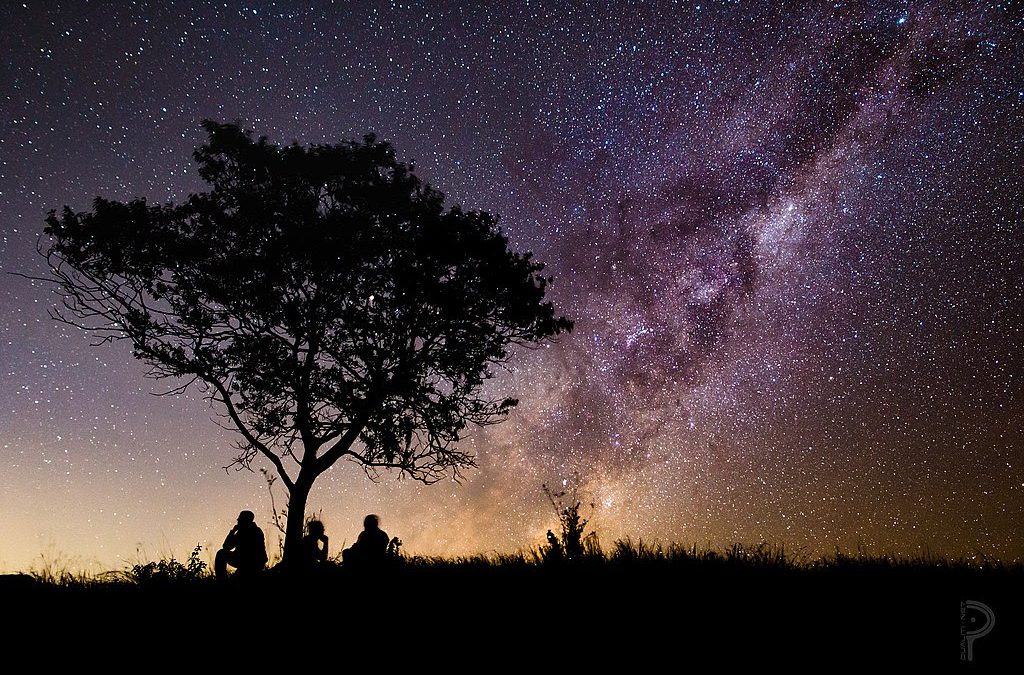
I think of the trees and the slugs as I contemplate the opening words of Parashat Nitzavim: “You stand this day, all of you, before YHVH your God”—from the chiefs to the water-drawers. No matter our station, whether the mightiest of the trees or the lowliest of the slugs, we stand in the midst of YHVH—the breath of life, the source of being, the animating force of the universe. We are all interconnected, made of the same stardust, here for a brief flicker in the span of cosmic time. And we, humans, are blessed with the gift of awareness, the capacity to be conscious of that interconnection—and thus the ability and responsibility “to work it and steward it,” in the words of Genesis.

Rosh Hashanah is nearly upon us, the day on which we commemorate the sixth day of Creation, when we humans were formed and placed amidst all these other creatures. In this week before that moment of renewal, I’d like to encourage you to deepen your own practice. In the midst of the cooking and cleaning and all the other preparations, make time for spiritual preparation too. Most importantly: Slow. Down. Spend some time meditating this week. Spend some moments in the natural world. Take the time to reconnect with the world, with yourself, with your breath, with the source of life. In doing so, we have the opportunity to return again to who and what we are, to where we are born and reborn again.