Getting Tefillined: Bo 5784

Getting Tefillined: Bo 5784

For the last decade or so, my family’s winter vacation has been a time to get together with my wife’s sister and her husband. She’s a diplomat, so they’re often stationed in interesting places (and have free housing to offer us). And when they’re not in a foreign country, we have a chance to go to other interesting places together: skiing, warm weather places, places where we can rent a house and just hang out for a week.

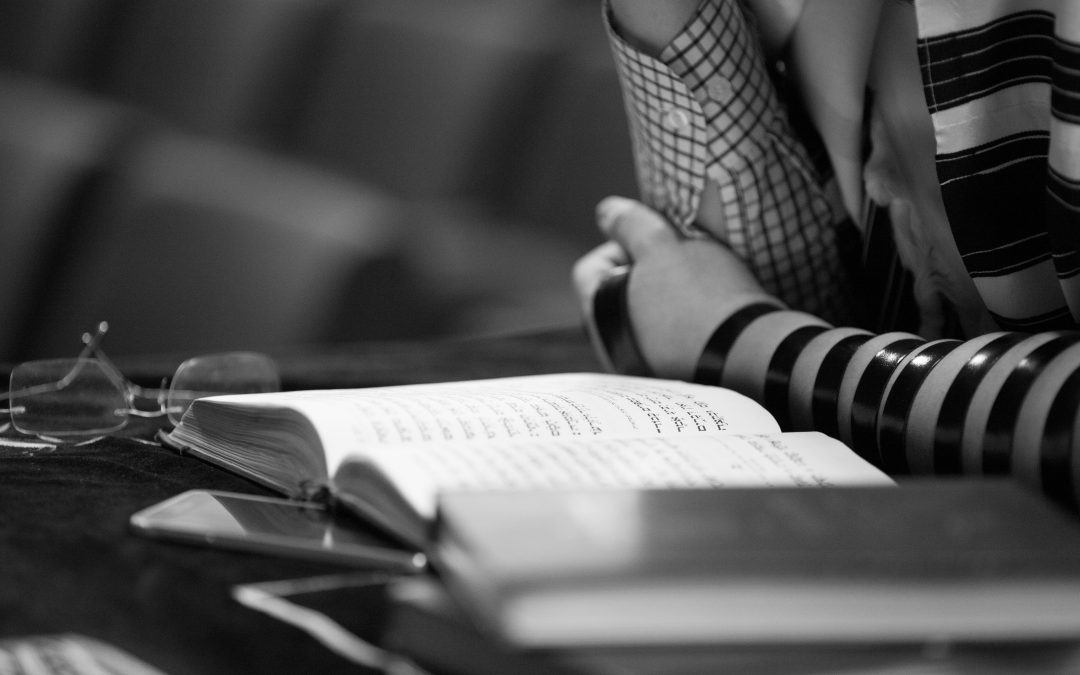
While we were on vacation this year in Toronto (their hometown–we made it a bit of a family reunion), my brother-in-law had occasion to be walking through a public spot when he was “tefillinned”–that is, he was approached by Chabad Hasidim who asked, “Excuse me, are you Jewish?” and when he said, “Yes,” proceeded to ask if he had put on tefillin today and, if not, would he like to do so.

This has happened to me many times before, and I imagine it may have happened to you or someone you know. (In the halakha or Jewish practice that Chabad follows, tefillin is a mitzvah to be observed only by men, so that likely affects your experience in this case.) There are whole subcultures built around stories of wrapping tefillin with Chabad shluchim (emissaries), both earnest–stories of the power of putting on tefillin for the first time, for instance–and humorous (e.g. funny rejoinders).

My brother-in-law asked a question I’ve heard many others ask too: Why tefillin in particular? There are plenty of other practices the Lubavitcher Rebbe could have chosen to further the outreach and engagement campaign he thought was so important. Why this one?

Many of the answers have to do with protection: Tefillin have traditionally been thought to serve as a kind of amulet (the infelicitous English translation, phylacteries, comes from the Greek “phulassein,” to guard–hence, for instance, prophylactic). The Rebbe launched the “Tefillin campaign” shortly before the Six Day War in 1967, a moment when many Jews sought safety in the face of impending catastrophe. Tefillin provided a valuable spiritual response.

But I think there’s a deeper significance reflected in the first mention of tefillin, which comes in Parashat Bo. It appears at the very end of the Torah portion–which has focused exclusively on the story of the Exodus and the rituals the Israelites will engage in to remember it. Tefillin are part of that commemoration, too: “And this shall serve you as a sign on your hand and as a reminder on your forehead—in order that YHVH’s teaching may be in your mouth—that with a mighty hand YHVH freed you from Egypt” (Ex. 13:9).

There’s a powerful, basic teaching present here, one that the Hasidic tradition emphasizes and that more modern liberatory approaches do as well: The Exodus from Egypt is not only an historical event, but an ongoing reality in our lives. Every moment we are confronted with constriction–in thought, in spirit, in breath. And every moment we have the potential to leave that constriction through mindful awareness and attention. That practice is a whole-body practice: It includes the sense organs of the head, the brain, the heart (where the tefillin box of the arm is meant to rest), and out into our hands and outer limbs. In every moment, with our entire bodies, we can be leaving Egypt. The tefillin, which extend from the crown of the head to the tips of the fingers, symbolize that and even make it something we can feel and touch.

Finally, I think a reason the Rebbe wisely focused on tefillin is that, despite its ubiquity in Orthodox circles, it can feel like a strange and out of reach practice for many Jews. Yet as Chabad has made clear–and as liberal movements have likewise shown through their embrace and expansion of tefillin-wearing beyond only men–tefillin can be a powerful aid in one of the most fundamental aspects of Judaism as a mindfulness practice: that, on the most intimate, personal levels, liberation is always possible, the Divine is always available. If we can practice that, with or without our tefillin on, then we are truly leaving Egypt.

Vaera 5784: Pressing Pause

Vaera 5784: Pressing Pause

When I first started at IJS just about four years ago, one of the good pieces of advice I received was to hire an executive coach. Robin Bernstein, who had served as our interim executive director before I started, stood out to me as a perfect person to support me in that way, and thankfully she agreed to do so.

During our weekly sessions, I would share my latest ideas on this or that opportunity, and we would talk through the ins and outs of making them happen. It became a long list, and our time together was regularly marked by the challenges I faced of leading an organization through adaptation and change–on top of the challenges of pivoting and responding to the pandemic. Robin’s guidance was extraordinarily valuable during that tumultuous time.

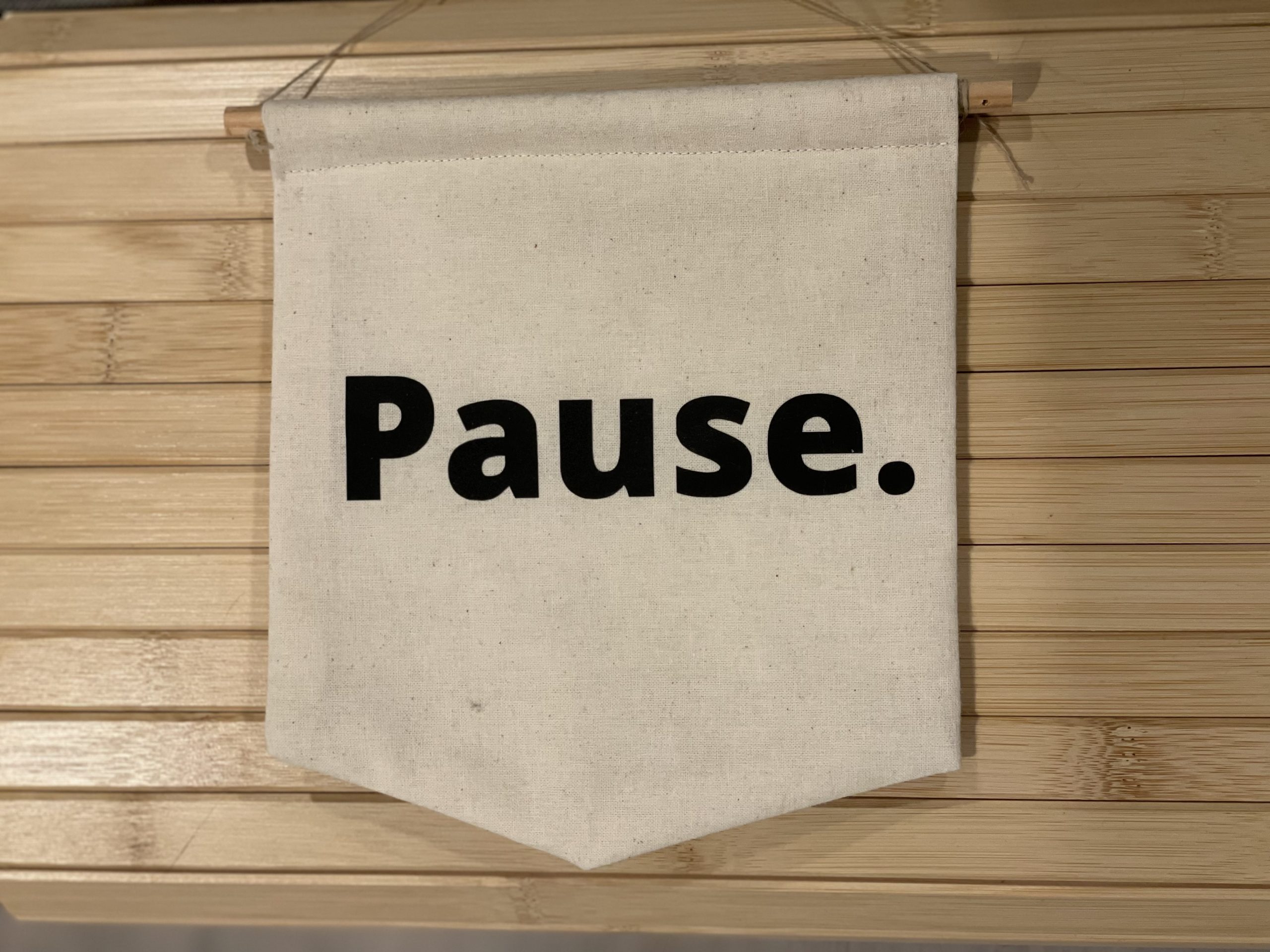
At one point, Robin gently called my attention to my… hmm… kind of peripatetic nature, and my occasional predilection to take action before necessarily fully considering an idea. (I’ll cut myself a little slack: It was the beginning of the pandemic and I was brand new. But still, she was right.) She suggested that I might benefit from having a focus phrase in front of me to encourage me to take a beat. I went on Etsy and found a banner with the word “Pause” on it. If you’ve ever been on a zoom call with me or seen me host our Daily Sit, you’ve seen it. It’s right there, reminding me all the time to breathe, center, and take the time to choose a wise and mindful response.

In the synagogue I attend, we read the entire Torah portion every week. And one of the things that strikes me every year encountering parashat Vaera is where the pauses the reading are placed. Normally, the breaks in aliyot (Torah reading units) come at natural spots: paragraph markings or other obvious transitions. Yet in Vaera, several of the aliyot end in what feel like unnatural places. The fourth aliyah ends at Exodus 8:6, in the middle of the second plague (frogs)–and even in the middle of a sentence that Moses is speaking to Pharaoh. Likewise, the fifth aliyah creates an unnatural pause mid-plague (swarming insects) and in the middle of a sentence God is speaking when it ends at 8:18. Same with the sixth aliyah, which ends awkwardly at 9:16. Given that this isn’t the way the tradition normally does things, I’ve long wondered why our custom developed in this way.

The answer I’ve come up with is that each of these unnatural endings share something in common. Here are the three verses in question:

Ex. 8:6 (conclusion): “that you may know that there is none like YHVH our God.”

Ex. 8:18: “But on that day I will set apart the region of Goshen, where My people dwell, so that no swarms of insects shall be there, that you may know that I YHVH am in the midst of the land.”

Ex. 9:16: “Nevertheless I have spared you for this purpose: in order to show you My power, and in order that My fame may resound throughout the world.”

Rather than end in a place we might expect–say, the end of the plague–the placement of each of these verses at the end of the reading creates an unnatural pause that serves to highlights knowledge and awareness of the Holy One as the ultimate aim of the plagues and the exodus of the Israelites from Egypt. It’s as though the Torah wants to remind us that this isn’t only a story about physical or political liberation; it’s ultimately a much deeper story than even that. It’s a story about genuine freedom from oppression and suffering, which comes about when we, and all beings, can live with the awareness that, to slightly paraphrase the prophet Isaiah, the world is filled with Divine presence. If and when we can truly live with that consciousness, then no form of Mitzrayim–physical, political, or spiritual constriction–will be able to oppress anyone anymore.

To me, this is simply an elaboration on the truth that Judaism is, fundamentally, a mindfulness practice. These pauses in the Torah reading are of a piece with the pause we take weekly on Shabbat, and the pauses we take daily, hourly, and moment-by-moment, to re-ground ourselves in the reality of the Divine presence that permeates creation. Those pauses help us to respond wisely rather than reactively, to live intentionally rather than mindlessly. It takes work and commitment (and a nice sign from Etsy doesn’t hurt, either). But that’s precisely why we are here, for ourselves and one another.

Crying It Out (Vayigash 5784)

Crying It Out (Vayigash 5784)

I finally watched “Barbie” this week. I was on the plane, heading home after an intensive four days of work, too exhausted to do much of anything else. So, the movies. 

If you haven’t seen “Barbie” yet, here’s my encouragement to do so. And if you have seen it, here’s my encouragement to see it again. It’s a smart, funny, and incisive two hours of social commentary on gender: the expectations of other people and society, performing for those expectations even within close relationships, and ultimately the challenge we each face to find our own voice and agency. 
 
Many of the most significant moments of the film involve tears. As Barbie transforms from doll to human, she discovers what it’s like to cry (“Achy, but good”). When she reaches her lowest point, Barbie is crying without makeup–an unvarnished, regular human being, exposed and raw. Likewise, Ken’s catharsis near the end of the film includes his shedding tears as he comes to terms with his life. None of this is surprising, of course–it’s the movies–but still, I found it illuminating to see these characters learn to do something that so many of us do naturally as children and then, as we grow older, learn to suppress. 
 
Parashat Vayigash, the emotional climax of the Joseph story, is filled with crying. Joseph sobs when he reveals himself to his brothers (Gen. 45:2). He cries on Benjamin’s neck (v. 14), and then he weeps when embracing each of his brothers (v. 15). Finally, when he sees his father, “he wept on his neck even more” (46:29). All of which is to say that Joseph is a crier. It’s as though he’s been holding this in for a long time. Now it all comes gushing out, part of the repair of his relationships, of witnessing the remorse and repentance of his brothers, and of being able to, finally, reveal to himself and to the rest of the world who he really is.

 
The days and weeks and months since October 7 have been filled with tears for so many people. Every day I hear from my own family in Israel about the tears they’re shedding. “Gotta go,” a relative wrote the other day, “have to squeeze in some work before the next funeral” for a soldier from their city. Tears are flowing from Israelis and Palestinians who have lost parents and children, grandparents and siblings; who have lost homes and ways of life; who have lost hope that life could be different than the suffering it is right now. There are also tears of relief and joy: When captives are freed; when soldiers come home; when loved ones are reunited; when we witness stories of support and solidarity.
 
Speaking for myself, I feel like I’ve stopped shedding as many tears as I did in the early days of the war, when I was kind of a puddle. I’ve felt myself, like Jacob, become a bit numbed as the suffering has continued for so many weeks. That’s natural, part of the body’s response that allows me to endure and not be completely overcome by these strong emotions. But I also feel it risks allowing the cool, rational brain to completely take over, to forget or suppress or lose touch with the emotional reality. 
 
The task I feel called to is maintaining awareness of all of it, and using my Jewish mindfulness practices to do so. As Lawyer Barbie says, “I have no difficulty holding both logic and emotion at the same time, and it does not diminish my powers. It expands them.” That’s an apt description of the lesson Joseph and his brothers learn (though, at least in my experience, it’s actually pretty difficult). May we learn and relearn and live into it today.
Beginnings and Endings (Mikketz 5784)

Beginnings and Endings (Mikketz 5784)

The other night our middle son, Micah, had a basketball game. We always try to light Hannukah candles together as a family, so we waited for him to come home. We wound up lighting the hanukkiah after 9 pm. (They won the game, btw–and he even had a three-pointer.) Natalie and I take fire safety seriously, so we wanted to make sure the flames were out before going to bed. So I decided to sit by the candles as they burned down.

As I sat there gazing at the flames, I realized that so many of the Hannukah teachings and practices I’m familiar with focus on lighting the candles, kindling the flames: observing the light, the idea of creating light in the darkness. Even the way we tell the story about the miracle of the oil has to do with its lighting (“It’s a miracle they found any oil!”) and the duration of the burning (lasting for eight days).

But that evening my attention was more drawn to the dying of the flames, the way they burn brightly and then, as they get lower and lower, diminish into a hushed presence. You don’t know exactly when they’re going to go out, but you can sense it’s coming–in a similar way to an animal or a person who is clearly in the process of dying. And then, suddenly, the flame is gone, a wisp of smoke rises up, and with it the smell of a candle snuffed out wafts into the air and lingers for a while.

We tend to like beginnings. They convey hope and a future. Perhaps for this reason we follow the custom of Hillel, to work our way up from one lonely candle on the first night to the majestic display of eight candles on the last. Our tradition opted for this position rather than that of Hillel’s great rival, Shammai, who argued that we should start with eight candles and work our way down to one.

In a poem she published the other day, Rabbi Jen Gubitz explores an alternative history of Hannukah:

What if Shammai was right?
What if
Each night
We go to light
And there is more darkness in our hearts
Than the night before?

What if we are not like Hillel
Cannot see the light increase
Cannot strike the match
Or have run out of wax and wick?

What if the wickedness
Of the world
Or the pain in our soul
Casts dark shadows
On the glimmering lights?

What if the miracle
Is the single flickering flame
On the last night
While the world
Tries to snuff you out?

I found Jen’s poem to be a poignantly honest expression of the Hannukah many of us have had this year–one that feels filled with more loss and heartbreak and darkness than we’ve felt in a long time, perhaps ever. What if, indeed, Shammai was right?

But I also want to end on a hopeful note, and for that I look to the Torah portion. Specifically, I look to a wordplay that happens in the Hebrew. In verse 53 of chapter 41 of Genesis, the Torah writes, “the seven years of plenty came to an end.” The opening word of this verse is וַתִּכְלֶ֕ינָה, vatikhlena, “they came to an end.” It comes from the same word that marks the completion of the six days of creation at the very beginning of Genesis, vayekhulu.

Now comes the wordplay: The next verse reads, “and the seven years of famine began.” The first word is וַתְּחִלֶּ֜ינָה, vatchilena, “they began.” The two words sound almost identical–but they mean precisely the opposite of one another. One is an ending, the other a beginning.

While the meaning of the text could have been conveyed in many different formulations, the Torah, through this exquisite little move, seems to go out of its way to gesture toward something else–a poetic expression, perhaps, of the reality that every ending is, indeed, a beginning; or, put differently, what we believe to be endings and beginnings are illusions. This is, in so many words, exactly what Joseph tells his brothers in next week’s Torah portion: “God sent me on ahead of you to make you a remnant on earth” (45:7). What they thought was an ending was, in fact, a beginning.

We are constantly living through endings and beginnings. Some are hopeful, some are painful, many evoke a jumble of feelings. As the final candles in our hannukiot burn down and those wisps of smoke ascend heavenward, may our practices help us live through every moment of transition (which, in reality, is every moment) with ease, wisdom, and peace.

Beaming Light (Vayeshev-Hanukkah 5784)

Beaming Light (Vayeshev-Hanukkah 5784)

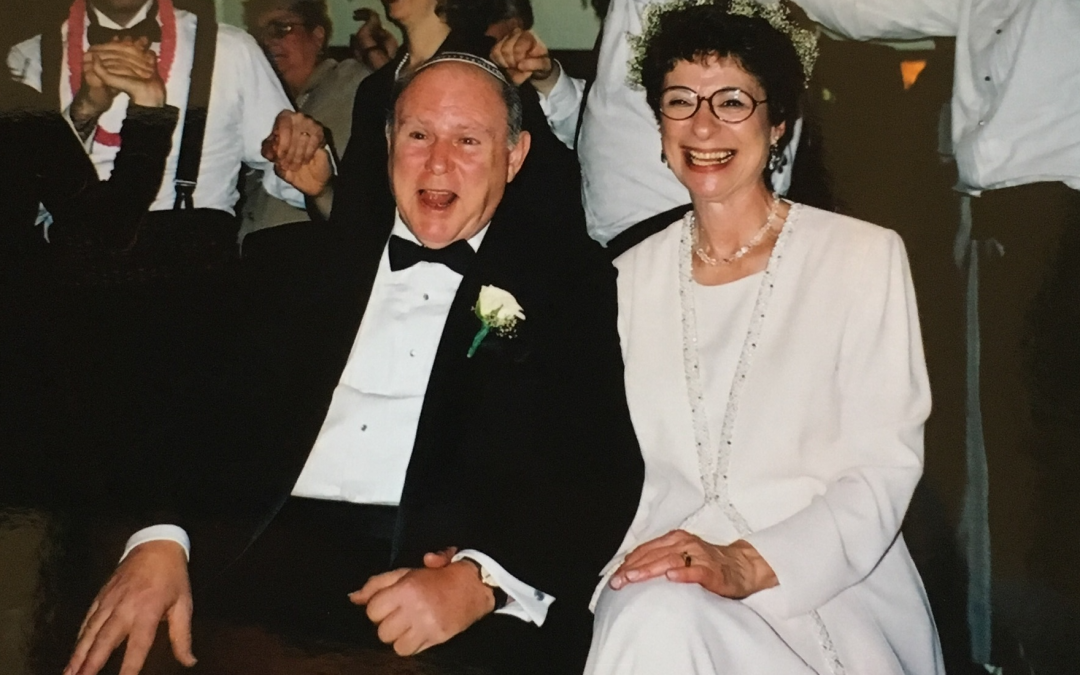
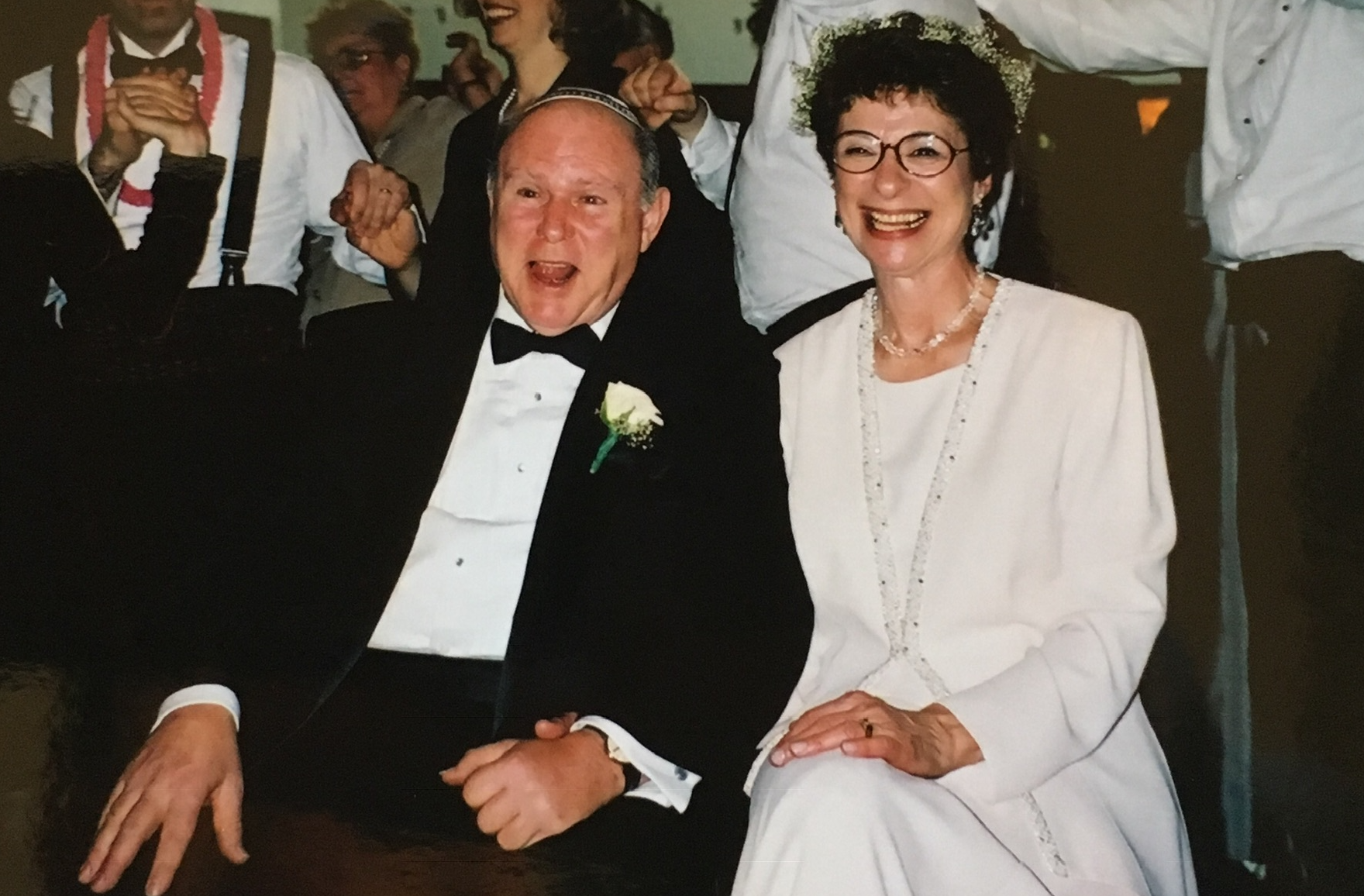
This coming Saturday night marks the fifth yahrtzeit, or death anniversary, of my father, Lou Feigelson z”l (pictured above with my mother during the dancing at our wedding; it’s a favorite picture.)

While professionally my Dad made his living in real estate and property management in our hometown of Ann Arbor, at his core he was a teacher. Like so many children of Jewish immigrants from eastern Europe in the mid-twentieth century, he was a product of public schools who commuted to the local public university (Wayne State). He was a Boy Scout and went to summer camp, which expanded his world beyond the Detroit of his youth (it was at a Fresh Air camp, Camp Tamarack, that he met my mom). And I think those two forces, school and camp, always remained, in his mind and heart, places and ideas and forces towards which he felt enormous gratitude, responsibility, and joy.

As I’ve mentioned before in this space, my Dad was our Boy Scout troop’s scoutmaster. One of the things I remember learning from him at an early age was how to run a patrol or troop meeting: having an activity for the scouts when they showed up that set the theme for the learning to take place, transitioning into an opening ritual, running a more identifiable period of teaching-and-learning, creating an opportunity for them to apply their newly-acquired knowledge in a fun and engaging way, review, recognition, closing. I probably learned that from him at age 11 or 12. It was only years later, in my own work as an educator (my brothers are attorneys; one of us had to go into the family business) that I came to realize that Dad had taught me what teachers would recognize as a “set induction.” He was teaching me to teach.

There is a poignancy, of course, to marking my father’s yahrtzeit on the third day of Hanukkah. The holiday is now, and for the rest of my life will be, bound up with remembering him. Which is frankly lovely, as Hanukkah was a holiday my father took seriously. Every morning he would clean out the previous night’s wax and get the candles ready for that evening so that they would be ready for us, as though they were reminding us all day, “It’s Hanukkah!” as we passed by them. Lighting the candles was a serious mitzvah for him.

And every year Hanukkah, and now my father’s yahrtzeit, comes as we read the stories of Joseph, a child separated from his father. While, thankfully, the circumstances were dramatically different (and my older brothers are good guys), like many other young people, I left home at age 18, about the same age as Joseph was sold into captivity in Egypt. And like many others, including Joseph, the years of my young adulthood were marked by looking for mentors and surrogate parental figures. (For Joseph, Potiphar and ultimately Pharaoh are two such people; mine weren’t quite so dramatic, but they were very important people in my life.)

The writer Sharon Daloz Parks, who was an important mentor to me as a young professional, wrote an illuminating book on the period of young adult life called Big Questions, Worthy Dreams. The book explores what Parks sees as the key task of young adulthood, namely to “become fittingly at home in the universe, moving from authority-bound forms of meaning-making anchored in conventional assumed community, through the wilderness of counterdependence and unqualified relativism, to a committed, inner-dependent mode of composing meaning.” This then points towards “a still more mature faith–an engaged wisdom grounded in the conviction of interdependence, seeking communion with those who are profoundly other than the self.”

I think that’s one way we can understand the story of Joseph, who, through a long period of suffering and searching and journeying, moves from a sheltered, privileged, even arrogant posture of his youth into a more mature, adult posture as an adult. He acquires a hard-won wisdom. Like his father and uncle, about whom I wrote last week, Joseph, like his brothers, grows up. And in that process of maturation, he and his brothers become shaped into characters who ultimately seem to understand their interdependence, the inextricability of their lives together, their mutual responsibility toward one another, as best evidenced, perhaps, in Judah’s poignant line describing the relationship between Benjamin and Jacob: “Their souls are bound up together” (Gen. 44:30). In this, they echo a lesson of Hanukkah, which invites us to recognize our mutuality and interdependence, to learn to kindle fire responsibly, to reflect and nurture the lights in our lives and the world.

In the last five years, as Hanukkah has become bound up with remembering the death and life of my father–as the yahrtzeit candle flickers and glows amidst the Hanukkah lights on the third night–the holiday has become richer and deeper for me. It’s easy for Hanukkah to be a children’s holiday, and thank God for that. But like all our holidays, its practices are ones that can help us grow bigger and wiser. This Hanukkah, when so many of us so deeply need it, may we kindle our lights within and without, may we deepen in both joy and wisdom, and may our practice lead to the light of redemption and peace.

It’s Darkest Before the Dawn: Vayishlach 5784

It’s Darkest Before the Dawn: Vayishlach 5784

Like so many others, I’ve been struggling for words since October 7. “Ein milim,” “There are no words,” is the phrase many Israelis have used to greet one another. For me, it feels like this time has tested the limits of my ability to formulate words, that language is insufficient to reflect and express all the thoughts and emotions I’ve been having.

Regular readers will have noticed that I’ve been preoccupied with questions of speech and silence in the last eight weeks, for this very reason. Judaism is, if nothing else, a tribute to the magnificent possibilities of language. It’s probably why silence feels so immediately countercultural to so many Jews–even though Judaism has a rich tradition of teachings and practices of silence, many of which we teach here at IJS.

But we’re living in a moment when, especially thanks to social media, we may judge ourselves–and we are certainly judged by others–about both our speech and our silence, the words we say or write and the ones we don’t. In the last two months, I have received my share of critical feedback for personal or organizational statements that, in the eyes of the reader, failed to say what needed to be said–on behalf of Jewish Israelis, Arab Israelis, Palestinian Arabs, Jews confronting antisemitism, Muslims confronting Islamophobia, the kidnapped, the soldiers, the innocent civilians. Feedback has come from everyone from strangers to former students to close relatives. As a result, I have felt acutely aware of and careful with the words I’ve said and written—and with those I’ve left unexpressed. I have felt a kind of sensitivity, an intense critical gaze, peering over me and judging me both for the letters on the page and the spaces in between them.

To be sure, I’ve gotten much more positive feedback than negative. And I appreciate every piece of feedback, whether affirming or critical, as it’s a gift that enables me to learn and grow. But if, as the great leadership theorist Ron Heifetz teaches, leadership is the art of letting people down at a rate they can absorb, then–and I’ll say this on behalf of my fellow Jewish communal leaders–our speech acts today feel like an acute lesson in its limits. Language doesn’t seem capable of communicating all that we want and need to express. It often feels like I’m groping around in the dark, looking for words and expressions I can’t quite find, waiting for the sun to shine and illuminate them for me.

Parashat Vayishlach brings us to the climax of the story of Jacob, so much of which takes place at night. As Avivah Zornberg has noted, Jacob is a creature of the dark, the night: He steals Esau’s blessing from his blind father, Isaac, who lives in a kind of perpetual nighttime; his dream of the ladder connecting heaven and earth takes place at night; his own deception at the hands of Laban, resulting in his marriage to not only Rachel but her sister Leah too, happens at night; it’s at night that he paints Laban’s flocks, and it’s in the darkness that he flees Laban with his family. Now, as he prepares to encounter Esau, he is again awake in the middle of the night, making preparations.

It is notable, therefore, that Jacob’s famous wrestling match with the mysterious man/angel takes place as the sun is about to rise: “And he wrestled with him until the break of dawn” (Gen. 32:25), and “He said, ‘Let me go, for dawn is breaking,’” (v. 27). After the angel leaves, the Torah notes that “the sun rose upon him” (v. 32). Rashi picks up on a perhaps unusual detail in the Hebrew in this last verse: viyzrach lo hashemesh, literally “the sun shone for him.” Rashi seems puzzled about the word lo, for him. His first interpretation is that this is idiomatic, the way we might say that “the sun was shining on me” to mean that something good happened for us: “When we reached such-and-such a place, the sun shone on us.” In this case, it comes to say, perhaps, that the sun shone upon him and he was healed of the injury he sustained in his fight. Or, Rashi offers, that just as the sun had set when Jacob left home (Gen. 18:11), it now rose to greet him as he returned.

But perhaps the Torah is gesturing at the idea that, after a lifetime of living in the murkiness of the night, Jacob finally experienced the light that comes “seeing the Divine face to face” (v. 31), of arriving at not only a physical but a spiritual home. Perhaps Jacob is finally at home with himself—and thus prepared to encounter his twin brother not from a place of fear or lack, but from a grounded sense of abundance: “To see your face is like seeing the face of God,” he tells Esau. “I have everything” (33:10-11)—I am content, I am not afraid, I can embrace you wholeheartedly.

Despite the Rabbis’ midrashic and Talmudic interpretations, I think the plain meaning of the story is that Jacob and Esau both mature into a posture of generosity. They are willing to give one another the benefit of the doubt, to be charitable in both their speaking and their listening. We don’t know what might have led Esau to that, but we can see that, for Jacob, it comes about after the profound inner work that allows the shadows of the night to emerge into the warmth and clarity of sunshine. That’s something I’m working on for myself as a I read and listen to the words of others, and I hope it’s something you’re working on, too. As we make our way through our own long nights, we need all the help we can get. May we support one another on the journey toward the dawn.