May 21, 2020 | Blog
The Institute for Jewish Spirituality announced today that Michal Fox Smart will become the organization’s first Chief Program Officer effective July 1. She will serve as the leader of the program team, overseeing the Institute’s faculty and program staff and coordinating the work of its rich roster of instructors, and will be responsible for developing and delivering all of IJS’s programmatic offerings.
Smart joins IJS after an already distinguished career in Jewish education. She has previously served as Executive Director of the Isabella Freedman retreat center, co- founded the Teva Outdoor Learning Center, and led the Jewish Studies faculty as Associate Principal at Bi-Cultural Day School in Stamford, CT. Most recently, Smart served as Director of Ayeka North America, overseeing the development of its celebrated programs to enhance spiritual development in Jewish day schools.
Smart is a graduate of Princeton University (BA) and Cornell University (MS in Natural Resources), a Wexner Graduate Fellow, a Fulbright Scholar, and a Fellow in the Melton Senior Educators Program. In 2015 she received the Grinspoon Award for Excellence in Jewish Education. Her 2013 book, Kaddish: Women’s Voices (Urim Publications) received a National Jewish Book Award. She also lists on her resume that she is a mother of five children, competes in triathlons, writes poetry, practices Jewish/kundalini yoga, and teaches wilderness exploration.
“I am thrilled that Michal is joining our team in this senior leadership role,” says Executive Director Rabbi Josh Feigelson. “Michal’s combination of experience, talent, intelligence, and creativity are exactly what we need now as we rise to meet the growing demand for IJS’s work. She will help our faculty to do their best work, aid us in our strategic thinking and planning, strengthen our integration of meaningful outcomes assessment, and serve as a highly-respected representative of IJS in the worlds of Jewish education and philanthropy.”
Apr 30, 2020 | Blog
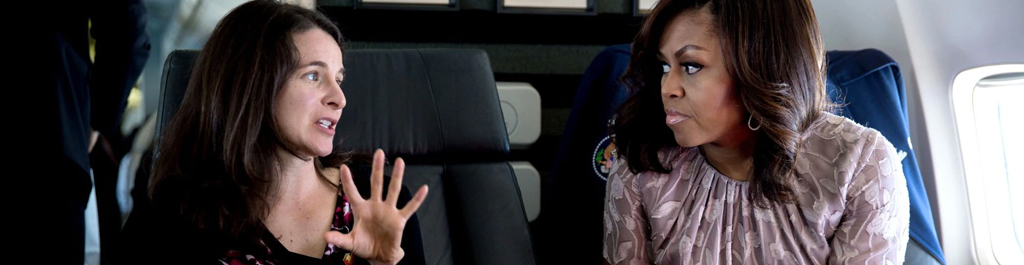
From 2009 to 2017, Sarah Hurwitz served as a White House speechwriter, first as a senior speechwriter for President Barack Obama and then as head speechwriter for First Lady Michelle Obama. Prior to serving in the Obama Administration, Sarah was chief speechwriter for Hillary Clinton on her 2008 presidential campaign.
Sarah is the author of Here All Along: Finding Meaning, Spirituality, and a Deeper Connection to Life – in Judaism (After Finally Choosing to Look There), a book about her experience rediscovering Judaism as an adult, which discusses among other things her transformative experience with Jewish mindfulness meditation.
IJS Executive Director Josh Feigelson interviewed Sarah during a live public event on April 28, 2020. This is a full recording of their conversation.

Apr 23, 2020 | Blog
In Genesis, God instructs Noah to build an ark to protect his family and two of each species on earth from the floodwaters that God will bring. “Make yourself an ark of gopher wood: make it an ark with compartments and cover it inside and out with pitch” (Genesis 6:14). The implication is clear: if the ark is to be a true refuge from the coming floods, Noah must pay close attention to how it’s built.
Like Noah’s Ark, our spiritual practices can provide us with a lifeboat, a place of safety and refuge in a world turned upside down. Like Noah, we are invited to pay attention and mindfully build for ourselves through practice a place of safety and wholeness. In the midst of the storm in which we find ourselves, our practice can provide a refuge, breath by breath and moment by moment. For those of us with established practices, now is the time to recommit and deepen them. For those new to mindfulness or who have long wanted to start such a practice, there’s never been a better time to begin. IJS offers numerous resources to launch you on this journey.
We share here some general guidelines for how you might use your mindfulness practice during this time to build your inner ark and find solace and strength:
- Cultivate Body Awareness: The uncertainty and disruption of this time leave all of us feeling anxious and even scared to some degree — for ourselves, our elders, our students and children, and our communities. Centering ourselves into a body awareness practice can help us cut through the ruminations that drive much of our anxiety and fear. Try out a practice like simply observing your breath coming in and going out or mindfully scanning each part of your body for the sensations you are experiencing. You could also listen to sounds arising and falling away or focus on each bite of food as you eat. Practices like these can help your nervous system relax so you get a much-needed break from being hyper-vigilant.
- Count Your Blessings: When we experience feelings of scarcity around time, resources, attention, and energy, it’s easy to fall into tunnel vision and a zero-sum-game mentality. Focusing obsessively on our own sense of fear, we become blind to the blessings and connections that are already here. Counting our blessings can open the heart to gratitude, a powerful antidote to feelings of scarcity and disconnection. An easy way to start off your day with an attitude of gratitude is to recite the Modeh/Modah Ani prayer and make an inventory of five things for which you’re grateful before getting out of bed.
- Develop Loving-Kindness: Social isolation helps us stay safe, protect others, and “flatten the curve.” Although we can connect online, it is still easy to feel lonely and disconnected, especially if we’re in our homes alone. A growing body of research shows that loving-kindness practices can help us feel more connected to others, even when we’re alone. You can engage in loving-kindness practice by gently closing your eyes, visualizing someone, and sending that person kind thoughts for safety, calm, and strength. Doing this when we’re online with others, too, can help us feel more openhearted during a time when our hearts may tend to close down and contract.
- Track Your Attention: We’re all spending more time online, and it’s easy to become more distracted from the very people we are trying to connect with. Simple practices that help us track our attention and bring it back to things we mean to focus on — the person on the screen — can be a major support in helping us to remain present online. If you are a teacher, invite your students to keep track on a notecard of the number of times their attention wanders or they notice or feed the impulse to multitask. Invite them to report out at the end of class, and give credit for simply reporting no matter what students share. Challenge students to see if they can reduce the number of times they fall prey to distraction by one each day. Challenge yourself to do the same thing. Just noticing when we get distracted helps us be better at paying attention.
- Cultivate a Sense of Sacred Purpose: During these times, it can be easy to feel hopeless and powerless. Doing practices that help us cultivate a sense of purpose can help us overcome these feelings and support us in doing thing within our control that help others. Practices like intention setting and asking for guidance in prayer about how to be of service during this time can help us kindle a sense of direction and sacred purpose. So can doing something to help a person in need. You might reach out to an elderly person who’s all alone, set up a charity to buy someone a tablet so they can video conference with their loved one, or donate to a charity.
Let us know, by posting below, if you have ideas for others ways in which spiritual practice can serve as a place of refuge during these disorienting and scary times.
May you be healthy, may you feel calm and safe, and may your practice support you with the wisdom and skill to weather this storm with kindness, wisdom, and compassion.
From our hearts to yours,
Rabbi Sam Feinsmith, Program Director and Firkins Reed, Foundation Relations
Dec 25, 2016 | Blog

There is a mystical teaching that the light of the first day of Creation is hidden away in this world as the Or HaGanuz, the Hidden Light. This light is no ordinary light. The Or HaGanuz brings the heat of timeless, limitless energy that penetrates and permeates matter and animates our physical bodies. It also exists as light waves of thought and feeling within our more subtle bodies of emotion and intellect. The Zohar states that this first light of Creation, this hidden light, is hesed, lovingkindness. Vibrating within each of us is this primordial, hidden light of love.
In the Hanukkah story, hesed wins. Light increases and drives away darkness. Hanukkah thus challenges me to reveal and to embody the healing power of love. As Dr. Martin Luther King, Jr. wrote, “Darkness cannot drive out darkness: only light can do that. Hate cannot drive out hate: only love can do that.”
Sometimes, being a Heart Warrior, a modern Maccabee, requires the courage to feel how my body holds fear and the willingness to let it be touched and softened by the transforming presence of loving attention. Other times, being a Maccabee means standing firm and strong, emboldened by the love I feel lighting me up inside.
How do we embody this miraculous power of love? We bring awareness to the body and pay attention without judgment to whatever is arising. We meet our bodies with compassion and curiosity. When we can receive our own beings just as we are, we strengthen a vessel that can reveal the hidden light of hesed that is inscribed in our very cells, no matter what we are feeling in the moment.
Begin standing with your feet hip distance apart. Let your arms rest by your sides. Close your eyes and feel your feet on the floor. Draw a deep breath through your nose. Watch the breath move down through the neck, the chest and belly, into your hips, and back out through the nose. Repeat several times. Visualize the breath kindling the light hidden inside the face, the neck, your heart, under the shoulder blades, your belly, and hips.Allow the sense of light to grow inside you with each soft, deep breath.
Next, again begin by feeling your feet firmly on the floor. From that grounding, as you inhale, raise your arms and clench your fists as you cross the forearms over each other in front of your chest. Furrow your brow and clench your jaw.
As you exhale, release the fists and uncross your arms. Let the arms lower towards the earth with palms open and facing forward.
Repeat several times. Notice what happens to the energy in your body as you clench your fists and cover your heart. Notice what you feel as you soften the hands and release the hands and arms by your sides. Explore moving your arms and torso in ways that clench, hold and guard your chest, and those which open and soften the hands and chest. See, with curiosity, how you move between states of open and closed. See if you can bring the state of openness to the following posture even as you engage your muscles and find your strength:
Star Pose
Take your feet wide apart, facing forward. Inhale and lift your arms up to shoulder height. Spread the fingers wide. Inhale and rotate the arms so the palms face the sky and the armpits are opened upwards. Strengthen through your legs, toning through the upper thighs. Lift up through the crown and the sides of your waist as you send the tail bone to the floor and draw your stomach in towards the spine. Enjoy several long inhalations and exhalations as you sustain the muscular energy to remain firm and toned in this pose. With each breath in and out, visualize the cells of your bones, muscles, organs, tissues, each filling with light and growing softly brighter. Fill yourself with light and scan your body. Where are you holding very tightly? Can you soften and let the light bathe you there? Stand firm and burn softly, and, brightly as you embody a luminary pulsing with the light of Divinity.
Now return your feet to stand under your hips and let your arms rest by your sides. In the stillness, notice what your body is feeling as you receive the gifts of having sown seeds of light through your body in the pose. Is there tingling? Warmth? Sweat? A quickened heart rate? Feel all that there is to feel in this body now. There is no need to do anything other than be right here.
What if, as Carl Sagan asserts, we really are stardust? And what if these stellar beings we are hold the energy of hesed, lovingkindness, hidden in our DNA and physical bodies since the beginning of creation? Practice shining this love through your eyes today as you greet others. Shine it into your own heart, belly, hips, hands and head. Become a modern Maccabee, letting your firm yet open stance become the vessel through with divine light burns steadily and bright.
With warmth and blessings,
Rabbi Myriam Klotz
Dec 25, 2016 | Blog
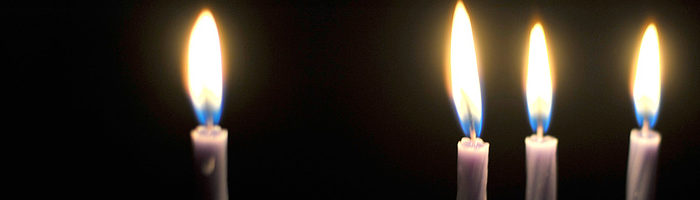
Many of us have come to recognize the symbolic power of the lights of Hanukkah. Hanukkah begins on the 25th of Kislev, which means around the last five days of the lunar month. Particularly when the festival falls later in December, it coincides with the winter solstice, the longest night of the year. When you combine the longest nights with waning of the moon at the end of the lunar month, when it does not appear in the night sky, you get some VERY DARK nights. It is precisely then that we light Hanukkah candles. Moreover, following the teaching of the School of Hillel, we increase the number of candles each night. So, just as the world is getting darker (at least here in the northern hemisphere), we are bringing more and more light.
But the months following Kislev are pretty dark themselves. And that darkness, and its persistence, is reflected in the Torah readings at this time of year. Hanukkah will always coincide with the Joseph story, and always with him in the “pits”. We either conclude Vayeshev with Joseph in prison, or begin Mikketz with him still there. While we witness Joseph’s rise to power, we also experience his ongoing conflict with his brothers. And when that is overcome, we suffer the death of Jacob and then Joseph in Egypt – and anticipate the slavery to come.
Furthermore, the mystical tradition identifies the weeks of first six readings of the book of Exodus as a time when negative forces prevail in the world. These weeks extend through the Hebrew months of Tevet, Shevat and into Adar. We can imagine why this might be: after all, everyone is cooped up inside, and possibly stir crazy. The weather outside is harsh, physically difficult to deal with, and hazardous to health. These months also coincide with the first six weeks of the book of Shemot (Shemot, Va’era, Bo, Beshallach, Yitro, Mishpatim). Using the initial letters of these parshiyot we can spell the word ShOVeVIM, signifying that which is wild, transgressive, backsliding. So, from the beginning of the Joseph story through to the crossing of the Sea in Beshallach, we have been living in darkness, inside and out.
So, even though we lit lights on Hanukkah, the weeks and months that follow are shadowed and dangerous, spiritually challenging and potentially dispiriting. Yet, the lights of Hanukkah are not forgotten. By the first week of Adar, just at the end of this beclouded period, we come to Moses’ birthday, 7 Adar. The midrash (Ex.R. 1:20) claims that when Moses was born the house filled with light. This was the light of Creation, the light hidden away in Torah to be revealed to us by Moses, and from which we can always find light. Although this light was “hidden away for the righteous” in the world-to-come, the Zohar claims that were it not for this lights constant radiance the world could not exist.
So, when we light the Hanukkah lights we are not only dispelling the darkness around us during that very dark week. We are bringing light into our hearts and souls to sustain us through a very dark time, so that we ultimately might taste freedom at Passover. And, this is true not only at Hanukkah, but all year round. At any moment we can turn inward to touch our own vitality, to sense the breath moving in the body, to recognize our capacity to perceive light even in the darkness, and to know that redemption will come.
With wishes for a beautiful holiday,
Rabbi Jonathan Slater
Dec 25, 2016 | Blog

Imagine how we might respond if someone said to us, as Joseph does to Pharoah in next week’s Torah portion, Miketz:
כט הִנֵּה שֶׁבַע שָׁנִים בָּאוֹת שָׂבָע גָּדוֹל בְּכָל־אֶרֶץ מִצְרָיִם: ל וְקָמוּ שֶׁבַע שְׁנֵי רָעָב אַחֲרֵיהֶן וְנִשְׁכַּח כָּל־הַשָּׂבָע בְּאֶרֶץ מִצְרָיִם וְכִלָּה הָרָעָב אֶת־הָאָרֶץ: לא וְלֹא־יִוָּדַע הַשָּׂבָע בָּאָרֶץ מִפְּנֵי הָרָעָב הַהוּא אַחֲרֵי־כֵן כִּי־כָבֵד הוּא מְאֹד
“Immediately ahead are seven years of great abundance in all the land… After them will come seven years of famine, no trace of the abundance will be left in the land because of the famine thereafter, for it will be very severe.” (Gen. 41:29-31, JPS 1985)
We are promised abundance – but it would not be lasting. The riches are not for our enjoyment. Rather, they must be allocated carefully in order to enable us to make it through the impending scarcity. We would likely feel great anxiety in such a situation and a pervading sense that our blessings are fleeting. Perhaps we would live those years on edge, never quite feeling that we were doing enough to prepare. I imagine that during this time it would be incredibly difficult to simply feel a sense of being settled and content. Well beyond the pressure to prepare for the practical needs of the time of lack, the impending famine would surely impose a great psychic toll. Even in a time of plenty, one can easily have a mind and heart of famine.
Hanukkah offers a counter-orientation to this famine mind and heart. As the Talmud tells it:
מאי חנוכה דתנו רבנן בכ”ה בכסליו יומי דחנוכה תמניא אינון דלא למספד בהון ודלא להתענות בהון שכשנכנסו יוונים להיכל טמאו כל השמנים שבהיכל וכשגברה מלכות בית חשמונאי ונצחום בדקו ולא מצאו אלא פך אחד של שמן שהיה מונח בחותמו של כהן גדול ולא היה בו אלא להדליק יום אחד נעשה בו נס והדליקו ממנו שמונה ימים לשנה אחרת קבעום ועשאום ימים טובים בהלל והודאה.
What is Hanukkah? The Sages taught, on the twenty-fifth of Kislev, the days of Hanukkah are eight…When the Greeks entered the Sanctuary they defiled all the oils that were in the Sanctuary. And when the Hasmonean monarchy overcame them and emerged victorious over them, they searched and found only one cruse of oil that was placed with the seal of the High Priest. And there was [sufficient oil] there to light [the Menorah] for only day. A miracle occurred and they lit the [Menorah] from it for eight days. The next year [the Sages] instituted those days and made the holidays with [recitation of] hallel and thanksgiving. (Shabbat 21b)
Hanukkah’s teaching, embedded in this rabbinic version of the miracle of the oil, is about affirming that what we have is enough–even if it does not seem like it will be. From this place of “enoughness”, of hopeful confidence and healthy satiety, we are strengthened in our capacity to be present in our lives, and with praise and gratitude to bring light into the world.
We should not confuse this healthy sense of enoughness with a passivity or unquestioning acceptance of our lot. Rather, it can serve as a greater context within which experiences of lack can be understood and engaged with differently. Our practice – especially practice during Shabbat or holidays – can cultivate our capacity for staying anchored in this deep sense that I have enough.
This Hanukkah, try a meditation in which you sit by the light of the candles. Begin by connecting to your breath and body, close your eyes. After a few minutes, open your eyes, and look at the candle. Witness its movement. Affirm with the breath: (inhale) this light, (exhale) is enough. Let that feeling of “enoughness” fill you. Repeat.
Wishing you a Hanukkah of warmth and light,
Rabbi Jordan Bendat-Appell
