Introducing IJS’s First Faculty Fellow: Kohenet Keshira haLev Fife

Introducing IJS’s First Faculty Fellow: Kohenet Keshira haLev Fife

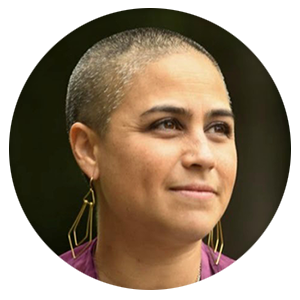
IJS is delighted to announce that Kohenet Keshira haLev Fife has joined its faculty as a Faculty Fellow. The fellowship, which runs from 2022-24, is the first of its kind at the Institute. It is designed to identify and nurture exceptional spiritual leaders who can contribute new skills and perspective to IJS’s teaching and programs, while also developing greater expertise in Jewish mindfulness, IJS pedagogy, and core practices.

As a Faculty Fellow, Keshira will bring her Kohenet training, Earth-based spirituality, and unique warmth and wisdom to a host of IJS programs, including a week-long daily sit intensive in February 2023. Additionally, Keshira will join Program Director Rabbi Marc Margolius and a diverse set of consultants in redesigning and teaching Awareness in Action: Cultivating Character through Mindfulness and Middot this year.

Keshira will also continue to lead IJS’s affinity group work with Jews of color, in partnership with Yoshi Silverstein of Mitsui Collective, and work with IJS faculty in staff in making all of our offerings more accessible and inclusive of Jews with historically marginalized identities. As part of the fellowship experience, Keshira will also be participating in IJS’s landmark Clergy Leadership Program, an 18 month cohort-based professional development program, as well as its upcoming training in Spiritual Direction.

“As someone who has grown through participating in IJS programs, and who has great admiration for the IJS team, I am especially excited by the invitation to weave my lived experience and background into some of IJS’ programs,” says Keshira. “In the spirit of tikkun middot, and finding a balanced way, the opportunity to contribute to a host of IJS’ offerings, while simultaneously deepening my own practice, already has me dreaming about what blessings might unfold from this new partnership. I pray that all of our work together will make mindfulness and integrated Jewish practice even more accessible to the Jewish world and beyond.”

Beyond IJS, Keshira sprinkles sparkles, disrupts expectations, and offers blessings wherever she goes. She serves as Oreget Kehilah (Executive Director) of the Kohenet Hebrew Priestess Institute, Founding Kohenet of Kesher Pittsburgh and Program Director of the ALEPH Kesher Fellowship and also enjoys working with Keshet and Beloved Builders. Additionally, she delights in serving as a davennatrix (shlichat tzibbur), life spiral ceremony/ritual creatrix, teacher, facilitator, liturgist and songstress. Her work in these realms is informed by her lived experience as a queer, bi-racial, Jewish Woman, her belief that Book, Body and Earth are equal sources of wisdom, and the quandries she encounters as a scholar of the Orphan Wisdom School. Keshira received Kohenet smicha in 2017 and earned her BS 2000 and MS 2001 at Carnegie Mellon University. (After many years of traveling and living in Australia, she and her beloved once again make their home on Osage and Haudenosaunee land, also called Pittsburgh, PA.) You can learn more about Keshira at her website, www.keshirahalev.com.

A Conversation with Rabbi Danya Ruttenberg

A Conversation with Rabbi Danya Ruttenberg

We are grateful to Rabbi Danya Ruttenberg for speaking with us about Repentance and Repair! Please enjoy the conversation recording below.

Rabbi Danya Ruttenberg is an award-winning author and serves as Scholar in Residence at the National Council of Jewish Women (NCJW). She was named by Newsweek as a “rabbi to watch,” as a “faith leader to watch” by the Center for American Progress, has been a Washington Post Sunday crossword clue (83 Down) and called a “wunderkind of Jewish feminism” by Publishers Weekly. She has written for The New York Times, The Washington Post, The Atlantic, Salon, Time, and many other publications. She is the author of eight books; her newest is On Repentance and Repair: Making Amends in an Unapologetic World.

Richard Schwartz: “To be a presence that can possibly bring some healing [is] an incredible gift.”

Richard Schwartz: “To be a presence that can possibly bring some healing [is] an incredible gift.”

Our recent Evening of Gratitude was a valuable opportunity to recognize Jewish spiritual leaders of all kinds and their incredible impact on the people and communities they serve. We are so grateful for all they bring to our world, and so proud to be part of their stories.

In one of the evening’s spotlights, IJS alum Cantor Richard Schwartz shared how pastoral care, mindfulness practice, and Jewish tradition have intertwined in his life-long journey towards personal peace and intentionality. Richard has brought this mindset to his current work in chaplaincy at Stanford Health Care. In reflecting on his role, Richard shared the following:


“To be a presence that can possibly bring some healing [is] an incredible gift.”

We hope you are inspired by Richard’s story and will consider a gift to support our work.

Alison Kur: “Spirituality is about nurturing my soul and giving my soul to others”

Alison Kur: “Spirituality is about nurturing my soul and giving my soul to others”

Hundreds of IJS supporters joined us on Tuesday, June 7, 2022 for our Evening of Gratitude, honoring and thanking Jewish spiritual leaders. We are eager to share one of the highlights of the celebration, and we hope that you will consider making a donation to support our work.

Alison Kur, Executive Director of Jewish Living at Temple Beth Elohim in Wellesley, MA, was one of the evening’s featured leaders. She spoke about the warm mutual support fostered by her IJS community, providing emotional sustenance in a difficult year. She also emphasized the critical importance of spiritual practice in allowing congregants to know and be known by one another:

“Spirituality is about nurturing my soul and giving my soul to others”


Learn more about Alison’s story:

Of Black Swans and Sabbatical Years

Of Black Swans and Sabbatical Years

If you haven’t seen it yet, take a minute to watch the finish from this year’s Kentucky Derby. It’s a sight to behold.

The two leading horses are racing neck-and-neck (literally), jockeying for position (again, literally), as they make the final turn of the one-and-a-quarter-mile track at Churchill Downs. Slowly and then suddenly, Rich Strike, a horse no one even expected to be in the race, comes out of nowhere to win. It’s shocking on every level: Rich Strike had 80-1 odds of winning, the second-highest odds in the history of the 148-year old race. He only became eligible for the Derby a day earlier due to another horse being scratched from the race with 30 seconds to spare before the registration deadline. And then, to top it off, he comes out of nowhere to win the biggest event in horse racing. Someone in Hollywood is surely working on a script already.

The day after the Derby, the writer and climate activist Rebecca Solnit posted a link to the race video on Facebook, calling attention to Rich Strike’s win as a “black swan event.” The term, popularized two decades ago by Nassim Nicholas Taleb, refers to an event that most people assumed simply couldn’t happen—and that, therefore, whole ways of thinking became devoted to assuming it couldn’t happen either. That is, it wasn’t simply an objective question of whether or not something was possible; it was also a psychological question: If my/our worldview depends on the impossibility of this idea, how could I entertain the notion that it might occur? My/our whole world would unravel! So we tend to treat black swan events as not just logical impossibilities; rather, we become emotionally invested in verifying the narrative of their impossibility.

As a climate activist, Solnit encounters this phenomenon a lot. If we read the news, we have good reason to feel like solving the problem of climate change is a black swan. The odds seem increasingly remote that we will keep global temperatures from rising past 2 degrees Celsius. The polar ice sheets are already melting. The invasion of Ukraine isn’t helping. It is totally understandable that a lot of us feel pretty grim about the future. And when we start telling ourselves that narrative, our human tendency toward confirmation bias leads us to reject news that might counter it and embrace news that reinforces it.

But, as Solnit has been doggedly pointing out on her Facebook page for months, there’s a lot of good climate news! Most significantly, advances in battery storage, solar, and wind technology are causing the price of renewables to drop quickly and, correspondingly, their use to increase rapidly. And, while the odds remain quite long, Solnit seems committed to helping the rest of us see the possibility of a black swan. Epicenter and Zandon, the two favorite horses at the Derby this year, had odds of 7-2 and 3-1, respectively. They were the horses racing neck-and-neck to win. The race was playing out precisely the way the math told us it would. Until it didn’t. The lesson for climate? While it’s still a major league longshot, we might, just might, be able to get it together for greener forms of energy to come out of the back of the pack and win the climate derby. (Likewise, Donald Trump was projected as having a 7 percent chance of being elected president in 2016. Black swans don’t take sides; they just describe longshots.)

On the Jewish calendar, we are deep into a Sabbatical year, a year of shemitah. The Torah’s expectations for this year, and for the larger Jubilee cycle in which it occurs, might strike us as fanciful, preposterous even. We are commanded not to farm the land, but only to live off whatever naturally grows. We are expected to forgive debts and release indentured servants. Every 49 years, we are expected to return the land to its ancestral owners. In short, we are, it seems, expected to overthrow the economic table and start anew. It is nothing short of a radical resetting, a recalibration of society.

If this might have seemed difficult to imagine two or three thousand years ago, it feels even more so now. Yet the Torah is not alone in deploying sacred ritual to reconfigure the social order. As David Graeber and David Wengrow demonstrate in their book The Dawn of Everything, societies the world over have done similar things throughout human history. From Native American communities to Neolithic Europe and Mesopotamia and beyond, human beings have shown a remarkable propensity to order our societies in many different ways—and to consciously reorder them when necessary and desirable.

Contra Rousseau, there is no “state of nature,” according to Graeber and Wengrow. Rather, there are innumerable different ways humans have configured social and political life. “If something did go terribly wrong in human history—and given the current state of the world, it’s hard to deny something did,” they write, “then perhaps it began to go wrong precisely when people started losing that freedom to imagine and enact other forms of social existence, to such a degree that some now feel this particular type of freedom hardly even existed, or was barely exercised, for the greater part of human history.”

That, perhaps, is the greatest challenge we face: that we accept that this is the way things are and will be—whatever that way is. We are so invested in the current scheme of things that we discount the possibility that anything could be otherwise. We lose imagination, we lose freedom, we become fatalists.

The Torah, like other wisdom traditions, invites us to practice a different way of being, the touchstone of which is yetziat mitzrayim, the Exodus from Egypt. What was is not what must be. What seems inevitable is not destiny. Just because life seems good right now doesn’t mean it’s going to remain that way; just because life looks horrible right now doesn’t mean it will always be so. When we cut ourselves off from the unfolding nature of the world, when we become so invested in a particular way of encountering it, we practice a kind of idolatry, we drive the Divine presence from the world.

Our calling and mission is to do the opposite: to live with mindful presence, aware of the contingency and ongoing becoming of a world which is constantly recreated anew, aware of our interconnection with all other beings, with the earth, with life itself. That is the practice of Shemitah, the practice of Shabbat. It is the practice that enables us to resist our confirmation bias, our fatalism about climate, and to remain open to the possibility—however long a shot it is—that the unexpected might just come about.


This piece was published in the Times of Israel on May 12, 2022.

A Conversation with Rabbi Danya Ruttenberg

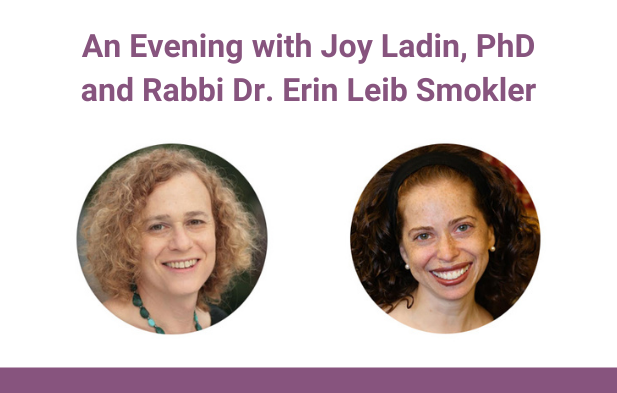
A Conversation with Joy Ladin, PhD and Rabbi Dr. Erin Leib Smokler

We are grateful to Joy Ladin, PhD and Rabbi Dr. Erin Leib Smokler for sharing their insights with us! Please enjoy the conversation recording below.

Joy Ladin, PhD is a teacher, widely published essayist and poet, literary scholar, and nationally known speaker on transgender issues. She is the author of twelve books, including 2021 National Jewish Book Award winner, The Book of Anna, newly published Shekhinah Speaks, and 2018’s The Soul of the Stranger: Reading God and Torah from a Transgender Perspective. She has a PhD in English Literature from Princeton and an MFA in Creative Writing from the University of Massachusetts. Since 2003, Joy has held the David and Ruth Gottesman Chair in English at Stern College of Yeshiva University.

Rabbi Dr. Erin Leib Smokler is the Dean of Students and Director of Spiritual Development at Yeshivat Maharat, where she teaches Hasidism and Pastoral Torah. She is also a faculty fellow of the Shalom Hartman Institute of North America. Rabbi Dr. Leib Smokler is the editor of the recently published volume, Torah in a Time of Plague: Historical and Contemporary Jewish Reflections (Ben Yehudah Press 2021), which received a 2021 National Jewish Book Award. She earned her PhD and MA from the University of Chicago’s Committee on Social Thought and her AB from Harvard University. She received ordination from Yeshivat Maharat.