Select Page
Purim and the Pursuit of Wisdom

Purim and the Pursuit of Wisdom

“Look again at that dot. That’s here. That’s home. That’s us. On it everyone you love, everyone you know, everyone you ever heard of, every human being who ever was, lived out their lives. The aggregate of our joy and suffering, thousands of confident religions, ideologies, and economic doctrines, every hunter and forager, every hero and coward, every creator and destroyer of civilization, every king and peasant, every couple in love, every mother and father, hopeful child, inventor and explorer, every teacher of morals, every corrupt politician, every “superstar,” every “supreme leader,” every saint and sinner in the history of our species lived there–on a mote of dust suspended in a sunbeam.

The Earth is a very small stage in a vast cosmic arena. Think of the rivers of blood spilled by all those generals and emperors so that, in glory and triumph, they could become the momentary masters of a fraction of a dot. Think of the endless cruelties visited by the inhabitants of one corner of this pixel on the scarcely distinguishable inhabitants of some other corner, how frequent their misunderstandings, how eager they are to kill one another, how fervent their hatreds.

Our posturings, our imagined self-importance, the delusion that we have some privileged position in the Universe, are challenged by this point of pale light. Our planet is a lonely speck in the great enveloping cosmic dark. In our obscurity, in all this vastness, there is no hint that help will come from elsewhere to save us from ourselves.

The Earth is the only world known so far to harbor life. There is nowhere else, at least in the near future, to which our species could migrate. Visit, yes. Settle, not yet. Like it or not, for the moment the Earth is where we make our stand.

It has been said that astronomy is a humbling and character-building experience. There is perhaps no better demonstration of the folly of human conceits than this distant image of our tiny world. To me, it underscores our responsibility to deal more kindly with one another, and to preserve and cherish the pale blue dot, the only home we’ve ever known.”
— Carl Sagan, Pale Blue Dot, 1994

Writing at Purim time, during the continued unfolding of Russia’s brutal invasion of Ukraine, the carnage only mounts. When we mark the holiday we think of the rivers of Jewish blood Haman would have spilled had he not been thwarted by Mordechai and Esther. Today we think of the rivers of Ukrainian blood being spilled by Vladimir Putin. Both of these tyrants are united across the ages in their wish to visit endless cruelty upon the inhabitants of a tiny corner of a fraction of a dot. Both are united in their utter delusion. When viewed through Sagan’s reflections on our one and only pale blue dot, all this violence and cruelty seems so utterly senseless, meaningless, and foolish.

Though it may not be readily apparent on the face of things, behind all this folly lies that most basic human impulse–the desire for happiness. Haman thought he would be happy if he annihilated the people who threatened his honor. Instead he brought about his own ruin and the destruction of his entire family. Putin believes he’ll be happy if he takes Ukraine and replaces its government with a puppet regime. But he won’t. His cruelty and greed will eat him alive as he becomes a pariah to the world and brings ruin upon his own people. As we are witnessing in real time on a grand scale, the impulse to pursue happiness can lead to horrible, disastrous consequences if it isn’t coupled with wisdom.

Mindfulness is our tool for cultivating wisdom. It works by peeling away misleading external appearances and obstructing masks to reveal the deeper nature or true face of things. With mindfulness, we recognize that happiness that depends on ephemeral external conditions can’t be sustained in the long run; to be truly lasting, our contentment and well-being need to be generated from within. When our desire for happiness is married to wisdom, we know how interconnected we all are, and operate with an awareness that to inflict harm upon another being or part of this planet for our own gain is an act of self-harm. And with mindfulness, tyrants might come to recognize that pinning their glory on their claim to a tiny part of an infinitesimally small blue dot is an exercise in folly.

At this moment in the evolution of Western culture, the pursuit of happiness as an end in itself has run its course as we careen toward growing conflict, division, mistrust, the collapse of democracy, and the destruction of our planet. What we need now as a species is a collective turning toward the pursuit of wisdom, which might then reveal the true conditions that lead to mutual happiness and well-being for all. That’s why we practice.

We at IJS are proud to be part of the burgeoning movement toward that turning as we broadly teach Jewish spiritual practices grounded in mindfulness. Such practices foster our ability to discern a wise path to human flourishing, one grounded in a deep recognition of our evanescence and frailty and the immense preciousness and interconnection of life and our planet. One that leads us beyond the folly, caprice, and lustfulness of the ego toward a deep sense of mutuality, interdependence, abundance, and shared responsibility. One where we triumph “not by might nor by power but by spirit alone” (Zechariah 4:6).

A Conversation with Rabbi Irving “Yitz” Greenberg

A Conversation with Rabbi Irving “Yitz” Greenberg

We are grateful to Rabbi Irving “Yitz” Greenberg for sharing his wisdom with us. Please enjoy the conversation recording below.

Rabbi Irving “Yitz” Greenberg is one of the most influential Jewish thinkers and institution-builders of our time. Currently president of the J.J. Greenberg Institute for the Advancement of Jewish Life (JJGI) and Senior Scholar in Residence at Hadar, Rabbi Greenberg’s distinguished career includes service as the founding director of CLAL: the National Jewish Center for Learning and Leadership, founding president of Jewish Life Network/Steinhardt Foundation, professor of Jewish History at Yeshiva University and City University of New York, and director of the President’s Commission on the Holocaust, and Chair of the United States Holocaust Memorial and Museum.

Over his long career, Rabbi Greenberg has taught tens of thousands of Jewish leaders in hundreds of communities across North America and around the world. He has written extensively on post-Holocaust Jewish religious thought, Jewish-Christian relations, pluralism, and the ethics of Jewish power. He was a member of the delegation of Jewish leaders who traveled to Dharamshala, India for an historic encounter with the Dalai Lama, which was later discussed in Rodger Kamenetz’s book The Jew in the Lotus.

In addition to his role as Executive Director at IJS, Rabbi Josh Feigelson is a leading scholar of Rabbi Greenberg’s thought. In this conversation, Rabbi Feigelson and Rabbi Greenberg will reflect on Rabbi Greenberg’s own training in and practice of Musar and experiencing Jewish life as a form of spiritual practice. Rabbi Greenberg will also discuss themes from his forthcoming book, The Triumph of Life.

A Reflection on Jewish Mindfulness and Habits of the Heart

A Reflection on Jewish Mindfulness and Habits of the Heart

It often feels these days that we’re living through a Great Unraveling. Institutions, those deposits of trust that enable things to be—or at least seem to be—settled, are coming apart. News media, public health, elections, representative government, the weather, the forests, the shoreline, truth, language itself: In so many places, things I took to be more or less stable are revealing themselves to be far shakier than I could have imagined.

I find my mind racing with questions I could scarcely have contemplated asking even a couple of years ago: Is the person standing next to me in the grocery store vaccinated? Is the man at the post office carrying a concealed weapon? Writing in the shadow of the anniversary of the January 6 insurrection, those questions include ones like, Will a mob storm the Capitol? Will a state legislature overturn an election?

Like all shadows, this Great Unraveling has its brighter side too. Much of it is driven by the democratization of media. Where Twitter and Facebook and Snapchat and TikTok seem to lead us to collectively ever-shorter attention spans, they also give opportunities for far more people to have a voice, for more of us to expand our awareness of people and issues than would have been in our view otherwise.

Whether we view it as an invitation or an externally-imposed compulsion, it seems to me that this moment calls each of us to deeper personal responsibility and agency: the responsibility to be vaccinated, to engage in democracy non-violently, to practice speech that is mindful, wise, and courageous. And when I reflect on that, I realize that, though it may feel more intense today, that is really our calling all the time: to be vessels for the Divine presence; to reflect and enhance the image of God in the world; to free and help every image of God to be present.

In his bestselling classic The Jew in the Lotus, Rodger Kamenetz describes how one of IJS’s founders, Rabbi Jonathan Omer-Man, summed up his personal spiritual path, which he referred to as keter malchut, or the crown of sovereignty, to the Dalai Lama: “To be a sovereign human being, to be a king, to be not reactive, but active, to know one’s place in the world, to be conscious. And it is extremely hard work. The ego always gets in the way, all the needs get in the way; it is a long, long path. But the path is very specific” (196).

In a democracy, as opposed to a monarchy, each and every citizen is a part of the sovereign; each of us wears a part of the crown. Thus Jonathan’s description of this spiritual work—to become a sovereign human being, a sovereign image of God—is, to my mind, the core of the “habits of the heart” about which Alexis de Tocqueville wrote nearly 200 years ago as being essential to the democratic project. At root, this heart work is about the most basic questions: How do we become aware of yet not beholden to the thoughts and emotions that arise in us—the results of our conditioning—when we encounter beings other than ourselves? How do we hold space for difference? How do we live together? How do we trust each other?

Nurturing and sustaining trust is the name of the game. It is essential to the infant who must trust adults to feed, clothe, shelter, and bathe them; it is essential to coworkers who must trust one another to work together; it is essential to neighbors and fellow citizens and residents who must trust that the people they encounter do not seek their harm; it is essential to voters who must trust that elected officials will act with honor and not for personal power or enrichment. Trust, Emunah, is essential for a life lived in relationship with the Divine. And, “In God We Trust”—our trusting both reflects and generates the possibility for the Divine presence to be visible. It is, on the most fundamental level, essential for democratic life.

That mutually supportive web of trust begins and is sustained by our continual work on our hearts—avodah shebalev, what the Talmud refers to as prayer and what we might expand to include the spiritual practices of democracy. I don’t know whether those practices by themselves are enough to calm the baser forces of fear, anger, and resentment that seem to be fueling this Great Unraveling. But I know they are essential for me—perhaps for you, too—to live through it. And I have a strong sense that they offer us a way through. May we support one another in cultivating them.

How Spiritual Practices Impacted my Bearing Witness Outside the Glynn County, GA Courthouse

How Spiritual Practices Impacted my Bearing Witness Outside the Glynn County, GA Courthouse

On Thursday November 18, 2021 I traveled to Brunswick, GA along with eleven other Jewish clergy to bear witness and offer support to the Black pastors, the community and family members gathering at the Glynn County courthouse during the trial for the killing of Ahmaud Arbery. Arbery, 25, was shot while going for a run in a suburban neighborhood. The chase and shooting were caught on video footage. Local rabbi and IJS Hevraya (alumni) member Rachael Bregman invited Jewish clergy to join her in Brunswick to bring spiritual comfort, solidarity, and to support the local community.

When I heard the call, my immediate response was YES. I don’t live there now, but I grew up in Georgia. While there are many parts of my upbringing in the South that I appreciate, I also find that when I walk on Georgia earth, I feel horror that any large tree I see might have borne “strange fruit”, a phrase referring to the 1937 song likening the many Black people lynched in the south to fruits hanging from trees. When I learned of the killing of Ahmaud Arbery, I became nauseous. The same nausea I feel when the stirrings of “strange fruit” move through my body when I am on Georgia soil.

Reflecting now, I ask myself: what motivated my discernment to participate in this action? What enabled me to stand with others for the long hot hours, awaiting Reverend Sharpton’s arrival for the prayers and calls for justice? And what inspires me now, looking ahead? I noted several things.

First, years of regular spiritual practice have shaped my heart, mind, and my nervous system so that my soul and my body could move in sync throughout this journey after my initial response was to participate.

Additionally, years of contemplative daily prayer have forged in me the language for feeling myself part of something larger than my individual body and ego mind. The injustice around me is an affront to the God Who lives in me and in all of us. There is no difference between me and another human soul. This clarity strengthened my conviction to study and learn about the history and prevalence of racism in the USA, and further forged in me the clarity that I cannot stand idly by and look away from the suffering around me.

Likewise, regular mindfulness meditation practice helps me pay attention to emotions, thoughts, sensations, be they pleasant or unpleasant, and bear witness to them with less reactivity. No doubt, the years sitting in meditation helped me stand steady and more open, as strong emotions such as grief, rage, and the physical discomforts of thirst and heat were blazing all around on the courthouse lawn and steps.

Years of yoga and somatic practices enabled me to stay grounded in my body, and to center my attention on the bodies around me. When I noticed that many Black pastors and others crowding together in the hot sun, were sweating and seemed to be suffering in the heat, I registered that in my consciousness–rather than pass over that recognition as I focused on “important” matters. Because I noticed, I could enlist colleagues and together we located cartons of water bottles (that would have been discarded), and carried them to the courthouse steps where we distributed the hydration to Arbery family members, Rev. Jesse Jackson, and others. Had I not been transformed through years of body-centered spiritual practice, I would not likely have paid attention and been able to help serve those I prayed to be of support to on that day.

Lastly, twenty years of practice in spiritual direction have formed in me the desire to look for God’s presence in whatever is unfolding around and inside me. Pausing to listen for the sacred in the chants or see the sacred in the signage or in the faces of those I looked upon, and to listen to the stirrings in my own spirit as I moved through the day, I could better sustain an intention of remembrance: remember I am bearing witness to God’s presence here today, in every human being I encounter. Seeking the face of the divine, my heart remained more open and less at the mercy of my own preferences, judgments and opinions in that volatile and fractured situation.

Looking ahead, though I am wary about the implications of this and other trials, I believe even more strongly that spiritual practices can help bring clarity, insight, and strength as well as the capacity to remain soft and open, willing, more hopeful, and to bear witness from loving intention. The practices also cultivate the potential to stand our ground, and to notice where suffering might be attended to. Perhaps you, too, might take stock of how your spiritual practices equip you to meet the present moments in your life when you might feel called to respond and engage.

May we each be empowered through our practices to meet what is ours to meet, so that together we might bring blessing and love, advocacy and change, right where, when, and how it is needed most.

Resilient Writers Fellowship Feature Articles

Resilient Writers Fellowship Feature Articles

I will pour out My spirit on all flesh
Your children shall prophesy
Your old shall dream dreams
And your youth shall see visions.

These words from the prophet Joel (made even more famous by Debbie Friedman) are a perfect introduction to the essays in the enclosed booklet, which are the product of the Resilient Writers Fellowship, a joint project of IJS and New Voices Magazine. Over the course of eight weeks in the winter and spring of 2021, this group of college students and recent graduates gathered online to explore the intersection of Torah, spiritual practice, creativity, and embodiment. These incredible essays are the fruits of their labor.

At a time when many young people were and are struggling — wrestling with social isolation, anxiety, depression, a global pandemic, political turmoil, and an uncertain future — this fellowship offered these outstanding young Jewish writers an opportunity to develop a personal set of practices to both navigate the emotions and spiritual challenges of an ailing world and maintain their creative work in a way that is sustainable and Jewishly rooted.

Co-facilitated by IJS Senior Program Director Rabbi Myriam Klotz and New Voices Editor Rena Yehuda Newman, the fellowship began with a three-hour opening online retreat, fostering a sense of community and connection between fellows, and gathered via Zoom each subsequent week on Thursday evenings for themed, 90-minute sessions where fellows learned, shared, and created Torah together. Throughout the fellowship, each fellow was responsible for writing a feature article on a topic of their choosing. Between sessions, fellows were encouraged to try an assortment of embodied and mindfulness practices, keyed to the weekly themes, to support their creative process.

As you will see in the essays in this booklet, these fellows come from an extraordinarily diverse, thoughtful, and provocative range of perspectives. They touch on issues ranging from Shabbat and time to body image and living through this extraordinary time of pandemic.

How Spiritual Practices Impacted my Bearing Witness Outside the Glynn County, GA Courthouse

To Prevent a Crisis of Clergy Burnout, Help Them Cultivate Their Inner Lives

As a spate of recent articles have proclaimed, clergy face a crisis. In his recent piece in eJewishPhilanthropy, Rabbi Lewis Kamrass, President of the Central Conference of American Rabbis (CCAR), warned of the real possibility of an exodus of rabbis from congregational life, due to the extreme additional emotional and professional burdens imposed upon them by the pandemic. He urges congregational lay leaders to mitigate this trend by acknowledging these additional burdens, expressing appreciation, increasing compensation, offering scheduling flexibility and time off, and being forgiving and generous towards clergy.

All of these are excellent, tangible steps institutions can take to address the symptoms of “clergy burnout” — a constant vocational hazard for rabbis across the denominational spectrum, which is greatly exacerbated by the extraordinary demands placed upon clergy in these pandemic times. External expression of empathy, gratitude, and tangible support from congregational leaders can, to some extent, ameliorate the heavy load clergy are bearing. But by themselves, these are band aids which can cover, but not heal, the underlying source of the problem.

To address the root causes of burnout, Jewish clergy themselves—liberal, Orthodox, and of every stripe—need spiritual practices and resources to help them navigate periods of “full catastrophe living” (in the phrase popularized by mindfulness teacher Jon Kabat-Zinn) with grace, resilience, and wisdom. This has, in fact, been our approach to working with over 500 clergy across denominations over the last two decades at the Institute for Jewish Spirituality. As part of our Clergy Leadership Program, we bring rabbis and cantors on retreat and engage them in spiritual practices including mindfulness meditation, contemplative study and prayer. We do this not so that they “take time out” or gulp down some oxygen in order to then get “back in the race”, but rather that they become more able to experience all moments of their work and life as opportunities for witnessing and lifting up awareness of the Divine.

This approach is analogous to the ritual of inhaling the sweetness of the spices at the conclusion of each Shabbat. The aroma of the spices reminds us (among other things) to infuse the six days of the week with the restorative quality of Shabbat. The rhythm of Jewish living is not sprinting for six days, catching our breath on the seventh day, and then returning to the track. Rather, we immerse in practices which help us cultivate a sense of Divine Presence on Shabbat, so that we might be better able to infuse all of our moments during the week with an awareness of that Presence.

Using this far more sustainable model, we immerse clergy in spiritual practice on retreats every six months, and in the interim periods between retreats, so they can learn skills for infusing their daily lives with breath and with a sense of Presence. We seek to help them experience their professional challenges not simply as burdens to be borne until they can set them down and breathe again, but as opportunities to engage in — and to model for others — spiritual practice and cultivate awareness of the sacred dimension of life.

The results of this approach are striking. Even years after their participation in our Clergy Leadership Program, 99% of alumni report that, because of their spiritual practice, they are able to be more fully present (56% of which report “to a great extent”) and 94% have greater emotional resilience (42% “to a great extent”). Amazingly, fully 87% of participants report that developing a spiritual practice increased their connection to their Jewishness.

This approach to Jewish mindfulness practices empowers clergy so that in times of stress they are better able to remain present in body, mind, and spirit — present for their congregants, themselves, and the Divine. Through their practice, clergy learn to exercise self-compassion rather than berating themselves for not being able to “do it all” and do it “perfectly.” By becoming more tender and compassionate towards themselves, they also learn to be more compassionate with those they serve.

It is easy in this period for clergy to imagine they need to be heroic figures, that they are being “tested”. But here we might learn from a 19th century Hasidic commentator, the Tiferet Shlomo (R. Shlomo Hakohen Rabinowitz of Radomsk, 1803-1866) who taught that the Hebrew word for the verb “test” — “nisa” — can be understood as a reverse acronym for the Hebrew expression “someikh noflim”, “uplifting the fallen”, a descriptor of God found in our liturgy. On the basis of this approach, that which appears to us as a “test” may actually be an opportunity instead to simply be present, to respond hineini, “I am here”, and notice a Divine source of strength buoying and uplifting us, rather than waiting to see if we will “pass” or “fail”.

Rabbi Kamrass is correct: particularly in these times, Jewish clergy need empathy and material support from their lay partners in congregational life and from the community at large. At the same time, more than ever they need spiritual tools, resources and community which can serve as somkhei noflim, supporting them in the midst of their efforts “in the field.” If we are to stem the tide of burnout and an exodus from the pulpit, we must support Jewish clergy to help them transform the “test” of these times into ongoing moments of spiritual uplift and awareness of the Divine Presence.

Rabbi Marc Margolius is a Senior Program Director at the Institute for Jewish Spirituality.


[1] With gratitude to my teacher and friend Rabbi Dorothy Richman (a member of the IJS Rabbis 2 cohort) who offered this teaching on the IJS Daily Meditation on October 21, 2021.

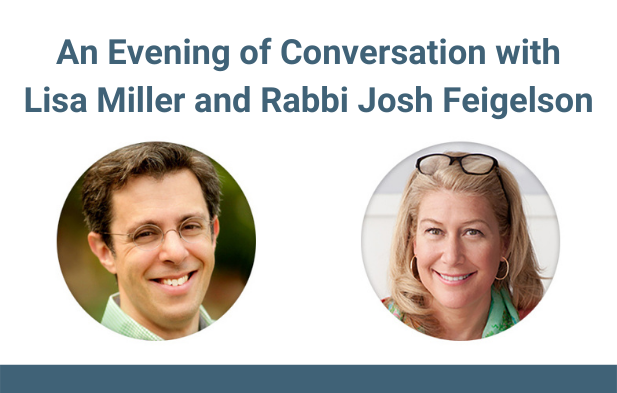
A Conversation with Dr. Lisa Miller

A Conversation with Dr. Lisa Miller

We are grateful to Dr. Lisa Miller for joining us on Tuesday, October 5, 2021 for a special evening.
In conversation with Rabbi Josh Feigelson, Dr. Miller shared her insights and research on the new science of spirituality.

Lisa Miller, PhD, is a professor in the Clinical Psychology Program at Teachers College, Columbia University. She is the Founder and Director of the Spirituality Mind Body Institute, and the author of The Spiritual Child. To learn more and order The Awakened Brain, visit https://www.lisamillerphd.com.

An Evening of Music with Joey Weisenberg

We are grateful to Joey Weisenberg for joining us on Tuesday, July 20, 2021 for a special evening. In conversation with Rabbi Josh Feigelson, Joey shared his music and insights.

Joey Weisenberg is a virtuosic multi-instrumental musician, composer and teacher. He is the Founder and Director of Hadar’s Rising Song Institute, cultivating grassroots musical-spiritual creativity in Jewish community. He has released seven albums with the Hadar Ensemble and is the author of The Torah of Music (2017 winner of the National Jewish Book Award).

Opening Your Heart with Psalm 27

Episode 51: Opening Your Heart with Psalm 27

The period of time from the start of Elul to the end of Sukkot is about the same length of time from Passover to Shavuot. The former period is given focus through the recitation of Psalm 27 (and the chanting/recitation of selichot, or penitential prayers). Rabbi Debra Robbins provides us with tools to make the practice of reciting Psalm 27 a richer, deeper, and more sustained experience in her book.
Read the episode transcript

Mishkan Ga’avah: Where Pride Dwells

Episode 49: Mishkan Ga’avah: Where Pride Dwells

There are so many ways to open up prayer. The most effective, and most important, is to connect deeply to one’s own life, one’s own heart, and to see oneself. From that clear seeing — or the desire to do so — we can express our deepest desires, most overwhelming fears, greatest joys, and significant commitments. That has inspired the flourishing of prayer in the LGBTQ+ community, which does not often see itself in traditional Jewish prayers. Rabbi Denise Eger introduces us to the richness of this prayer tradition in Mishkan Ga’avah: Where Pride Dwells, A Celebration of LGBTQ Jewish Life and Ritual.
Read the episode transcript

25-25-50 Meditation

Episode 48: 25-25-50 Meditation

Do you think you could have an “I-Thou” connection to a tree? Well, not sitting in your house you can’t! And, likely just walking up to a tree and saying “HI” won’t work either. Rabbi Mike Comins offers us a practice to help us cultivate our capacity to be outdoors and really BE there, perhaps ultimately to meet it as a “Thou”.
Read the episode transcript

Amen: Seeking Presence with Prayer, Poetry, and Mindfulness Practice

Episode 45: Amen: Seeking Presence with Prayer, Poetry, and Mindfulness Practice

Is prayer poetry? Is poetry prayer? What is the orientation of mind and heart that one needs to bring to be able to do one, the other, or both? Rabbi Karyn Kedar — author, poet, spiritual director, and IJS alumna — invites us into her investigation of these questions through her recent book.
Read the episode transcript

PrayerFull Guide to Prayer Practice – Part 1

Episode 43: PrayerFull Guide to Prayer Practice – Part 1

Just as there are varied prayer traditions in different communities, so there are many ways to enter into prayer. Rabba Dina Brawer and Rabbanit Leah Sarna, Orthodox rabbis, have created a podcast of curated, thematic offerings for personal, contemplative prayer. We have a wide-ranging conversation about prayer, to prepare us to listen to one of their episodes in our next episode.

Read the episode transcript

Omer 5781: Seven Weeks of Exploration

Omer 5781: Seven Weeks of Exploration

From Passover through Shavuot, IJS invited its community to count the Omer with us. Each week, we shared an email with an exploration of that week’s particular middah, prepared by IJS faculty. Throughout the Omer, IJS’s free daily offerings helped us focus on the middah of each particular week, and to grow in our ability to embody it in our lives.

We are pleased to share the seven weeks of explorations here, including an introduction to the Omer from Rabbi Jonathan Slater.

Thank You, Shekhinah, for Blessing This Day

Episode 42: Thank You, Shekhinah, for Blessing This Day

Rabbi Jill Hammer is the co-founder of the Kohenet Hebrew Priestess Institute, which is a training program in earth based embodied feminist Jewish leadership and spiritual life. She invites us to join in a davvening practice rooted in the Kohenet community, and which she would engage in herself, sitting in Central Park, or at home on Shabbat.

Read the episode transcript

A Theological Discussion with Dr. Michael Fishbane

A Theological Discussion with Dr. Michael Fishbane

We are delighted to share a recording of a special evening with Dr. Michael Fishbane in conversation with Rabbi Nancy Flam. This live public event sponsored by IJS, took place on Wednesday, May 12, 2021. Dr. Michael Fishbane discusses his recently published book Fragile Finitude: A Jewish Hermeneutical Theology.

Dr. Michael Fishbane of the University of Chicago is a well-known teacher and author of numerous books on the Hebrew Bible and Jewish Thought. These include Sacred Attunement: A Jewish Theology (2008) and Song of Songs: A Commentary (Jewish Publication Society, 2015). Fishbane was a founding member of Havurat Shalom in the 1960s, and is a Fellow of the American Academy of Arts and Sciences.

Opening, through Song and Chant, to My Body and Soul

Episode 41: Opening, through Song and Chant, to My Body and Soul

Particularly in the West, body and soul exist in two different domains. This is true for classical Judaism, as well. But, they are not separate, they live in one, intimate unity. It takes work to awaken to that truth. Prayer — particularly through breath in song and chant — can be a means toward inner and outer unification. Rabbi Margot Stein invites us into her practice for that purpose.

Read the episode transcript

The Words of the Siddur: Evocative Poetry of the Soul

Episode 40: The Words of the Siddur: Evocative Poetry of the Soul

Often, when a book is placed before us we think we have to read it. But, that is not what we are supposed to do with the prayer-book. We’re supposed to use it to open our hearts to prayer. Rabbi Ruth Sohn shares her personal practice of morning prayer, using the words of the siddur to prompt her own heart to prayer. Join her!

Read the episode transcript

Bringing God Into Our Bodies through Reiki, the Sefirot, and Adon Olam

Episode 39: Bringing God Into Our Bodies through Reiki, the Sefirot, and Adon Olam

Spiritual life is all encompassing, and there is no dimension of our lived experience that is outside of its concern. In the same way, most spiritual traditions intuit and focus on shared awareness and experience. Cantor Louise Treitman brings together the healing sensation of Reiki, the energy of the Sefirot, and the experience of singing Adon Olam in a powerful morning prayer practice.

Read the episode transcript

Praying in the “In-Between”

Episode 36: Praying in the “In-Between”

We often think of prayer as coming in prescribed times or in specific places. But, often the most profound prayers come at those “in-between” moments, when things can go this way or that, or when we sense those important (but not necessarilly unusual) transitions in our lives. Dasee Berkowitz shares her “in-between” prayers, and invites us to live, pray, and love with her.

Read the episode transcript