That’s What Friends Are For: Pekudei 5784

That’s What Friends Are For: Pekudei 5784

One of the main reasons Natalie and I moved to Skokie eleven years ago was so that our children would have other kids to play with on Shabbat afternoon. We had previously lived in Evanston, which had a wonderful but very small shomer Shabbat community. There were basically the same few kids, and no one else at our children's grade levels. When Toby came along, we realized we wanted a different experience and moved three miles west.

At this point, Toby is old enough that most Shabbat mornings he finds me at shul to tell me that he's hanging out with his friends and classmates all afternoon and he'll be back in time for havdallah. Which is exactly what we wanted. Like his older brothers, he has a group of friends his age who can spend time and play with one another. Normal, healthy developmental stuff--and a good validation of our decision back in the day.

Yet as you no doubt know, friendships and childhoods that look like this are becoming rarer. Teens are spending less time hanging out with their friends--a trend facilitated by social media and accelerated by the pandemic. The same is happening with adults, as the Surgeon General discussed in a recent report on the epidemic of disconnection and loneliness affecting the country--an epidemic that has profound consequences for our physical, emotional, mental, and spiritual health.

We're wrapping up the Torah portions that recount the building of the Mishkan. One of the sometimes overlooked features of this story is the role of friendship, specifically that between Bezalel and Ohaliav, the two master builders. Now, you may actually be scratching your head: "Betzalel--him I've heard of. Who is the Ohaliav character?" He was Bezalel's chief helper--or, as my own friend and rabbi, Ari Hart, pointed out recently, his buddy. These were two friends--really, two of the only friends (not blood relations) that we see in the Torah. They shared in the work together, inspired one another, dreamed, thought, created, and labored with each other. They were friends.

It makes sense to me that the Torah would choose to highlight two friends at the center of the creation of the Mishkan, as the word for friend, chaver, is related to a word the Torah itself uses to describe putting together the Mishkan, l'chaber. Like the Mishkan or the clothing of the high priest, a healthy friendship reflects the interconnection between distinct individual parts within a larger whole. Each part is unique and important, and each also contributes to the total project, the greater communion of the friendship.

Rava, one of the great rabbis of the Talmud, quoted a folk saying: O havruta o mituta. Literally translated, the phrase means, "friendship or death." I think a perhaps more accurate rendering might be, "Friendship is the essence of life." Why? Perhaps because, unlike familial ties or contractual responsibilities, a friendship is a relationship characterized by freedom. We choose our friends. And because of that, a friendship is its own, particularly special, kind of love--freely chosen, much like the freely-given offerings that provided the raw materials for the Mishkan.

Jewish spiritual practice can often be thought of as something we do on our own--meditating or journaling or praying. And yes, much of our work is internal, taking place in zones to which only we have access and that cannot really be shared with others. But/And: so much of our spiritual labor can only, frankly should, be done in the company of friends--spiritual friends, friends with whom we can practice, friends to whom we can open our hearts, friends who are, in the truest sense of the word, a havruta. May we all merit to develop, maintain, and grow such friendships.

Josh's Friday Reflections
FREE

Every Friday morning, IJS President & CEO Rabbi Josh Feigelson shares a short reflection on the week in preparation for Shabbat. Josh weaves together personal experience, mindfulness practice, and teachings from the weekly Torah portion in a uniquely accessible and powerful way. Sign up to receive Josh’s weekly reflections here.

  • This field is for validation purposes and should be left unchanged.
Enough is Enough: Vayakhel 5784

Enough is Enough: Vayakhel 5784

I travel frequently for work. My checklist of things to do before I leave home includes not only packing undershirts and a toothbrush, but also emptying the compost bin that sits next to our sink. I seem to be the member of my family who can stand the smell the easiest. So before I get in the taxi to the airport, I dump the compost into the larger bin outside.

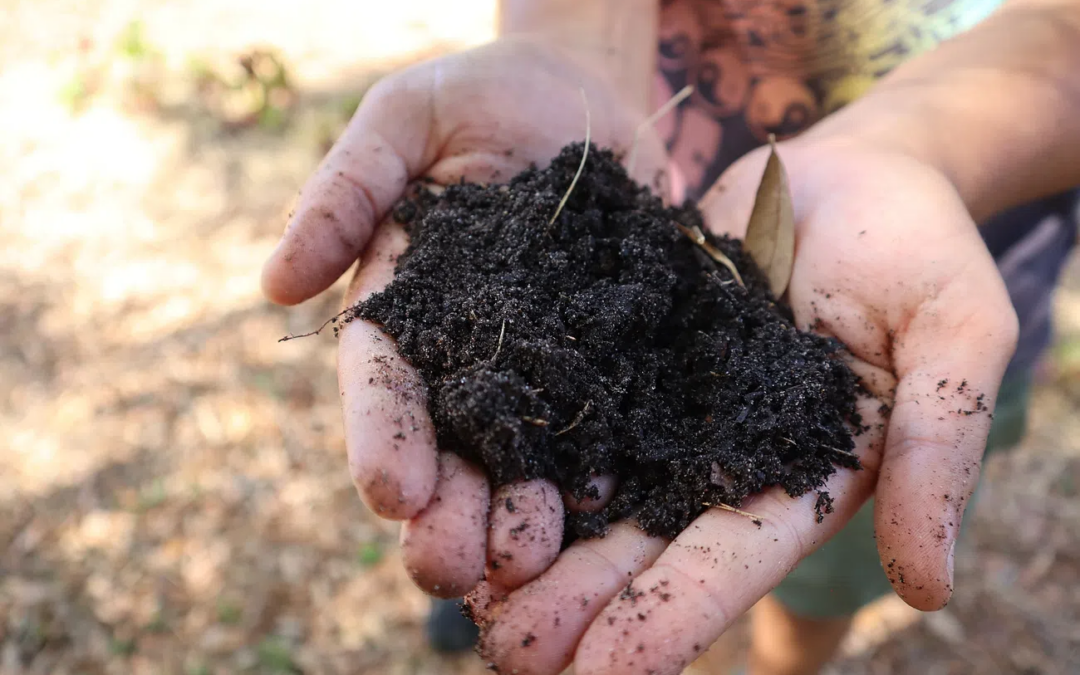
I therefore think about the compost with some regularity. On the one hand, I feel good about it: We're diverting waste from the landfill; we get soil back in the spring; we're contributing to a larger movement. On the other hand, there's a little perversion that creeps in when I clean out the fridge: "Ooh, that lettuce I bought last week that didn't get eaten--awesome, it can go in the compost!" But, of course, it would have been better to either eat the lettuce or not buy it in the first place.

The existence of the compost bin can thus provide a subconscious crutch for overconsumption. While it mitigates some problems, it doesn't address the basic questions of desire and sufficiency operating in my mind and heart when I'm at the grocery store or standing in front of the fridge thinking about what I want to eat. Those questions are still mine to work through.

These issues are on my mind this week because at the heart of Parashat Vayakhel is a story about sufficiency and saying, "Enough." Making good on the Holy One's invitation for everyone whose heart is moved to contribute to the construction of the Mishkan, Moses invites the Israelites to do just that. But not only do they bring--they keep on bringing, to the point that the craftsmen come to Moses to tell him they're being overwhelmed.
"Moses thereupon had this proclamation made throughout the camp:
'Not a single man or woman should make further effort toward gifts for the sanctuary!' So the people stopped bringing: their efforts had been more than enough for all the tasks to be done." (Ex. 36:6-7)

In his Mei Hashiloach, Rabbi Mordechai Yosef Leiner interprets this passage spiritually: "In truth, one does not know the root of their heart—if they are truly giving. The test of this is, if one is asked one time to donate for a new mitzvah, then they can give abundantly, but after they have grown accustomed to this mitzvah they then close their hand from giving. From this it is understood that they are not giving from their roots, for if it came out of their roots they would not refrain from giving." In the case of the Mishkan, the rebbe says, the Israelites kept giving again and again, manifesting that they were truly giving from the roots of their hearts. Hence these verses should be read as praising them.

Now, this would be a good place for me to make a fundraising pitch. (Sure: If your heart is moved, please do donate to IJS!) But/And: I think the larger point is one about the spiritual practice of discerning and knowing our hearts--in our giving, our consuming, our making, our selling. The Torah invites us to consider that, just as there is an economy that exists between the grocery store and the compost bin (or the trash can), there is likewise an economy within our hearts--impulses, either genuine or manufactured through advertising, of need, desire, and craving; stirrings of generosity, openness, and sufficiency.

In an age characterized by consumerism, impulse purchasing, and life-threatening levels of waste, mindfulness practices are more important than ever. They enable us to walk through the grocery store--or Amazon--with stronger, wiser hearts that are less susceptible to the manipulation of desire. And in an age characterized by isolation, division, and epidemic levels of loneliness, our practices likewise help us to cultivate connection, compassion, and resilience. These are two sides of the same coin, two parts of the economy of the heart that, with practice and dedication, can become the economy of the world too.

Josh's Friday Reflections
FREE

Every Friday morning, IJS President & CEO Rabbi Josh Feigelson shares a short reflection on the week in preparation for Shabbat. Josh weaves together personal experience, mindfulness practice, and teachings from the weekly Torah portion in a uniquely accessible and powerful way. Sign up to receive Josh’s weekly reflections here.

  • This field is for validation purposes and should be left unchanged.
The Idol of the Fourth Wall: Ki Tissa 5784

The Idol of the Fourth Wall: Ki Tissa 5784

On Monday night, for the first time since before I had children (meaning at least 21 years ago), I went to the opera. Not just any opera, but the premiere of a new production of Verdi's La Forza del Destino at the Met--a production that lasts four hours and involves a huge cast and elaborate sets. And, because it was opening night, there were a lot of people decked out in their finery. It was a scene.

Yet what made this night so memorable was the singing--and especially that of the soprano, Lise Davidsen, who was making her Met debut in an Italian opera. This was a big deal, as Davidsen, a Norwegian-born star in the opera world, is known for her work in German pieces (Wagner, Strauss). But Italian opera is a different animal, and there was a lot of anticipation about how she would do.

Suffice it to say, she brought down the house--both with her aria before the first intermission and then, most memorably, with her rendition of Pace, pace, mio Dio in the final act. And that was when the moment I'll never forget unfolded. You see, unlike in virtually any other Western performance art form, opera not only invites the audience to applaud mid-performance, after every solo (jazz does this), but, because it's a theatrical performance, there's a pause in the action when that happens (something that doesn't happen in jazz). While most of the time the applause runs its course and the show goes on, occasionally something magical can happen.

That's what happened on Monday: Davidsen's performance was so immediately appreciated and beloved that the audience clapped and clapped, hooped and hollered, yelled "brava!" and "bravissima!" for what seemed like an eternity. Even the conductor and the orchestra started applauding. And Davidsen, trying to remain in character, simply couldn't ignore it--she ultimately had to break character and acknowledge the reality of the moment with a smile and a hand to the heart. Only then could the performance go on.

It was that breaking character--breaking through the "fourth wall" of the performance--that made the moment indelible in my memory, and probably in that of the several thousand other members of the audience, because it is such a rare thing to witness. Performers and audience alike are so committed to maintaining that imaginary wall; it is a fundamental part of the experience of theater and music, ceremony and ritual. We invest spaces like theaters and symphony halls--and synagogues--with an artifice that allows another world to come into being. When we break that wall, the experience can be jarring, just as it can also be magical.

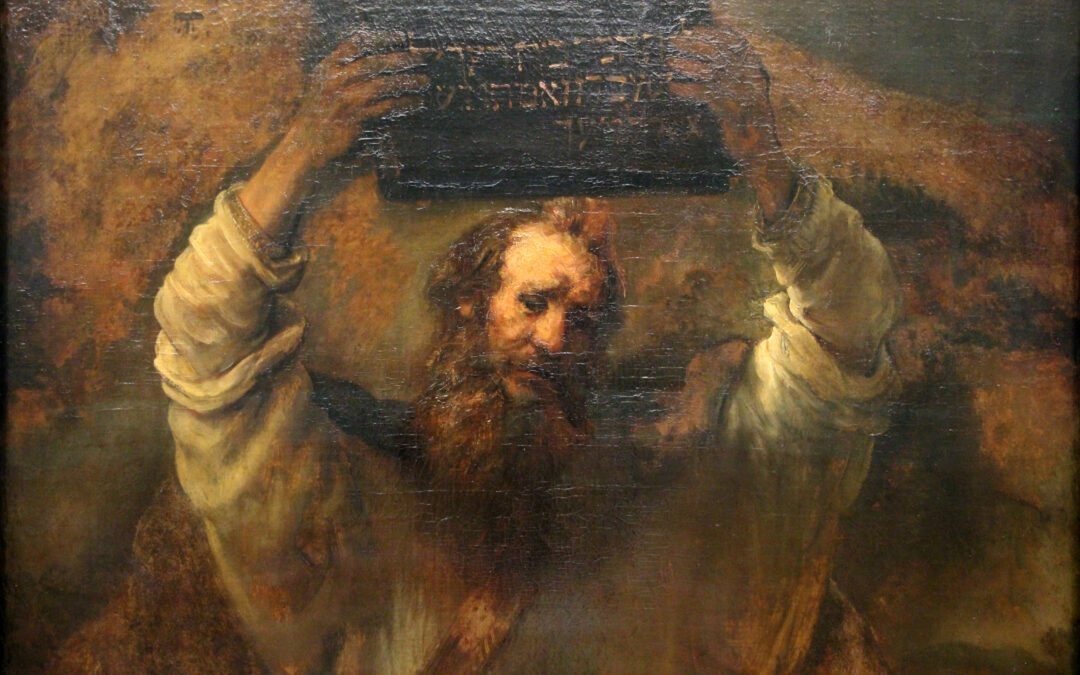
The story of the Golden Calf is a counterpoint to the story of the construction of the Mishkan that it interrupts. And while its most fundamental lesson, of course, is to be ever mindful of the possibility of idolatry, some of our tradition's most insightful, even radical, interpretations see significance not only in the people's construction of the calf, but of Moses's smashing of the tablets of the law in response. As Rashi, quoting the Talmud, famously says in his very final comment on the Torah at the end of Deuteronomy: "The Holy Blessed One agreed with Moses's action, as it says, asher shibarta (Ex. 34:1), which implies that God said, 'Yishar koach,' Good work breaking the tablets."

I wonder if we might think of these two breakings--the breaking of the tablets and breaking character/breaking the fourth wall--as partaking of or expressing a related impulse. In the case of Lise Davidsen, the moment demanded that she break the fourth wall in order to acknowledge her own humanity and that of the audience, which wanted to express their love and appreciation for her singing. In the case of Moses as interpreted by the Talmud, the Holy One recognizes that the moment called not for standing on ceremony, but instead for the expression of emotion--disappointment, anger, rage--of Moses's gesture; or, perhaps, on an even deeper level, the moment called for a lesson that nothing, not even words of Torah written by the finger of God, should become an idol, immune to the realities of the world, and thus the tablets had to be broken.

How do we discern what the moment calls for? That's one of the reasons we practice. Through our mindfulness, we hopefully become aware of the overt and subtle ways idolatry operates in our hearts and minds: in the things we cling to, in our inability to live with uncertainty, in our stubborn desire to maintain an impermeable, unbreakable fourth wall between the lives we live and the stories we tell ourselves about them.

We don't seek to break the fourth wall all the time, of course, or even most of the time. In both opera and in Torah, those moments of breaking are meaningful only because they are rare. But I would suggest that one of the reasons we practice is so that we might  know when those moments have arrived--and that we might have the courage to break those idols when they do.

Josh's Friday Reflections
FREE

Every Friday morning, IJS President & CEO Rabbi Josh Feigelson shares a short reflection on the week in preparation for Shabbat. Josh weaves together personal experience, mindfulness practice, and teachings from the weekly Torah portion in a uniquely accessible and powerful way. Sign up to receive Josh’s weekly reflections here.

  • This field is for validation purposes and should be left unchanged.
Cultivating Joy, Here and Now

Cultivating Joy, Here and Now

משנכנס אדר מרבין בשמחה
When Adar arrives we abound in joy

–Babylonian Talmud Ta’anit 29

An enormous wave of renewed fear and reawakened trauma has been washing over us since October 7. As we follow the news while the war rages on, our joy may be eclipsed by deep-seeded patterns of self-protection, our nervous systems may be highly aroused, landing us in fight or flight mode as we brace ourselves, tense up, and/or withdraw into ourselves and hide in fear. As we enter the month of Adar I this year, we may be wondering if we’re even permitted to cultivate joy in the face of so much hurt.

Our response at IJS is clear. The war between Israel and Hamas is likely to continue for the long haul, and the ongoing rise in antisemitism will probably intensify as well. And so, it’s incumbent upon us to cultivate more joy so we can meet the challenges ahead with a buoyant, hopeful, and resilient heart, and find some inner spaciousness, self-compassion, and freedom in the midst of our individual and collective suffering.

“Yes, but how?” we may ask. Rabbi Israel ben Eliezer, the Ba’al Shem Tov¹ offers a path:

“The Israelite people shall keep the sabbath” (Ex. 31:16).²

Melancholy and the physical husks³ inhibit the soul’s joy… Therefore, the Torah provides a piece of good counsel: “The land shall observe a sabbath of the Lord” (Lev. 25:2).⁴ Meaning, we must bring the land—that is, our physical body—some relief and cessation (shevitah)⁵ so that it might experience physical joy. Through this, the soul can rejoice in Spirit (Sefer Ba’al Shem Tov, Ki Tissa #5).

Our teacher reinterprets the injunction to keep the Sabbatical year (Shemitah) and allow the land to rest as an instruction point for self-care. A sad heart and a tense body, he suggests, tend to block the innate joy of the soul. Providing the physical body (the earthy part of our being) with rest and restoration can release emotional and physical blockages that keep the soul’s innate joy from shining brightly through our whole being.

At IJS we’ve long taught that we can build an inner Shabbat sanctuary–a refuge from the suffering and tumult of our lives–by dedicating periods of mindful practice to cessation, rest, and restoration. Such practice periods afford us the opportunity to care for our bodies by slowing down, releasing tension, relaxing deeply, and coming into a nourishing quality of embodied presence. The more embodied we become, the more we can process and release embodied emotional knots that keep us contracted, fearful, narrow, and reactive. In time and with repeated practice, the simple but powerful act of observing these inner phenomena with loving, non-judgmental attention allows these knots to unfurl, revealing the innate luminosity, freedom, and joy of the soul and allowing its radiant glow to saturate every part of our being.

True, the fear, tension, and trauma of this time may be propelling us to harden; clench up; withdraw; fall into hopelessness; or move into quick, frantic action. Such patterns may be indicators that it’s time to dedicate time for mindful practice. Here are some instructions to support you.

Practice Instructions: Practicing Self-Care, Cultivating Joy

Silence your phone and put the to-do list on hold, even if only for a few minutes. Give yourself the gift of presence, softness, and restoration.

Find a comfortable posture, sitting on a comfy chair, cushion, or mat, with your feet firmly planted on the ground or some blocks or thick books. Alternatively, you may choose a supine posture, lying on your back on a soft, comfortable surface (e.g. a yoga mat, rug, or blanket), and laying a support under the back of your head if you feel any strain in the neck. If you sense any pain in the small of your back, consider bending your knees while keeping your feet planted on the mat.

Your eyes can be closed or open and downcast with a soft gaze. Rest your hands where they land comfortably, palms up or down.

Take some deep, relaxing breaths, drawing the breath all the way down into your abdomen, and noticing the rise and fall of your belly as you breathe in and out. With each inbreath draw your attention into the present moment. With each outbreath, release any tension, tightness, clenching, or bracing, wherever you may sense it in the body.

Continue to do this and notice if any emotional pain arises or makes itself known of its own accord (don’t go looking for it). See if you can sense where you feel it in the body with an allowing, non-judgmental stance. See if you can welcome it on the inbreath and release it on the outbreath. Don’t try to push it away. Instead just notice if breathing out deeply might open some space around the painful emotion or support it to unfurl of its own accord. If this exercise becomes too intense and you find yourself recoiling or becoming numb, stop attending to the breath and shift your attention to the sensations of your feet on the ground or those of contact between your hands (you can even give yourself a hand massage!) for the duration of your practice period. Or you can ground yourself by opening your eyes if they’ve been closed, looking around the room, and naming items you can see.

As you conduct this practice, simply notice if your awareness becomes brighter, more spacious. Notice if any contentment, happiness, or well-being shine forth from within your innermost being–naturally, spontaneously. There’s no need to try to make anything special happen. Simply rest in awareness, notice what you notice, and feel what you feel.

Conclude your practice by stretching in any manner that feels comfortable, revitalizing, and grounding. Offer yourself some words or a gesture of gratitude for practicing, and make a note of anything you may have learned.

  1. The Ba’al Shem Tov (d. 1760) was the charismatic founder of Hasidism. His teachings continue to serve as a source of inspiration and guidance on the spiritual path for countless Jews, and have been fundamental to the Neo-Hasidic theology of IJS since its inception.
  2. Referring to the seventh day of the week, Shabbat.
  3. Though the word “kelipah” (husk) carries a variety of associations in the kabbalistic tradition, in this context it seems to connote something like a stiffening of the tissues in the body.
  4. Referring to the seventh year, Shemitah.
  5. The Hebrew “שביתה” (shevitah) shares the same root as שבת, Shabbat.
Habits of the Heart: Terumah 5784

Habits of the Heart: Terumah 5784

The other night I pulled off our bookshelf a thick volume from my childhood, "The Complete Book of U.S. Presidents." I was into politics and government as a kid, and at some point (before the presidency of Bill Clinton, to judge by the men profiled in the book) I had acquired this one. I'm still something of a government nerd--my kids sometimes get out the almanac on Shabbat afternoons and quiz me--though as I've aged into the life stage in which I can recognize and relate to U.S. presidents as my own contemporaries, I see them with less mystique and, perhaps, more sobriety.
 
In her exceptional 2004 book, Talking to Strangers: Anxieties of Citizenship Since Brown vs. Board of Education, Harvard political theorist Danielle Allen offers a reflection on the model that--we hope, at any rate--presidents of the United States hold out to the rest of us, particularly as it relates to one of the most basic elements of living in a democracy, namely the need to talk to strangers. I quote the full passage here, because I have long loved and taught it and I think it deserves to be read and studied in its entirety:
 
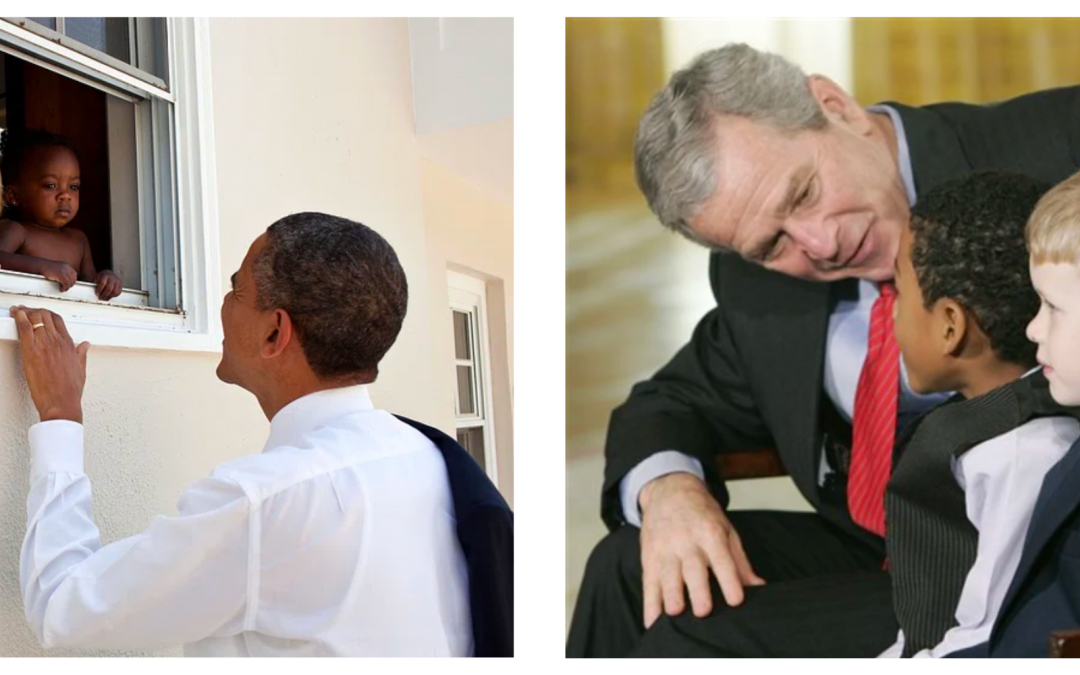
‘Don’t talk to strangers!’ That is a lesson for four-year-olds. Eyes that drop to the ground when they bump up against a stranger’s gaze belong to those still in their political minority. If the experience of the most powerful citizen in the United States is any guide, talking to strangers is empowering; the president is among the few citizens for whom the polity holds no intimidating strangers. Presidents greet everyone and look all citizens in the eye. This is not merely because they are always campaigning, but because they have achieved the fullest possible political maturity. Their ease with strangers expresses a sense of freedom and empowerment. At one end of the spectrum of styles of democratic citizenship cowers the four-year-old in insecure isolation; at the other, stands the president, strong and self-confident. The more fearful we citizens are of speaking to strangers, the more we are docile children and not prospective presidents; the greater the distance between the president and us, the more we are subjects, not citizens. Talking to strangers is a way of claiming one’s political majority and, with it, a presidential ease and sense of freedom.
 
Allen is, I believe, pointing us toward what Alexis de Tocqueville wrote about two centuries ago, namely the habits of the heart that are foundational to sustaining a diverse democracy. How we encounter strangers in our neighborhoods and our communities--whether we approach them with an open-hearted faith or a closed-hearted fear--is one of the constitutive elements of the character of our larger polities. As Judge Learned Hand said in an Independence Day speech in 1944, "Liberty lies in the hearts of men and women; when it dies there, no constitution, no law, no court can even do much to help it. While it lies there it needs no constitution, no law, no court to save it." The condition of our hearts and the condition of our democracy are, in a profound way, intertwined.
 
The heart plays a foundational role in the construction of the Mishkan, the portable dwelling place for the Divine: "Tell the Israelite people to bring Me gifts; you shall accept gifts for Me from every person whose heart is so moved" (Exodus 25:2). The Mishkan was required to be constructed of voluntary donations, not taxes or seized property. Everything within it--all its curtains and rods, the ark and the menorah and the altar, all the clothing of the priests--all of it had to be imbued with an opening of the heart, an opening which was then reciprocated by the Divine: "They shall make me a dwelling place, that I may dwell among them." As Rabbi Meir Leibush Wisser (Malbim, 1809-1879) puts it: "A holy sanctuary like this exists in the heart of every person, and it is possible to create it in every time and era." When we open our hearts, we create a space for the Divine to dwell within us.
 
It's Presidents Day weekend in the United States, and I don't need to remind you that it's a presidential election year. As we move further into this season, the pressures to harden and close our hearts will no doubt increase. So I find myself thinking about the ways in which our spiritual practices can not only help us cope through the inevitable travails of a year like this, but can help us even see in them opportunity--to open our hearts, to have the courage to talk and listen to strangers, to discover anew where and how the Divine might reside within us and the world.
A Conversation with Rabbi Toba Spitzer

A Conversation with Rabbi Toba Spitzer

We are grateful to  Rabbi Toba Spitzer for speaking with IJS President & CEO, Rabbi Josh Feigelson! Please enjoy the conversation recording below.

Rabbi Toba Spitzer has served Congregation Dorshei Tzedek since she was ordained in 1997 at the Reconstructionist Rabbinical College (RRC). Rabbi Spitzer is a popular teacher of courses on Judaism and economic justice, Reconstructionist Judaism, new approaches to thinking about God, and the practice of integrating Jewish spiritual and ethical teachings into daily life.

Factory Reset: Mishpatim 5784

Factory Reset: Mishpatim 5784

As I'm regularly privileged to do, I spent part of this first week of February with 50 rabbis and cantors, some of the 530 alumni of our IJS clergy cohort programs, during our annual Hevraya retreat in Simi Valley, California. First and foremost: We were all okay with the weather. Thankfully, the American Jewish University's Brandeis-Bardin Campus, where we have long held this retreat, is at a high enough elevation to avoid major flooding. While there were some travel delays, everyone arrived safely. And given all that these spiritual leaders have been holding for themselves and their communities in recent months, it didn't take long for the weather to become an afterthought.

During this retreat, I found myself reflecting on a talk I listened to recently by one of my favorite teachers, Gil Fronsdal, about the meaning of "retreat." Gil suggested that the word is a bit of a misnomer, because the label "retreat" suggests that the experience is a pulling back from what's normal: Our normal world is full of hustle and bustle, but on retreat we do something different, live at a slower rhythm, engage more deeply with ourselves and the world. And while that's true, Gil suggested that a better label might be "return"--because the truth is that our actual normal is that slower, deeper reality. It's the fast-paced, surface-level life before and after the "retreat" that we should see as the unusual setting. When we go on retreat, we're really returning to our truest nature.

The rabbi in me was immediately drawn to this notion of return as teshuva. Every year during Elul and Tishrei, we make a special effort to return, as it were, to our factory settings: to reconnect with what we know to be our deeper nature, the go back to the intentions we know we really have. Throughout that intense period of teshuva, it can feel like we're on a kind of retreat, and at the end of it we're remade and reborn.

Yet we don't have to wait for Tishrei, as evidenced by the retreat/return we held for those spiritual leaders this week. For so many of them, this time has become a sacred period of reconnection, renewal, and rebirth. It's truly one of my greatest honors and joys that these holy souls trust us to create and hold the container for them to do that returning.

At morning services on Tuesday, Rabbi Hannah Dresner, one of our wonderful alumni, shared a beautiful teaching about Parashat Mishpatim from the Hasidic master Rabbi Yehudah Leib Alter of Ger's Sefat Emet (Terumah, 1895). At the end of the Torah portion, Moses ascends into the mountain, where he will stay for 40 days and 40 nights while he receives the Torah. The Sefat Emet picks up on the number of 40 days, which in the mind of the Talmudic sages is the same amount of time it takes after conception for a fetus to be formed in the womb. Putting the two ideas together, he teaches that during his sojourn on the mountain (which was enveloped in cloud, suggesting to the midrashic imagination a womb-like experience), Moses "received an entirely new form"--that is, he was literally transformed, renewed, reborn. And further, through the study of Torah, all of us have a share in Moses's experience--we can experience our own renewal and transformation too.

I wonder if we might understand this transformation and renewal as of a piece with the return we experience on retreat or during the fall holidays. I wonder if we might think of it as available to us not only through those intensive experiences but even on a weekly basis (Shabbat) and a daily or even moment to moment basis through our mindful return to our intention. As we say in our liturgy, the Divine "renews creation each day." Likewise, we can, through our practices, experience that renewal, that return to our factory settings, in every time and place.

Homeward Bound: Yitro 5784

Homeward Bound: Yitro 5784

In some of my recent morning meditation sits, I've noticed a feeling of sadness and grief arising. Yes, of course, there's plenty of cause for sadness and grief in the world and amongst the Jewish people. But this grieving was coming up from a different place. It's some anticipatory grieving around a subtle but significant shift in the life stage my wife and I are going through as our middle child prepares to graduate high school and leave home.

In one of those mysterious poetic rhymes in which life can sometimes speak, my children--21, 18, and 11--have almost precisely the same spread in age as my brothers and I (I'm the youngest). And I'm finding echoes of the feelings of loss that I experienced when my two older brothers had flown the coop and it was down to just my parents and me at home. But this time, I'm approaching that point as one of the parents, aware of all the memories of these now-grown children in this house we've lived in for the majority of their lives. While I am happy that both my older boys are making their way in the world--and that we can still look forward to the company of our wonderful little one for a few more years--I get why there's some grief making its presence felt. The shape of home is shifting, and that's hard.

Home, its shape-shifting, and even the undertow of the powerful emotions surrounding it, is a theme in Parashat Yitro--though I think we sometimes have to look for it a little. But when we do, it's right there beneath the surface. Look right at the beginning: "So Jethro, Moses’ father-in-law, took Zipporah, Moses’ wife, after she had been sent home, and her two sons—of whom one was named Gershom, that is to say, 'I have been a stranger in a foreign land'; and the other was named Eliezer, meaning, 'The God of my father was my help, delivering me from the sword of Pharaoh.' Jethro, Moses’ father-in-law, brought Moses’ sons and wife to him in the wilderness, where he was encamped at the mountain of God." (Ex. 18:3-5) Rashi, quoting the midrash, paints a scene wherein Aaron, when he first greets Moses on his way back to Egypt from the burning bush, asks him, rhetorically, "We're already grieving so many people in Egypt; why add to the number?" So Moses sends his wife and children away--a moment, one imagines, of painful family separation, of grieving and loss, of shifting the dimensions and feelings of home.

Home is also present in the Ten Commandments: the mitzvot of honoring parents (#5), honoring marriage (#7), focusing our attention on what is present in our homes and not coveting that which is over the fence (#10)--and the ways we can imagine or have experienced the transgression of those commandments--all of these tap into the strong emotional currents surrounding the nature and shape of home.

I'm fond of saying that I think spirituality is our capacity to feel truly at home in the universe. And in this sense, perhaps the most powerful teaching about home comes not in any of these moments that I've mentioned, but in the mitzvah of Shabbat: "For in six days YHVH made heaven and earth and sea—and all that is in them—and then rested on the seventh day; therefore YHVH blessed the sabbath day and hallowed it." Like the Creator, for six days we label and separate, calling things heaven or earth or sea, this name or that home, home or not-home. All that naming connotes both standing in relationship with and standing over and against the world--at home in the world, but also not fully at home in it at the same time. On Shabbat we rest from all that, from the constant work of naming and labeling and separating. We allow ourselves to feel deeply, truly at home--in the world, in our houses, in our relationships, in ourselves.

Yet Shabbat doesn't only happen every seven days. Shabbat consciousness is actually available to us every seven hours, every seven minutes, every seven seconds. That, in many ways, is the whole point of Jewish spiritual practice. When we can cultivate it and allow it to take root and grow within us, we can respond to the shifting shapes and tones of home more wisely and graciously--because we can sense that, on the deepest levels, we've never really left home at all.

Aging Well (Beshallach 5784)

Aging Well (Beshallach 5784)

In a casual conversation the other day with my dear friend Marvin Israelow, our board chair at IJS and someone nearly 30 years my senior, I shared with him that one of the many blessings of my job is being in the presence of so many people who are "doing aging well." He asked what I considered aging well. I considered his question and responded that I thought it included a few things: Getting clear on what's really important to you, developing the ability to share that openly with loved ones, and living your life that way (and it doesn't hurt if you're blessed with the health and means to do so).

Marvin is an exemplar of this, as are many of the people who serve on our board and in our broader community. That's not an accident, of course--one of our founders, Rabbi Rachel Cowan z"l co-wrote, with Dr. Linda Thal, the book Wise Aging, and for several years IJS even ran a program to train facilitators to lead groups working through the book together (and some of those groups continue to meet to this day). People at what developmental theorists call the generative stage of life more frequently tend to have the time, capacity, and interest to engage in mindfulness and spiritual practices. If you've ever been to our daily online meditation sit, you'll see the proof.

One of the reasons I felt prompted to share my observation with Marvin is that my own life, like most other people's, I expect, has been a mixed bag of examples of aging. My grandfather did aging really well--lots of hobbies and interests, travel, writing moving letters and reflections on Torah at our bnei mitzvah and weddings. My mother, his daughter, did too--singing in choirs, volunteering at the symphony, writing her own reflections, sharing directly her thoughts and feelings. My dad, however, didn't do as well. I always felt he struggled to adjust to life after children, as we had been the center of his life for so many years. While he cared deeply about family, he often struggled to express it with ease.

That difficulty was manifest at the end of his life, as, despite my noodging for many years, my Dad didn't get around to buying burial plots. I don't fault him--that's a hard thing to do, and I can totally understand how it happened. Yet it led to the scene in his final days--again, a scene which I expect many others have experienced--of me standing in the hallway outside his palliative care room on the phone with the synagogue about acquiring a spot in the cemetery.

When I shared this with Marvin, he told me that one of the great gifts his own mother had given him was, several years before her death, talking with him about her wishes for her funeral and ensuring that all the arrangements were in place. As part of her own aging well, Marvin's mom wanted to make sure that, when the time came, her family would not be preoccupied with figuring all of these things out on the spot and could be more present with their loss and with each other. Pretty amazing.

Amidst all the hubbub of leaving Egypt, the Torah offers us the image of Moses running around looking for Joseph's bones in order to fulfill the promise Joseph made the Israelites swear--that they would bury him in the land of Israel (Ex. 13:19). There are many beautiful midrashim on this moment, some of which draw a comparison between the box (aron) that carried Joseph and the box (aron kodesh) that carried the tablets of the Ten Commandments. Within that second aron were not only the intact tablets but the broken pieces of the first tablets that Moses smashed.

The Torah thus offers us a window into the deeply intergenerational nature of the Exodus: the commitments we make to one another that extend beyond our lifetimes; the wisdom of our ancestors we carry with us, metaphorically and, in this case, literally; the ways in which elders help to liberate their descendants and descendants help to liberate our ancestors. The Seder, of course, is a quintessentially intergenerational conversation.

But I think the larger point is that that conversation between generations is not only meant to happen once a year over the matzah, but in an ongoing process that happens in gestures large and small, day after day, moment after moment. Initiating those conversations, living with that quality of awareness and intention, is, at root, what I think it means to age well. May our practices help us do it.

Turn, and Be Turned: A Mercy Unique and Unpredictable

Turn, and Be Turned: A Mercy Unique and Unpredictable

When my son, who has autism, was young, I took him to synagogue on Rosh HaShanah so he could hear the shofar blasts. Listening to the shofar being blown was a physical, sacred focal point on this High Holy Day, and I wanted him to feel included in this regal, ritual re-enactment of the birthday of the world. And I wanted to share these meaningful moments together. As soon as we entered, though, my son said he wanted to leave. It was too loud for him!

No sooner had we stepped outside than he saw a “guy”--my son’s honorific title for men on construction vehicles or lawn mowers–mowing the lawn of a building next door.

“Mommy look: a Guy!” my son beamed, as I faintly heard the Rabbi call “Tekiah Gedolah!” from the synagogue next door.

My son ran ahead to the Guy. He loved the rhythmic whirls of engines, no matter how loud. Unlike the shrill blasts of the shofar, engine noises soothed and engaged him. Before I knew it, this man got off his seated mower and took my son into the equipment shed. They found a tennis ball, and the two of them began playing catch on the lawn.

I had gone to synagogue that morning wanting to share with my son what I anticipated would be a meaningful experience, even a sacred one. Sometimes when I close my eyes on Rosh HaShanah and listen to the shofar, the vibrations of those blasts transport me to a timeless realm into which I meld utterly, somehow touching Eternity in the awakening of Becoming Anew.

I had hoped to share something of this sacred experience with my son, to enfold him in this immersive and soulful, ancient Jewish experience. It didn’t turn out that way exactly. An awakening of a different kind sounded its clarion call and I was being tuned to an epiphany of another sort. Different and, yet, to me, also utterly, sacred.

The sounds of the ball slicing the air, and my son’s delighted shouts were as sacred to me as the shofar blasts. The lawn we were standing on, though hiding in plain sight, was holy ground. Sometimes we are awakened in expected ways. And sometimes revelation happens off the beaten path, with a mercy unique and unpredictable.

Towards the beginning of Exodus, we find Moses busy tending sheep when he sees a thorn bush that is burning. He turns aside to look deeply at that bush and sees that it isn’t being consumed. God calls to Moses from the bush and says, “Do not come closer! Take your shoes from your feet, for the place on which you stand is holy ground!”

The Hebrew word for shoe, na’al, in verb form means “lock”. The Hebrew word for foot, regel, contains the same letters used for the word for “habit”. So, “Take your shoes off your feet” can also be understood as “Take the locks off your habits”.

Sometimes life asks us to unlock our habituated ways so that we can know we stand on the holy ground where sacred encounter occurs. What might you need to unlock today, that you might feel the holy ground beneath your feet? What is calling you to awaken?

Getting Tefillined: Bo 5784

Getting Tefillined: Bo 5784

For the last decade or so, my family's winter vacation has been a time to get together with my wife's sister and her husband. She's a diplomat, so they're often stationed in interesting places (and have free housing to offer us). And when they're not in a foreign country, we have a chance to go to other interesting places together: skiing, warm weather places, places where we can rent a house and just hang out for a week.

While we were on vacation this year in Toronto (their hometown--we made it a bit of a family reunion), my brother-in-law had occasion to be walking through a public spot when he was "tefillinned"--that is, he was approached by Chabad Hasidim who asked, "Excuse me, are you Jewish?" and when he said, "Yes," proceeded to ask if he had put on tefillin today and, if not, would he like to do so.

This has happened to me many times before, and I imagine it may have happened to you or someone you know. (In the halakha or Jewish practice that Chabad follows, tefillin is a mitzvah to be observed only by men, so that likely affects your experience in this case.) There are whole subcultures built around stories of wrapping tefillin with Chabad shluchim (emissaries), both earnest--stories of the power of putting on tefillin for the first time, for instance--and humorous (e.g. funny rejoinders).

My brother-in-law asked a question I've heard many others ask too: Why tefillin in particular? There are plenty of other practices the Lubavitcher Rebbe could have chosen to further the outreach and engagement campaign he thought was so important. Why this one?

Many of the answers have to do with protection: Tefillin have traditionally been thought to serve as a kind of amulet (the infelicitous English translation, phylacteries, comes from the Greek "phulassein," to guard--hence, for instance, prophylactic). The Rebbe launched the "Tefillin campaign" shortly before the Six Day War in 1967, a moment when many Jews sought safety in the face of impending catastrophe. Tefillin provided a valuable spiritual response.

But I think there's a deeper significance reflected in the first mention of tefillin, which comes in Parashat Bo. It appears at the very end of the Torah portion--which has focused exclusively on the story of the Exodus and the rituals the Israelites will engage in to remember it. Tefillin are part of that commemoration, too: "And this shall serve you as a sign on your hand and as a reminder on your forehead—in order that YHVH's teaching may be in your mouth—that with a mighty hand YHVH freed you from Egypt" (Ex. 13:9).

There's a powerful, basic teaching present here, one that the Hasidic tradition emphasizes and that more modern liberatory approaches do as well: The Exodus from Egypt is not only an historical event, but an ongoing reality in our lives. Every moment we are confronted with constriction--in thought, in spirit, in breath. And every moment we have the potential to leave that constriction through mindful awareness and attention. That practice is a whole-body practice: It includes the sense organs of the head, the brain, the heart (where the tefillin box of the arm is meant to rest), and out into our hands and outer limbs. In every moment, with our entire bodies, we can be leaving Egypt. The tefillin, which extend from the crown of the head to the tips of the fingers, symbolize that and even make it something we can feel and touch.

Finally, I think a reason the Rebbe wisely focused on tefillin is that, despite its ubiquity in Orthodox circles, it can feel like a strange and out of reach practice for many Jews. Yet as Chabad has made clear--and as liberal movements have likewise shown through their embrace and expansion of tefillin-wearing beyond only men--tefillin can be a powerful aid in one of the most fundamental aspects of Judaism as a mindfulness practice: that, on the most intimate, personal levels, liberation is always possible, the Divine is always available. If we can practice that, with or without our tefillin on, then we are truly leaving Egypt.

Vaera 5784: Pressing Pause

Vaera 5784: Pressing Pause

When I first started at IJS just about four years ago, one of the good pieces of advice I received was to hire an executive coach. Robin Bernstein, who had served as our interim executive director before I started, stood out to me as a perfect person to support me in that way, and thankfully she agreed to do so.

During our weekly sessions, I would share my latest ideas on this or that opportunity, and we would talk through the ins and outs of making them happen. It became a long list, and our time together was regularly marked by the challenges I faced of leading an organization through adaptation and change--on top of the challenges of pivoting and responding to the pandemic. Robin's guidance was extraordinarily valuable during that tumultuous time.

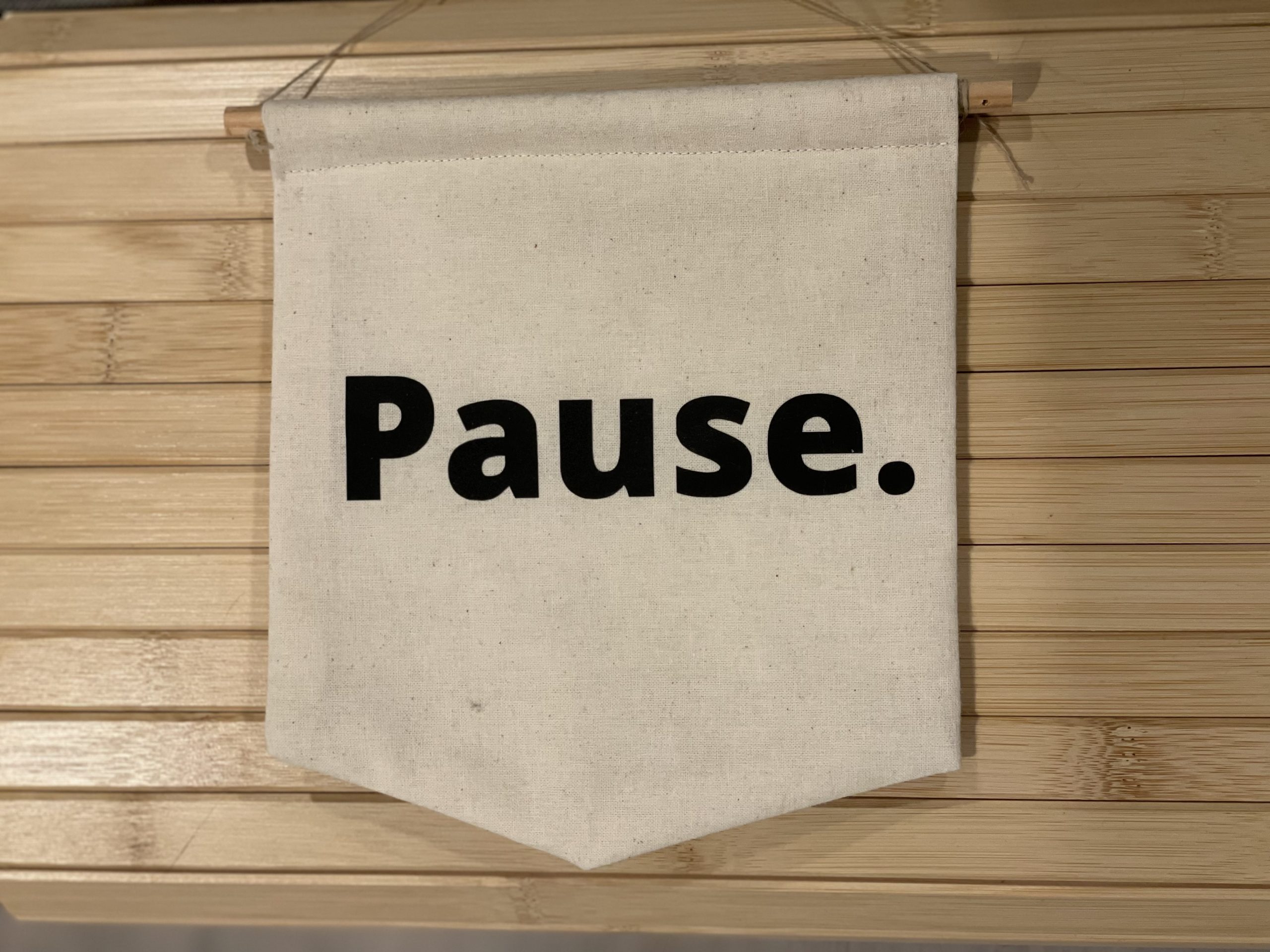
At one point, Robin gently called my attention to my... hmm... kind of peripatetic nature, and my occasional predilection to take action before necessarily fully considering an idea. (I'll cut myself a little slack: It was the beginning of the pandemic and I was brand new. But still, she was right.) She suggested that I might benefit from having a focus phrase in front of me to encourage me to take a beat. I went on Etsy and found a banner with the word "Pause" on it. If you've ever been on a zoom call with me or seen me host our Daily Sit, you've seen it. It's right there, reminding me all the time to breathe, center, and take the time to choose a wise and mindful response.

In the synagogue I attend, we read the entire Torah portion every week. And one of the things that strikes me every year encountering parashat Vaera is where the pauses the reading are placed. Normally, the breaks in aliyot (Torah reading units) come at natural spots: paragraph markings or other obvious transitions. Yet in Vaera, several of the aliyot end in what feel like unnatural places. The fourth aliyah ends at Exodus 8:6, in the middle of the second plague (frogs)--and even in the middle of a sentence that Moses is speaking to Pharaoh. Likewise, the fifth aliyah creates an unnatural pause mid-plague (swarming insects) and in the middle of a sentence God is speaking when it ends at 8:18. Same with the sixth aliyah, which ends awkwardly at 9:16. Given that this isn't the way the tradition normally does things, I've long wondered why our custom developed in this way.

The answer I've come up with is that each of these unnatural endings share something in common. Here are the three verses in question:

Ex. 8:6 (conclusion): "that you may know that there is none like YHVH our God."

Ex. 8:18: "But on that day I will set apart the region of Goshen, where My people dwell, so that no swarms of insects shall be there, that you may know that I YHVH am in the midst of the land."

Ex. 9:16: "Nevertheless I have spared you for this purpose: in order to show you My power, and in order that My fame may resound throughout the world."

Rather than end in a place we might expect--say, the end of the plague--the placement of each of these verses at the end of the reading creates an unnatural pause that serves to highlights knowledge and awareness of the Holy One as the ultimate aim of the plagues and the exodus of the Israelites from Egypt. It's as though the Torah wants to remind us that this isn't only a story about physical or political liberation; it's ultimately a much deeper story than even that. It's a story about genuine freedom from oppression and suffering, which comes about when we, and all beings, can live with the awareness that, to slightly paraphrase the prophet Isaiah, the world is filled with Divine presence. If and when we can truly live with that consciousness, then no form of Mitzrayim--physical, political, or spiritual constriction--will be able to oppress anyone anymore.

To me, this is simply an elaboration on the truth that Judaism is, fundamentally, a mindfulness practice. These pauses in the Torah reading are of a piece with the pause we take weekly on Shabbat, and the pauses we take daily, hourly, and moment-by-moment, to re-ground ourselves in the reality of the Divine presence that permeates creation. Those pauses help us to respond wisely rather than reactively, to live intentionally rather than mindlessly. It takes work and commitment (and a nice sign from Etsy doesn't hurt, either). But that's precisely why we are here, for ourselves and one another.

Crying It Out (Vayigash 5784)

Crying It Out (Vayigash 5784)

I finally watched "Barbie" this week. I was on the plane, heading home after an intensive four days of work, too exhausted to do much of anything else. So, the movies. 

If you haven't seen "Barbie" yet, here's my encouragement to do so. And if you have seen it, here's my encouragement to see it again. It's a smart, funny, and incisive two hours of social commentary on gender: the expectations of other people and society, performing for those expectations even within close relationships, and ultimately the challenge we each face to find our own voice and agency. 
 
Many of the most significant moments of the film involve tears. As Barbie transforms from doll to human, she discovers what it's like to cry ("Achy, but good"). When she reaches her lowest point, Barbie is crying without makeup--an unvarnished, regular human being, exposed and raw. Likewise, Ken's catharsis near the end of the film includes his shedding tears as he comes to terms with his life. None of this is surprising, of course--it's the movies--but still, I found it illuminating to see these characters learn to do something that so many of us do naturally as children and then, as we grow older, learn to suppress. 
 
Parashat Vayigash, the emotional climax of the Joseph story, is filled with crying. Joseph sobs when he reveals himself to his brothers (Gen. 45:2). He cries on Benjamin's neck (v. 14), and then he weeps when embracing each of his brothers (v. 15). Finally, when he sees his father, "he wept on his neck even more" (46:29). All of which is to say that Joseph is a crier. It's as though he's been holding this in for a long time. Now it all comes gushing out, part of the repair of his relationships, of witnessing the remorse and repentance of his brothers, and of being able to, finally, reveal to himself and to the rest of the world who he really is.

 
The days and weeks and months since October 7 have been filled with tears for so many people. Every day I hear from my own family in Israel about the tears they're shedding. "Gotta go," a relative wrote the other day, "have to squeeze in some work before the next funeral" for a soldier from their city. Tears are flowing from Israelis and Palestinians who have lost parents and children, grandparents and siblings; who have lost homes and ways of life; who have lost hope that life could be different than the suffering it is right now. There are also tears of relief and joy: When captives are freed; when soldiers come home; when loved ones are reunited; when we witness stories of support and solidarity.
 
Speaking for myself, I feel like I've stopped shedding as many tears as I did in the early days of the war, when I was kind of a puddle. I've felt myself, like Jacob, become a bit numbed as the suffering has continued for so many weeks. That's natural, part of the body's response that allows me to endure and not be completely overcome by these strong emotions. But I also feel it risks allowing the cool, rational brain to completely take over, to forget or suppress or lose touch with the emotional reality. 
 
The task I feel called to is maintaining awareness of all of it, and using my Jewish mindfulness practices to do so. As Lawyer Barbie says, "I have no difficulty holding both logic and emotion at the same time, and it does not diminish my powers. It expands them." That's an apt description of the lesson Joseph and his brothers learn (though, at least in my experience, it's actually pretty difficult). May we learn and relearn and live into it today.
Remembering the Small Jars

Remembering the Small Jars

How might we kindle an inner light during this dark, traumatic time for our people?

Many of us will gather this Hanukkah to light the menorah as the days grow shorter and darkness prevails. On the surface, this act continues to affirm, as it did during the time of the Hasmoneans more than two thousand years ago, that even as our people are enveloped in the darkness of persecution at the hand of those who would annihilate us we can hold fast to the light of our faith. Certainly, kindling the lights for all to see will take on a heightened level of immediacy and power this year as we affirm that we stand strong in our Jewish values and refuse to cower in the shadows of our fear in the face of rising antisemitism.

But the Hanukkah lights point to something subtler too. According to the kabbalistic tradition there’s a link between the story of Jacob – who wrestled with an adversary throughout the night and emerged victorious, earning the name Israel – and the Hanukkah story, a link that suggests how we might kindle an inner light.

According to the biblical narrative of Genesis 32, after making preparations for battle against his brother Esau and sending his whole encampment ahead beyond the Western side of the Jabbok river, Jacob remained alone on the Eastern banks. Paraphrasing a teaching offered in the Talmud (Hullin 91a), the 11th century French commentator Rashi explains why Jacob remained alone: “He had forgotten some small jars and he returned for them” (on Genesis 32:25).

The Galician hasidic teacher Naftali of Ropshitz (1760-1827) cites the kabbalistic tradition that teaches that the jar of oil that the Hasmoneans would use hundreds of years later to rekindle the Menorah after defeating the Syrian Greeks was among the small jars Jacob had forgotten:

It is written in the mystical books regarding the verse “Jacob remained alone” that the very jug of oil from the Hanukkah story was among the small jars [that Jacob had forgotten]...He specifically went back for those small jars in order to draw down blessing (Zera Kodesh, Homilies for the Festivals, Hanukkah).

Why did the Kabbalists see fit to link Jacob’s small jars with the cruz of oil used by the Hasmoneans to rekindle the lights in the Temple? Perhaps they were trying to convey that during times of great struggle and darkness when our people are under attack, we tend to forget the power of the smallest and simplest of vessels as sources of immense blessing and strength. In the frenzy of trying to manage our fear, anxiety, grief, trauma, and hypervigilance, we may completely forget the subtle sources of light that lie within waiting to be magnified and enhanced so they might shine brighter than we may have ever imagined possible.

Our practice reminds us that it doesn’t take much to kindle an inner light to fortify ourselves for the dark night ahead. Becoming aware of the sensations of our feet firmly planted on solid ground; taking a few deep, mindful breaths; placing a hand on our heart and lovingly affirming, “Sweetheart, in this moment you’re safe”; bringing those who are suffering to mind and wishing them ease and well-being; recognizing the fragility and preciousness of this human life and being more present and grateful with those we love; reaching out to our family and friends in Israel and letting them know that we care – all of these are small vessels that, when opened regularly, contain the fuel with which to kindle a great light within, one that can nurture our courage, wisdom, compassion, resilience, and responsiveness during this painful, dark time and beyond.


​The Spiritual Practice of Revealing Hidden Light

​The Spiritual Practice of Revealing Hidden Light

“Darkness is your candle,” wrote the great Sufi poet Rumi. “You must have shadow and light source both."  

Jewish tradition understands darkness as an inherent and necessary aspect of life; our spiritual task is to extract sparks of holy light concealed within the shadows of life. In this season of encroaching darkness, this practice takes on special import.

According to tradition, the sacred light of the first day of Creation extended to the end of the universe; the Talmud questions how this could be so, since the heavenly luminaries were not created until day four.  Rabbi Elazar answers that the light created on day one

was not that of the sun, but a different kind of light, through which humans could observe from one end of the world to the other. But when the Holy One of Blessing looked upon the generation of the Flood and the generation of the Dispersion and saw that their ways were corrupt and that they might misuse this light for evil, God arose and concealed it from them, as it is stated: “And from the wicked their light is withheld”(Job 38:15).

This light is concealed from human beings when we fall from consciousness and act “sinfully” or unwisely.  After Adam and Eve ate from the forbidden tree, God granted them only an additional 36 hours of this light (from Friday midday through the first Shabbat), after which fell to them and future human beings to reveal the now concealed light through our own initiative. 

We are charged with the task of perceiving and testifying to the continued existence of the or haganuz, the "hidden light," and revealing it through sacred study and righteous deeds. The or haganuz is said to be revealed only to 36 tzadikim, 36 anonymous righteous people (the lamed-vavnikim) in each generation. This number corresponds as well to the total of 36 lights we kindle on a single hanukiah over the eight nights of Chanukah. 

Because we do not know the identities of the 36 individuals by whose righteousness the earth is sustained, each of us must act as if we may be a lamed-vavnik.  By bringing mindful intention to each of our words and actions, we can reveal the or haganuz, the light of sacred awareness which, while often concealed from view, is nevertheless present in each and every moment and experience.

IJS Alumni Team Up for New Book on Daily Psalms as a Spiritual Practice

IJS Alumni Team Up for New Book on Daily Psalms as a Spiritual Practice

Mazal tov to Rabbi Debra Robbins of Temple Emanuel in Dallas TX, an alum of the IJS Clergy Leadership Program and member of the Hevraya (our clergy alumni), who has written a wonderful new book: New Each Day: A Spiritual Practice for Reading Psalms. Based on her previous book on using Psalm 27 as a basis for spiritual practice leading up to the High Holidays, “New Each Day” guides readers to engage with the shir shel yom, the “psalm of the day” as a daily spiritual practice.

Each of the seven psalms forming the basis of the practice is accompanied by a niggun (wordless melody) composed by Cantor Richard Cohn, a member of the current IJS CLP faculty. Here is a link to Cantor Cohn’s niggun for practicing with the psalm for Sunday.

Readers engage each week with a different reflection question on the psalm of that day of the week; each psalm is also accompanied by four Reflections for Focus, one for each week of the month. For the psalm for Rosh Chodesh, the book includes reflections for focusing on the holiday or theme for each Hebrew month.

Here is an example from the book of a Reflection for Focus, this one relating to Psalm 24, the psalm for Sunday:

“Introduction to Sunday, Psalm 24” (pages 6-7)
The Dawn of Creation.
The Beginning of it All.
Psalm 24: The Way to Start Each Week.
Order and openings, internal and eternal gates,
always in God’s Presence.
A seven-day spiritual curriculum,
a core vocabulary for conversation,
as ancient poems speak with each other and us,
and days unfurl toward Shabbat.
The language of lovers,
or of siblings, understood in silence,
by unseen bonds of holy connection…

Sunday sets the schedule
a singular focus in ten verses,
Adonai, God,
everywhere,
all the time,
in everything.

Sunday speaks the language of life,
the mountain of work for the week,
God’s challenge looms large.
Rested and re-souled,
we return to the week, to the words,
tall and strong, noble,
with hope,
this week,
our labor will bear fruit,
for God’s world,
in God’s presence.

Beginnings and Endings (Mikketz 5784)

Beginnings and Endings (Mikketz 5784)

The other night our middle son, Micah, had a basketball game. We always try to light Hannukah candles together as a family, so we waited for him to come home. We wound up lighting the hanukkiah after 9 pm. (They won the game, btw--and he even had a three-pointer.) Natalie and I take fire safety seriously, so we wanted to make sure the flames were out before going to bed. So I decided to sit by the candles as they burned down.

As I sat there gazing at the flames, I realized that so many of the Hannukah teachings and practices I'm familiar with focus on lighting the candles, kindling the flames: observing the light, the idea of creating light in the darkness. Even the way we tell the story about the miracle of the oil has to do with its lighting ("It's a miracle they found any oil!") and the duration of the burning (lasting for eight days).

But that evening my attention was more drawn to the dying of the flames, the way they burn brightly and then, as they get lower and lower, diminish into a hushed presence. You don't know exactly when they're going to go out, but you can sense it's coming--in a similar way to an animal or a person who is clearly in the process of dying. And then, suddenly, the flame is gone, a wisp of smoke rises up, and with it the smell of a candle snuffed out wafts into the air and lingers for a while.

We tend to like beginnings. They convey hope and a future. Perhaps for this reason we follow the custom of Hillel, to work our way up from one lonely candle on the first night to the majestic display of eight candles on the last. Our tradition opted for this position rather than that of Hillel's great rival, Shammai, who argued that we should start with eight candles and work our way down to one.

In a poem she published the other day, Rabbi Jen Gubitz explores an alternative history of Hannukah:

What if Shammai was right?
What if
Each night
We go to light
And there is more darkness in our hearts
Than the night before?

What if we are not like Hillel
Cannot see the light increase
Cannot strike the match
Or have run out of wax and wick?

What if the wickedness
Of the world
Or the pain in our soul
Casts dark shadows
On the glimmering lights?

What if the miracle
Is the single flickering flame
On the last night
While the world
Tries to snuff you out?

I found Jen's poem to be a poignantly honest expression of the Hannukah many of us have had this year--one that feels filled with more loss and heartbreak and darkness than we've felt in a long time, perhaps ever. What if, indeed, Shammai was right?

But I also want to end on a hopeful note, and for that I look to the Torah portion. Specifically, I look to a wordplay that happens in the Hebrew. In verse 53 of chapter 41 of Genesis, the Torah writes, "the seven years of plenty came to an end." The opening word of this verse is וַתִּכְלֶ֕ינָה, vatikhlena, "they came to an end." It comes from the same word that marks the completion of the six days of creation at the very beginning of Genesis, vayekhulu.

Now comes the wordplay: The next verse reads, "and the seven years of famine began." The first word is וַתְּחִלֶּ֜ינָה, vatchilena, "they began." The two words sound almost identical--but they mean precisely the opposite of one another. One is an ending, the other a beginning.

While the meaning of the text could have been conveyed in many different formulations, the Torah, through this exquisite little move, seems to go out of its way to gesture toward something else--a poetic expression, perhaps, of the reality that every ending is, indeed, a beginning; or, put differently, what we believe to be endings and beginnings are illusions. This is, in so many words, exactly what Joseph tells his brothers in next week's Torah portion: "God sent me on ahead of you to make you a remnant on earth" (45:7). What they thought was an ending was, in fact, a beginning.

We are constantly living through endings and beginnings. Some are hopeful, some are painful, many evoke a jumble of feelings. As the final candles in our hannukiot burn down and those wisps of smoke ascend heavenward, may our practices help us live through every moment of transition (which, in reality, is every moment) with ease, wisdom, and peace.

Beaming Light (Vayeshev-Hanukkah 5784)

Beaming Light (Vayeshev-Hanukkah 5784)

This coming Saturday night marks the fifth yahrtzeit, or death anniversary, of my father, Lou Feigelson z"l (pictured above with my mother during the dancing at our wedding; it's a favorite picture.)

While professionally my Dad made his living in real estate and property management in our hometown of Ann Arbor, at his core he was a teacher. Like so many children of Jewish immigrants from eastern Europe in the mid-twentieth century, he was a product of public schools who commuted to the local public university (Wayne State). He was a Boy Scout and went to summer camp, which expanded his world beyond the Detroit of his youth (it was at a Fresh Air camp, Camp Tamarack, that he met my mom). And I think those two forces, school and camp, always remained, in his mind and heart, places and ideas and forces towards which he felt enormous gratitude, responsibility, and joy.

As I've mentioned before in this space, my Dad was our Boy Scout troop's scoutmaster. One of the things I remember learning from him at an early age was how to run a patrol or troop meeting: having an activity for the scouts when they showed up that set the theme for the learning to take place, transitioning into an opening ritual, running a more identifiable period of teaching-and-learning, creating an opportunity for them to apply their newly-acquired knowledge in a fun and engaging way, review, recognition, closing. I probably learned that from him at age 11 or 12. It was only years later, in my own work as an educator (my brothers are attorneys; one of us had to go into the family business) that I came to realize that Dad had taught me what teachers would recognize as a "set induction." He was teaching me to teach.

There is a poignancy, of course, to marking my father's yahrtzeit on the third day of Hanukkah. The holiday is now, and for the rest of my life will be, bound up with remembering him. Which is frankly lovely, as Hanukkah was a holiday my father took seriously. Every morning he would clean out the previous night's wax and get the candles ready for that evening so that they would be ready for us, as though they were reminding us all day, "It's Hanukkah!" as we passed by them. Lighting the candles was a serious mitzvah for him.

And every year Hanukkah, and now my father's yahrtzeit, comes as we read the stories of Joseph, a child separated from his father. While, thankfully, the circumstances were dramatically different (and my older brothers are good guys), like many other young people, I left home at age 18, about the same age as Joseph was sold into captivity in Egypt. And like many others, including Joseph, the years of my young adulthood were marked by looking for mentors and surrogate parental figures. (For Joseph, Potiphar and ultimately Pharaoh are two such people; mine weren't quite so dramatic, but they were very important people in my life.)

The writer Sharon Daloz Parks, who was an important mentor to me as a young professional, wrote an illuminating book on the period of young adult life called Big Questions, Worthy Dreams. The book explores what Parks sees as the key task of young adulthood, namely to "become fittingly at home in the universe, moving from authority-bound forms of meaning-making anchored in conventional assumed community, through the wilderness of counterdependence and unqualified relativism, to a committed, inner-dependent mode of composing meaning." This then points towards "a still more mature faith--an engaged wisdom grounded in the conviction of interdependence, seeking communion with those who are profoundly other than the self."

I think that's one way we can understand the story of Joseph, who, through a long period of suffering and searching and journeying, moves from a sheltered, privileged, even arrogant posture of his youth into a more mature, adult posture as an adult. He acquires a hard-won wisdom. Like his father and uncle, about whom I wrote last week, Joseph, like his brothers, grows up. And in that process of maturation, he and his brothers become shaped into characters who ultimately seem to understand their interdependence, the inextricability of their lives together, their mutual responsibility toward one another, as best evidenced, perhaps, in Judah's poignant line describing the relationship between Benjamin and Jacob: "Their souls are bound up together" (Gen. 44:30). In this, they echo a lesson of Hanukkah, which invites us to recognize our mutuality and interdependence, to learn to kindle fire responsibly, to reflect and nurture the lights in our lives and the world.

In the last five years, as Hanukkah has become bound up with remembering the death and life of my father--as the yahrtzeit candle flickers and glows amidst the Hanukkah lights on the third night--the holiday has become richer and deeper for me. It's easy for Hanukkah to be a children's holiday, and thank God for that. But like all our holidays, its practices are ones that can help us grow bigger and wiser. This Hanukkah, when so many of us so deeply need it, may we kindle our lights within and without, may we deepen in both joy and wisdom, and may our practice lead to the light of redemption and peace.

It’s Darkest Before the Dawn: Vayishlach 5784

It’s Darkest Before the Dawn: Vayishlach 5784

Like so many others, I've been struggling for words since October 7. "Ein milim," "There are no words," is the phrase many Israelis have used to greet one another. For me, it feels like this time has tested the limits of my ability to formulate words, that language is insufficient to reflect and express all the thoughts and emotions I've been having.

Regular readers will have noticed that I've been preoccupied with questions of speech and silence in the last eight weeks, for this very reason. Judaism is, if nothing else, a tribute to the magnificent possibilities of language. It's probably why silence feels so immediately countercultural to so many Jews--even though Judaism has a rich tradition of teachings and practices of silence, many of which we teach here at IJS.

But we're living in a moment when, especially thanks to social media, we may judge ourselves--and we are certainly judged by others--about both our speech and our silence, the words we say or write and the ones we don't. In the last two months, I have received my share of critical feedback for personal or organizational statements that, in the eyes of the reader, failed to say what needed to be said--on behalf of Jewish Israelis, Arab Israelis, Palestinian Arabs, Jews confronting antisemitism, Muslims confronting Islamophobia, the kidnapped, the soldiers, the innocent civilians. Feedback has come from everyone from strangers to former students to close relatives. As a result, I have felt acutely aware of and careful with the words I’ve said and written—and with those I’ve left unexpressed. I have felt a kind of sensitivity, an intense critical gaze, peering over me and judging me both for the letters on the page and the spaces in between them.

To be sure, I've gotten much more positive feedback than negative. And I appreciate every piece of feedback, whether affirming or critical, as it’s a gift that enables me to learn and grow. But if, as the great leadership theorist Ron Heifetz teaches, leadership is the art of letting people down at a rate they can absorb, then--and I'll say this on behalf of my fellow Jewish communal leaders--our speech acts today feel like an acute lesson in its limits. Language doesn’t seem capable of communicating all that we want and need to express. It often feels like I’m groping around in the dark, looking for words and expressions I can’t quite find, waiting for the sun to shine and illuminate them for me.

Parashat Vayishlach brings us to the climax of the story of Jacob, so much of which takes place at night. As Avivah Zornberg has noted, Jacob is a creature of the dark, the night: He steals Esau’s blessing from his blind father, Isaac, who lives in a kind of perpetual nighttime; his dream of the ladder connecting heaven and earth takes place at night; his own deception at the hands of Laban, resulting in his marriage to not only Rachel but her sister Leah too, happens at night; it’s at night that he paints Laban’s flocks, and it’s in the darkness that he flees Laban with his family. Now, as he prepares to encounter Esau, he is again awake in the middle of the night, making preparations.

It is notable, therefore, that Jacob’s famous wrestling match with the mysterious man/angel takes place as the sun is about to rise: “And he wrestled with him until the break of dawn” (Gen. 32:25), and “He said, ‘Let me go, for dawn is breaking,’” (v. 27). After the angel leaves, the Torah notes that “the sun rose upon him” (v. 32). Rashi picks up on a perhaps unusual detail in the Hebrew in this last verse: viyzrach lo hashemesh, literally “the sun shone for him.” Rashi seems puzzled about the word lo, for him. His first interpretation is that this is idiomatic, the way we might say that “the sun was shining on me” to mean that something good happened for us: “When we reached such-and-such a place, the sun shone on us.” In this case, it comes to say, perhaps, that the sun shone upon him and he was healed of the injury he sustained in his fight. Or, Rashi offers, that just as the sun had set when Jacob left home (Gen. 18:11), it now rose to greet him as he returned.

But perhaps the Torah is gesturing at the idea that, after a lifetime of living in the murkiness of the night, Jacob finally experienced the light that comes “seeing the Divine face to face” (v. 31), of arriving at not only a physical but a spiritual home. Perhaps Jacob is finally at home with himself—and thus prepared to encounter his twin brother not from a place of fear or lack, but from a grounded sense of abundance: “To see your face is like seeing the face of God,” he tells Esau. “I have everything” (33:10-11)—I am content, I am not afraid, I can embrace you wholeheartedly.

Despite the Rabbis’ midrashic and Talmudic interpretations, I think the plain meaning of the story is that Jacob and Esau both mature into a posture of generosity. They are willing to give one another the benefit of the doubt, to be charitable in both their speaking and their listening. We don’t know what might have led Esau to that, but we can see that, for Jacob, it comes about after the profound inner work that allows the shadows of the night to emerge into the warmth and clarity of sunshine. That’s something I’m working on for myself as a I read and listen to the words of others, and I hope it’s something you’re working on, too. As we make our way through our own long nights, we need all the help we can get. May we support one another on the journey toward the dawn.

Wordly Wise: Toldot 5784

Wordly Wise: Toldot 5784

I recently heard a podcast interview with Benjamin Wittes, the editor of a blog called Lawfare that I read every now and then. Wittes was talking about the role of context in determining the meaning of speech acts according to the law. He cited the following example: If an insurance salesman says to me, “You have a beautiful house, it would be a shame if something happened to it,” we can understand that as a perfectly normal thing to say. But if a mob boss says the same thing to me, we would understand that as a threat. That is to say, words often don’t have absolute meaning. Rather, we have to understand the context in which they are uttered in order to discern the meaning they convey.

I’ve been thinking about this issue of words and context a lot lately, in the midst of the Israel-Hamas war. There has been, of course, a great deal of public discussion of the meaning and context of the words, “From the river to the sea.” Likewise, we encounter questions about the context in which references to Amalek are invoked, or  the meaning of words like “humanitarian pause” or “ceasefire.” At the rally on the National Mall that I attended on Tuesday, I found myself thinking about how messages that are directed internally to the Jewish community are understood by people in other communities—or how words directed internally within other communities are heard and experienced by our own, given our particular stories and experience. Words like “Never Again” can evoke different emotional responses depending on our own history, who is saying them, where and when.

There is perhaps nothing Jewish tradition does better than consider the possible meanings of words. Torah, in its broadest meaning, is understood not only as the Five Books of Moses, but the thousands of years of interpretation of those books—and of the further interpretation and discussion of those interpretations. For Jews, the work of making and interpreting and understanding language is the holiest thing there is. It is what we mean—or, perhaps more accurately, one of the things I think we mean—when we say, as the Mishnah does, “The study of Torah is equivalent to all the other mitzvot put together.”

Parashat Toldot contains one of the murkiest, most mysterious passages in the Torah: Jacob’s deception of his elderly, blind father, Isaac, in order to steal his brother Esau’s blessing. One of the ways we can understand this story is as a reflection on the complexities of language and interpretation. We can read the story as the struggle of Isaac to understand clearly what is happening—and of Jacob to discern how to behave. As readers, we sense Isaac’s profound challenge: He seems to know something is off in this situation, as reflected in his repeated attempts to verify the identity of Jacob (who he thinks, and wants to believe, is Esau). We can sense Jacob’s struggle to carry out the task. And we can even sense the struggle we, as readers and interpreters, have in discerning the meaning of the story—this last perhaps most clearly when Isaac asks, “Who are you, my son,” and Jacob replies, “I am Esau, your firstborn.” Rashi, unable to live with the idea that Jacob lied so directly, strains credulity by parsing the verse, “I am, [and] Esau is your firstborn.” In the context of the story, such an interpretation is incredible. In the context of Rashi’s larger project, and his theological and ideological commitments, it’s understandable. Context is key.

One of the values I find in mindfulness practice is that it invites, even demands of me to pause and consider the context of words—both words I speak or write and words I hear or read. As I shared recently, I’ve been referring a lot lately to the Buddha’s five principles of right speech (and right listening): Are these words true? Are they timely? Are they gentle? Are they beneficial? Are they spoken with goodwill? Wartime is, almost by definition, one in which our capacity to create space between stimulus and response is reduced. Our world of social media, which is designed to feed and feed on our reactive impulses, intensifies that reality even more.

All of which suggests to me that we need to double down on our practice, to insist on more space and time in evaluating the words we see and hear, and the contexts in which we see and hear them, and crafting the words we put out into the world and the contexts in which we do so (and, it should go without saying, to reduce our time on social media).

So much depends on our words. A few words uttered by Jacob in this week’s Torah portion have an enormous effect on his own life and that of his descendants—right down to today. May our practice help us communicate wisely and listen with clarity and resilience.

The Reach of Our Light

The Reach of Our Light

I was a teenager the first time I was in Jerusalem for Hannukah. Coming from Christmas-centric life in Toronto where every grocery, pharmacy, and book store was splashed in tinsel and endlessly rang out Christmas muzak, I remember how surprising, how moving it was to be in Jerusalem and feel the presence of Hannukah everywhere. Sitting in an Italian restaurant, the whole dining room was brought to a hush as the owner lit the candles of the hannukiah and everyone in the restaurant sang together. Entire main streets of store windows had electric hannukiah bulbs shining into the night. But I found the most striking sight walking in older neighborhoods where the four-story apartment buildings with little courtyards in front of them had low stone walls abutting the sidewalk - and there, sitting on the stone walls, at the edge of each building’s property, were glass aquariums with lit hannukiyot inside them. Along the length of these quiet streets, the sidewalks were flanked with these glowing, flickering outdoor flames.

The Sages of the Talmud teach - it is a mitzvah to place the hannukiah at the entrance of your home, on the outside.  And if you live upstairs, they alternatively assert, place the hannukiah in the window, facing the public domain. Igniting the flame (hadlakah) is only half of the practice at the heart of lighting the Chanukah candles. The lighting is partnered with the act of placing the candles (hanacha) so that they are visible to the outside world. This can be within the warmth and enclosure of your home, shining outward, but if possible, we are called upon to bring this light to the outer edges of our property, to the farthest boundary that our personal domain can reach, touching the public sphere.

What a beautiful image for practice. Chanukah candles serve such a different purpose than Shabbat candles. Shabbat candles are meant to give light to our individual homes, to bring pleasure as well as utilitarian light to the intimacy of our meal and to the company of those gathered around our Shabbat tables. Even the circling gesture of waving our hands three times around the Shabbat candles gathers their light inward. The placement of Chanukah candles, on the other hand, is guiding our intention and attention outward. It is striking that the light of the Chanukah candles should not be functional. It is not intended to light up our homes and we are prohibited from making any mundane use of it. We are instructed simply, subtly, just to look at the light of the candles, and to make it accessible, available for others to be able to look at it too. It becomes our conscious intention for the light that we ignite to touch all those whose lives brush past our own. The boundary between inside and outside dissolves along with the boundary between insider and outsider. And it’s the light that connects us to one another.   

So let’s ask the question that carries the literal flame of the candles into the illumination of our souls - in this dissolving of boundaries, how do we strengthen and direct our inner light so that it extends to the outer limits of our reach, enabling many, many others to be lit up by it? 

R. Levi Yitzchak of Berditchev (18th century Hasidic master) teaches that hanacha, placement, comes from the same root as menucha, rest. He states, “And menucha – rest is called the container in which you put love.” The practice of lighting and placing the Hannukah candles is teaching us to locate a quality of restfulness within. There, we create a container within us for love to be nurtured and amplified so that it can be felt by others, so that it becomes visible to others in the softness and warmth of our gaze, our presence. As the hours of sunlight grow brief and night stretches long, as the air gets colder and the impulse to hibernate and withdraw might feel strong, we are invited to instead extend warmth and light through our whole beings to everyone we encounter.  We’re invited to be creative about the ways we reach beyond our usual circles, to extend loving. We’re invited to be daring in thinking of the directions we extend ourselves - to reach toward painful places, to meet people in the rifts of conflict, in the dissonance of difference, to find delightful strangers and mirror to them their beauty and goodness and to receive others mirroring your own beauty and goodness back to you.

We have the opportunity to help each other in this. Know that we are in a collective project, generating collective energy in reaching light outward with compassion and kindness. Know that you can bring relief. Know that you can bring love into much needed places. The more we practice, the more radiant the inner container becomes, and the further and clearer its light can extend.

Loving and Pursuing Peace

Loving and Pursuing Peace

Pursuing peace in our incredibly polarized and conflicted world can be a tall order. But our mishnah has some guidance for us in this endeavor. It is written there that we must be like Aaron, the high priest, both rodef shalom—pursuers of peace—as well as ohev shalom—lovers of peace. Pursuing peace has to do with our action in the world - we have to go for it, to work for it and make it happen! And ohev shalom, which the rabbis teach actually proceeds rodef shalom—has to do with loving peace.

Mindfulness: The Foundation for Peacemaking (Vayera 5784)

Mindfulness: The Foundation for Peacemaking (Vayera 5784)

Twenty-five years ago, right out of college, I lived in Jerusalem for a year. While I grew up with a very strong Jewish identity, I didn't receive the kind of Jewish education that would allow me to study Talmud in the original Hebrew/Aramaic or to walk into a beit midrash and know what all the books on the shelf were, much less how to open them up and study from them. In college I met people who did have that kind of education, so I decided to spend my first year after graduation acquiring it. That took me to Jerusalem.

My mom had a friend from Ann Arbor whose son was my age--he went to the high school across town, so we didn't know each other--and who was also spending the year in Jerusalem. His name was Chris, and his family was of Palestinian Arab ancestry. Chris had studied to be a journalist and had an internship that year at the Jerusalem Times, an English-language Arab newspaper. Our mothers suggested we meet. We did, and we became friends.

Chris spent a couple afternoons a week tutoring students at Bethlehem University in English. He invited me to join him and I was excited to go. These were the heady days between the Oslo Accords and the second intifada, the days of od yavo shalom aleinu. Transportation wasn't difficult, though it did require bringing my passport along for a ride on a bus line serving the Arab community that left from just outside Damascus Gate. An Israeli soldier boarded the bus to check everyone's papers on the return trip. I made the journey several times.

These were still the nascent days of email and well before social media, so I confess that I've fallen out of touch with the people I met then, including Chris. But a few memories stand out a quarter-century later, memories I find stirring in me these days.

The first is that, while I felt safe enough to go, I did not feel safe enough to identify as a Jew. The rest of the time I lived in Jerusalem I walked around wearing a kippah and flowing tzitzit. But as I approached Damascus gate, I took off the kippah and tucked the tzitzit into my pants. As soon as I got off the bus on Derekh Hevron, on the edge of the Jewish neighborhoods of south Jerusalem, the kippah went back on and the tzitzit came back out.

Related to this, I remember an encounter with a young woman at the university. At one point she asked me, "Are you Arab?" I told her I wasn't, but I didn't tell her I was Jewish, either. "Amazing. You look like an Arab."

I remember disembarking from the bus and walking down the hill toward my apartment, the sun beginning to set over Jerusalem. And I remember feeling, even in those more hopeful days, this indescribably melancholy feeling: My bus ride had been less than ten miles; genetically, it seemed, I could pass for an Arab (and of course she could pass for a Jew); and yet these two societies felt worlds apart.

The story of Abraham prompts me to reflect on some elements of my own story here: the passing (in the form of Abraham trying to pass off Sarah as his sister); the so-close-yet-so-far nature of the relationship between Ishmael and Isaac and their descendants; questions of speech and silence, of honesty and something less than it; questions of fear and courage.

While Parashat Vayera contains the Greatest Hits of the story of Abraham--welcoming the angels, standing up for the people of Sodom, the Akedah--there's a little story nestled within it that often gets overlooked. It comes just after Hagar and Ishmael are rescued in the wilderness and before the Binding of Isaac. It's the story of Avimelech and Abraham resolving a land dispute. Set against the backdrop of their previous history, which involved deception and the threat of sexual violence, it's all the more remarkable: Abraham and Avimelech are able establish a kind of working trust of each other. "The two of them made a covenant," the Torah says (Gen. 21:27) and "Abraham resided in the land of the Philistines for many days" (v. 34).

Our work at IJS is not that of policy, so it seems far out of my lane to comment on military or political strategy. And in the fog of war and the age of quick takes and misinformation, I find myself doubling down on the importance of listening, discernment, and what I've come to call the silence of presence. Yet one clear thing I've found arising for me over the last few weeks is an increasingly urgent reminder of the foundational nature of mindfulness practice for peacemaking--both within ourselves and between each other.

Peace is made possible by, among other things, our capacity to be aware of, honest about, and yet not necessarily governed by our emotions. This is the bedrock of resilient listening. When we can practice mindful awareness grounded in compassion; when we can practice setting wise boundaries while grounding ourselves in love and interconnection; when we can practice tikkun hanefesh, repair of our own hearts and spirits, then and only then can we possibly begin to create the conditions for honesty, coexistence, and peace--the conditions for genuine tikkun haolam. 
 

The Sound of Silence: Lekh-Lekha 5784

The Sound of Silence: Lekh-Lekha 5784

When I was little, I remember I would usually wake up and come out to the kitchen to find my mother sitting there with her coffee, reading a book or the newspaper. She would often have a notebook beside her, and whatever she was reading was marked up with sticky notes. In later years, the books and sticky notes weren't there as much, and I would find her with just the coffee. I asked her about it once, and she told me that she loved the quiet time in the morning, before everyone else was up. It was her time to be alone, to listen, to think.

Like mother, like son: My best writing time (the time I'm writing this, in fact) is invariably early in the morning before anyone else in the house is around (and with coffee, of course). Most mornings I come downstairs, feed the dog and the cat, put in my earbuds and do a meditation sit. It's my time to be quiet, to be alone, to listen, to think, before the rest of my household, the rest of the world, wakes up.

I've grown to cherish this time, especially these days, because of the quiet, the silence. Perhaps that's because, like many others, I've been preoccupied with questions of silence and speech of late: Who is speaking up, and who is being silent? The phrase, "their silence is deafening" is all over the place. I see accusations of sinful speech or silence a lot right now: This university president or that corporate executive was silent--they didn't say anything, or they said something but were silent about something else, and that makes them a moral failure. This is the stage we've reached in the current crisis.
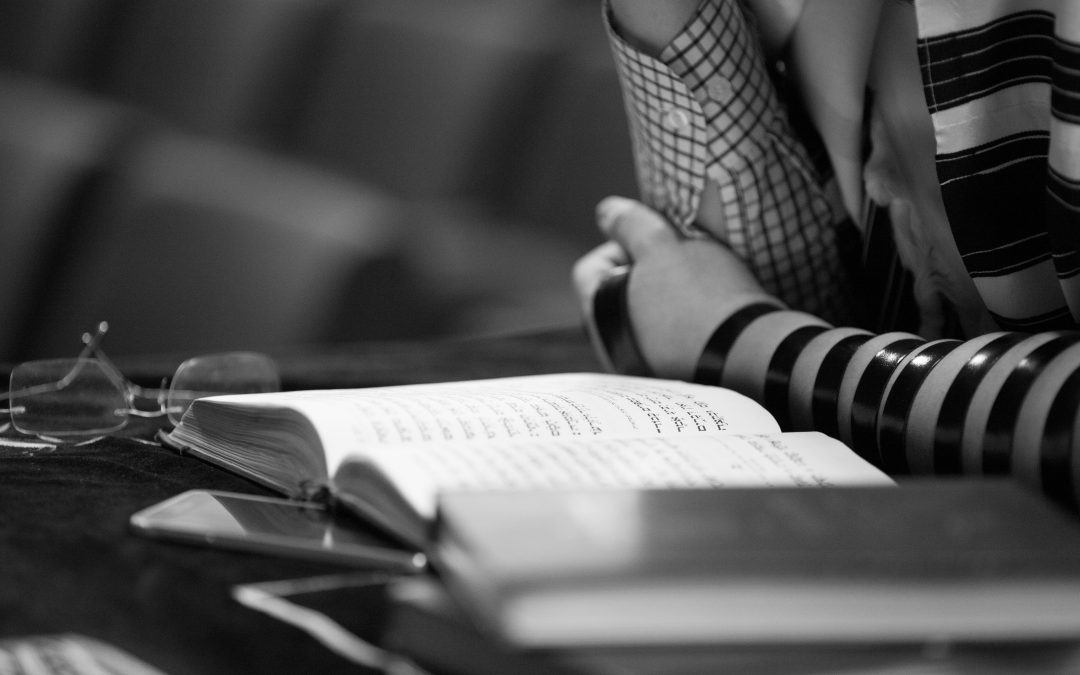
Particularly in the age of social media, I think a lot of us feel like we have to speak. Since I was a child, I've been taught Elie Wiesel's words about silence always aiding the oppressor, and so I feel a moral duty to speak. I feel Professor Wiesel's quiet, intense moral gaze looking over me and asking, in his powerful whisper of a voice, "Josh, are you remaining silent?"

Yet Elie Wiesel was also a Hasid, and he knew the value of silence. Sama d'ukla mashtuka, silence is a balm for everything, says the Talmud (Megillah 18a). I imagine, if I were having a conversation with him, that he would have reminded me that there are multiple kinds of silence: Silence of absence, yes, but also silence of presence. There is a silence of fear, and there is a silence of courage. There is a silence that communicates disconnection, and there are silences that embody deep relatedness. And there is the silence of gestation, of creation, of possibility: The silence of the early morning, the silence that comes before the Creator says, "Let there be light."

One of the things that makes the story of Abraham so intriguing is the seeming inconsistency between when Abraham speaks and when he is silent. Most famously we have his speech in protest at God's planned destruction of Sodom ("Far be it from You to do such a thing, to bring death upon the innocent as well as the guilty, so that innocent and guilty fare alike. Far be it from You! Shall not the Judge of all the earth deal justly?” Gen. 18:25) and his silence when commanded to sacrifice his son (22:2-3). These both come in next week's Torah portion. But we find intriguing moments of speech and silence this week, too: his plea on behalf of Ishmael ("O, that Ishmael might live by your favor!" in 17:18) versus his silence at God's very first command, to leave everything he knows behind and go to an unknown land--and versus his deceitful speech, which is a kind of absence-through-speech, with Pharaoh (repeated with Avimelech next week) to say that Sarah is his sister and not his wife.

I'm of the last generation to come of age before the internet and social media. (We still learned how to use a card catalog in school.) Perhaps that conditions me to try to recall what life can be like when we don't feel the constant need to make statements, to speak, when we can create room for silences of presence, silences of possibility. I don't presume to have a full answer to the problem of speech and silence right now, and it seems to me Abraham, too, was unclear. In some moments, speech is appropriate; others call for silence. And, as Abraham shows us, sometimes, perhaps much of the time, we may not get it right. Perhaps that can help us be a little more gentle with ourselves.

By way of conclusion, I want to share that I've found myself going to a core Buddhist teaching in the last few weeks as I've been reflecting on these questions of speech and silence, the practice of shemirat hadibbur or mindful speech, namely the Buddha's five principles for right speech. These are often formulated as questions, and I find they can be useful both as I'm contemplating my words and as I'm listening to the words of others:

      1. Are these words timely?
      2. Are they true?
      3. Are they gentle?
      4. Are they beneficial?
      5. Are they spoken with goodwill?

Jews are a people who love language. We love words. We believe the world was created through an act of speech, and our tradition conceives of every subsequent act of speech as an act of profound power--to create and nurture, to hurt or destroy. In this time of so much pain and difficulty, and in this age of so much speech, I think we could all benefit from more mindful silence for the sake of more mindful, creative, and life-sustaining speech.

Why I Went to Wadea’s Funeral: Noah 5784

Why I Went to Wadea’s Funeral: Noah 5784

On Monday morning a headline crossed my newsfeed: A six-year old boy in suburban Chicago had been brutally stabbed to death by his family's landlord. His mother was severely injured while trying to protect him. 

The story was tragic. What made it even more significant was that the boy, Wadea Al-Fayoume, was, like his mother, from the Palestinian community. While the landlord was--I hate to say it, thank God--not Jewish, the authorities are treating the murder as a hate crime because it seems the landlord was activated, in part, by the Hamas pogrom in Israel on October 7.

I live in the Chicago area, and I knew right away that, if possible, I wanted to attend the boy's funeral. I felt called to go for a few reasons: As an American, I’m heartbroken and outraged that this would happen to any family, or that anyone would feel unsafe because of who they are; as a parent, I’m shattered at the family’s loss; as a Jew and a Jewish leader, particularly in the present moment, I wanted the family and the larger Palestinian community in Chicago and the United States to know that I bear witness to their pain. If there is anything we should be able to come together on, it is that the death of children is unspeakable sorrow. We should be able to show up for one another for that. And at a time when I feel so powerless to help my own people in Israel, this act of humanity and bridge-building felt like a small concrete action I could take.

I went with a few colleagues. As we approached the neighborhood where the mosque was located, it was evident this was a huge event. Traffic was backed up. We had to park on a side street and walk ten minutes, along with hundreds of others streaming toward the mosque. The mosque filled up, and the crowd spilled outside into the parking lot. It felt like thousands of people were there.

Since I went, some have asked me whether I felt unsafe. The answer is no. In fact, I was warmly welcomed as an honored guest. Dozens of people came up to me to shake my hand and thank me for coming. A few of us hugged. Everyone I spoke with seemed to share the sentiment that what the vast majority of people want is simply to be able to raise their families and live in their communities in peace. That felt like a small glimmer of hope.

Parashat Noach is, among other things, a story of violence, terror, survival, and rebuilding. As I referred to in my post last week, it is part of the Torah's larger meditation on the fraught nature of siblinghood, the profound difficulty humans seem to have in living together in peace. And, in the concluding story of the Tower Babel, it offers ground for reflecting on the values and complexities of languages and cultural identities--dynamics that were all present in the moment, that are all present now. There is a reason we read this book again and again: "hafoch bah v'hafoch bah, ki hakol bah--turn it and turn it, for all is within it." 

After the flood, God promises Noah not to destroy the world again and establishes that the rainbow will serve as a sign of that commitment. Rebbe Nachman of Bratslav (Likkutei Halakhot Shabbat 7:70) comments that the rainbow (KESHET) evokes the shofar blasts of Rosh Hashanah (teKiah, SHevarim, Truah). There are many ways we might interpret this connection: A call to repentance, a call to duty. What stands out to me is that both the shofar blasts and the rainbow contain within them a full spectrum: of emotion, experience, language, culture, people. They ask of us: Can we make room for all of that within our own hearts? Can we find a way to live with ourselves--and with one another? For that, at the end of the day, is the basic question of the covenant, whether it is the Covenant of Sinai or the Covenant of Noah. The stakes of these questions, as we are being so painfully reminded right now, are life and death.

I'll conclude with a note about the kippah I wore (pictured): I generally only wear this kippah on Yom Kippur. On most other days I wear a black one. But at the funeral I wanted to make sure people saw I was there, that a rabbi showed up. I hope in doing so I was able to effect some modicum calling us all, inviting us all,  back to the demands, expectations, and possibilities of the Covenant of Noah. I hope I was able to perform a small act of kiddush Hashem, a sanctification of the divine name, in a time when that name has been so horribly desecrated.

May all our children know no more suffering, may our families and communities know no more sorrow.

Mindfulness as a Conflict Resolution Resource

Mindfulness as a Conflict Resolution Resource

Written by Rebecca Schisler in 2021, edited and adapted 10/2023

The Mishnah, the core text of the Talmud, relays a concept called “mahloket l’shem shamayim” – conflict ‘for the sake of heaven.’ The ancient rabbis valued an approach to engaging in difficult discourse which has the potential to preserve and even deepen or strengthen relationships, rather than harm them.

The critical role of mindfulness in “mahloket l’shem shamayim” became apparent for me the other night while I was on the phone with a loved one. We get along well, and he is someone whose ideological perspectives and outlooks are often similar to mine. But we found ourselves in a tense, blameful and defensive conversation with the heat rising.

In the middle of it all, I asked him if we could just take a ten-minute break. We hung up and I laid on my bed and breathed. My impulse was to come up with my next line of defense to make him feel remorse for saying something hurtful – but my experience with mindfulness practice supported me in remembering that the most skillful thing to do in a non-urgent moment of heat is to pause and allow my nervous system to regulate. I practiced mindful breathing for ten minutes. It worked. My emotions settled and my mind cleared a bit.

I called him back. Our conversation continued with more space and openness, and concluded with us joking, mutually apologizing, and appreciating what had happened.

We just needed that moment of space.

Much of what reduces harm in a moment of conflict, and potentially even makes it productive, has to do with our ability to self-regulate when we get triggered. It’s crucial that we learn how to do this – and unfortunately, it’s a skill that not all of us were taught. It’s also helpful to know the science: on a physiological level, when I am experiencing a strong emotional reaction, my access to my prefrontal cortex is compromised. This is the part of the brain that is able to empathize, reason, think critically, and self-reflect.

This means that it is unwise to attempt to have a productive conversation about difficult issues – particularly with a loved one, or someone who poses no threat and whose relationship I value – when either one of us is in a heightened state of significant emotional reactivity.

When the heat is rising, it’s time to pause, take a break, and breathe – not to plan the next line of attack or defense. In this pause, it’s best to literally just breathe. I set a timer if I need to, and focus on my breath – not my thoughts. Then, the nervous system begins to self-regulate. I am able to think more clearly. And I am less likely to say something harsh or hurtful that I’ll later regret, likely won’t help get my point across anyway, and may further the divide between us.

Global tensions are high right now. We are swirling in environments of reactivity, blame, violence, and trauma. All of this has an impact on our mental and emotional stability, and interpersonal conflict is more likely to erupt.

My friend and I agreed that a frontier in leadership must be cultivating skills for engaging in conversation with people who hold different opinions and values. There would be more solidarity, collaboration, and peace among us if we could learn to effectively process our emotions and express empathy with those with whom we disagree. This can be incredibly difficult, especially when conversations trigger our own traumas. It gets personal. But it’s possible, and always worthwhile.

As someone with loved ones across political and ideological divides, I’m not a stranger to triggering conversations. Though never easy, if engaged in a skillful and compassionate way, they are often where some of the most important change, epiphany, and healing in our lives and in our communities occurs. I’ve failed plenty of times, but I’ve learned a lot and have also succeeded in moving the needle towards greater understanding and mutuality.

If you’re struggling with how to have difficult conversations with loved ones during this time, or any time, you can utilize some principles of mindfulness practice in a basic three-part process:

      1. Become aware that you are in an emotionally reactive state. You may notice your heart beating quickly, that you are holding your breath, the heat is rising, you feel emotionally overwhelmed, you can’t find the right words, etc.
      2. Choose to pause. Gently remove yourself from the interaction if needed.
      3. Take some space to focus on your breath. 5-10 minutes of mindful breathing is ideal, but even 5 to 10 deep breaths can shift the nervous system enough to have a beneficial impact.

Learning foundations of mindfulness can support us in nurturing our capacity for wise response. IJS holds daily meditations online with guest experts in the field of Jewish mindfulness, and our Gift of Awareness course is a great starting point for beginning a practice.

During these turbulent times, may we support ourselves and one another in cultivating skills for compassionate and effective communication across divides, so that we can unify our hearts in pursuit of healing and peace, both in the world and in our own communities.

Bereshit 5784: Band of Brothers

Bereshit 5784: Band of Brothers

If there's one constant to my life, it's siblinghood. From the moment I was born, I have been the youngest of three brothers. Since my second child was born, I have been the father of siblings (pictured above on a family picnic when they were little). When my brothers and I got married, I learned what it meant to have sisters.

But my experience of siblinghood didn't come about exclusively through biology or marriage or family life. In my rabbinic school class, we often addressed each other--half-jokingly, but also kind of seriously--as "Holy Brother!" (and often still do). In the Boy Scouts we referred to each other as brothers--the way fraternity or sorority members do, the way monks and nuns do, the way soldiers do.

And perhaps all of that has led to a lifelong preoccupation with this notion of siblinghood. What does it mean to be a brother or a sister or a sibling? Some of it has to do with sharing a language: the intimate language of family, the shared people and places and jokes. Some of it has to do with sharing experiences: shared purpose or effort or struggles. And some of it has to do with the sense of responsibility that's present: My brothers and I know, without even asking, that we and our families can show up and stay at each other's houses and take food from the fridge. We know, without even asking, that we can list each other as emergency contacts for our children.

The Book of Genesis is, as much as anything, an extended reflection on the meaning of siblinghood: The children of Noah, the children of Terach, Isaac and Ishmael, Rebecca and Laban, Jacob and Esau, Rachel and Leah, Joseph and Dinah and their brothers. Every Torah portion in Genesis is animated, often centrally, by questions about siblinghood--about what it means to be a brother or sister, what it means to share a common ancestor.

Of course, at root the Torah teaches us that we all--all human beings--ultimately share the same common ancestors, Adam and Eve, and beyond that, the same divine source. And thus the primordial story of siblings, that of Cain and Abel, serves as something of a touchstone for this whole exploration. This is the story that essentializes siblinghood into questions of violence and responsibility:

When they were in the field, Cain set upon his brother Abel and killed him.

God said to Cain, 'Where is your brother Abel?' And he said, 'I do not know. Am I my brother’s keeper?'

'What have you done? Hark, your brother’s blood cries out to Me from the ground!'

(Gen. 4:8-10)

While Cain's rhetorical question, "Am I my brother's keeper?" rings in our ears as a fundamental question about human life, the words that immediately precede them are equally important. Those words are: lo yadati, I do not know. Rashi, quoting Bereshit Rabbah, captures the importance of these two words: "He became a gonev da'at elyonah" -- a deceiver of the Most High, or, perhaps more literally, he stole ultimate awareness. In his moment of rage, Cain was overcome; and in the moment following, when confronted with his action, he would not or could not allow his awareness to recognize it, so he lied to himself and to the source of genuine awareness. That led him to ask a question, "Am I my brother's keeper?" which, it would seem, he meant rhetorically--"I bear no responsibility for him!" And we can understand why Cain spins this story in his mind, because when he is ultimately forced to confront the reality of his actions, he is overcome once again: "My sin is too great to bear" (4:13), he cries. In the immortal words of Jack Nicholson: He can't handle the truth.

The question of siblinghood--who, if anyone, we call a brother or sister or sibling; who, if anyone, we label as a friend, a neutral, an enemy; who, if anyone, we call a tragic but necessary casualty; and what, on the basis of that labeling, our posture is towards them--this is one of the deepest, most difficult, and most important questions we confront. We are living through a time suffused with these questions right now. It's why so many of us are shedding tears.

It should go without saying that the violence and brutality suffered by so many Israelis at the hands of Hamas last Shabbat were heinous desecrations of the image of God. Failing to acknowledge this is, itself, an act of "stealing ultimate awareness." Likewise, failing to acknowledge that those who were murdered and kidnapped seem to have been targeted for no other reason than that they were Jews (or people who were with Jews at the time) is an act of seemingly unconscionable disbelief. We Jews, who have endured so much trauma through the centuries, are understandably activated by it.

And: The question of da'at, awareness, is ultimately the question that keeps coming back--day by day, hour by hour, moment by moment. Where are we directing our awareness? Toward whom? With what kind of quality or valence--curious, compassionate, angry, something else? What do we notice, and what do we--willingly or unwillingly, wisely or unwisely--overlook?

Just last week, our people read the Book of Kohelet (Ecclesiastes). My own wonderful rabbi, Ari Hart, like many others I expect, went to that book for guidance as the violence unfolded in shul in real time. Ari invoked Kohelet's most famous passage: "A season is set for everything, a time for every experience under heaven." Speaking for myself, the time isn't right yet--I still feel too raw to create the necessary space to reflect dispassionately on where and how to train my awareness. Hostages are in harm's way. My own loved ones are on the front lines. My practice helps, but there are still many many moments when tears cloud my vision and my thinking. And I'm not living under threat of rocket fire.

And, in the same breath, the gifts and demands of da'at, of awareness, this most basic element of our humanity and thus our status as images of the Creator--those gifts are ever-accessible, those demands are ever-present. And so I practice, and I invite you to practice, in the aspiration that, through all the fog and haze, in the midst of all the chaos and tumult in the world and in our mind-hearts, our da'at might be whole and our bodies, our spirits, and our worlds--and the bodies, spirits and worlds of our brothers and sisters and siblings, and of all beings--might be at peace.

Bereshit 5784: Band of Brothers

A Special Message from IJS

Dear friends,

Like so many others, I awoke this past Shabbat morning to the heart-rending news from Israel. And like so many others, as the hours and days have unfolded, I have struggled to contain all the emotions: fear, grief, anger, confusion, gratitude for those who are keeping others safe and bringing healing to those in need. As I danced with my community on Simchat Torah--somberly, with tears in my eyes--I felt a new appreciation for Rabbi Abraham Joshua Heschel's famous words about praying with his feet.

Like so many others, I am praying for the well-being of my own family, friends, and loved ones, including nieces and nephews who have been called back to active duty, a brother and sister-in-law and many good friends who, like millions of others–Israelis and Palestinians–must now seek shelter from bombs and missiles. These prayers come alongside our collective prayers for the safe return of those taken captive, healing for the injured, safety for innocents, and a peaceful resolution to the war as soon as possible.

And, perhaps like you, I find that in these times, I lean on my spiritual practice as much as ever. I find comfort and insight arising from meditation. I find healing in prayer, chant, and song. I find wisdom and depth in the words of Torah.

But most important, I find that now is when community matters most to me. It is in that spirit that I write today to say: the IJS community is here for you. Now, as ever, we are here for you with all of our resources: Our daily Jewish meditation sit at 12:30 pm ET or on demand; our weekly Jewish yoga studio at 11:00 am ET on Mondays; our podcasts and courses; our teachings and our teachers. We are here for you, we are here for one another, day in and day out.

These are hard days, and hard days are why we practice--together. As the Jewish people and the world make our way through this profoundly difficult time, I invite you both to lean on this community and to join in so that others may lean on you.

With blessings for well-being and prayers for peace,

Rabbi Josh Feigelson, PhD
President & CEO

Bereshit 5784: Band of Brothers

Shemini Atzeret 5784: Being There

Like many people, I grew up with a beautiful Yom Kippur break-fast. Immediately after the end of services, my family would drive over to our family friends, the Rubinfelds. Rivka, the matriarch, always had out a delicious spread of bagels and lox and whitefish and rugelach. I remember the acidic sting of orange juice in my parched mouth, and the sensation of it landing at the bottom of my empty stomach. (I also remember that the radio was always on during the day at the Rubinfeld house, ever since 1973. Rivka is Israeli.)

My own children haven't grown up with this ritual, which I regret. A big reason why is that in the early years of our family life, I was a rabbi with institutional responsibilities. I oversaw three simultaneous services on campus at Northwestern University. And, being a younger man than I am now, not only did I give sermons at all of them and co-lead the Reform service, I also timed things such that I could lead Musaf and Ne'ilah myself at the Orthodox service, my home base. By the end of it all, I was so exhausted that I could barely move. The kids were little, and it became easiest for them to just go home and for me to make my way there eventually. Break-fast became a bowl of cereal.

But like most things, there was a silver lining. After everyone had hurried out to go to their break-fasts, I remember lingering in the room that served as our little shul. It was just me and the room. I still had on my kittel, the white robe I had worn for most of the last 25 hours. And in that empty room, I could still sense the energy and life force we had generated and shared, the songs we had sung, the heartfelt prayers we had offered. The room was empty, and yet it was full—not in a nostalgic way, but in some way that was both present and absent at the same time. 

My podcast this week, devoted to the holiday of Shemini Atzeret that we observe this Shabbat, is about lingering. The Talmud imagines the Holy One saying to the people of Israel something to the effect of, "We've had such a wonderful time together these last weeks. Stay one more day." Hence Shemini Atzeret has no particular mitzvot: no sukkah or lulav, no matzah, no shofar. Just being. Or, perhaps, lingering—just as I was somehow moved to do at the end of Yom Kippur years ago.

The way the calendar works out this year, Shemini Atzeret is the day on which we read the book of Kohelet (Ecclesiastes, also sometimes spelled Qohelet). One of the reasons we read this book at this time of year, I believe, is that it reflects this mood—a combination of spiritual groundedness, wistfulness at the passage of time, the sensibility of taking it all in after "the long season of tending and growth" in the words of Marge Piercy, aware that it will fade and pass and arise again. In this, Kohelet's mood is not unlike a kind of posture we cultivate in mindfulness meditation as we bring awareness to the life-giving sensation of breath entering our nostrils and lungs, and then fading as we breathe back out into the world.

Breath, one way to translate the word hevel in Hebrew, is a—perhaps the—central metaphor in Qohelet. As Rabbi Audbrey Glazer writes in the introduction to the stunning new translation and commentary of Qohelet he developed with Rabbi Martin Cohen, "Hevel... manifests a 'qualified optimism' such that awareness of the evanescent feeling of life as vapor enables a deeper cultivation of joy! 'Enjoy life, for not only injustice, but everything, is contingent.' By enjoying the passing pleasures from moment to moment, we can deepen our appreciation of the nature of being amidst its evanescence. Such awareness then further reveals its own glimmers of deeper light that wash over the present."

We have traveled a long journey these last months—in fact, this entire last year: A journey through Torah (we start all over this week!), through the holiday cycle, through the seasons, through natural rhythms of birth, growth, and life, dying, death, and decay. Shemini Atzeret, this final moment on the journey, invites us to breathe, to delight in our awareness, and to start the cycle anew with, hopefully, a deeper sense of loving interconnection (hesed), a greater capacity for compassion (rachamim), a refined attunement to true joy (simcha), and an expanded quality of wholeness and peace (shalom) within, between, and all around us. May it be so.

Sukkot 5784: The Embrace of the Sukkah

Sukkot 5784: The Embrace of the Sukkah

One of the many emotional moments of my year of mourning for my father came when I was building our sukkah. Sukkah-building is often a family affair, because it's so hard to do alone and it's something kids generally love to do. That was true for me growing up, and it has been true with my own children. While so many other Jewish rituals involve putting away and cleaning up, sukkah-building is creating something where nothing existed before. Unlike cooking, a sukkah doesn't get consumed but lasts. It lives in space. And you can decorate it. What's not to love?

But what also usually happens in our family is that the kids get tired after the initial phase. So after my children had helped put together the poles and put up the canvas tarp (the skhach—a bamboo mat in our case—would go on top much closer to the holiday), I was left alone to do some of the last touches. That year, I decided to secure the sukkah to a railing so that it wouldn't blow around too much, as it had the year before. I took out some rope and began tying knots and hitches I had learned in the Boy Scouts.

And that's when I thought of my Dad, who had been our Scoutmaster growing up and who taught me not only how to do the actions I was performing with my hands, but the context in which I was doing them. As I wrote in a letter to him that I posted on Facebook, "I would have loved to call you to tell you about it, because I know you would have schepped a lot of nachas. I'm sure you're enjoying a wonderful sukkah up there. We have a picture of you in ours, and we miss you." (Picture of our family sukkah is above.)

There's something in this story that gets at the heart of what Sukkot can be: a time of visceral, embodied, felt openness and flow—between the natural world and the world of civilization we construct that, in our minds at least, separates us from it; between people past and future who are with us here in the present, guiding our hands and visiting us as ushpizin; between our own hearts, minds, and bodies, which, in this uniquely physical, spatial ritual, flow through one another.

Yet for all that, the act of sukkah-building and sukkah-dwelling depends on letting go (something I explored last week). The sukkah is meant to be a temporary dwelling, and this particularly comes through in the requirements for the roof. As the Mishnah teaches, the skhach or roof of the sukkah must be made of formerly living material. If one had a grape vine and wove it on top of the sukkah in order to serve as skhach, the sukkah would not be a sukkah until the vine was cut. As long as it's still attached to the earth, still holding on and still able to grow later, it can't serve as skhach. The message would seem to be: We can't hold on. We have to let go.

In that letting go, of course, we find possibilities for different forms of embrace—with neighbors, loved ones, ourselves, the world, the Holy One. By opening the walls and doors of our homes, by venturing outside, we bring down the baffles of our regular homes and can enter the embrace of a less secure yet more expansive sense of home.