Chukat 5785: In(di)visible

Chukat 5785: In(di)visible

Earlier this week, my middle son and I woke up bright and early in order to beat Chicago rush hour traffic and make it to Champaign, Illinois in time for his orientation/registration day. While our older son is also a student at U of I, the new student process then was entirely online because of the pandemic. So this was a new experience.

Having grown up in another Big Ten college town (Ann Arbor) and spent much of my career in higher education, there was something reassuringly familiar about walking on the sleepy quad in the summer, entering the student Union building, and witnessing the beautifully diverse array of students and families on hand. At a time when universities have become sites of so much contention, this was a visceral reminder of their incredible positive possibilities.

[Related side note: Last year I published an article in the Shalom Hartman Institute’s journal, Sources, entitled, “American Jews & Our Universities: Back to Basics.” I’m pleased to share that it was recognized as the runner-up in the Excellence in North American Jewish History category of the Simon Rockower Awards for Excellence in Jewish Journalism. Shout-out in particular to the journal editor, my old college friend Dr. Claire Sufrin, for her excellent guidance.]

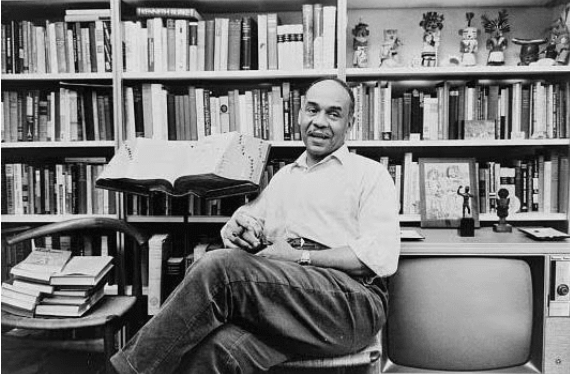
After a morning of the expected sessions (how to pay your bill, how to use the health center, getting oriented to your department/school), my son eventually went to register for courses. I waited in the campus bookstore (always on brand). As I perused the shelves, I came across a copy of “The Collected Essays of Ralph Ellison.” This was a delight, as Ellison is someone I’ve always wanted to read more of but for whatever reason have never gotten around to. I wasn’t disappointed.

For starters, I discovered that we shared some common interests: He too had studied music before embarking on a career as a writer and academic. Additionally—and perhaps related, or maybe not—Ellison and I share a preoccupation with questions about the nature of the American experiment, particularly the experiences of the minority groups with which we each respectively identify, while simultaneously claiming and holding fast to the label “American.” 

In 1970 Ellison published an essay in Time magazine entitled, “What America Would Be Like Without Blacks.” He observes that one of the enormous contributions of African-American culture to American life in general has been “to remind us that the world is ever unexplored, and that while complete mastery of life is mere illusion, the real secret of the game is to make life swing.” (The musician in me thrills to that metaphor.) Imagining an American history without African-Americans—an idea he dismisses as objectionable on both ideological and pragmatic grounds—Ellison observes that such a history would yield the absence of a “tragic knowledge which we try ceaselessly to evade: that the true subject of democracy is not simply material well-being, but the extension of the democratic process in the direction of perfecting itself.” And then he adds, “The most obvious test and clue to that perfection is the inclusion, not assimilation, of the black [sic] man.” 

There is much to say: About the meaning of democracy as including, but not limited to, material well-being; about the essential energy of American democracy as aimed at an ongoing, asymptotic quest to perfect itself as it expands to represent everyone it serves, ever more fully; about the striking resonance of Ellison’s notion of inclusion without assimilation with the experience of Jews—in America and, really, every place. (It’s also striking that the preface to this edition of Ellison’s essays was written by Saul Bellow, who, recalling a summer he and Ellison shared a rental house in Dutchess County, comments on some similar motions in the stories of African-Americans and American Jews.)

I’m writing all of this, first and foremost of course, because it’s July 4. We could leave it at that and it would be fine. But these reflections are also meant to explore connections between our lived experience and our never-ending exploration of the Torah. Which brings us to our Torah portion, Chukat, and particularly its very last line: “The Israelites marched on and encamped in the steppes of Moab, across the Jordan from Jericho” (Num. 22:1). 

The people have just come through several encounters with foreign nations, including military victories. They have taken possession of land on the eastern side of the Jordan, and they will stay there until the end of the Torah. This last sentence frames several events to come in next week’s Torah portion, including Balak’s engagement of Balaam to curse the people, and the violent episode involving the sexual/marital relationships between the Israelites and Midianites. 

Which is all to say that one of the animating questions of this entire section of the Torah is something like this: What does it mean to be an Israelite? How, if at all, can others join this group? How does the people relate to the other peoples around it—and how do those peoples relate to them? 

These are bigger questions than this space allows for. But by way of conclusion, I want to bring in a teaching of Rabbi Menachem Nachum of Chernobyl, the starting point of which is a verse from earlier in Chukat (Num. 15:14). Here’s what he says: “There are 600,000 letters in the Torah, against which there are also 600,000 root-souls… Therefore, each Jew is connected to one letter in the Torah… Each letter represents the divine element in each person. It is actually the very letter from which their soul derives. It is this letter that pours forth divine blessings and holy vital force.” 

What is so significant about this teaching to me is the notion that every one of us has a place in the Torah—a spiritual heritage, a home in the universe, despite even millennia of diasporic existence. That sense of spiritual groundedness is essential to any further discussion of political at-homeness—for Jews or anyone else. Perhaps the great American jurist Learned Hand put it best, in his short but essential speech from 1944: “Liberty lies in the hearts of men and women; when it dies there, no constitution, no law, no court can even do much to help it. While it lies there it needs no constitution, no law, no court to save it.” 

As I have written before, I believe our spiritual practices are what Tocqueville had in mind when he wrote about the “habits of the heart” essential to democratic life. We claim our spiritual inheritance, we live lives of Torah, in order to be both fully ourselves and fully human. That is the ground from which flows the rest of our lives, as individuals, as communities, as nations, and as humanity. May we renew ourselves in that practice, and help every image of God to find their place in the family of things.

Shabbat shalom, and a meaningful Independence Day to all who observe.


Korach 5785: Hit the Drum

Korach 5785: Hit the Drum

If you were in band class at Pioneer High School in Ann Arbor in the 1980s and 90s, you probably had Robert Albritton for a teacher. And if you had Mr. Albritton for a teacher, you probably remember some of his many colorful sayings. More than 30 years later, my brothers and I still find occasion to recite them to each other. One of our favorites was what Mr. A would occasionally say to a percussionist by way of encouragement: “Young man/woman, Hit the drum! I promise it won’t hit you back.”

Naturally, this phrase came to mind the other night as I attended a moving performance of Giuseppe Verdi’s Requiem with the Chicago Symphony, led by Riccardo Muti. While the entire piece is one of the crown jewels of the classical repertoire, its most memorable section by a mile is the Dies Irae, a truly terrifying piece of music set to terrifying words about the “day of wrath” that will “break up the world into ash” and “how much trembling there will be.” The words are brought to life by the full orchestra, soloists, and double chorus, who perform music that feels like a freight train on a roller coaster at maximum volume, punctuated by the repeated thunderous booms of two bass drums and the tympani played as loud as humanly possible. Mr. Albritton would love it(And kids, I can testify with my own eyes: the drum did not hit back.)

While the piece contains many moments of beauty that offset this fire-breathing energy, theologically speaking the Dies Irae is pretty representative of the liturgical text of this requiem mass overall. The view of the Divine that Verdi presents here is not, on the whole, a comforting one: It’s a lot of Day of Judgment, prayers for salvation from a fiery fate and the like, concluding with the words of the Libera me, “Deliver me, Lord, from eternal death on that awful day. Deliver me.” While we have some of this kind of thing in traditional Jewish liturgy (most notably, perhaps, on Rosh Hashanah), on the whole the portrait of God presented here lands as a striking contrast to the gentler, more loving, less judgmental, and less angry conception that predominates much of contemporary Jewish theology—including the approach we teach here at IJS.

Which makes sense. I mean, today we can choose what kind of service we want to go to—or even make for ourselves. And while Verdi’s music is breathtaking, it’s hard for me to imagine many folks in my world vibing with a vision of the Divine as a terrible, destructive force. To put it crassly: that view of God just isn’t good for business.

And yet, as I write these words, there is terror and violence all around. A war has just taken place between Israel and Iran involving weapons whose destructive power were unimaginable in Verdi’s time. And that war comes on top of a war between Israel and Hezbollah, which of course came on top of the ongoing war in Gaza, with its enormously devastating toll. Which of course came on top of the October 7 massacre. And this is to say nothing of the terrors of ICE raids and deportations, or attacks on vulnerable minorities (including Jews) here in the US, or the fear and trembling at the destructive power of Mother Earth in the form of tornados and hurricanes and punishing heat waves, all of which we have managed to make even worse through our own collective action and inaction.

While we may listen to Verdi’s Requiem and think, “Well that’s not a very sunny view,” all we have to do is take a look at the news and we might find ourselves saying, “Maybe he wasn’t so wrong.”

Parashat Korach is not only about the story of a rebellion against Moses. At its heart lies the latent terror that can be present in the collective human encounter with the Divine, with the source of life—which is also the source of death. In this Torah portion we read of the earth swallowing people up and sending them down to she’ol, and a plague of Divine wrath that takes the lives of 14,000 people. At its core, perhaps, is the people’s anguished cry to Moses: “‘Lo, we perish! We are lost, all of us lost! Everyone who so much as ventures near YHVH’s Tabernacle must die. Alas, we are doomed to perish!” To paraphrase, perhaps: How are we supposed to do this—to live together with the Holy One in our midst, to trust our leadership and one another? We can’t seem to pull it off.

In response, the Torah offers us a system of social-spiritual order: The kohanim will be specialists in God-service, as it were, assisted by the Levites, so to that the whole camp can function without further risk of plagues and death. (Note: Ibn Ezra comments that this whole episode comes out of order, and in fact occurred before the people left the wilderness of Sinai.) In exchange for receiving special gifts from the people, God instructs that the Aaron that “you and your sons alone shall bear any guilt connected with your priesthood.”

This is a solution, of course, but it’s far from perfect. Leaders who are granted power and privilege then face their inevitable temptations—which can just lead to a repetition of the cycle that started all of this to begin with. This leads Rabbi Kalonymos Kalman Epstein (1753-1825) to interpret this charge to the kohanim this way: “You must always mindfully tend to the concern that you are doing this sacred service for your own glory and enjoyment. You must regularly engage in deep discernment as to whether your intention is aligned with that of the Creator.” And, being a Hasid, Rabbi Epstein sees this as not only the work of the kohanim, but, in the nascent democratic spirit of the age in which he lived, the spiritual labor of us all.

It seems to me that a good deal of that regular practice of reflection and discernment involves touching in with our fears and acknowledging them: fears of violence, death, destruction, and loss, or even of their less extreme expressions—fear of rejection, humiliation, not belonging. The embers of these fires are ever-present—that comes with being human—so we can show ourselves some compassion for having them. Yet I would suggest the work that we are called to do is to acknowledge those fears and then choose life-giving responses—in our words and our actions. I think that’s what Verdi did with his music, and I bless us all that we may do it with the music we make too.

Shabbat Reflection – Shelach 5785

Shabbat Reflection – Shelach 5785

A few months ago, my dear friend and synagogue rabbi Ari Hart delivered a sermon that opened with a critique of an aspect of some (perhaps a lot?) of contemporary mindfulness practice: nonjudgmental acceptance. Now, I hasten to add that Ari is a participant in our Clergy Leadership Program cohort that launches next month, and he was not offering this critique to knock Jewish spiritual practices grounded in mindfulness. He was pointing out something on which, frankly, I agree with him: The Torah and Judaism aren’t simply about accepting what is, but about changing our lives and the world to what they can and should be. If we’re going to practice mindfulness, it should be in the service not just of acceptance of what is, but bringing about what might be.

I don’t think that should be a controversial statement, yet I imagine it might prompt at least a moment of going, “Huh” in our minds. It should come as no surprise that as mindfulness practice has become commercialized it has emphasized the self-acceptance element—”You are absolutely perfect, just as you are”—and de-emphasized the self-improvement aspect—”with room for improvement,” as Shunryu Suzuki Roshi, founder of the San Francisco Zen Center, was known to teach. The former is good for sales; the latter, not so much.

Twenty years ago, when I was a freshly minted rabbi who just arrived in Evanston to work at Northwestern University Hillel, I came up with the idea of hanging a banner to advertise for the High Holidays. Intuitively, I decided to put a question on the banner, rather than just making an announcement: “What will you do better this year?” While the banner got a lot of positive response, one of the other staff members came to me with some concern: “I’m worried about the word ‘better.’ It’s kind of judgmental. It might push people away. What about ‘What will you do different this year?'” I responded, “It’s called the Day of Judgment. It’s okay to be judgmental.” (I was younger and brasher then.) Clearly this tension between non-judgmental acceptance of what is and gentle judgmental aspiration of what might be isn’t a new conversation.

A keyword in Parashat Shelach (Numbers 13:1-15:41) is the verb latur. “Send people to scout (latur) the land,” the Holy One tells Moses (13:1). He does so, and in his charge he elaborates on the mission of scouting: “See what kind of country it is” (13:18). The scouts are meant to take an honest look at the land and its inhabitants and bring back a report. They do so, of course, but famously they add their own commentary, full of judgmentalism and self-doubt: “The country that we traversed and scouted is one that devours its inhabitants. All the people that we saw in it are of astonishingly great size… We looked like grasshoppers to ourselves, and so we must have looked to them” (13:32-33). We know what comes next: the imposition of a 40-year period of wandering in the wilderness, so that the entire generation of the Exodus might die off.

Yet the word latur comes back at the very end of the Torah portion, in the mitzvah of tzitzit. By looking at them, the Torah says, v’lo toturu, we should be reminded not to follow after our hearts and our eyes “in your urge to stray” (15:39, JPS translation). Rashi, following the Midrash, connects this instance of latur with that of the scouts. As Rebbe Nachman of Bratslav puts it: “They are a method of self-rebuke, reminding us to fulfill the mitzvot and not simply follow the desires of our hearts and eyes.”

We can interpret these words harshly, as though they involve discounting and denying bodily sensations altogether. But I think that misses the point. The larger message here, it seems to me, is that our spiritual practice is meant to help us see clearly—both what is present in our mind-hearts and, gently, what of that which is present is not serving us well.

Thank God, we are created with desires generated by our bodies and our hearts. We have emotions, we have thoughts, we have imaginations, and we are able to experience an incredible range of feelings and sensations. The point of mindfulness practice in a Jewish idiom is to see all of these things clearly—so that we can make choices that reduce harm and suffering and, wisely and skillfully, bring about something better than what might be right now.

Beha’alotcha 5785: And/or

Beha’alotcha 5785: And/or

Like millions of people, earlier this spring I binge-watched the second and final season of Andor, the Star Wars TV series starring Diego Luna as the titular character: a reluctant, yet willful and highly effective agent in the growing rebellion against the Empire.

For many Star Wars fans, Andor is probably the greatest thing the 48-year old franchise has ever made. The quality of the scripts, acting, and production value is exceptional. And it’s unusual in the Star Wars universe: Over two seasons, we see not a single light saber, no Jedi, no Darth Vader (even though he is alive and kicking at this point in the timeline). Rather than tell the story of leaders at the highest levels of institutional power (emperors, lords, princesses), Andor mostly focuses on life at more mundane—but, it turns out, no less important—registers: bureaucrats who execute the Empire’s policies, soldiers conscripted into military service, farmers and businesspeople and retired mothers who just want to live their lives in peace.

You can read about all of this in other places, and of course you can watch the show yourself (with a Disney+ subscription). But one thing I have found myself wondering about is the name of the show and Luna’s character. My own read is that the name Andor should, perhaps, be read with a silent slash: And/or. Because I think that’s part of what the series is getting at: The coexistence of simultaneous truths and experiences, the possibilities and limits of our choices, the promise and peril of our agency. Some things in life are “and”—they’re just true, no matter what, though they may only become “and”s to us when we’re aware of them—and some things are “or”s: options, possibilities, things that could otherwise be true or not true, things we may bring about by our choices or that may be chosen for us. Part of the point of Andor (or, “And/or”), it seems to me, is to complicate what may feel like a simple story line of rebels (=good) versus Empire (=evil) by showing how all of these big concepts are made up of individuals and their manifold contradictions.

This brings us to Parashat Beha’alotcha, which, as much as any Torah portion, moves in this space of both-and. Famously, the parasha is divided into three sections: Before Numbers 10:35, after Numbers 10:36, and the two verses in between, which are bracketed and, according to the Talmud, counted as their own “book.” In the first section, the people make their final preparations to leave Sinai, and then journey forth “by the word of YHVH.” There is, seemingly, perfect alignment and attunement between the Divine and the entire Israelite camp.

In the third section, we experience what has always felt to me like a Bizarro version of the story: “The people took to complaining bitterly before YHVH,” it begins (JPS translation). “YHVH heard and was incensed: a fire of YHVH broke out against them, ravaging the outskirts of the camp. The people cried out to Moses. Moses prayed to YHVH, and the fire died down.” If there is an opposite to perfect alignment and attunement, this seems like it. And, of course, from here it’s one story of complaining, fighting, and suffering after another. It reads like a photonegative of the previous 10 chapters.

Yet perhaps take note of that little story (but, if we pause long enough, we may realize, not so little—it could certainly be an episode in a Disney series on Numbers) of the fire breaking out. Note what happens: “The people cried out to Moses”—not the Holy One directly—and “Moses prayed to YHVH and the fire died down.” Here is Rashi, quoting the Sifrei: “A parable: This may be compared to the case of an earthly king who was angry with his son, and the son went to a friend of his father and said to him, ‘Go and ask forgiveness for me from father!'” Rashi highlights the breakdown in relationship, trust, and communication that brings about this result that nobody really wants, as if the Israelites and the Creator have become middle schoolers reduced to passing notes. How far they have all fallen together.

Eventually, Moses himself unloads on the Holy One. In response, the Divine brings about a sharing of the burden. And here we get the seeds of another potential side-series off the central canon: “Two men, one named Eldad and the other Medad, had remained in camp; yet the spirit rested upon them—they were among those recorded, but they had not gone out to the Tent—and they spoke in ecstasy in the camp” (11:26). What was meant to be an ordination only to an authorized set of 70 elders winds up touching lives beyond the boundaries. The Divine spirit, it seems, cannot be fully contained. The story as it was meant to be is not the only story that winds up happening.

While that’s always true, it feels especially so today. Between the time I write this and the time you read it, the headline stories will likely have shifted. Wherever we live, violence may have broken out. Protesters, soldiers, bureaucrats, and regular folks may have confronted choices about reading their situation as “and” or “or,” and, concomitantly, dilemmas about whether and how to speak, act, be. As Andor reminds us, the work of making, unmaking, and remaking the world (or the galaxy) doesn’t only sit with those who hold institutional power—it is work that belongs to all of us.

The middle “book” in this parasha is a two-line poem about when the Ark would begin to travel and when it would come to rest. That is, it is about the constant going out and coming in, journeying away from home and finding our way back to it, a beating heart of the Torah and of our own lives. Perhaps it comes to remind us that you and I are constantly discerning between “and” and “or,” constantly dancing with the storyline of our individual and collective lives, constantly breathing out and in. Our spiritual practices can support us in navigating that journey of discernment. May they be that for us now, and may we support one another in mindful and courageous speech and action.

Naso 5785: “Zalman, what’s become of you?!”

Naso 5785: “Zalman, what’s become of you?!”

One of my favorite jokes in the (heilige/holy) Big Book of Jewish Humor is the one about a man from Warsaw who is in Chelm on a business trip. As he walks down the street, he’s stopped by Yossel the chimney sweep.

“Zalman!” cries Yossel. “What happened to you? It’s so long since I’ve seen you. Just look at yourself.”

“But wait,” replies the stranger, “I’m—”

“Never mind that,” says Yossel. “I can’t get over how much you’ve changed. You used to be such a big man, built like an ox. And now you’re smaller than I am. Have you been sick?”

“But wait,” replies the stranger, “I’m—”

“Never mind that,” says Yossel. “And what happened to your hair? You used to have a fine head of black hair, and now you’re completely bald. And your mustache, so black and dapper. What happened to it? You know, I don’t see how I ever recognized you. Zalman, what has become of you?”

“I’ve been trying to tell you,” the man replies. “I’m not Zalman.”

“Oy,” replies Yossel. “You’ve gone and changed your name as well!” 

Aptly, you can find this tale on the internet as a case study of the humor trope “thoroughly mistaken identity.” Part of what makes it such a successful joke (you have to admit it’s hilarious) is that, like most really effective humor, it touches a deep vein in our human experience. In this case, that vein is perhaps the profound contingency of recognition. While “Zalman,” who is already traveling, does not seem to experience dislocation, Yossel invests everything into making this man into someone he recognizes. He’s so committed to that story that he never gives it up, even when “Zalman” tells him, “I’m not Zalman!” That is, Yossel is so invested in this stranger being Zalman that he denies both the truth (he’s not Zalman) and the most logical explanation for the man’s claim (the problem is in his own perception).

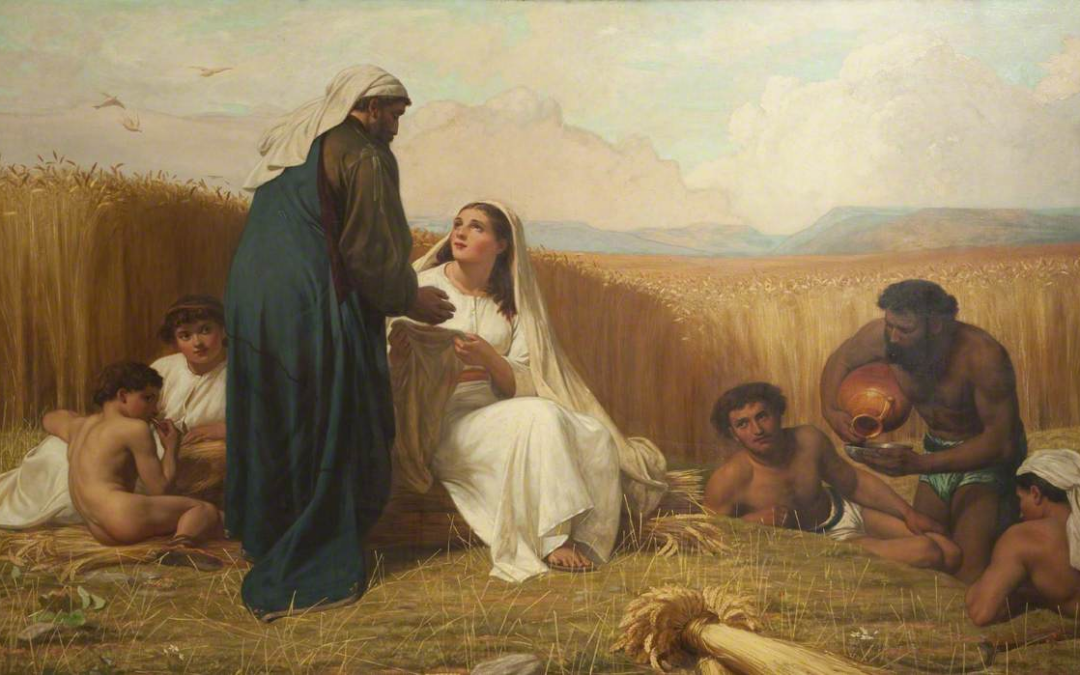
This issue of recognition came to mind earlier this week as I read the Book of Ruth over Shavuot. In the second chapter, Boaz spots a stranger gleaning in his field. This itself isn’t a problem–the produce that falls to the ground during reaping (leket in Hebrew) is specifically designated by the Torah for the poor. But when Boaz inquires of the young man supervising the harvest, “Who does that girl belong to?” he responds with more information than Boaz asked: “She’s a Moabite who returned with Naomi,” he tells Boaz. This immediately injects some tension into the scene, as leket is technically reserved only for the Israelite poor. (The Rabbis of the Talmud clarify later that the practice is to support the non-Jewish poor alongside the Jewish poor “for the sake of peace.”)

In one of the many moments of exemplary hesed in the book, Boaz tells Ruth that she is more than welcome to continue to glean in his field, that he has ordered everyone else to be good to her, and that she’s even invited to drink from the water that the workers have drawn. Ruth, seemingly overcome, falls on her face and says to Boaz, “Why are you so kind to me? You have recognized me even though I am a stranger!” (2:10) The English here doesn’t do it justice. The last three words of Ruth’s statement in Hebrew are pure poetry: l’hakireini v’anochi nochria. 

In many years of reading Ruth, I don’t remember these words jumping out at me the way they did this year. l’hakir—to recognizeand nochria—foreign woman or strangershare the same letters: nun, kaf, and yod. And while they may not be technically related etymologically, they are undoubtedly drawn together here to point up the deep intertwining between them. Because what is that makes or unmakes someone as foreign, strange, different? Recognition or lack thereof. A stranger is a stranger until we realize, or decide, that they aren’t. With the act of recognition, we transform the unknown into the known. Boaz, holding the power of recognition in his word, brings Ruth over a hidden but no less powerful border.

Reading Ruth on Shavuot always comes at the time we read Parashat Naso, which, like the larger opening of the Book of Numbers, is concerned with establishing boundaries and distinctions: In the camp, between the tribes, down to the intimate lines that delineate trust and distrust in marriage (see: Sotah) and the ways we can make ourselves, temporarily, into a different kind of social-spiritual being (see: Nazir). Yet the story of Ruth, Naomi, and Boaz lingers in the background, like an earlier movement in a symphony. As we consider all these ways that structure is imposed, that story might prompt us to be sensitive to the ways in which those structures–who is in and who is out, who is a stranger and who we consider known–are made and sustained, and how they are undone and refashioned.

Naso culminates in a twelve-day official parade, with each head of tribe bringing an identical offering of riches to fully inaugurate the altar of the Mishkan. We can imagine the newspapers of the day covering the pomp and pageantry. Similarly, Ruth culminates by situating its heroes in a grand genealogy that links its protagonists with their eventual descendant, King David.

Yet I think both Ruth and our Torah portion also call us to look far beyond the headlines, to the more quotidian levels on which we live our daily lives. They ask us to consider, mindfully and reflectively, some timeless and timely questions: Who do we recognize and treat with hesed, and who do we call a foreigner and treat more harshly? What does it take for us to trust, and to earn the trust of others? And what might we do to bring about a world in which we can all feel safe enough to practice the hesed of our exemplary forebears?

Shavuot 5785: Remembering Uncle Arthur

Shavuot 5785: Remembering Uncle Arthur

On erev Shavuot 1993, a Volkswagen van pulled up outside our house in Ann Arbor. I was finishing my junior year in high school, and we were preparing for the holiday. An unfamiliar older couple exited van and came to the door.

I honestly don’t remember the interaction that followed, but the long and short of it is that this was my father’s brother Arthur and his wife Kate. They had driven from their home in Montana. Art was dying and he wanted to see my father before he passed away.

My Dad was the youngest of three children. And while my brothers and I knew our Aunt Marilyn, who moved out to California early in her adult life, we didn’t hear much about our Uncle Arthur. I remember seeing a small black and white photo of a young Lou (i.e. Dad) and his much taller older brother Art, who was wearing a sweater with a big S on it—for Michigan State, but that’s about it. We never really learned the story. It had something to do with Arthur’s being 11 years older than our dad, living in Montana (even more remote than California), and (probably, given the known family dynamics) having married Kate, who wasn’t Jewish. Like many other Jewish families of immigrant parents at that time, that could be the cause of a tremendous rupture. Now, as Arthur was dying, there was an attempt at reconciliation.

All I really remember of the days that followed was awkwardness. Arthur came to shul, and I remember feeling a mix of befuddlement, dislocation, and annoyance—which, as a father, I can now see as totally predictable teenage behavior. I don’t remember having a real conversation with him or Kate, just practicing a lot of avoidance. And I don’t remember really processing any of it with my Dad after they left after a couple days. But looking back, and having experienced my Dad’s death 25 years later, I can appreciate that even the act of welcoming Art and Kate into our home was a big deal for all of them. I’d like to think some repair occurred, even if it wasn’t obvious to me how.

I’d also like to think it wasn’t quite an accident that this visit took place on Shavuot, which is imbued with such a melange of valences and impulses. There is, of course, the inclusiveness of Shavuot. It is the day we read the Book of Ruth, a paradigmatic story of chesed, the force of loving connection that sees beyond boundaries (in Ruth’s particular case, the boundary of her status as a Moabite who is prohibited by the Torah from joining the Israelite people—but who, of course, does and becomes the ancestor of King David and the messiah). And this is the day when we re-experience the revelation at Mount Sinai, when, according to the Midrash, every person heard the voice of the Divine in a way custom-tailored to them. It’s a day for celebrating the multivocality of Torah, a day whose central observance is no more and no less than delighting in the overflowing storehouse of riches of our textual tradition, our inheritance.

Yet revelation is not only a happy event. It can, perhaps even should, be an overwhelming one. “All the people witnessed the thunder and lightning, the blare of the horn and the mountain smoking; and when the people saw it, they fell back and stood at a distance. ‘You speak to us,’ they said to Moses, ‘and we will obey; but let not God speak to us, lest we die'” (Exodus 20:16). There is disorder here, synesthesia: “they saw that which should be heard — something which is impossible to see on any other occasion,” as Rashi explains. He adds, “Startled, they moved back twelve miles, a distance equal to the length of their camp.” Revelation is not simply a warm embrace. It is that—and, in the same breath, something that pushes us back, causes us to recoil because it is so beyond the capacity of our human senses. It is a moment of both speech and silence, when everything—everything—is expressed through the utterance of the vowelless, noiseless aleph of Anochi, “I am YHVH your God.”

It’s easy to allow maamad har sinai, the moment of revelation, to be an abstraction, an idea. We can play with it as an intellectual exercise. We can read our texts and experience the delight of our minds lighting up at the stimulation. But a fuller engagement and reckoning will move us on many more and deeper registers as we experience contradictory gestures: both chesed and gevurah (unnboundedness and limitation), netzach and hod (strength and flexibility), all the worlds through which we have journeyed these seven weeks of the Omer. That journey has served as preparation for our encounter on Shavuot.

Every year before Shavuot we start reading the Book of Numbers, which begins with an instruction to Moses to take a census, counting the Israelites b’mispar shemot, according to the “number of their names.” The medieval Italian commentator Rabbi Obadia Sforno suggests that this unusual formulation suggests that each Israelite was counted not only by number, but with a recognition of their unique individuality. Perhaps there’s a Shavuot charge there for each of us as well: To encounter anew, through this moment of Revelation, the fullness of our existence in relationship with the Divine, with life, with one another, with ourselves—and, in the process, to tend what is broken, heal what is in pain, renew and redeem our lives and the world.