
On Grief and Solace: Rosh Hashanah 5785

On Grief and Solace: Rosh Hashanah 5785

About ten years ago, I discovered an album of the poet David Whyte called “Solace: The Art of the Beautiful Question.” At the time I was leading Ask Big Questions, an initiative of Hillel International I had helped to found, and so the title intrigued me. Yet even as I’ve transitioned to new work and new stages of life, listening to this album has become an annual ritual, part of my practice of preparing for the High Holidays. (I wrote about it last Rosh Hashanah too. Like any good work, it repays regular visits.)
 
Whyte explores a lot of terrain over the course of two hours. He reflects on loss and renewal and becoming. He offers beautiful ruminations on pilgrimage. He talks about exile and homecoming. And because Rosh Hashanah encompasses all of these themes (seriously, Rosh Hashanah is a rabbi’s favorite holiday, because you can write a meaningful sermon on just about anything–its lens is so vastly wide), I find listening to this album prompts fresh and deeper reflection year after year.
 
The second part of the recording begins with a series of reflections on grief and solace.  Understandably (I hope), it was this section that really spoke to me as I listened this year. Because we have all done a lot of grieving this year–of lives lost, of realities shattered, of ideas we thought were solid that, perhaps, turned out to be less durable than we assumed. And, perhaps even more challenging, so many of us have not been able to grieve properly, as our worlds and realities are fundamentally unmoored, the possibility of feeling at home strained to the breaking point, as if we’re climbing a staircase without any landings–no rest and no respite. 
 
“Solace,” Whyte writes elsewhere, “is what we must look for when the mind cannot bear the pain, the loss or the suffering that eventually touches every life and every endeavor; when longing does not come to fruition in a form we can recognize, when people we know and love disappear, when hope must take a different form than the one we have shaped for it.” And the most basic gesture of that solace comes not through our minds, but through our bodies. Here is how he describes it at the end of a poem he wrote after losing a close family friend:

 
For this loss I could not speak,
the tongue lay idle in a great darkness,
the heart was strangely open,
the moon had gone,
and it was then
when I said, “He is no longer here”
that the night put its arms around me
and all the white stars turned bitter with grief.
 
To me, the image of the night embracing us in our pain, the stars crying along with us, is beautiful and powerful–and evocative of the sound of the shofar. Or, perhaps more accurately, what I think the shofar can and is meant to help us do. 
 
The Rabbis of the Talmud understood that the middle sounds of the shofar blast–the shevarim or teruah-are meant to evoke crying. Or, as Rebbe Nachman of Bratslav explains, a broken heart. According to Rebbe Nachman, the word shofar itself is related to hitpa’arut: the confidence and pride of fully living in our humanity as images of the Divine. “On the other side of our self-estrangement, which continually changes its form and voice, we can inhabit a healthy self-confidence that includes all these tones.” This is symbolized, even experienced, in our surrounding the broken blasts with whole ones. When we truly sense the fullness of our grief and open our hearts to the solace the world offers at the same time, “we become whole. This,” he says, “is the essence of Rosh Hashanah.” (Likutei Halakhot, Laws of the New Year 4:5:2–my poetic translation). 
 
Frequently at this time of year I get questions about the theology of Unetaneh Tokef, the prayer that asks, “Who will live and who will die?” and, inevitably, the Holocaust: Where was God? Why didn’t God save the Jews? This year I’m hearing from friends and relatives similar questions about October 7 and the year since. 
 
Here’s my answer, in two parts: a) I don’t know; and/but b) I also have found that looking for that kind of intervening-in-history version of God isn’t all that helpful for me, as I find it leads me to a theological and experiential cul-de-sac. At this point in my life, I have found  other conceptions of divinity that are more helpful. Here is one of them.
 
The Rabbis of the Talmud taught that the Divine presence travels with us into exile and will be with us in redemption (Megillah 29a). The sixteenth-century mystical master, Rabbi Moshe Cordovero, elaborates: “Shechinah is the one who is expelled with us, ascending with us and descending with us. She is redeemed with us and exiled with us. She is the one connected to us always, never separated from us under any circumstance. She dwells with us. Our deeds cause her union or separation or mercy. It all comes from us, for she depends on souls” (Ein Yaakov 1:3).
 
Speaking for myself, I experience a strong desire to hear the tekiah of the shofar as a stirring blast to pride and courage–the kind of sound I often associate with national glory and military honor. But/and: that kind of orientation can also lead me towards understandings of the Divine as acting–or not acting–in history, and away from the much more personal, intimate, often painful and challenging kind of heart work that the broken middle notes call us to do. 
 
Each of us relates to that heart work in our own way, at our own pace, in a language that is, at its deepest level, only decipherable to ourselves as the Infinite One. This, too, is an invitation of the shofar: to be in a way that is both before and after the language we can share with others; to live, if only for a long moment, in the expansive silence of a wordless cry. 
 
As the new year enters, I want to bless you, as I hope you will bless me, that through our shared experiences of grief and loss, through our silent witness to one another, we might come to also sense the love and support of the Creator and creation, the divine presence that is always available, the night that puts its arms around us, the whole notes that embrace the broken in the cry of the shofar.
Coming Home (Ki Tavo 5784)

Coming Home (Ki Tavo 5784)

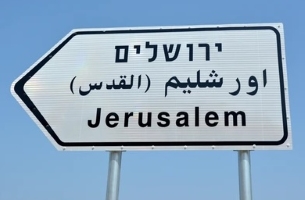
My father, may he rest in peace, used to say that there were two vistas, two views on the road, which made him feel like he was coming home. One was driving south on US-23 towards Ann Arbor, where he lived most of his adult life, as the road slopes down towards the Huron River yielding a view of downtown and the University of Michigan. The other was heading east on Highway 1 in Israel, coming up the hill towards Jerusalem.

Though my parents and my older brothers lived for a year in Israel before I was born, and though my Dad visited many other times, that year was the only time he spent extended time living in the country. Yet there was something about driving up that hill that made him feel like he was coming home.

My guess is you likely have some views that evoke similar feelings in you: a landscape on a highway, a smell as you cross a threshold. If my social media feed is any indicator, my Dad was not alone in feeling like arriving at Ben-Gurion Airport, much less making that ascent up Highway 1, aroused deep feelings of homecoming–despite the fact that he didn’t actually live there.

Earlier this week, the Israeli religious singer Ishay Ribo played a concert at Madison Square Garden. Tens of thousands attended, with many expressing a feeling of solidarity and strength in being together in the midst of this profoundly difficult year. On the day after the concert, a friend of mine, who is a rabbi living in Israel, shared on Facebook that, as much as he was glad that people went to the concert, if they really cared about Israel they should be going not to 34th Street and Eighth Avenue, but making aliyah: “Bring Them Home isn’t just a slogan for the hostages,” he wrote. A lot of Israelis commented on his post, saying that they were grateful he had said what they were thinking. A few pointed out that not everyone has the means to be able to make the move.

To me, what the post most illuminated was the very deep animating tension of the idea of home in Jewish life. “Ki tavo el ha’aretz,” “When you come into the Land,” are the opening words of the Torah portion of Ki Tavo (Deut. 26:1-29:8). The land, of course, is Canaan–the land of Israel. It’s home. And yet, even just those words–“When you come into the land,” and the fact that the name of the land changes from Canaan to Israel, reflect tensions built into the very narrative of Jewish history we tell ourselves: Abraham came from a different land into this one; this people came out of Egypt into this land. It is as though the Torah wants us to be simultaneously at home and not fully at home. Perhaps that’s why it constantly reminds us to be mindful of our experience as strangers in a foreign land.

One of the great and necessary innovations of the ancient Rabbis, which was deepened and amplified by the Hasidic masters, was articulating a way of simultaneously longing for our ancestral homeland and being spiritually at home wherever we are. Ashrei yoshvei veitecha, Happy are those who dwell in Your house (Ps. 145:1), which we say three times a day in the traditional liturgy, can refer both to the beit hamikdash, the ancient Temple in Jerusalem, and, simultaneously, to the spot where you are right now as you read this. It is, I believe, not either/or but both/and.

This tension has been the incredible–and incredibly difficult–challenge and invitation of Jewish life and spiritual practice for virtually our entire existence as a people: to sense the Divine presence and long for it; to accept the moment as it is while also seeking to mend and improve it; to be at home and not-at-home, all at the same time. It is the challenge and invitation embodied in the sukkah, the ultimate destination of our spiritual journey of this season. May our practices help us to enter and live within it with strength, wisdom, and compassion.

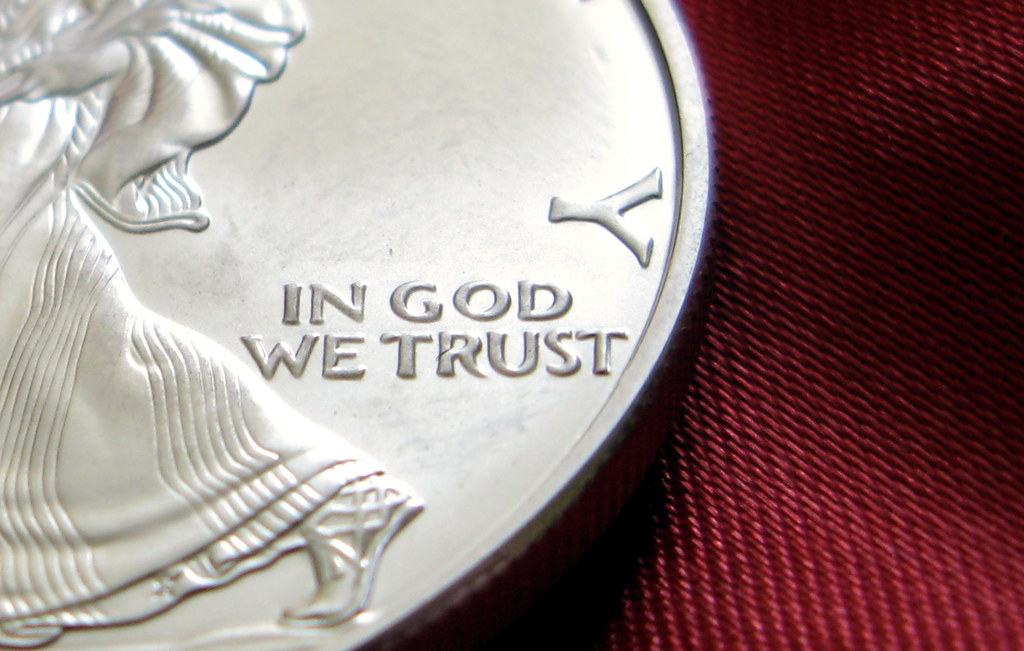
In God We Trust (Shoftim 5784)

In God We Trust (Shoftim 5784)

One of the leadership teacher Stephen Covey’s most famous observations is that “relationships operate at the speed of trust.” It’s a line that has resonated with me for a long time. To me, trust is everything–at work, at home, in life. When I keep my promises, I feel like I’m upholding trust, depositing it in my account; when I fail to do so, I feel like I’m reducing the balance. When I have trust in the account, I can draw on it to ask other people to trust me as we head into uncertain situations; when my balance is low or overdrawn, that’s pretty hard to do.
 
That’s a rather transactional way of putting it, of course. Interpersonal trust isn’t just a mortgage application–it’s much more. Trust and trustworthiness are ultimately things most of us experience in much deeper registers. They touch chords within us that go back to our earliest moments of life: when we learned to trust that a cry would produce someone to hold and feed us, when a parent who left us in the care of someone else kept their promise that they would come back. Violations of trust are perhaps the deepest violations we can experience. 
 
For me, as for many others, the past week was an especially hard one. On Monday morning, our synagogue held services at 7 am–unusually early for a national holiday–so that folks could gather to watch the funeral of Hersh Goldberg-Polin. While Hersh is of course just one of the thousands of precious souls violently snuffed out over the past eleven months, for many of us he had become one we felt especially close with. And in my community’s case, that was even truer: Hersh’s aunt, uncle, and grandmother are members of our shul. 
 
Sitting and crying along with hundreds of others in the sanctuary, what became so palpable to me was this sense of the degradation of trust. During his remarks at the funeral, Israeli President Isaac Herzog repeatedly said, “Selicha,” we’re sorry, to Hersh–for failing to protect you, for allowing you to be kidnapped, for not bringing you home safely.  That reflected what has been so devastating for so many Jewish Israelis and so many Jews the world over: the sense since October 7 that the State of Israel, the ultimate Jewish institution, the Jews’ safe haven, profoundly betrayed their trust, our trust. Other arguments about Israel–about its military tactics, about the occupation, about its politics–also test our trust in our conception of the exercise of Jewish power. But for me and many others, this most basic element–the implicit duty of a state to protect and rescue its people–strikes to the most elemental levels of our self-conception. That is one of the things that has made this week, and these last eleven months, so especially hard.
 
Parashat Shoftim (Deut. 16:18-21:9) is all about law, authority, and power. In many ways it is a reflection on the social contract between judges and officials and the people who appoint them, and on the implicit trust upon which that social compact sits. In a midrash on the Torah portion (Devarim Rabbah 5:1), Rabban Shimon ben Gamaliel warns that, since the Sages teach that the world stands on judgment, truth, and peace, then “if you distort judgment you destabilize the world, as it is one of its legs.” I believe he is not only speaking in formal terms about corruption or the perversion of justice, but is pointing to something even deeper: the need for officials to maintain the trust of those who authorize them to begin with. When the people sense they can’t trust the judgment of the authorities they have empowered, then the world becomes destabilized. (An issue as true in America or any other country as it is in Israel.)
 
This, it would seem, is part of the motivation behind the ritual described in the closing section of the Torah portion, when a dead body is found on the outskirts of a city and the perpetrator cannot be found. “The elders of the town nearest to the corpse shall wash their hands… and they shall make this declaration: ‘Our hands did not shed this blood, nor did our eyes see it done.'” Why do the authorities need to seek absolution for something that presumably wasn’t their fault? Perhaps because the trust placed in these authorities is so fragile and so sacred–the public needs to know, and the authorities need to reaffirm, that they take seriously their obligations to safety, protection, wellbeing, and peace.
 
None of this is new, of course. The Pew Research Center keeps regular tabs on public trust in government here in the U.S., and the results for most of the last 50 years have been pretty steadily declining. We are divided along political and cultural lines, and we have a hard time believing that those in another camp are operating in good faith (or even agreeing on what constitutes operating in bad faith). All of this is both symptomatic of and contributes to the erosion of trust.
 
As we’ve been exploring on my Soulful Jewish Living podcast in recent weeks, the habits of the heart for living in a democracy are fundamentally spiritual in nature. That heartwork informs both the trust we, the people, invest in our authorities–and the sense of “sacred honor” that must inform those who hold authority as they draw on the people’s trust. There is spiritual work, heart work, to be done by both citizens and officials. All of us, together, are the custodians of that trust, and all of us, together, need to strengthen those spiritual muscles of the heart. 
 
So, as we conclude this awful week and begin the month of Elul, a prayer: May the life and death of Hersh, of the other hostages, of the far too many soldiers and civilians who have died and been injured and orphaned and displaced–may all this suffering serve as a shofar blast to rouse us to awakened hearts, and to a path of healing and renewed trust in one another. 
 
Open Your Hand (Re’eh 5784)

Open Your Hand (Re’eh 5784)

There’s a neighborhood grocery store two blocks from my house. It’s called Village Marketplace and, to many of us who reside in Skokie, it’s one of the best things about living here. It’s not a big chain, it’s independently owned, and best of all, I can walk there and back in 5 minutes when we need a dozen eggs.

Occasionally there are folks standing outside Village Market (locals drop the “place” in the name; in our family we refer to it as VMart in an homage to the great Detroit Tigers switch-hitting DH from the early 2010s, Victor Martinez): young women selling Girl Scout cookies or people selling “StreetWise,” the magazine written and produced by homeless people around Chicago.

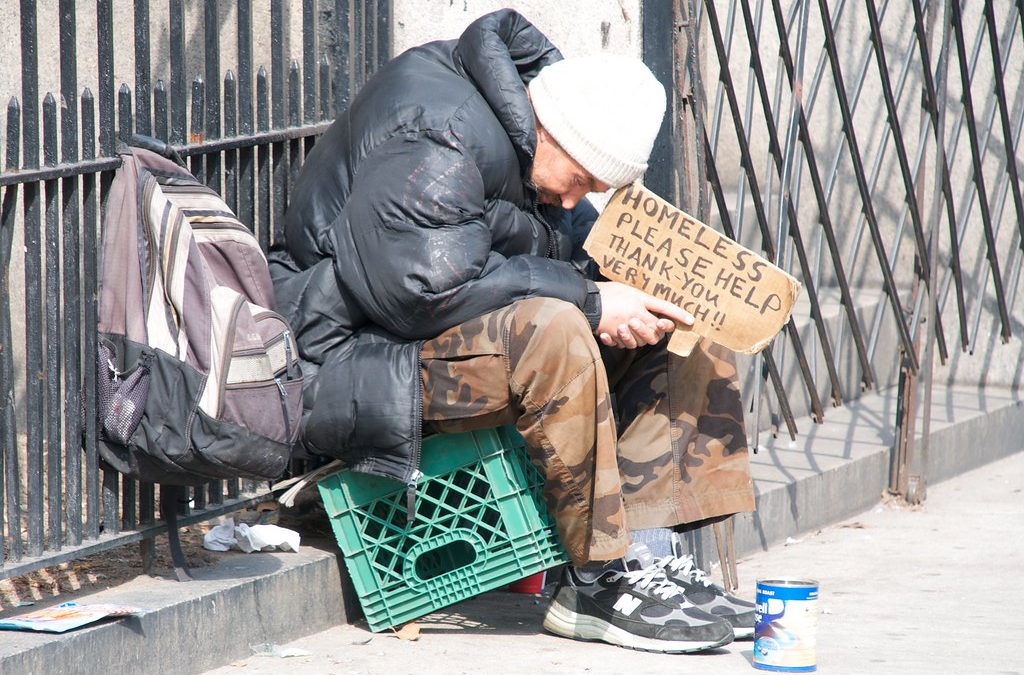
But in recent years the folks standing outside have more often been migrant families holding cardboard signs asking for donations, a local reminder of a national and global challenge. We can see these migrants, refugees, in what feels like virtually every shopping center parking lot, at major street intersections, outside sporting events.

Like most people, when I’m in my car I drive right past them. But when they’re standing in front of me as I pass the entrance to the grocery store, that’s harder to ignore. Which doesn’t mean I don’t ignore them–it just means that doing so weighs more heavily on my conscience. While I often give them money, just as frequently I don’t have cash, and their cardboard sign doesn’t have a QR code to Venmo them. So I go into the store and exit it with a little aversion of my gaze, my modest attempt to diminish the pain of both internalizing their situation and my own moral self-judgment. (If my Spanish were better, I might ask them what they need from inside and buy it for them.)

Part of the mental story I tell myself during such moments is precisely that these people in front of me are manifestations of much larger systemic problems: our immigration and asylum systems, failed governments in far away places, foreign policy choices, climate change. My inaction toward them thus becomes justifiable: What good does helping one person do in the face of challenges that are many orders of magnitude larger than me or them? It’s like trying to boil the ocean–so I can just go on with my day. Perhaps this resonates with you, too.

There’s an article that’s been circulating on my social media feed this week by a writer named Rachel Cohen. She explores her own attitudes towards volunteering, and thoughtfully places them in the context of larger social trends and ideas of the last 25 years–Robert Putnam’s Bowling Alone, Occupy Wall Street, climate activism. What she concludes is that many of us have been told, and now tell ourselves, that we should focus on systemic solutions, and that emphasizing individual actions is actually a distraction from doing so, i.e. we’re not going to recycle our way out of climate change. Yet Cohen thoughtfully interrogates this set of assumptions, and ultimately suggests that our individual actions–she starts donating blood regularly–are important not only for the actions themselves, but for the well-being and sense of connection they foster within and between us.

Among the commandments that are restated or elaborated in Parashat Re’eh are the laws of the sabbatical year. The Torah here addresses us as both individuals and as a collective, envisioning a society that sees and cares for those on the margins. “If there is a needy person among you, one of your kindred in any of your settlements in the land that YHVH your God is giving you, do not harden your heart and shut your hand against your needy kindred. Rather, you must open your hand and lend whatever is sufficient to meet the need” (Deut. 15:7-8). Rashi, quoting the midrash, observes: “There are people who painfully deliberate whether they should give or not, therefore Scripture states, ‘you shall not harden your heart’; and there are people who stretch their hand forth but then close it, therefore it is written, ‘you shall not close your hand.'”

I certainly have been that person the Torah is talking about. Perhaps, like me, you’ve had a momentary deliberation about whether to give to the person in need standing in front of you. Perhaps, like me, you can recognize yourself in those brief moments of hesitation Rashi describes. So, first and foremost, I would just say: Let’s listen to the Torah, which plainly understands how our minds and motivations work, and seeks to help us respond to our own inclinations through mindful attention.

Beyond that, I would add that I think it’s helpful to think of the systemic as related to–not necessarily defined by, but related to–a sum of individual actions. “Don’t harden your heart” is clearly connected to the “listening heart” King Solomon asks for at the beginning of his reign, the same listening heart I frequently suggest is what we seek to cultivate as members of democratic societies. The king’s actions are rooted in his heart, and in a democracy all of us are kings–we all hold responsibility for the state of society, whether through our votes or through our actions in front of the neighborhood grocery store.

Politics (Ekev 5784)

Politics (Ekev 5784)

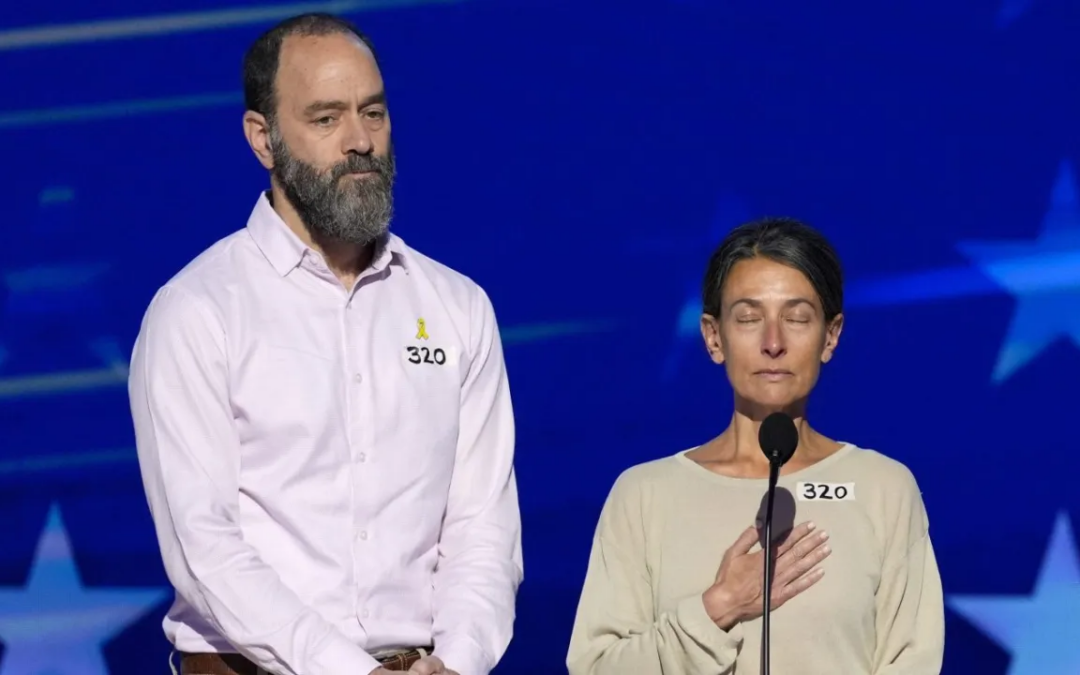
Like many of you reading this, I expect, the most powerful moment of this week’s Democratic National Convention for me was the speech of Jon Polin and Rachel Goldberg, the parents of Hersh Goldberg-Polin, one of the 109 remaining hostages held by Hamas in Gaza. Jon, and especially Rachel, have tragically become the most recognizable spokespeople for the hostage families. Seeing the tears in their eyes and the warmth of the reception for them from the 50,000 people at the United Center in Chicago, just a few miles from my home, was a profoundly moving moment.

“This is a political convention,” Jon said, “but needing our only son and the cherished hostages home is not a political issue. It is a humanitarian issue.” I have been thinking about that line a lot. Because while the cause of the hostages is certainly a humanitarian issue, I find that the question of whether or not it’s a political issue highlights a different question: What do we mean when we call something “political”?

I think what Jon meant by “political” here is that this isn’t an issue that can or should be politicized, i.e. used as a tool to score points or advantages, to accrue political capital, for a party or an individual. The hostages are civilians, and they should never have been taken in the first place–so they should be released immediately, on humanitarian grounds.

Yet the very fact that Jon and Rachel spoke at the convention, like Ronen and Orna Neutra, the parents of Omer, who spoke at the Republican National Convention earlier this summer, reflects that there is a political dimension to the issue–in a different sense of the word. This sense is more along the lines of another dictionary definition: “Relating to the government or the public affairs of a country.”

In that sense, securing the release of the hostages is certainly a political issue: absent a miraculous unilateral decision by their Hamas captors or a similarly  miraculous rescue operation by the IDF, the way the hostages will come home is through governmental decision-making and negotiation; i.e. political action. That is why both these families spoke at these conventions; it is why so many in Israel have been organizing to apply political pressure on the government for months.

This week on my podcast, Soulful Jewish Living, we began a five-part series exploring some of the spiritual “habits of the heart” about which Alexis de Tocqueville wrote 200 years ago, and that I think Oprah Winfrey had in mind when she talked about the “heart work of democracy” during her speech at the DNC. The five we’re looking at come by way of Parker Palmer’s book, The Heart of Democracy. They include: Remembering that we’re all in this together; valuing and embracing otherness; holding tension in life-giving ways; finding our personal voice and agency; and nurturing a capacity to create community. I hope you’ll listen and let me know what you think.

For this week, however, I feel a need to highlight the ways in which so many of these habits find expression in the Torah–and in Parashat Ekev (Deut. 7:12–11:25), that we read this week. Ekev is when Moses seems to hit his rhetorical stride in his valedictory address to the people before they enter the land and begin their exercise in self-government. It is full of grand, sweeping evocations to love God and do God’s ways. But it is also all about the work of the heart, perhaps no more centrally than in this series of verses:

Cut away, therefore, the thickening about your hearts and stiffen your necks no more. For YHVH your God is God supreme and Sovereign supreme, the great, the mighty, and the awesome God, who shows no favor and takes no bribe, but upholds the cause of the orphan and the widow, and befriends the stranger, providing food and clothing. You too must befriend the stranger, for you were strangers in the land of Egypt. (Deut. 10:16-19)

 
This is the essence. We know from our own experience that our hearts grow thick, that we allow ourselves not to see and hear things we don’t want to see and hear. We know that what starts out as an obvious humanitarian cause, clearly rooted in the deepest springs of Divine compassion–remembering those who, like us, were oppressed strangers; caring for those on the margins of society–can become a political football used to accrue and maintain power.
 
It’s a tendency as old as humanity, which is precisely why Moses exhorts us to be mindful of it and counter it. The Torah, the eternal truth that we aim to live out  through our spiritual practice, calls us to reject politicization without rejecting politics. Because politics–the work of living together–can and should be about making the world a home for the Divine presence, enabling every image of God to live free from oppression, whether those images of God are hungry migrants on the streets of Chicago, kidnap victims in the tunnels of Gaza, or widows and orphans on the bombed-out streets above them.
 
That work begins and is constantly sustained in our hearts, and from there it touches our minds and our hands. So our politics are only as healthy as our spiritual practice. It is up to us to renew and sustain them both.
Totally Awesome (Vaetchanan 5784)

Totally Awesome (Vaetchanan 5784)

One of the inside jokes my wife Natalie and I have shared over 23 years of marriage is what we lovingly call the “Really, you needed research to tell you that?” phenomenon. You might be familiar with it yourself. In our experience, it most regularly occurs reading articles in The New York Times in which scientific research demonstrates something that it seems like someone with common sense could have figured out on their own. “Having friends contributes to lower levels of loneliness” “More sleep helps you feel more rested.” “People who have more birthdays live longer.” That kind of thing.

That’s not to knock the scientists who do this work (okay, the last one was genuinely tongue in cheek). Studies into phenomena we intuitively know to be true are, in my experience, very valuable. They usually uncover dimensions we didn’t previously understand. They give us ways to quantify and talk about aspects of our lives that have previously been a little mushy. And they often offer ways in which science and religion can speak to one another.

One truly excellent contribution to this genre is Berkeley social psychologist Dacher Keltner’s recent work on awe and wonder. Keltner defines awe as “the feeling of being in the presence of something vast that transcends your current understanding of the world.” He and his team show that awe is a very deep emotion that serves a number of psychological, physiological, and social functions. I learned a tremendous amount reading his book.

It turns out that awe, like meditation, stimulates the vagus nerve, which helps to reduce inflammation in the body and in the processes that regulate our emotions. And so experiencing even a few minutes of awe regularly can help us be more humble and altruistic, feel more connected to community and the natural world, and see the world as less polarized. That, in turn, can help us alleviate multiple crises we’re experiencing: in mental and physical health, the epidemic of loneliness (about which the U.S. Surgeon General has issued a warning), political polarization, even climate change.

If you’re the kind of person who’s reading a Shabbat reflection from a rabbi who leads the Institute for Jewish Spirituality, you may well be hearing that little voice in your head I described at the top: Really, I needed a study to tell me that awe is a good thing? I know that from my own experience. True. And I’ll still highly encourage you to read the book and watch Keltner’s Ted talk, because you’ll probably learn things you didn’t know (I certainly did), including ways to experience awe you might not have thought of. And of course, it may be particularly useful for having a conversation with people in your life who don’t intuitively buy the argument.

Tuesday was the Ninth of Av, the lowest point on the Jewish calendar. Beginning this Shabbat and continuing for the next seven weeks, the haftarah, or portion of the Prophets we read liturgically, is drawn from the Book of Isaiah. Collectively these seven haftarot are known as the shiva d’nechemta, the seven haftarot of consolation.

This week’s haftarah is marked by an abundance of nature imagery: deserts, mountains, hills and valleys. “Who measured the waters with a hand’s hollow, and gauged the skies with a span, and meted earth’s dust with a measure, and weighed the mountains with a scale, and the hills with a balance?” (40:12-13). All of this, it would seem, is in service of reawakening within us a sensation of awe, helping us sense that we are part of something much larger than ourselves.

The haftarah concludes with the memorable verse, “Lift high your eyes and see: Who (in Hebrew: Mi) created these (eleh)? The One who sends out their host by count, who calls them each by name. Given such great might and vast power, not a single one fails to appear” (40:26). The Hasidic master Rabbi Menachem Nachum of Chernobyl comments that the act “lifting up our eyes” is a spiritual act, whereby we connect the mi (who) with the eleh (these), thus producing the letters that spell out elohim, the Creator.

The lesson would seem to be that a trailhead on the path of healing is re-grounding in awe. Our brokenness can lead us to places of constriction and isolation. But contemplating the vastness and majesty of creation–of which we are an amazing and yet infinitesimally small part–helps awaken with our bodies, hearts, and minds the sources of our own renewal.

In this, Isaiah would seem to be a precursor to Mary Oliver’s poem “Wild Geese,” which memorably concludes,

Whoever you are, no matter how lonely,
the world offers itself to your imagination,
calls to you like the wild geese, harsh and exciting–
over and over announcing your place
in the family of things.