Finding a haven in a turbulent world: Lekh-Lekha 5785

Finding a haven in a turbulent world: Lekh-Lekha 5785

Even though I went to bed early on Tuesday, before the election outcome was clear, I didn’t get much sleep. Try as I might — sleep meditations, visualizations, every trick I know—I couldn’t get my mind to stop spinning: so much uncertainty, so much at stake for so many of us. I just couldn’t settle down, and I tossed and turned all night.

I know many of you felt that way too.

When I finally got out of bed at 5:30 a.m. and made some coffee, I checked the news. While I grappled with the results, shaken, my first instinct was to study Torah. I started reading the weekly Torah portion. Sitting there reading Parashat Lekh-Lekha in the early morning darkness, I felt as if the Torah was enveloping me in an embrace, like a warm blanket.

Not because it was comforting to read these stories — they are profoundly difficult stories that touch on the many issues that challenge and divide us: migration, being strangers and welcoming strangers, gender and sexuality, treatment of women, bodily autonomy, war, conflicts over land, the taking of captives and their rescue — but because I found comfort and support in remembering that the Torah is a home, a sanctuary for me. And that’s when my tears started to flow, thinking about the sometimes brutally painful ways many of us have struggled and continue to struggle to feel secure, to feel at home. For many of us, the election results have only sharpened that profound feeling of insecurity.

In this time when many of us are deeply shaken, I want you to know that IJS is here to be a place where you can feel secure, and where you can find comfort and belonging.

Whatever happens in the days and years to come, we are here for you to be a sanctuary of calm, welcome, acceptance, and love that you can turn to when you need to breathe deeply and connect with others in our divisive and in many ways broken world.

On Monday night, during one of our special IJS meditation sits for election week, I led a practice that included a selection of a favorite teaching from Rabbi Menachem Nachum of Chernobyl’s Meor Einayim. It’s a text in which the rebbe says that every Jew has a root-soul that corresponds to a letter in the Torah. I take that to mean that each of us (and here I would extend his teaching to all human beings, not just Jews) has a spiritual home in the universe. I think that means that our avodah, our spiritual work, is ultimately about building a world in which every human being can experience that sense of belonging.

This is our commitment to you, now and always: Like Abraham and Sarah, who welcomed everyone under their tent and made them feel at home, we will be here for you as a sanctuary and spiritual haven in a turbulent world. It’s what we have sought to do for 25 years, and it is what we are committed to doing this week, next week, and into a redemptive future.

Confronting Chaos with Silence: Noach 5785

Confronting Chaos with Silence: Noach 5785

Here’s a historical tidbit I love to recite: Benjamin Franklin was born in 1706. Rabbi Israel ben Eliezer, the founder of Hasidism better known as the Ba’al Shem Tov, was born eight years earlier, in 1698. Which is to say, Franklin and the Besht were contemporaries.

I often mention this factoid when I teach Hasidic texts because I think that, while they emerged in different political and cultural landscapes, at root, Hasidism responded to some similar questions as the Enlightenment and the nascent American democratic project. Most significantly, perhaps, was this: What could spiritual experience look like in a world in which power does not reside exclusively in a king or emperor, but is rather shared among all citizens? Put differently, how does our conception of and relationship to the divine, one another, and ourselves, change when we take seriously the idea that all people are created equal?

Hasidism didn’t have a monopoly on these questions, of course. All modern expressions of Judaism—and religion in general—have responded to them in one way or another. And, eventually, some strains of Hasidism took an anti-democratic turn, investing spiritual authority in a tzaddik or rebbe who was treated as something like a king.

But I think one of the reasons that so many American Jews have been drawn to Hasidic teachings over the last two generations is because we experience a profound resonance between this approach to Torah and our deeply held values of liberty and equality. When the Hasidic masters teach that every Jew is the bearer of a divine spark, and that each and every one of us can create a home for the divine Presence with this breath or this word or this action, we hear an evocation of Jefferson’s words that “all men are created equal.” We experience a Torah that invites and demands of us a set of democratic impulses—so much so that, intuitively, we extend the sentiment of the Declaration to all people, not only men, and such Torah to all human beings, not only Jews.

It’s not a simple thing, to live life this way. Being aware of our thoughts and emotions, mindful and skillful in how we speak and act, present in every moment, requires practice–as does sacrificing and sharing power the way we have to in a democracy. We constantly have to tread a line–of exercising our agency and making choices, and, when that becomes infeasible or exhausting, trusting institutions and leaders we authorize to make choices for us. Sometimes it can feel easier to outsource our agency—to a rebbe or a Tzaddik, to someone we view as powerful or a savior. And sometimes our need for belonging can lead us down an emotional road in which it feels better, at least for a moment, to be self-righteously angry and resentful at “them,” those “others” who we allow ourselves to perceive as making our lives worse.

But that is not our way. That’s a form of aversion, a way of turning away from deep and difficult truths—most fundamentally, the truth that our seeming separation is an illusion, that we are indeed all interconnected, all created in the divine image, all mutually responsible for one another, as Jews, as Americans, as beings who are human.

Of course, the Torah begins with this teaching: Human beings are created in the Divine image. And, of course, it doesn’t take long for us to lose our way, as we read in this week’s Torah portion: “The earth became corrupt before the Holy One; the earth was filled with lawlessness” (Gen. 6:11). While the commentators offer various interpretations, a consistent theme is that we human beings managed to lose our capacity for self-awareness and self-regulation. We forgot that we are not the centers of our own universes, and instead took people and property simply because we wanted to. We lost our internal sense of honor, and thus we could not honor the inherent dignity of God’s creations. In short, human beings became mindless.

What to do? The answer, after unleashing the forces of chaos upon the world, was to start over with the most basic awareness: Don’t shed blood. Stop killing each other. And then: learn to trust. “I now establish my brit, my covenant with you,” God tells Noah (Gen. 9:9). Rashi observes, “God said this because Noah feared to fulfill the duty of propagating the species until the Holy Blessed One promised to not destroy the world again.” How could Noah bring children into the world again? He had to learn to trust on the other side of intense, unprecedented trauma.

There are lessons here that apply to individuals as much as nations: What does it take to trust after destruction and devastation? What does it take to live mindfully, lovingly, as a home for the Divine presence, when the storm feels like it’s approaching, when the earth beneath our feet feels like it’s turning to mud on the way to being covered in water altogether? These are some dark questions–terrifying questions we may not want to ask. And yet the story of Noah demands that we confront them.

A classic Hasidic teaching on Noah finds meaning in the fact that the word for ark in Hebrew, teivah, also means word. Thus when Noah’s family and the animals enter the ark, they enter into language in its most reduced and elemental form. As the earth unravels, so too does language. And, as the earth is renewed, language too is renewed. But during the storm, I imagine there may have been long periods of silence, or wordless niggunim, inside the ark.

In a letter to John Adams in December 1818, following the death of Abigail, Adams’s wife and partner (Adams’s word) of 50 years, Thomas Jefferson wrote, “I know well, and feel what you have lost, what you have suffered, are suffering, and have yet to endure. The same trials have taught me that, for ills so immeasurable, time and silence are the only medicines.” Around the same time, Rebbe Nachman of Bratslav taught that “Silence is a hedge for wisdom… Like Shabbat, it is above speech, the root of speech, and the remedy for speech” (Likkutei Halachot Shabbat 7:43:6).

As we head into these final days of the election and enter what is likely to be a difficult post-election season, I find that my practice is more important than ever–and I imagine that may be true for you. Our language feels like it’s being tested to its limits, and nourishing silence or wordless song feels like a refuge. And perhaps that’s precisely what we need to heal and renew ourselves, as individuals and as a society–fewer and better words, deeper and richer shared silences, longer and more beautiful shared songs. May it be so; may we make it so.

Three-Day Yontif: Bereshit 5785

Three-Day Yontif: Bereshit 5785

In the part of the Jewish world I live in, we are approaching the third and final cycle of what are lovingly (well, maybe not entirely lovingly) referred to as “Three-Day Yontifs.”

An explanation: Since ancient times, Jewish communities outside the land of Israel have observed not one, but two days of yom tov–holidays on which work is prohibited–at the beginning and end of Passover, on Shavuot, during the beginning of Sukkot, and on Shemini Atzeret.

Why? Because the dates of the holidays are set according to the New Moon, and according to the understanding of the Rabbis of the Talmud, the New Moon had to be proclaimed by Sanhedrin (the Rabbinic High Court) after they received testimony from witnesses who had seen it. Once they had proclaimed the New Moon, the date of the month could be fixed, and messengers would be sent out to let everyone know, e.g. “Last Tuesday was the New Moon!”

But it could take some time for those messengers to reach their destinations, and in the meantime the Jews in Huppetzville might be wondering, “According to our calculations, the New Moon should have been on Tuesday–but it also could have been early Wednesday. So is Sukkot/Shavuot/Sukkot on Tuesday, or Wednesday?” Thus, it would seem, the custom arose of keeping two days of yom tov–to cover their bases. And even though at this point we have lived with a fixed calendar for longer than the Rabbis were in the proclamation business; and even though today such proclamations would be transmitted instantaneously via livestream and text messaging, many communities including my own still keep two days of yom tov.

(One last note: Rosh Hashanah is the one holiday that occurs on the New Moon itself, which means this uncertainty applies equally inside or outside the Land of Israel. Thus the custom arose to observe two days of Rosh Hashanah worldwide. And Yom Kippur, for reasons that should be obvious, is only one day all over the world–because who could fast for 50 hours?!)

All of this means that, in a year when the holidays start on Wednesday night, those of us who celebrate two days of yom tov (=yontif in Yiddish, which is a lot more fun to say) have Thursday and Friday–and then a Shabbat immediately afterwards: i.e. a “Three-Day Yontif.” And if that happens in the fall, it happens three times. For people like me, it means that fully ten out of the 30 days of the month of Tishrei this year are Shabbat or Yom Tov. That’s a lot of time with family, a lot of time in shul, a lot of time not at work and off screens and away from the news–and also a lot of meal planning, shopping, cooking, eating, and dishwashing.

Yet I find it can also generate an effect that’s something like a retreat, or a series of retreats. Three days of immersion–times three (plus Yom Kippur, which is its own immersive experience–the Talmud compares it to a mikveh). While as a younger person I kind of resented these three-day yontifs, as I’ve gotten older I’ve come to embrace them as a gift–an extended series of retreats that supports making the month of Tishrei a month of renewal.

One of the challenges of the three-day yontif phenomenon, though, is experiencing Shabbat as different. It isn’t a three-day Shabbos. Why? Perhaps the biggest distinction between Shabbat and Yom Tov is that on Yom Tov the halakha allows us to prepare food and cook it. While there’s plenty of preparation required, it’s not like Shabbat, on which everything has to be ready beforehand. So Yom Tov isn’t quite full rest. Shabbat is still unique.

That leads to a poetic aspect of this intensive Tishrei experience. After all this activity and this extended series of spiritual retreats, we arrive back at the beginning of the Torah–at the elemental materials of creation: making, forming, shaping, dividing, beholding, naming. And I experience that as an invitation to bring this awareness of Shabbat into everything we do: to be mindful of our words, which bear the power of creation and destruction; to be conscious of our actions, through which we can increase or reduce life, love, and compassion in the world; to be aware of our hearts, which can be a home for the divine presence if we simply attune them properly.

This year, we conclude the chagim and begin a new cycle of reading the Torah amidst war, violence, and profound worry. We need this last retreat as much as ever. So: Whether or not you observe a three-day yontif, I hope you can find an opportunity during this final holiday of the season and the Shabbat Bereshit that follows it to drink from the cups of yom tov and Shabbat, and to re-enter the world renewed from this long Tishrei retreat.

All the World’s a Stage: Sukkot 5785

All the World’s a Stage: Sukkot 5785

Last week I wrote about Yom Kippur as a quintessentially adult holiday. This week we arrive at Sukkot, a holiday very much made for children.
 
Aside from the assembly and decoration of the sukkah itself, which many kids love to do, there’s the basic notion of the sukkah that I find engages children. “You mean we build a hut and eat our meals in it? I have so many questions!” How many walls does it need, and what can they be made out of? How high can it be? How short? What if you can’t fit your whole body inside the sukkah–does it still count? What if you used an elephant for a wall? What counts as a “meal”–can I snack outside the sukkah? What if it rains? What if we built a sukkah on a wagon? Or what if–crazy idea, I know–but what if we built one sukkah on top of another sukkah?!
 
All of these and many more are questions we could imagine children asking–and all of them happen to be actual questions the Talmud takes up. They point up the playfulness of Sukkot: the way we create rules to delineate walls and boundaries and then poke and prod within, around, and perhaps just beyond that perimeter. Without those rules, the sukkah cannot exist. But once we state the basic rules–minimum 3 walls, between 10 handbreadths and 20 cubits high, roof made of organic material that’s no longer attached to the earth, and make it your dwelling place for 7 days–then we’re going to invite all sorts of questions. That’s what children do, and that’s where the adults of the Talmud go too.
 
To the point, one of the joys of my own parenting has been studying tractate Sukkah of the Mishnah with each of my children at around age 7 or 8. In my experience, there is something deliciously approachable for a child of that age in this subject matter. And we went a little further and extended the play by creating little home movies with legos to illustrate the teachings. For your viewing pleasure, here’s my favorite:
The 20th century German philosopher Hans-Georg Gadamer writes, “In being presented as play, what is emerges. It produces and brings to light what is otherwise constantly hidden and withdrawn.” He applies this observation to art: “What we experience in a work of art and what invites our attention is how true it is–i.e. to what extent one knows and recognizes something in oneself.” But, as Gadamer shows, the observation applies to any world created through shared acquiescence to the rules of play: a game, a poem, a song, a comedy sketch, a conversation, a Mishnah movie made on an iPhone.
 
And in that sense, of course, building and dwelling in the sukkah invite us to experience something much deeper about what is than we can experience through our regular everyday activity. Most fundamentally, perhaps, there are invitations in the sukkah to reveal for ourselves truths about permanence and impermanence: “All seven days one must make the sukkah their permanent residence and their house their temporary residence” (Sukkah 2:9). What do we experience as permanent, and what as temporary? It doesn’t get more real than that.
 
In this past year, I certainly have been profoundly challenged on that score: to really sense what seemingly permanent dwelling places I have created for myself, and to allow them to dissolve into a new reality–one in which things like borders and social contracts, the language and norms of public life, the weather and the coastline, can’t be taken for  granted. Rather, these things are always being renewed–like our breath, like our lives. Which is no simple matter. It is affirmatively not child’s play.
 
And yet, on the heels of the confrontation with mortality and renewal that is Yom Kippur, here is Sukkot, with its rules and its games, to invite us deeper still. Hevel havalim–hakol havel–Everything is the merest breath, says Kohelet (1:2). After all the play of Sukkot, that perhaps is the essence at which we can arrive. In arriving there, with all the difficulty and loss that arrival entails, we might experience renewal and possibility. May it be so this year.
To Be Carried as a Child: Yom Kippur 5785

To Be Carried as a Child: Yom Kippur 5785

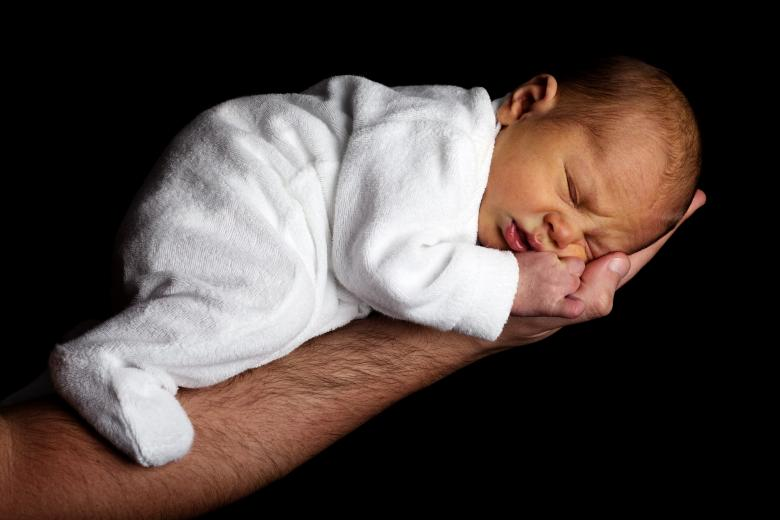
Years ago, when he was 7 years old, my son Micah couldn’t sleep. (He’s now 19.) After a fitful hour of tossing and turning, he finally came downstairs and lay down on the sofa. And of course he was asleep within seconds. Half an hour later I picked him up to carry him back upstairs to his bed. At age 7, Micah was reaching the point where I could no longer comfortably carry him. But, perhaps sensing precisely that this was likely one of my last opportunities to carry the sleeping child who for the last seven years has been my youngest (his younger brother was about to be born), I made an extra effort to carry him instead of asking him to walk up on his own. We made it to the top of the stairs, and I put him in his bed.

There is something about sleeping children: we look at them and see innocence, we pick them up and feel protective and intimate. I remember moments when my children were babies and toddlers, holding them in a rocking chair, willing myself to remember the feeling of the moment, sensing just how ephemeral it was. To hold a child, to carry a sleeping toddler to bed, is one of the great tender moments of life, overflowing with a feeling of generosity. We sense the holy in such moments.

I find myself thinking about children, and about carrying, on this Yom Kippur.

Being Carried on Yom Kippur

When we think of children and holidays, we usually think of Passover. Of course, Passover is a child-centered holiday, with its games and questions, its special foods and many meals. The youngest child asks the Four Questions; the cleverest child negotiates the best deal for returning the afikomen. Many a Jewish parent has carried a sleeping child from the couch to the bedroom at the end of the seder.

Not so Yom Kippur. Unlike Passover, Yom Kippur is a quintessentially non-child-centered holiday. Parents of young children are challenged to figure out what to do with their kids on Yom Kippur, because Yom Kippur is made for adults: there is no meal, there are no stories, no games, no question-and-answer. Even when the grownups aren’t in shul, fasting makes them low-energy and not particularly available to children. Likewise the substance of Yom Kippur is for grownups. The concept of teshuva can be a hard one for children to connect with. To think about teshuva requires a long view, an ability to be self-reflective, to take in the scope of one’s actions in the past year, and to judge oneself. While children can grasp the idea of being sorry and granting forgiveness, the fullness of the idea of teshuva isn’t something to expect of a 7-year old.

Yet on Rosh Hashanah and Yom Kippur our metaphors are frequently parental: k’rachem av al banim, ken terachem aleinu: As a parent has mercy on their children, so may You have mercy on us. Or the many times we say avinu malkeinu, our parent, our sovereign. Or consider Rabbi Akiva’s famous words at the end of the Mishnah in Yoma: “Who purifies you? Your parent in heaven!” This is language unique to the High Holidays. At Pesach we refer to the Divine as God, and ourselves as God’s servants. On Rosh Hashanah and Yom Kippur, alongside the image of God as sovereign and ruler, the liturgy evokes a different relationship, that of parent and child.

The language of carrying is also central on these days. In our selichot prayers we repeatedly refer to God the way God describes Godself: nosei avon, the one who carries sin. We draw this language from two accounts in the Torah: the Holy One’s forgiveness after the sin of the Golden Calf, and the Divine’s second act of forgiveness after the sin of the spies. In both instances, God refers to Godself as the one who carries sin.

The language of carrying is also evoked in the verse from Micah that we read in our Haftarah Yom Kippur afternoon (appended to the story of Jonah), and in the central sacrificial act of Yom Kippur, the confession of Israel’s sins on the head of the se’ir l’azazel, the scapegoat: “The goat will carry on itself all their sins to a remote place.”

A Lesson From Cain

The midrash reminds us of the earliest episode when this language is used. It comes in the story of Cain. Just after Cain has killed his brother Abel, God famously asks him, “Where is Abel your brother?” Cain responds, “Am I my brother’s keeper?” God tells Cain that his brother’s blood is crying out from the earth, and condemns Cain to be a wander, na v’nad, in the midst of the earth.

But, says the midrash, Cain prays.

Rabbi Eliezer said: See how great is the power of prayer. If it cannot transform everything, it at least transforms half. Cain stood over Abel his brother and killed him. The decree went out against him: “Na v’nad, a wanderer you will be in the earth.” Immediately Cain stood and confessed before the Holy Blessed One, saying, “My sin is too great to carry.” He said, Master of the Universe, you carry the entire world, but my sin you will not carry? Did you not write, ‘[I] bear sin and pass over wrongdoing?’ Forgive my sin, for it is great!” Immediately Cain found mercy before the Holy Blessed One, who took away the Na part of the decree, for it is written, “And he lived in the land of Nod.” From here you learn how great is prayer before the Holy Blessed One. (Deuteronomy Rabbah 8:1)

Cain’s plaintive words in this midrash are striking. Helpless, overcome, he cries out to God: My sin is too great to bear. The burden is too heavy. I can’t carry it. And then he reminds God that the Holy One is the ultimate carrier: the one who is sovel, who bears the burdens of the world; the one who is nosei avon, who carries sin away. Cain does not ask God to carry him: just the opposite, Cain will have to carry himself. But God agrees to carry his sin, to lessen the severity of the decree. Cain will not have to carry the burden of both his own life and the sin he has committed. God grants forgiveness, God carries away Cain’s sin, and his burden is eased.

This is an adult moment. Cain’s forgiveness does not mean he recovers his childlike innocence. The very next verse of the story tells us as much: “And Cain knew his wife, and she became pregnant and gave birth to Hanoch.” Immediately after his forgiveness, Cain finds a place to live, the land of Nod, and engages in the most basic definition of biological maturity, reproduction. He then has a son whose name signifies education. Cain does not become a child again. He becomes an adult, doing adult things, taking adult responsibilities. He finds a place to live. He has a child. He teaches his child. In just a few verses, Cain transforms from the teenager who kills his brother and shirks responsibility into a responsible adult who has children and educates them.

Yet the touchstone for this assumption of adulthood is an ironic twist. In order to become a fully responsible adult, Cain first has to surrender himself to God. He has to let go of the power he thinks he has–the power he has just proven, the power to kill–and acknowledge that in the presence of God, in the presence of ultimate consciousness, he is powerless. In surrendering his power, Cain in effect becomes a small child again: the small child who is powerless, who is utterly dependent. The small child who cannot fight off sleep. The small child who needs us to carry him. This powerless small child is precisely the being that evokes our sympathy, our rachmanus, our tender love.

Cain is not a child, and his moment of returning to a child’s state is not permanent, but temporary. Through this moment of throwing himself on God’s mercy, of acknowledging his powerlessness, Cain is transformed. He is forgiven. He is redeemed. He grows up. By allowing God to carry his sin, and by begging God to carry it, Cain becomes capable of carrying himself.

Yom Kippur: Allowing Ourselves to Be Carried

There’s a famous Christian poem about a person having a dream of walking on the beach, looking back on the footprints of the journey. Sometimes there were two sets of footprints, those of God and the person walking. Sometimes there was only one. As the poem famously puts it, “During your times of trial and suffering, when you see only one set of footprints, it was then that I carried you.”

I think sometimes we have too easily resisted this kind of language in Judaism. We’ve been more  fond of intellectual arguments and text-heavy formulations of symbolism and signification. We often tend to over-intellectualize the experience of the High Holidays. In doing so, we can miss the core experience, the basic move that this time is about. It is about allowing ourselves to be carried.

Yom Kippur is about enabling God to forgive us of our sins, those accretions that build up in our adult lives of power and separate us from our Divine essence. The halakhah defines an adult as  a bar da’at, one who has the capacity to know. The old maxim goes that knowledge is power, but it is not simply an aphorism. To know is to be powerful. That’s what it means to be an adult, to have agency and to exercise it. But as the story of Cain poignantly illustrates, our knowledge, our power, the very thing that makes us tzelem elohim, images of the Divine, can be used to dominate, to control, even to kill. That is the inherent dilemma of power. The corruptions that knowledge and power engender, those are our sins.

The great possibility of teshuva on Yom Kippur is to acknowledge those corruptions, and then to allow the Creator to carry them away. It is about returning, for a moment, to being a child–not with a child’s innocence, but with a child’s capacity for surrendering. It is about giving up our illusions of certainty, liberating ourselves from the false trappings of our knowledge and power, and allowing ourselves to be ultimately powerless–on this day, this Shabbat shabbaton.

A few weeks after that night he couldn’t sleep, I took Micah and Jonah to their first night baseball game. Jonah caught a foul ball. Our beloved team (go Tigers!) held off the White Sox. We stayed until the end. When we got home after 11 p.m., Micah threw himself on the couch and began to fall asleep. This time I looked at him and knew that I couldn’t carry him. He was too big now, and I was no weightlifter. I had to rouse him and help him walk up the stairs on his own two feet.

As we experience this Yom Kippur, I pray that we can all find the emotional and spiritual place where we can let ourselves be carried. Where we can stop being adults so fearful of losing power, and remember what it is to be a child who trusts in their parents to carry them.
On Grief and Solace: Rosh Hashanah 5785

On Grief and Solace: Rosh Hashanah 5785

About ten years ago, I discovered an album of the poet David Whyte called “Solace: The Art of the Beautiful Question.” At the time I was leading Ask Big Questions, an initiative of Hillel International I had helped to found, and so the title intrigued me. Yet even as I’ve transitioned to new work and new stages of life, listening to this album has become an annual ritual, part of my practice of preparing for the High Holidays. (I wrote about it last Rosh Hashanah too. Like any good work, it repays regular visits.)
 
Whyte explores a lot of terrain over the course of two hours. He reflects on loss and renewal and becoming. He offers beautiful ruminations on pilgrimage. He talks about exile and homecoming. And because Rosh Hashanah encompasses all of these themes (seriously, Rosh Hashanah is a rabbi’s favorite holiday, because you can write a meaningful sermon on just about anything–its lens is so vastly wide), I find listening to this album prompts fresh and deeper reflection year after year.
 
The second part of the recording begins with a series of reflections on grief and solace.  Understandably (I hope), it was this section that really spoke to me as I listened this year. Because we have all done a lot of grieving this year–of lives lost, of realities shattered, of ideas we thought were solid that, perhaps, turned out to be less durable than we assumed. And, perhaps even more challenging, so many of us have not been able to grieve properly, as our worlds and realities are fundamentally unmoored, the possibility of feeling at home strained to the breaking point, as if we’re climbing a staircase without any landings–no rest and no respite. 
 
“Solace,” Whyte writes elsewhere, “is what we must look for when the mind cannot bear the pain, the loss or the suffering that eventually touches every life and every endeavor; when longing does not come to fruition in a form we can recognize, when people we know and love disappear, when hope must take a different form than the one we have shaped for it.” And the most basic gesture of that solace comes not through our minds, but through our bodies. Here is how he describes it at the end of a poem he wrote after losing a close family friend:

 
For this loss I could not speak,
the tongue lay idle in a great darkness,
the heart was strangely open,
the moon had gone,
and it was then
when I said, “He is no longer here”
that the night put its arms around me
and all the white stars turned bitter with grief.
 
To me, the image of the night embracing us in our pain, the stars crying along with us, is beautiful and powerful–and evocative of the sound of the shofar. Or, perhaps more accurately, what I think the shofar can and is meant to help us do. 
 
The Rabbis of the Talmud understood that the middle sounds of the shofar blast–the shevarim or teruah-are meant to evoke crying. Or, as Rebbe Nachman of Bratslav explains, a broken heart. According to Rebbe Nachman, the word shofar itself is related to hitpa’arut: the confidence and pride of fully living in our humanity as images of the Divine. “On the other side of our self-estrangement, which continually changes its form and voice, we can inhabit a healthy self-confidence that includes all these tones.” This is symbolized, even experienced, in our surrounding the broken blasts with whole ones. When we truly sense the fullness of our grief and open our hearts to the solace the world offers at the same time, “we become whole. This,” he says, “is the essence of Rosh Hashanah.” (Likutei Halakhot, Laws of the New Year 4:5:2–my poetic translation). 
 
Frequently at this time of year I get questions about the theology of Unetaneh Tokef, the prayer that asks, “Who will live and who will die?” and, inevitably, the Holocaust: Where was God? Why didn’t God save the Jews? This year I’m hearing from friends and relatives similar questions about October 7 and the year since. 
 
Here’s my answer, in two parts: a) I don’t know; and/but b) I also have found that looking for that kind of intervening-in-history version of God isn’t all that helpful for me, as I find it leads me to a theological and experiential cul-de-sac. At this point in my life, I have found  other conceptions of divinity that are more helpful. Here is one of them.
 
The Rabbis of the Talmud taught that the Divine presence travels with us into exile and will be with us in redemption (Megillah 29a). The sixteenth-century mystical master, Rabbi Moshe Cordovero, elaborates: “Shechinah is the one who is expelled with us, ascending with us and descending with us. She is redeemed with us and exiled with us. She is the one connected to us always, never separated from us under any circumstance. She dwells with us. Our deeds cause her union or separation or mercy. It all comes from us, for she depends on souls” (Ein Yaakov 1:3).
 
Speaking for myself, I experience a strong desire to hear the tekiah of the shofar as a stirring blast to pride and courage–the kind of sound I often associate with national glory and military honor. But/and: that kind of orientation can also lead me towards understandings of the Divine as acting–or not acting–in history, and away from the much more personal, intimate, often painful and challenging kind of heart work that the broken middle notes call us to do. 
 
Each of us relates to that heart work in our own way, at our own pace, in a language that is, at its deepest level, only decipherable to ourselves as the Infinite One. This, too, is an invitation of the shofar: to be in a way that is both before and after the language we can share with others; to live, if only for a long moment, in the expansive silence of a wordless cry. 
 
As the new year enters, I want to bless you, as I hope you will bless me, that through our shared experiences of grief and loss, through our silent witness to one another, we might come to also sense the love and support of the Creator and creation, the divine presence that is always available, the night that puts its arms around us, the whole notes that embrace the broken in the cry of the shofar.