Hinenu: Shanah Tovah from IJS
We invite you to watch our special high holiday message to help you prepare for the new year:


Below is a recording of the first session of Earth, Moon, Mindfulness. We hope you enjoy, and invite you to join us for a full year of practice!
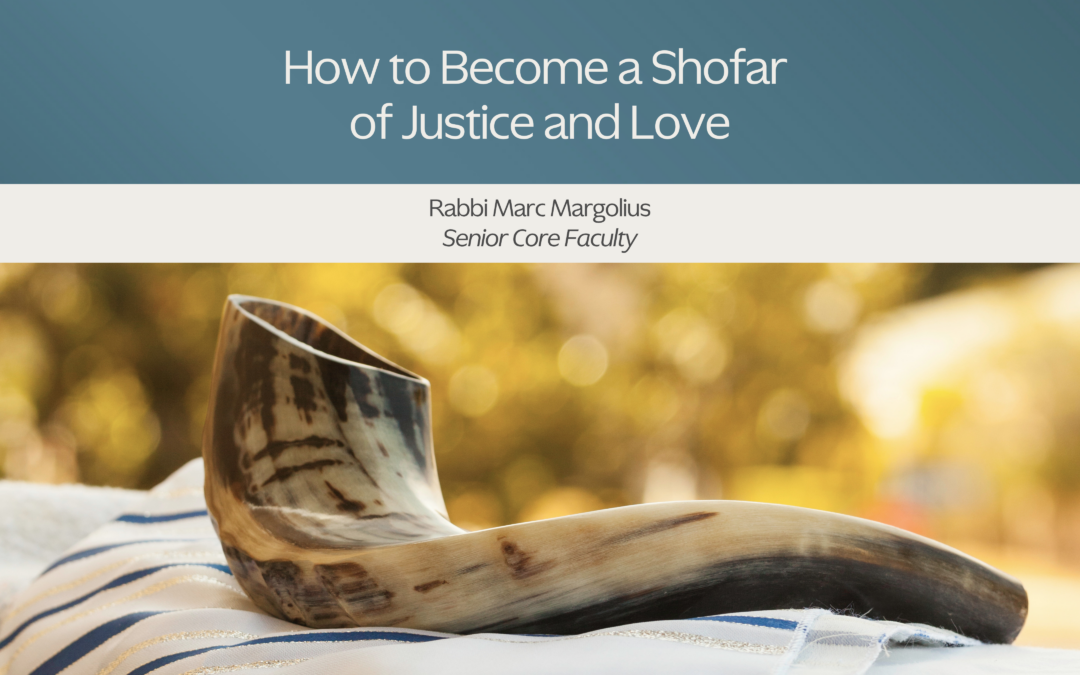
Throughout the month of Elul, the shofar invites us to crack open our hearts and soften our defenses. It calls us to attend more fully to the pain of the world. And it invites us to cultivate our capacity to respond to this pain with more compassion for ourselves and others. Ultimately, this is our intention: to imagine our very selves as a shofar, a living instrument through which the Divine Voice might flow.
The shofar can awaken us to a sacred voice within us yearning to repair that which is broken, and elevate our own voices and, in speech and deed, promote justice, love, and wholeness in this broken world.
A foundational text for this practice comes from the prophet Isaiah, and is part of the traditional prophetic reading for Yom Kippur. God instructs the prophet (58:1-10) to speak to the Israelites, in language that inspires our practice:
קְרָא בְגָרוֹן אַל־תַּחְשֹׂךְ כַּשּׁוֹפָר הָרֵם קוֹלֶךָ וְהַגֵּד לְעַמִּי פִּשְׁעָם וּלְבֵית יַעֲקֹב חַטֹּאתָם׃
Cry with a full throat, don’t hold back; raise your voice like a shofar! Declare to My people their transgression, to the House of Jacob their sin.
The people ask: why isn’t God pleased by their piety and their fasting? After all, they claim, they are seeking God, and searching to know the right direction. They ask God:
Why, when we fasted, did You not see? When we starved our bodies, why did You pay no attention?
God answers:
Because on your fast day you go about your business and you oppress your workers. Because you fast in strife and contention, and you strike with a wicked fist! When you fast as you do today, your voice cannot be heard on high.
Is such the fast I desire, a day for humans to starve their bodies? Is it bowing the head like a bulrush and lying in sackcloth and ashes? Do you call that a fast, a day when YHVH is favorable?
No, this is the fast I desire: to unlock fetters of wickedness, and untie the cords of the yoke; to let the oppressed go free; to break off every yoke. It is to share your bread with the hungry, to take the wretched poor into your home; when you see the naked, to clothe him, and not to ignore your own kin.
Then shall your light burst through like the dawn and your healing spring up quickly; Your Vindicator shall march before you, the Presence of YHVH shall be your rear guard. Then, when you call, YHVH will answer; When you cry, God will say: Hineini, here I am. If you banish the yoke from your midst, the menacing hand, and evil speech, and you offer your compassion to the hungry and satisfy the famished — then shall your light shine in darkness, your gloom shall be like noon.
Isaiah teaches us to imagine our very being as a shofar, a vessel through which the Divine can flow. When we soften our defenses, cultivate more spaciousness within us, release our self-focus, empathize with the pain of others, and access our capacity for compassion, we can become klei kodesh, instruments in a sacred orchestra.
From Isaiah, we learn to discern in the vibrations of the shofar a Voice yearning to flow through us that expresses the hopes, dreams, and needs of the vulnerable. The insight spurs us to “lift our voices like a shofar,” in word or deed, addressing the brokenness of our world, and generating actions to promote tzedek v’shalom, justice and wholeness.
The shofar awakens each of us to an ever-present kol demamah dakah, a still small voice, within us. It urges us to lift up that Voice, to amplify its message, to help bend the long moral arc of the universe towards justice, even if only a little.
The enormous brokenness of our world can overwhelm us. It can render us feeling powerless and speechless. Or, it can make us want to scream out of pent-up anger and frustration. But our practice of attuning to the shofar over the month of Elul helps us understand the shofar as a conduit for the sacred flow of love, compassion, and justice.
Like Isaiah, the late Congressman John Lewis implored us to lift our voices like a shofar. “When you see something that is not right, not fair, not just,” he said, “you have to speak up. You have to say something; you have to do something.” John Lewis taught that when we allow the sacred wind, the spirit of God, to flow through us, we will be guided by “the spirit of peace and the power of everlasting love.”
Over the course of Elul, the shofar helps us cultivate openness, empathy, and compassion. As we enter the momentous year of 5787, May the shofar awaken us to our capacity to lift our voices for justice, and to infuse our words with love.
Reflection questions for practice:
יְ-הֹ-וָ-ה יְ-הֹ-וָ-ה אֵל רַחוּם וְחַנּוּן אֶרֶךְ אַפַּיִם וְרַב־חֶסֶד וֶאֱמֶת׃
נֹצֵר חֶסֶד לָאֲלָפִים נֹשֵׂא עָוֺן וָפֶשַׁע וְחַטָּאָה וְנַקֵּה
Adonai Adonai El rachum v’chanun erech apayim v’rav chesed ve’emet notzer chesed la’alafim nosei avon va’fesha v’’chata’ah v’nakeh
Adonai, Adonai, a God Compassionate and Gracious, Slow to Anger, Abundant in Kindness and Truth, Extending Kindness to the Thousandth Generation, Forgiving Iniquity, Transgression, and Error, and Cleansing (those who return).
Perhaps we recite these attributes in penitence to God— affirming the benevolent qualities of the divine, and in that sense, invoking and awakening them within our world. And perhaps we are also invoking and awakening these qualities within ourselves, in remembrance of our inherent sanctity as beings created in the divine image. We may not naturally feel an arising of compassion in response to our own or others’ pain— we may actually feel a response of criticism or harshness — and that’s OK! We can engage the 13 Middot as a practice in cultivating our hearts. Each day, we can contemplate one or more of these attributes and plant seeds of love and compassion in the soil of our consciousness.
Cultivating lovingkindness and compassion helps us to enhance the energies of belovedness and unity that are meant to permeate the month of Elul. By infusing the entire teshuvah process with love, we can more easefully be honest with ourselves about where we have missed the mark. Because love itself, actualized in a balance of chesed (loving-kindness) and emet (honesty) is what most effectively supports healing, growth, and repair. Love does not bypass or belittle harm; it holds the truth of our behavior honestly, while also affirming that teshuvah is possible and we can always return. We are returning to our awareness of the sanctity of life, and we are returning to our own loving nature; to the very essence of who we are.
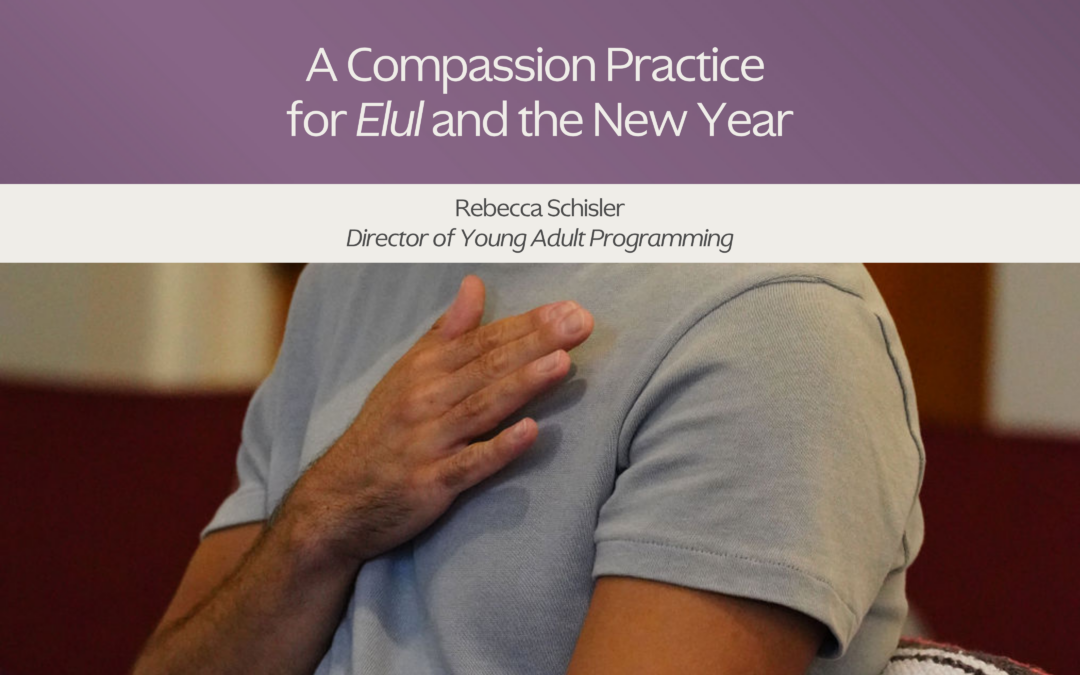
Here is a short, ten minute guided meditation for cultivating compassion as we move through Elul into the New Year.
Invite yourself to arrive more fully into the present moment. Find a comfortable posture — you can be either seated or lying down. Allow your body to settle in, feeling a sense of being both awake and relaxed. If it feels comfortable, you can let your eyes close, soften your gaze, or do something else to allow your attention to come inward for the duration of this practice.
Take a few deeper breaths, breathing in fully and breathing out slowly. Notice the sensation of the ground beneath you, supporting your weight. And just let yourself continually arrive here in the present moment.
Bring your attention to rest on the sensations of breathing, noticing the gentle rise and fall of your belly and chest. There’s nothing to change or fix or control here. Simply rest with the breath as it is, moment by moment.
Now begin to open your awareness to your inner life. What emotions or states of your heart are present right now? There’s no right or wrong, and you don’t need to go searching — simply notice what is already here. Your emotional landscape may feel calm or unsettled, light or heavy, peaceful or anxious. Whatever is here, whatever is true, simply allow it to be known.
You might place a hand over your heart as a welcoming gesture. How does it feel to simply acknowledge what is true with curiosity and care? Whatever is here, this too belongs. This too belongs.
If strong feelings arise, see if you can notice where they live in the body — perhaps tightness in the chest, warmth in the face, or heaviness in the belly. Practice meeting these sensations with kind and curious attention, just noticing and welcoming what is here in the heart and in the body in this moment.
Now you might bring to mind one of the thirteen attributes of compassion — perhaps rachum, tender mercy, or rav chesed, abundant loving kindness. Simply repeat the word of your choosing to yourself, invoking its presence, recalling the felt sense in your body and in your heart when that quality is here.
As you breathe in, you might imagine this quality flowing into your heart. And as you exhale, you might imagine it gently surrounding whatever feels tender or difficult within you.
You may offer yourself some quiet words of loving kindness, such as:
May I be held in compassion. May I find ease. May I meet this moment with kindness. May I return to my innate loving nature.
Just rest here, allowing this compassion to touch whatever places within you are in need.
Now allow your heart to widen, to expand. Bring to mind someone in your life who you know might be struggling right now. You can imagine seeing their face or hearing their voice, invoking their presence as you hold them in awareness. With each breath, extend this compassion toward them, perhaps with the words of your choosing, or with phrases such as:
May you be held in compassion. May you find ease.
Imagine them opening to receive this love. You might expand even further, encompassing loved ones, community, or even all beings everywhere — feel that your heart is spacious enough to hold it all.
As we come to a close, invite your attention back to your own body, your own breath. Feel the ground beneath you, supporting you. Take a moment to acknowledge and thank yourself for this time of practice, for meeting your own heart with honesty and tenderness, and extending compassion outward.
As we prepare for the Yamim Nora’im, may we remember that compassion is something we can cultivate each moment that we pause to become aware and to welcome what is arising in our hearts with kindness.
We’ll close our practice with a few deep breaths. When you are ready, you can gently open your eyes if they have been closed, or flutter your fingers or toes to transition out of your sit.
Below, you can find audio recordings of the meditation and text study sessions from our annual day of practice in the Berkshires.
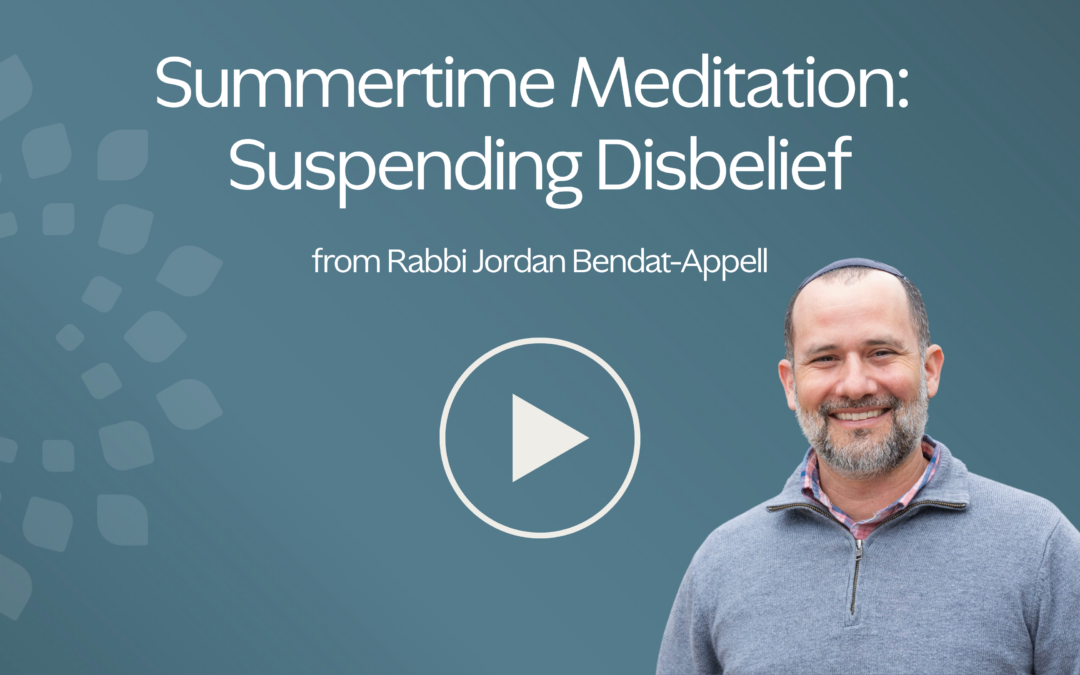
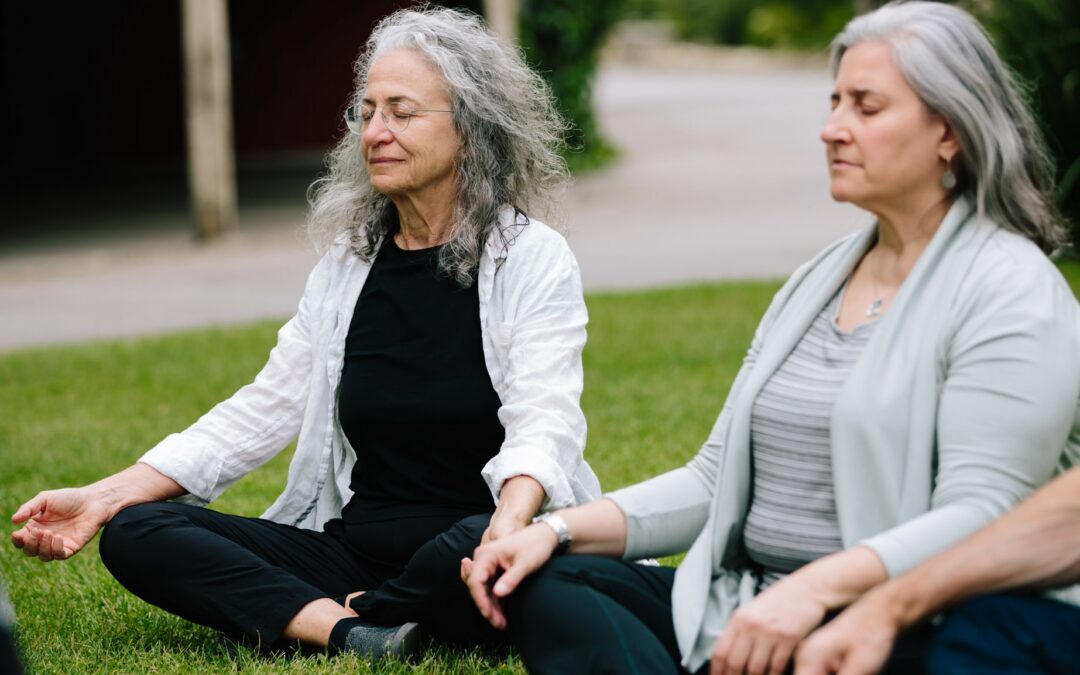
We invite you to unwind with a simple, powerful practice. Step outside for a summertime meditation led by Rabbi Jordan Bendat-Appell.
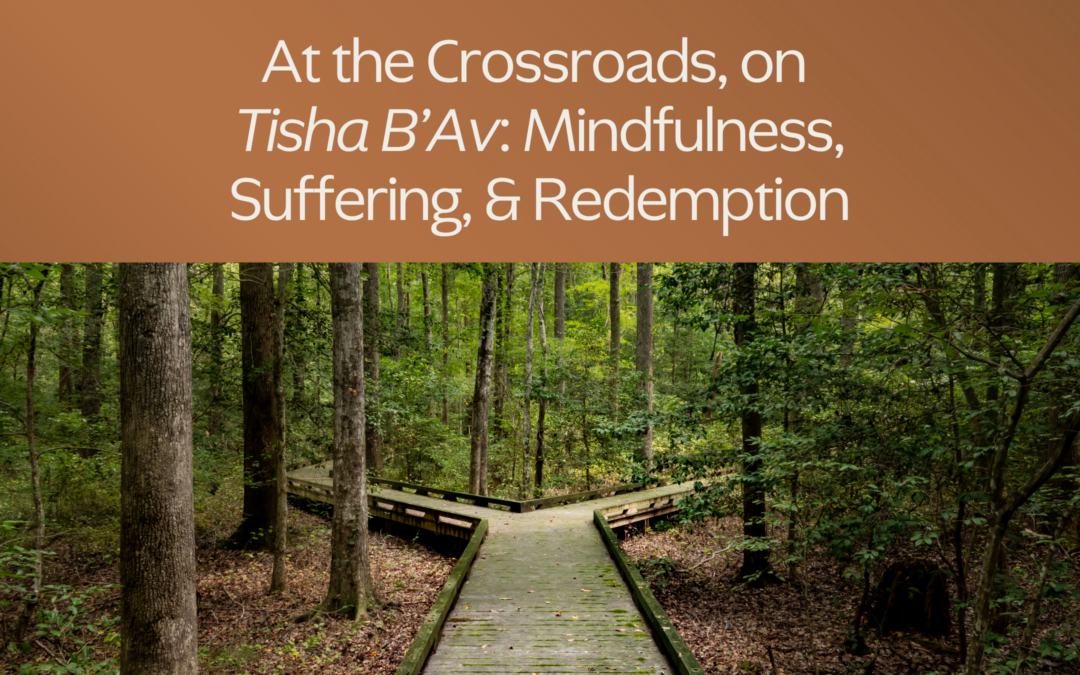
As we move in the Jewish year towards Tisha b’Av, the nadir of the Jewish year, how shall we confront the reality of pain and suffering spiritually? Given the cataclysms of our world, where is there any space to allow for the real possibility of redemption or repentance? Where is there room for empathic, mindful practice in a harsh world that seems so utterly distant from it all?
Commenting on the concluding verse of the Book of Lamentations, the great Hasidic teacher Rabbi Levi Yitzhak of Berdichev offers a mesmerizing take:
Another explanation for “take us back, YHVH, to You, and we will return; renew our days as of old.”¹ What is the explanation of the words, “of old,” in the context of this verse?. . . Every person in Israel is required to believe with full faith that in each and every moment, they receive vitality from the Blessed Creator, as the Rabbis expound: “Each soul (neshama) will praise Yah – each and every breath (neshima) will praise Yah.”² For each moment, the vitality desires to leave a person, and the Blessed Holy One sends back new vitality. We find that it is according to this principle that repentance (teshuvah) works for every single human being.
When a human being engages in repentance, they demonstrate belief that they are, at that moment, an entirely new creation, and Hashem, may God be Blessed, in God’s abundant mercy, doesn’t recall the prior sins. But if, God forbid, a person does not believe in this, then repentance won’t work, God forbid. This is the explanation of the midrash, “every mention of the word ‘now’ [עתה] in the Torah] denotes repentance.”
Since a person believes that they are now a new person, repentance operates successfully. This is the explanation of the verse, “take us back, YHVH, to You, and we will return”… How will a person return? By having their days renewed like old. This explains the [cryptic] passage of Talmud, “when are you [the messiah] coming? He replied, today. ‘Today, if you heed His voice.’”³ – when you live with this quality that each day you are an entirely new creation.⁴
There is a two-step move here. First, how can we repent or change individually? By renewing our days as of old. But wait! Are the days new, and we’re meant to put the past behind us, or are we supposed to yearn for a supposedly more innocent past? In the past, says Rabbi Levi Yitzhak, the spiritual masters practiced mindfulness, living in the present, and not the past. It’s a paradox. Repentance is fundamentally rooted in a practice of now/עתה, of being mindfully attuned to the present situation and having enough awareness of this reality to escape the accumulated anxiety and trauma that inhibits real change.
Secondly, the ramifications are not localized, because all of reality is an interconnected unity. In the Talmudic passage cited, the Messiah is distinguished for bandaging only one individual at a time; others treat many patients at once. The Messiah is a healer fully engrossed in practicing local acts of empathy, wholly attuned to the pain of individuals. Our global problems are not served by quickly scaling up, but rather by harnessing empathic awareness and healing fully. This is what it means to “listen” to the voice of the Creator. By attuning ourselves to the newness of each present moment with connection and empathy for the suffering of others, we transcend churban/destruction together.
This teaching for Tisha B’Av by Rabbi Barry Dolinger (CLP1) originally appeared in Torah Without End: Neo-Hasidic Teachings and Practices in Honor of Rabbi Jonathan Slater, edited by Rabbi Michael Strassfeld (2002).
Rabbi Dolinger is an alumnus of the IJS Clergy Leadership Program. He received ordination from the Rabbi Isaac Elchanan Theological Seminary of Yeshiva University, and serves as spiritual leader of Congregation Beth Sholom in Providence, RI. Rabbi Dolinger co-founded Mitzvah Matzos, a non-profit Passover matzo bakery that donates all profits to fight human trafficking, and serves as the Executive Director and Menahel of the International Beit Din.
¹ Lamentations 5:21: הֲשִׁיבֵנוּ ה’ אֵלֶיךָ (ונשוב) [וְנָשׁוּבָה] חַדֵּשׁ יָמֵינוּ כְּקֶדֶם, Take us back, Eternal One, to Yourself, and let us return/Renew our days as of old.
² Bereishit Rabbah 14:9
³ Babylonian Talmud Sanhedrin 98a
⁴ Kedushat Levi. Megillat Eicha 16a

Thank you Jeremy David Engels for joining Rabbi Josh Feigelson for this insightful conversation about his book: On Mindful Democracy: A Declaration of Interdependence to Mend a Fractured World. Please enjoy the recording below.
Jeremy David Engels is the author of six books, including On Mindful Democracy: A Declaration of Interdependence to Mend a Fractured World (Parallax, 2026), as well as a Liberal Arts Endowed Professor of Communication Arts & Sciences at Penn State University, co-founder of Yoga Lab, and a mindfulness and yoga teacher. You can find him in the classroom, lecture hall, on a meditation cushion, or a yoga mat, sharing his insights on how to become capable, compassionate, and engaged democratic citizens.
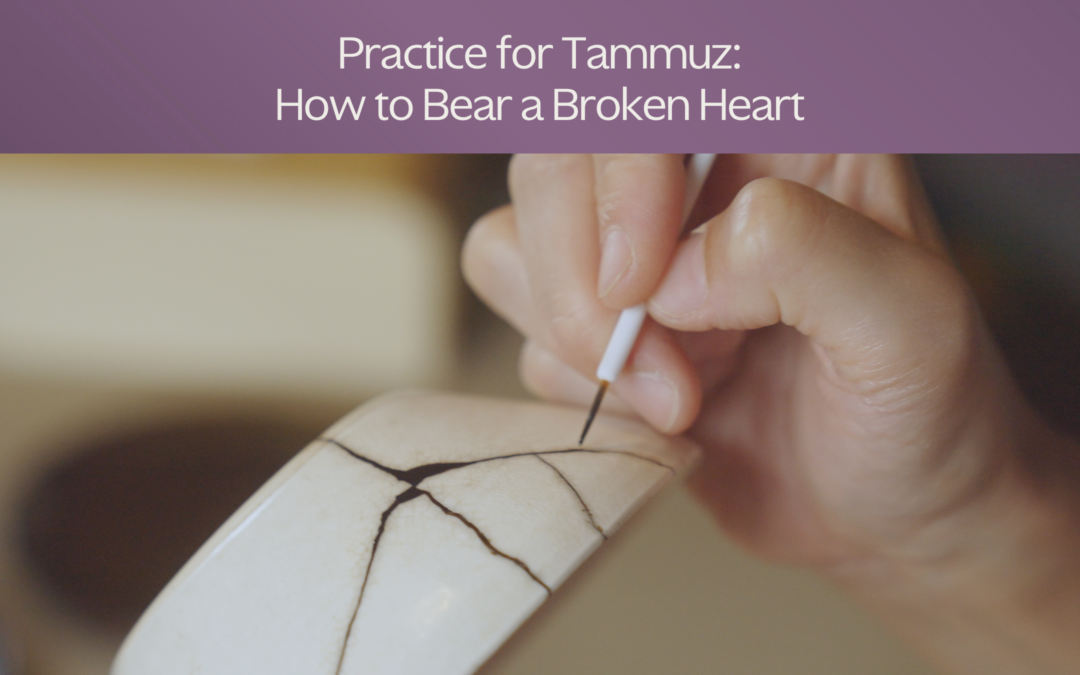
As we reach the end of the month of Sivan, which includes Shavuot and revelation at Sinai, we prepare to enter the month of Tammuz and the period of the Jewish calendar known as the “Three Weeks.” This stretch begins on the 17th of Tammuz, commemorating the breaching of the walls of Jerusalem by the Romans, and culminates on Tisha B’Av (the Ninth of the month of Av), marking the destruction of the First and Second Temples. Spiritually, this is a season for noticing and working with our grief and heartbreak.
Over the Three Weeks, we allow our own hearts to crack open, creating the condition for moving, over the subsequent seven weeks after Tisha B’Av, towards healing and wholeness on Rosh Hashanah and Yom Kippur, as well as towards joy on Sukkot, Shemini Atzeret, and Simchat Torah. The spiritual arc of this period, as Rabbi Alan Lew describes so beautifully in his contemporary classic, This is Real and You Are Completely Unprepared, is from grief to joy.
The core spiritual practice of Tammuz involves cultivating our innate, sacred capacity to face and to hold uncomfortable, unpleasant, even painful truths. The middah of savlanut, usually translated as “patience,” derives from the Hebrew root סבל, s-v-l, connoting “holding” or “bearing.” Thus, a better English equivalent of savlanut might be “forbearance,” the holy capacity to bear that which we may experience as a burden.
Rabbi Nachman of Bratzlov taught it is preferable to enter directly into grief, rather than avoiding or shutting out that which is painful.¹ “Sometimes,” he taught, “when people don’t want to suffer a little, they end up suffering a lot.”² In facing the inevitability of emotional pain, the poet Robert Frost once wrote, “the best way out is always through.”³
Our mindfulness practice helps us observe aversion to unpleasant thoughts, feelings, and sensations and, through hitlamdut (curious, kind, nonjudgmental attention), investigate them without assessing them. In the nekudat ha-bechirah (the “choice point”), we see more clearly the option of holding a broken heart tenderly, rather than instinctively fleeing from or covering over painful thoughts and feelings.
In that moment, we can choose to engage our innate sacred trait of savlanut, forbearance, choosing to “hold the pose,” to bear that which we might otherwise consider unbearable. We can choose to witness painful truths, without flinching. As a result, sometimes the energy concealed in our broken heart can thereby be freed and flow towards healing and wholeness. As Stanley Kunitz wrote in his poem “The Testing Tree:”⁴
In a murderous time,
the heart breaks and breaks,
and lives by breaking.
It is necessary to go through dark and deeper dark,
and not to turn.
This stretch of the Jewish year invites us to allow our hearts to crack open, and to fill the fissures with chesed, loving kindness. As we move into those fractures, may we be blessed with savlanut to bear all of the thoughts, feelings, and sensations, no matter how challenging. May we be blessed with compassion and gentleness in navigating the path of pain, that it might lead us to deeper wisdom, and ultimately move us to acts of kindness and justice.
Practice for Tammuz: What pain or grief are carrying in your heart these days? Can you bring chesed, kind attention to that hurt? Can you Investigate, again without judgment, your habitual inclination vis a vis grief, whether it is pushing away, repressing or denying it, or getting lost in it. What would be a wise relationship with your pain today? Can you let it in a bit more – or might it be wiser to shield yourself from it?
Song for practicing holding our heartbreak with tenderness, allowing it to ebb over time: “Pachot aval Koev, Hurts but Less,” by Yehudah Poliker, son of Holocaust survivors from Salonika, Greece; (lyrics by Yonatan Gefen):
Poem for welcoming our grief: Use the Sufi poet Rumi’s “The Guest House” to help set an intention to accept the full range of thoughts and feelings (or lack of feelings) as they arise in the mind or body:
This being human is a guest house.
Every morning a new arrival.
A joy, a depression, a meanness,
some momentary awareness comes
as an unexpected visitor.
Welcome and entertain them all!
Even if they are a crowd of sorrows,
who violently sweep your house
empty of its furniture,
still, treat each guest honorably.
He may be clearing you out
for some new delight.
The dark thought, the shame, the malice.
meet them at the door laughing and invite them in.
Be grateful for whatever comes.
because each has been sent
as a guide from beyond.
¹ Likutei Moharan I, 65, expounded by Rabbi Matthew Gewirtz in The Gift of Grief: Finding Peace, Transformation, and Renewed Life After Great Sorrow (Berkeley: Celestial Arts, 2008).
² Siach Sarfei Kodesh I, 6.
³ Robert Frost, “A Servant to Servants.”
⁴ Stanley Kunitz, “The Testing Tree.”
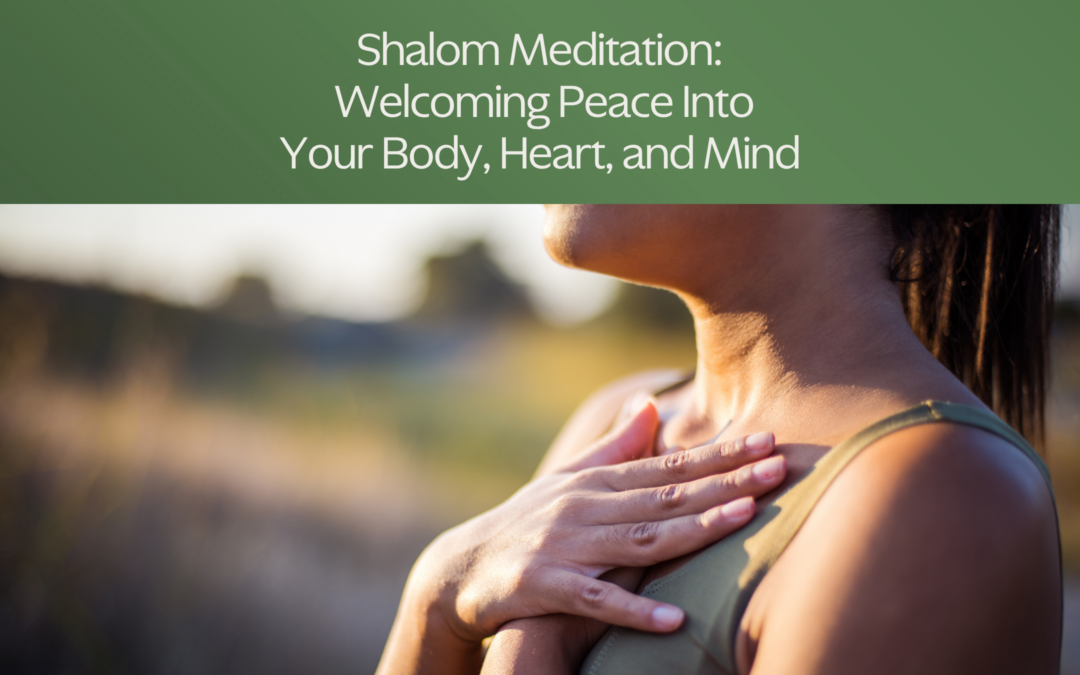
Join Rabbi Sheila Peltz Weinberg for this meditation on shalom/peace. Shalom is vast and open, receptive, spacious, it does not grab; it holds everything.
Transcript of meditation:
Every day is a good day to pray for Shalom.
Our most important prayers are sealed with the prayer for Shalom.
Birkat Hamazon. After each meal. The Amidah recited three times a day.
The priestly blessing. May peace be upon you.
This is also how we bless our children after candle lighting on Erev Shabbat. With Shalom.
Every day we face the fact that the world is filled with conflict.
Wars abound. Fear of war threatens. Violence is all around us.
We make our best efforts to work for peace as we understand it.
For the next few minutes, you are invited to welcome peace, shalom, to enter your body, heart, and mind.
This is a meditation for shalom. A prayer for shalom.
It moves from the inside to the outside.
Come to a comfortable seated position.
Allow your hips and legs to be heavy.
Undo the lower half of your body.
Invite rest, peace, shalom in the lower part of your body.
Now feel your spine reaching upward. Light. buoyant all the way to the crown of your head.
Soften your skin.
Shalom is receptive,
spacious,
non-clutching.
It does not grab.
Allow your skin to be soft and sensitive.
Allow your belly to release and be soft.
Shalom is here. It fills the inner spaces.
heart of this moment.
Feel the peacefulness in a soft belly.
Allow your shoulders to relax and soften.
With a great sense of ease and shalom, receive your own breath.
Shalom is vast and open.
It can contain the coming and the going of breath, sensation,
sound,
even thoughts.
Nothing to grab hold of. Shalom.
Shalom is a vast openness that holds everything.
Shalom is wholeness.
Shalom is completeness.
Allow a full breath to complete itself.
In breath.
Out breath.
Receive.
Be in. Shalom.
Rest. in Shalom.
Let Shalom rest in you.
Let Shalom be in you.
Notice any place in your body that is struggling.
Make space for that.
Notice any place in your mind that is tense.
Make space for that as well.
Make space, Shalom,
even when there is nothing to do. You can be at peace.
Shalom.
Go with shalom.
Go toward Shalom.
Go into Shalom.
Open to Shalom. Inside of you.
In your inner body.
Allow breath to expand the sense of Shalom.
Sitting in this open space.
Feel the harmony.
Peace.
Non-contention.
Non-struggle.
Non-striving.
Let us sit until the bell rings.
Thank you.
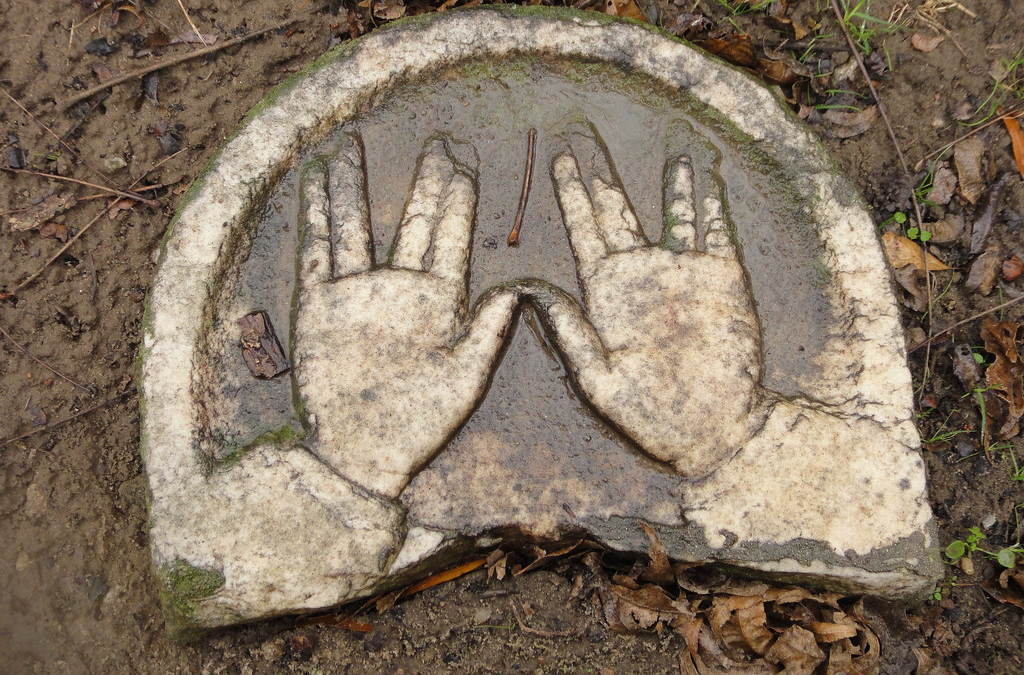
While the Priestly Blessing is a central ritual at my family’s Shabbat table, that hasn’t always been the case. For whatever reason, it wasn’t part of my parents’ repertoire when I was growing up.
That changed when, at age 12, I attended the bat mitzvah of a family friend and saw her parents place their hands on her head and recite the words. I told my folks, “I’d like us to do that.” Soon thereafter, my dad started blessing my brothers and me. (For whatever reason, my mom left it to him to do.)
In both the relationship with my father and my relationship with my children, I have experienced real power in this ritual.
Parent-child relationships aren’t easy, and Friday afternoons can be tense. Teenage children can be moody (okay, so can the rest of us), and I imagine ours is not the only family in which we’ve sometimes been forced to decide whether to wait for a child who was having a hard time making it to the dinner table that week, or just proceed with dinner. In those cases, I have found that the laying of hands and the recitation of this bracha can work as a kind of solvent, melting some of the ice that can form.
On my dad’s last Shabbat, as we gathered in a small conference room in the hospital palliative care wing for a dinner prepared by friends, my brothers and I—all full-grown men with families of our own—each went to him to receive what we knew would be our final blessing from him. It’s hard to describe how that memory makes me feel. Suffice it to say that if you know, you know, and it made me grateful for advocating for the ritual when I was young.
“Thus will you bless the children of Israel,” the Holy One instructs Moses to instruct Aaron and the kohanim (Num. 6:23). It is in Parashat Naso that we find the words of this ancient blessing that we still recite today.
Koh, “thus,” shall you bless. The Seer of Lublin comments, “The Priestly Blessing is the blessing that the people of Israel should be blessed with the traits of Aaron: to pursue peace and love one another.” Similarly, Rabbi Avraham of Gur points out that the commandment here is not actually to bless but is rather in an instruction in how to bless when blessing. Why? Because the default state of the kohanim is understood to be hesed, loving connection. Thus, no commandment was necessary to bless—they were naturally going to do that. The instruction is simply in what words to say.
These are beautiful commentaries, both of which get at the loving sensibility conveyed in both the words and the action of the blessing. Yet I find a third Hasidic vort (short gloss) particularly moving. It comes from the Modzitz tradition: “‘Koh, thus shall you bless them’—thus, just as they are. Don’t search for the most outstanding or important among them, nor for the greatest or the most righteous. Rather, every individual deserves to receive the blessing.”
While this instruction would seem to be directed at the blessers, I think we can understand it as directed at all of us, whether we are offering blessing or receiving it. In blessing my children, or offering blessing to others, I try to soften my proverbial gaze and perceive the child or person in front of me as no more and no less than a human being, an image of the Divine who is utterly unique, infinitely valuable, and equal to everyone else. Their accomplishments and setbacks, the stories I might tell myself about them—they melt away for a moment, and I can be a channel for a Divine blessing toward them.
After all, that’s what I experienced in receiving the blessing from my father, something I think we all yearn for and need: coming home to a loving embrace in our fundamental humanness, a “safe place,” in the words of Maya Angelou, “where we can go as we are and not be questioned.”
For Reflection & Conversation

Rabbi Caryn Aviv (she/her/hers) serves as Rabbinic and Program Director at Judaism Your Way, as well as Director of Studies at ALEPH. Caryn loves to create and facilitate transformative Jewish experiences that spark joy and meaning for Jews and loved ones. Prior to becoming a rabbi in 2020, Caryn earned a PhD in sociology from Loyola University Chicago in 2002. She taught, mentored students, and published research in Jewish Studies and sociology at University of Colorado at Boulder and the University of Denver from 2003-2013 before entering the ALEPH Ordination Program. Caryn loves spending time with her family, hiking in the Rocky Mountains, singing with Denver Women’s Chorus, hugging trees as a spiritual practice, organizing for justice, and making art.
On Tuesday, May 14, Rabbis Benjamin Ross, Josh Feigelson, Jenny Solomon, and Cantor Julia Cadrain, held a candid and timely conversation about the burnout crisis. Josh and Benjamin’s recent joint report, Holy Work, Human Limits, Communal Potential, captures the gravity of this issue, and together they shared the findings and open a dialogue about where we go from here.
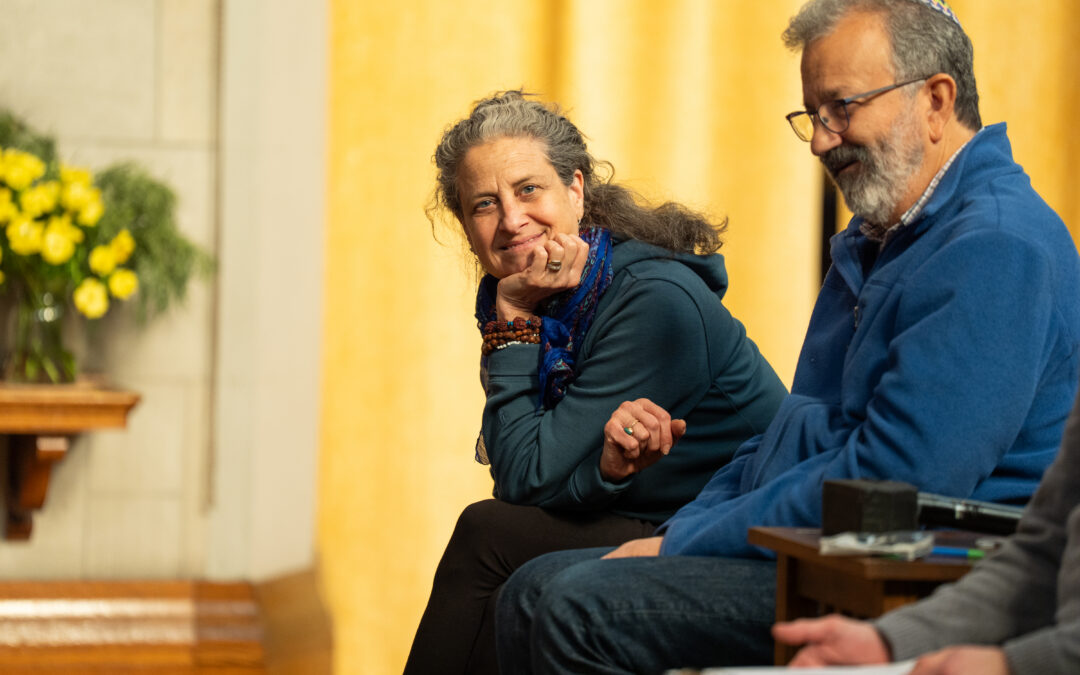
Rabbi Nancy Flam: Let’s just rest in ourselves for a minute or two. Allow everything else to just be what it is. And just just I invite you to rest in yourself. Sitting for a minute or two. So, we’re in a progression in our meditation instructions and practice over this retreat preparing ourselves to experience what revelation might be. So in a way the instructions and the teaching will be pointing us to more and more subtle aspects of mind and being such that we might make ourselves transparent to revelation. That’s the preparation. So, I’d like to start this morning with a teaching. It’s actually written out on the sheets. I think they’re below your seats. Thank you, Rachel and Maidelle and Shai for putting them out there. And it’s about this word Anochi. Surprise, surprise.
Rabbi Nancy Flam: So, first I’ll read the text from Deuteronomy. This is right before Moses repeats the revelation, the content of the Ten Commandments. And Moses is saying to the people:
Face to face. God spoke to you on the mountain out of the fire. I stood between you and God at that time to convey God’s words to you. For you were afraid of the fire and did not go up the mountain, saying, “I the eternal am your God who brought you out of the land of Egypt, the house of bondage.”
And that last line of course starts Anochi. So that’s what God first spoke. And he people were afraid as we recall from the Zornberg—could be annihilating. What can we bear? We can’t bear it. The people said, “You do it for us. You stand between us and God. We won’t be able to bear it. We won’t be able to maintain our identity, as the Zornberg taught.” Fair enough.
And now we have this teaching from the Ma’or Va-shemesh, another third generation teacher, Hasidic great on the parasha of Be’haalotcha. And he wrote:
I heard from the holy Rav, our teacher Yechiel Mikhel, the preacher from the holy congregation of Zlatchov, a drash on the verse, “I stand before you and God,” which is of course what Moses said. And he teaches that in his name— the Ma’or Va-shrmesh is teaching—if a person makes themself out to be important or clever—a somebody—that only creates a separating partition that is the work of an “I.”
Meaning that if out of pride one says I’m a somebody with good qualities, that will stand between you and God—that will stand between you and God. Through such doing, you erect a separating partition. You need to know that you are like nothing at all. Only what the Holy One of blessing gives to you by way of your life force to accomplish something great or small. For God makes everything be. Therefore, it is not fitting for any person to say “I”. Rather, it is only fitting for God to say “I”.
Try that on for size—right? It’s a profound teaching and for those of you who have been students of meditation for some time you know that the whole question of I, me, and mine—relating everything back to me—can be problematic, imprisoning, obscuring in terms of what’s really real. What’s really real?
Rabbi Nancy Flam: So, I’m going to read you a couple pieces from Danny Matt which I read at this very time last year and which we talked about afterwards on the Zoom call. Um, but you liked it so much I wanted to bring it back. So, these are the pieces, and not all of you were here last year, of course. Danny Matt writes in my all-time favorite essay, if you have not read it or not read it recently, as in the last month, go read it again. It’s called “Beyond the Personal God,” and it’s in the 1994 spring edition of the Reconstructionist Journal. You can find it online for free or email me, and I’ll send it to you.
In that essay, he talks about how the idea of a personal god and the idea of a separate personhood that we are sort of arise together and are mutually reinforcing. But there’s another way to construct reality and divinity which is without separation. The aleph—ein od milvado—as Jon taught us—that’s it. It’s just all divinity, no separation. And that’s what can be an overwhelming experience. And the people said, “No, no, no, no, no. We’d like to—we’d like to—we don’t want to die and we don’t want to lose our separate existence.” Understandable. We might, no pun intended, identify with that perspective.
So what meditation practice can do is train us toward more and more transparency to the point that we can bear. It’s not an all or nothing proposition. It’s not like come up to the mountain and be there or don’t. Our meditation training helps us to efface that sense of I, the attachment, the identification—to where we experience more of the teeming vitality that is life of which we are a part. That is a central project of Hasidut—bittul ha-yesh—effacement of self. Effacement. And what’s so cool is that our meditation practice in this way can be a training toward that for as much as we can bear. Each according to her strength. Okay. Danny Matt:
Over our lifetime in collaboration with our family and friends, we’ve woven a story about ourselves—a story that defines who we are. The ego cannot be understood or expressed except in relation to an audience. And this audience’s responses, real or imagined, continually shape the way in which we define ourselves, the story we tell. We do not consciously and deliberately figure out what narratives to tell and how to tell them. For the most part, we don’t spin our tales, they spin us. These streams of narrative issue forth as if—if from a single source—to those around us, it seems that a unified agent has authored the story—that there’s a center of narrative gravity. This apparent center, this apparent self is an enormously helpful simplification, but it’s an abstraction, not a thing in the brain. Though fictional, it is remarkably robust and almost tangible.
And later he writes—actually it’s earlier in the essay he writes:
“I’m looking out the window at a tree. My eye follows a branch and focuses on a leaf.” Leaf. The name is mentally satisfying. I found the appropriate label. I know what I’m seeing. But the appropriateness of the name lulls me into thinking that there’s really a separate object there called leaf. As if the leaf were not part of a continuum. Blade, veins, stem, stipule, twig, branch, limb, bough, trunk, root. So, the name leaf is misleading. Maybe I should just stick with tree. But is there really a separate self-contained thing I can call by that name? Down below, the roots absorb water and minerals from the soil. Up above, the chlorophyll in the leaves traps and stores the energy of sunlight. The leaf is not separate from the tree. The tree is not separate from the earth and the atmosphere. Nothing is entirely separate from anything else.
Nothing is entirely separate from anything else. We need names to navigate through life, but those very names obscure the flowing continuum. Behind each handy name is a teeming reality that resists our neat definitions. Don’t we want to get close to that? Don’t we want to know that—don’t we want to experience the living beings that we are like that? We do. We do. And our meditation practice is a training toward that loosening of this attachment, this identification with the fiction, the word I. Only God, the Ma’or Va’shemesh says in the name of the Zlatchover, only God should say I.
Rabbi Nancy Flam: So for our practice, I told you we’d be building on the mental noting. It’s good news or bad news. But it’s—it’s simple. So what I’m going to suggest today is for a mental noting if you so wish is that the way we label—note the experience—is “something’s arising.” It’s arising in the field of consciousness. So—”thought arising,” “sensation arising,” “emotion arising,” whatever we notice, we get even the word I out of the way like “I’m angry.” Oh no, it’s really actually very cool. It’s actually a hot experience, but “anger arising,” you know, rather than “I’m angry”—that kind of locks things in there. Have you noticed?
But if we can open our arms to be that field of consciousness co-terminus with all sensations. And we say “anger arising,” “constriction arising,” “thought arising,” like the whole crazy concatenation of what it is. Often when—say “anger arises,” but keep the “I” out of it because only God should say I. Let’s just experiment with what happens with that. Does it allow us to relax more? Does it allow us to just open the limbs of our being so that the energy can come through as this color or that flavor without making it mine, without identifying with it. I mean, it’s fairly ridiculous what goes through a human mind. It’s—it’s—have you noticed it’s ridiculous, right? It’s like—and we think everything’s so important. And it’s not that our lives, our discernments, our decisions are not important, but each moment if we can get a little bit of release, it’s—it’s experience arising, you know, it might bring a smile to your face. It’s like, yeah, it’s like they say, get over yourself, you know, it’s like—it’s so freeing.
Rabbi Nancy Flam: Anyway, that’s my testimony today. You got it. Um, so we’re going to practice that way. And, um, does anyone have a question about that? About the practice where we might name drop in? And you can keep it general or you can get more granular in the kind of particular flavor of the thought. You can say you know “remembering arising” or “judgment arising” but it’s just arising. Does anyone have a question about the practice I’m suggesting? Yes.
Participant: Do you place a higher value on saying emotion arising than naming the specific emotion?
Rabbi Nancy Flam: No, it doesn’t matter. No, in fact, you know, whatever is going to keep your mind relaxed, at ease, awake, just to notice something’s arising. If it helps you to be more precise because that makes you more awake to your experience, go for it. More general can sometimes just be more easeful. Experiment with it. Anything else?
Okay. So, we’re going to practice. But first, this is a bit belated. I’m going to remind you about posture. I know. Why didn’t I do this on the first day? Oh, you know, whatever. Okay. So, the main thing, the most important thing is that we want this balance of alert and relaxed, which is not what we usually practice—either we are alert and tight or we’re relaxed and somnolent. So actually we want to cultivate a sense of relaxation and alertness.
So you want to feel your sitsbones. It’s helpful to have your feet on the floor. It is helpful to have your hips higher than your knees. So if you need to sit up on a pillow for that—um—like—like Josh is, you can Carol Merrill over there. Yeah, Josh is modeling how you might sit so your hips are above your knees. That allows you to stay erect without using all your muscles to do so. You want to not lean back on the back of the chair. You actually—you can even—um—do an external rotation on your thighs so you can really feel your sitsbones really planted there. You’ve got a good tripod of a—of a base.
Hands can rest on your thighs. Up or down, it doesn’t matter. Shoulders down and back. You might roll them once or twice. Imagine the head resting on top of the spine like a balloon, like a helium balloon. Right in line. Chin—chin slightly tucked in toward the notch of the neck. Just very slightly. Jaw relaxed. And can open and close the jaw a couple times at the beginning of a sit. Eyes can be open or closed. And you might just do a little scan to invite relaxation where it’s possible. We’ll sit together. Rest with your anchor. From time to time, drop in a mental note. Sensation arising. A thought arising. And come back to your anchor. Notice when a sense of I comes in. Invite yourself to release that and go back to noticing something arising. The thing—if you’ve gotten lost, come back. Rest with your anchor.
[Period of silence]
Rabbi Nancy Flam: Wondering if a few people would like to share observations or questions about working with this practice. And would you—would you speak up, Louis?
Louis: I’ll speak up so I can hear myself. Um, what—what does it mean? I know—I know in the beginnings of my meditation I know what it meant when I would fall asleep or my mind would really wander off base. What does it mean when in this meditation I did not—not definitively interact with the presentation as part of my process. Instead, I was just very tranquil and transparent. I’m wondering if I can catch myself an enormous break and say, “Oh, then you were absorbing it subliminally” or if I can—or if I hold myself accountable and say, “Nice try, Louis.”
Rabbi Nancy Flam: Oh, Louis, you’re so good. Um, I mean that. I mean that. Um, I mean that. Um, it’s beautiful what you’re sharing, which is that you just experienced a sense of tranquility and transparency and you didn’t choose to—um—um—effort to do this practice. It sounded like—um—something of it came in and you meditated. So, bravo. That’s fantastic. And I wouldn’t—I wouldn’t go another layer out of like what does it mean? Or you know, are you able? You just don’t want to, you know. No, no, it’s not that. It’s not that. It’s—um—um—my—my gut sense is that—um—you engaged in meditation. So that’s beautiful. And not only that—there was a sense it sounds like of—of ease, of openness, of transparency, of alertness. Um so that’s great. Thank you. Thank you. That’s great. That’s great. Ken yirbu. So, may that increase. Yeah. Beautiful. Um, Marte?
Marte: So I have never cared for mental note.
Rabbi Nancy Flam: Okay.
Marte: And I’ve always felt like the words got in the way.
Rabbi Nancy Flam: Yeah.
Marte: Um, but for some reason today, the way you explained it, or maybe it’s because we did a second day, this really appealed to me as an experiment and I was able to engage and realize that particularly on retreat I get to a place of spaciousness, openness, comfort and peace and it kind of is a space. So then I’m thinking is this a sensation or is this an emotion or this is a thought and then I said no this is my anchor. This place is my anchor which brought me back to last night David’s point about God revelation that God and revelation is always there. The issue is when I am prepared and I can reach him. So I am like so jazzed.
Rabbi Nancy Flam: All right. All right. We—okay. We are accepting not so pleasant experiences as well to share. So just so you know—that is beautiful. I love it. I’m happy. Um thank you for sharing that. Yes.
Unnamed Participant: I’m going to accommodate less pleasant.
Rabbi Nancy Flam: Okay, less pleasant is coming.
Unnamed Participant: So, um I found it relatively easy to just say arising whatever was arising. That seemed to make me more relaxed, less of critical thing and then I got sleep.
Rabbi Nancy Flam: Okay.
Unnamed Participant: So now kind of lost my alertness in my—in this whole process and then I would struggle to be more alert, sit up, whatever. I’m not going to go back. But it was a kind of—
Rabbi Nancy Flam: Yeah. Yeah. Thank you for sharing that. Um yeah, I just had a couple thoughts. I want to see if I can catch them. Right. This practice—um—my experience is with this kind of mental noting that more relaxation comes to the body. It was beautiful noticing you notice that—and then as I said before, our default is relaxed somnolent.
Unnamed Participant: Right.
Rabbi Nancy Flam: Right. Alert, tight. And so what you noticed is that with relax came somnolent. That’s fine. And you could continue the practice. I mean, we’re just noticing how this whole system works so that we can operate it with more grace and wisdom. Um you can continue the practice which is—um—”sleepiness arising.” “Fuzziness arising.” If it’s unpleasant to you because you’re starting to struggle, “unpleasant arising,” you can just keep the practice with whatever is happening. You see what I’m saying?
Unnamed Participant: I do. I felt the urge to—um—”sleepiness arising.” I don’t want to be sleepy.
Rabbi Nancy Flam: Yeah.
Unnamed Participant: I need to sit up more alert. I need to—
Rabbi Nancy Flam: Yeah. Yeah. “I need to”—that came out. And that’s okay, too. We always have choice with sleepiness or any hindrance. So sleepiness is one of the five hindrances. We always have a choice which is to—uh—be mindful of the hindrance that’s arising or apply some kind of antidote. And so with sleepy one of the antidotes is open the eyes or stand up. Is it harder to fall asleep when we’re standing up? Um hopefully. So we can do one of two things when we notice what we might label a hindrance to our balanced alert and relaxation. We can either mindfully notice and be with kindness and clarity or we can apply one or another antidote. So, it’s—it’s just interesting to know it’s an art. Meditation is truly an art. There’s science to it, but there’s also art to it. And we become better artists as we—as we practice. Yeah. I can’t even see because of the sun who’s in the back? It’s Keith…
Peter: Peter.
Rabbi Nancy Flam: Peter.
Peter: Um I—uh—I noticed things arising. I forgot—this is very helpful just now. I forgot to—to say it was arising. So I was like, “Oh, I do a lot of planning. I do a lot of like—I’m sort of noticing where my head is going.” Uh and at the—at the very end my legs started to hurt and I’m kind of looking at the clock and then I said, “Okay, I’m gonna stretch” and then like a minute later you ring the bell. I’m like, “f***, I could really bing [sic] up.” Um, so—so—um—
Rabbi Nancy Flam: Good noticing.
Peter: Um, but what I’m curious about is like I’ve always had this sense of like you just, you know, in meditation you are with what is, right? Like you—you—you—know just be with what is—like that hurts then it hurts whatever—you’re not—you’re not changing anything—but I’m curious about what you just said around the distinction between that and hindrances and doing something to change the—I lost a little bit in that.
Rabbi Nancy Flam: Sure sure question—yeah—so as I said—um—noticing something that feels like a hindrance to—to our mindfulness to our balanced mindfulness—balanced mind—we can be with that so—or we can apply an antidote. So with pain this is where sort of art and discernment comes you know—um—pain if it’s not too extreme and doesn’t overwhelm our mindfulness can be very interesting support for mindfulness for meditation right we go—um—you know “tightness arising,” “constriction arising,” “heat arising,” “aversion arising.” So that’s another thing we can notice—desire, aversion or spacing out. It’s technically called delusion arising. So we can notice the aversion which is kind of a second level—um—noticing.
Um and then if it’s becoming like we’re agitated, we are becoming unbalanced, we don’t have enough mindfulness to meet the moment which is always a discernment. Do I have enough mindfulness to meet the moment or not? Because sometimes we do and sometimes we don’t. So then wisdom can say I’m going to stand up. No need for—like—it wasn’t a failure. It wasn’t a failure. That could have been wisdom saying you know though it was subconscious there’s not enough mindfulness here for me to meet the moment—moment as it’s presenting itself. I have another choice. I’m going to mindfully stand up, stretch, feel the release. Oh, pleasant. Oh, you know, deep breath and sit down again. So, it—it in my—um—in my way of practicing and how I’ve been taught, it’s not one right answer. It’s not like just sit there till your mind becomes so tight like a corkscrew that like—what’s the point of that you know that doesn’t increase mindfulness. We’re trying to increase mindfulness. Does that help?
Peter: Yeah. Yeah, it does. I where I get caught up a little bit is—is—if fix my logic here. If the—if the—if the goal ultimately is to be able to sit with what is—I can’t—stand getting in the way of my mindfulness. So, I’m going to stand up. Now, I’m revealing my psychology. How is that not failure?
Rabbi Nancy Flam: Oh, because—um—because you do it mindfully. You are make wisdom. So wisdom has to come in. Wisdom has to come in. Wisdom has to come in to say what’s the wise choice here—to continue to breathe. Make space for the pain. Investigate it. Allow it. You know, usually it will subside at some point. Um—um—but if there’s not enough mindfulness to meet the moment, there’s not enough mindfulness on board. We haven’t sat for two weeks straight. Maybe after two weeks there’d be enough, you know, it’s all conditions. So conditions are—wisdom says, you know, evaluating the conditions that are actually on board, right? And making a wise decision. So, um, yeah, thank you for that. I think, you know what I think we’ll do? I’m seeing so many—so many—No, no, we’re going to go to Rex. And then I’m thinking about tomorrow afternoon. I think we’re going to do more question and answer because I think that will be more valuable than anything—um—I might have prepared next year. Okay, Rex.
Rex: Um so building on David’s experience, um Wednesday night I did not sleep well and yesterday morning I think I fell asleep at least eight times the sit. Um, and today there was none of that. Not a good night sleep. Um, and I noticed—um—after a little bit of time—uh—that imagining—there was a lot of imagining happening and I noticed “imagining arising”—coming back—um—and then a—an itching sensation arose near my eye and—um—thought arose. Thought was, “Oh, itching is—half itching is rising—and sun is shining on that plate of grass over there and it’s all the same”—and then there was delight—and then I—and so the light—but the light and back to breath—so—and there was a moment I—I—there was a moment ego actually stepping like, “Oh, triumph! I became one with everything.”
Rabbi Nancy Flam: Yeah—yeah—with everything. All right. So, we have self-condemnation. We have self-congratulation.
Rex: Okay. Yeah. So, just—just sharing that I’m finding the name helpful because it does—it actually—even the emotion. Yeah. It’s really gentle and loving and okay, come back to the breath.
Rabbi Nancy Flam: Fantastic. That’s beautiful. Um yeah, I mean it connects back to in what I said at the top which is like you know the mind is fairly ridiculous when you watch it and—um—I mean we can say that with love but it’s a wild place the mind right it’s pretty wild it’s like—itch—don’t like it—sun—delight—planning—like holy Toledo you know it’s not easy to navigate. And hopefully our practice helps us navigate the mind, the heart, the body and ultimately in this Jewish context brings us as well to a sense of the ani, the ein od milvado, the fiction of the eye. Because that ultimately leads to greater availability for others and greater delight in being part of the mystery which Jonathan spoke of in Heschel’s words this morning.
Rabbi Nancy Flam: I’d like to close with—um—two pieces—um—to bring us back to the theme of the teaching today that there may be moments of revelation where we have become more transparent, less filled with the I-identification and therefore more clear as a conduit for divinity. So here’s a piece—um—that I also read last year, but everyone liked it, so I’m going to read it again. Well, it might or might not be here. Yep. Yeah. This piece by Thich Nhat Hanh. So, here’s a poem. He’s a poet.
Looking into a flower, you can see that the flower is made of many elements that we can call non-flower elements. When you touch the flower, you touch the cloud. You cannot remove the cloud from the flower because if you could remove the cloud from the flower, the flower would collapse right away. You don’t have to be a poet in order to see a cloud floating in the flower. But you know very well that without the clouds, there would be no rain and no water for the flower to grow. So cloud is part of flower. And if you send the element cloud back to the sky there will be no flower. Cloud is a non-flower element and the sunshine—you can touch the sunshine here. If you send back the element sunshine the flower will vanish and sunshine is another non-flower element. And earth and gardener—if you continue you will see a multitude of non-flower elements in the flower. In fact a flower is made only with non-flower elements. It does not have a separate self. A flower cannot be by herself alone. A flower has to inter-be with everything else that is called non-flower. That’s what we call interbeing. You cannot be. You can only inter-be. The word interbe can reveal more of the reality that the word—than the word to be. You cannot be by yourself alone. You have to inter-be with everything else. So the true nature of the flower is the nature of interbeing. The nature of no self. The flower is there. Beautiful, fragrant. Yes. But the flower is empty of a separate self. To be empty is not a negative note. Because of emptiness, everything becomes possible. So a flower is described as empty. But I like to say it different. A flower is empty only of a separate self. But a flower is full of everything else. The whole cosmos can be seen, can be identified and touched in one flower. So to say that the flower is empty of a separate self also means that the flower is full of the cosmos. It’s the same thing. You are of the same nature as a flower. You are empty of a separate self, but you are full of the cosmos. You are as wonderful as the cosmos. You are a manifestation of the cosmos.
And then—um—I chose this one for—for Nancy Krakar, but I don’t know if she’s here because I don’t see her. Nancy, are you here? Okay, you probably know what—Nancy, for those of you who don’t know, is—is—an Emily Dickinson scholar and fanatic. I say that with love. Um and I have no—another poem. I’m sorry. Sorry, I’m going to make you wait because it’s so good and it looks like it might be in my folder. Today’s Friday morning. This is Friday morning folder. Okay. Oh, here it is.
I’m nobody. Who are you? Are you nobody, too? Then there’s a pair of us. Don’t tell! They’d advertise—you know!
How dreary—to be—somebody! How public—like a frog— To tell your name—the livelong June— To an admiring bog!
I’m nobody. Who are you? Are you nobody, too? Then there’s a pair of us. Don’t tell. They’d advertise. You know how dreary to be somebody. How public like a frog to tell your name the livelong June to an admiring bog.

In this video teaching, we begin by contrasting the earth-shaking revelation at Sinai in Exodus 19 and 20 with the subtle, silent murmur of I Kings 19. This distinction serves as a map for our meditation, guiding us past the noise of the ego toward a sanctuary of inner quietude. Here, we connect with the source of divine wisdom to receive a fresh transmission of inner Torah—revealing that the voice of the Divine is still speaking to us, here and now.
This video originally appeared as part of a week-long IJS Daily Sit series in 2021, titled: Standing (or Sitting!) at Sinai, Here and Now: A Week-Long Jewish Mindfulness Meditation Intensive. Click here to access the entire series.
A Note on Language and Inclusion
I created the content before I began my personal journey of growing in awareness about my own disability and my unconscious use of ableist language. I apologize for using metaphors that assume specific physical or sensory abilities. As you engage with this teaching and practice, I invite you to adapt my language to your own experience—perhaps replacing words like “see” or “hear” with “notice,” “observe,” “perceive,” or “tune in.”
May this teaching support all of us to tune into the Torah we need right now – for our own benefit and the benefit of all beings,
Sam.
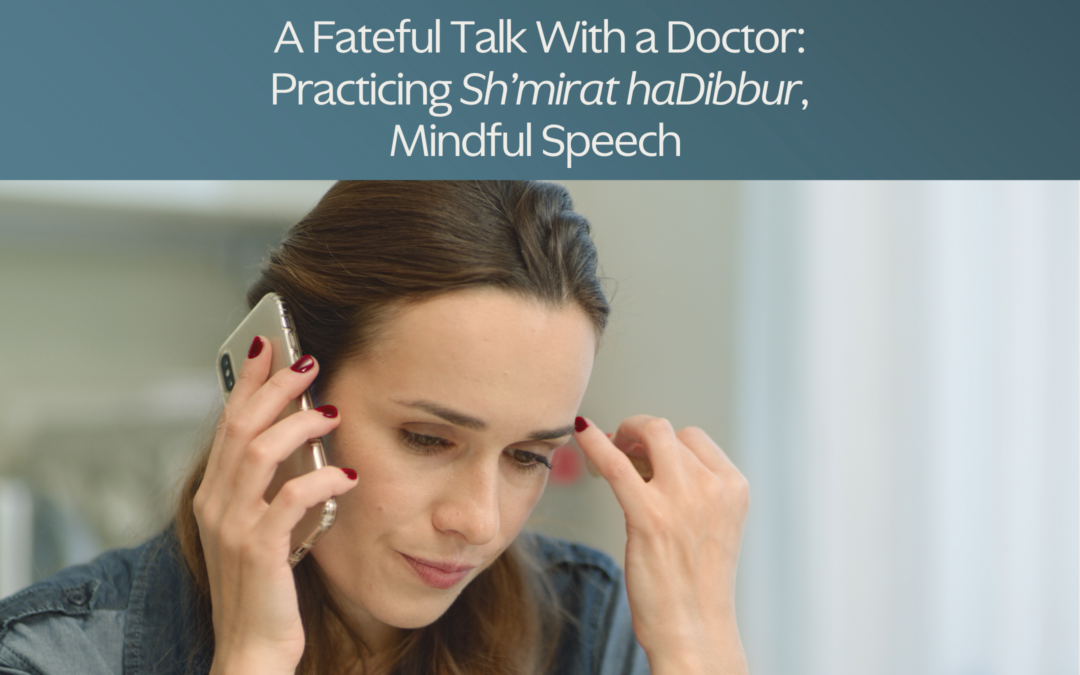
We are heading into the seventh and final week of the Omer period, associated with the sephirah (Divine emanation) of Malkut (Sovereignty), which in Jewish mystical tradition is connected with holy speech. The focus of our practice this week is sh’mirat hadibbur, mindful speech. How might we channel all the middot, the sacred traits we have cultivated over the Omer period, so they inform how we interface with the world through speech and action? How can we transform our communications into divrei kodesh, holy words?
As an example of how we might use Jewish mindfulness tools to nurture our innate capacity to communicate wisely and from the sacred traits within us, consider the following situation with which many of us are familiar: speaking up to an authority figure on behalf of others who may not be in a position to do so for themselves. (This example is drawn from the module about Shmirat haDibbur, mindful speech, in the IJS Awareness in Action program.)
Imagine you need to speak to a doctor on behalf of a loved one. You’re feeling concerned about their condition and their care, and have questions about their treatment. The doctor is busy and has been hard to reach. You’ve left a number of messages and the office keeps insisting you’ll hear back soon. Finally, your phone rings: the doctor is calling you back.
You only have a few precious minutes. A lot is riding on how it goes. Your intention is to express all your concerns and raise all your questions. You want to communicate with respect, but also be treated with respect. You want to honor the doctor’s expertise, but not be intimidated by the doctor’s authority. You want to communicate warmly, but not be submissive.
Step one is to cultivate hitlamdut, kind, nonjudgmental attention to what is happening in this moment. Notice what’s happening within you and, as judgments arise, let those pass. Scan your body, and just observe: maybe your chest is constricted, your breath shallow, your heart speeding. Your mind may be racing with fear-based thoughts.
Maybe worry or sadness and pain is feeding critical thoughts about the healthcare system, medical professionals in general, or this doctor in particular. You may have anxiety about your loved one’s condition. Speaking with an authority figure may be deeply uncomfortable. You may notice frustration at not hearing back more quickly from the doctor, annoyance about the doctor calling you back at an inconvenient time.
You might be nervous whether the doctor will be receptive to your concerns, or will be defensive. Recognize your anxiety as it manifests in your body, your breathing, your emotions, and your mind. Accept these anxiety-based thoughts and emotions as they are, without wishing or pushing them away.
Now move to the next step, the bechirah point – the moment in which you grow more aware of your options.
Begin by investigating your habitual reaction in this situation. Maybe your anxiety feeds an instinct to become passive, deferential, or avoid. Maybe it inclines you to get off the phone before fully exploring the issues. This approach would ill-serve your loved one and leave you feeling guilty and more frustrated. Maybe your worry leads you to be overly confrontational. Maybe when you are nervous, you tend to express anger or hostility. That might feel good at the moment, but surely it would be unhelpful and unwise.
Investigate your underlying anxiety, the obstacle drawing you away from your original intention, which risks leading you to express yourself in an unwise and unproductive way. Then practice non-identification by remembering that anxiety is the normal human reaction in this situation, and it is not you. You might silently whisper, “This is anxiety, and it, too, will pass.”
Now, apply the middah of sh’mirat hadibbur, the capacity to use speech for holy purpose. Return to your original intention. What kind of world do you want to create with your speech?
Now you have practiced sh’mirat hadibbur, not allowing your anxiety, anger, or fear to distort your words or to thwart your intention. You’ve spoken clearly, strongly, respectfully, and effectively. You’ve been an effective advocate for your loved one. Your words have emerged from the middot representing your best self.
This is just one scenario we may find ourselves in during everyday life in which sh’mirat hadibbur, choosing wisely when and how to speak, can help us use the gift of speech. Through this middah, we can learn to raise our voice on behalf of ourselves and others who are vulnerable, in a way that emerges from our best selves and our most noble intentions.
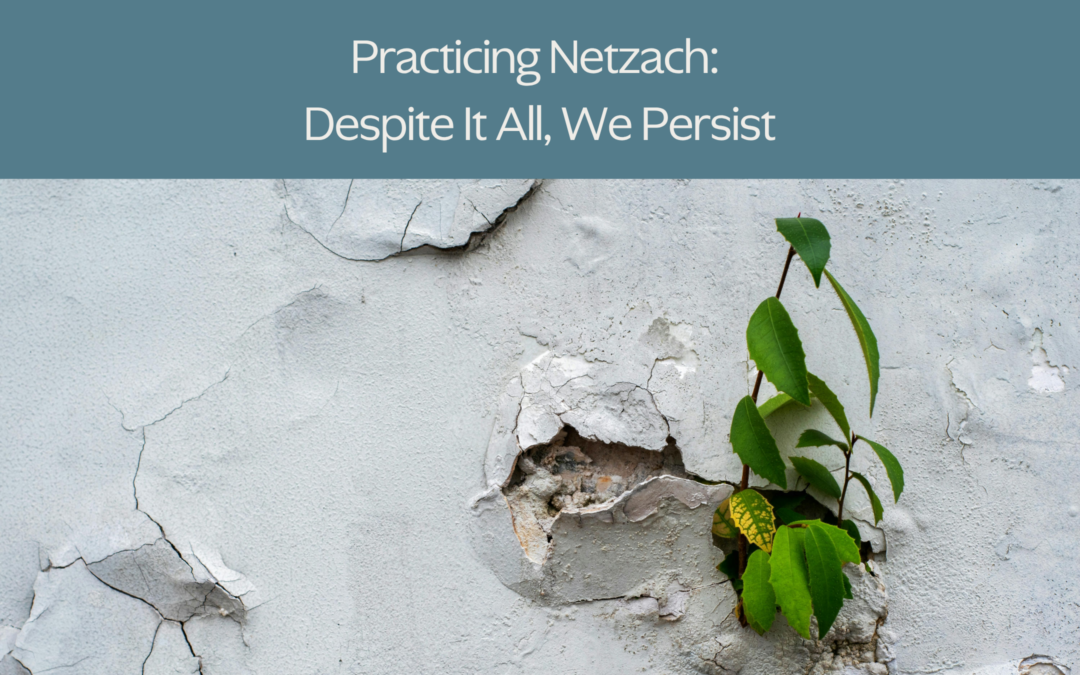
We are moving into the fourth week of the Omer, the seven-week period between Passover and Shavuot, traditionally a time for spiritual reflection and growth as we move from freedom towards revelation.¹
This fourth week of the Omer is associated with the kabbalistic sephirah (Divine emanation) of Netzach (“victory” or “endurance”). A middah (spiritual/ethical trait) associated with Netzach is zerizut, the energetic response necessary for fulfilling an intention. The Ba’al Shem Tov, founder of modern Hasidism, taught that as beings “formed in the image of the blessed Holy One who generates worlds … everything we do should be with energy and dedication (b’zerizut), since in every act we are able to serve God.”²
In his ethical masterwork Mesilat Yesharim (“The Path of the Just”), Rabbi Moshe Chayim Luzzato describes two forms of zerizut: one prompting us to act, and one sustaining our action. In the first, we respond immediately as opportunities arise.³
For Luzzato, such zerizut means:
not allowing a mitzvah to become chametz (literally, “soured”). Rather, when the time of its performance comes, or when it happens to present itself, or when the thought of performing it enters one’s mind, one should hurry and hasten to seize hold of it and perform it, and not allow time to go by in between. … [E]ach new second that arises can bring with it a new impediment to the good deed.⁴
Once we’ve initiated action, we shift into the second aspect, “follow through zerizut” or persistence:
[Once] one [has taken] hold of a mitzvah, one should hasten to complete it. … [W]hen one is performing a mitzvah with great swiftness, this will move one’s inner being to kindle aflame also, and the desire and want will increasingly intensify within. But if one acts sluggishly in the movement of one’s limbs, so too the movement of one’s spirit will die down and extinguish. This is something experience can testify to.
Lethargy represents a “shadow aspect” of zerizut. Many of us have a habitual inclination to procrastinate when facing a task, particularly if we anticipate it being unpleasant or challenging. Our lassitude may reflect the yetzer hara operating within us, fulfilling its function of protecting us from frustration or disappointment. Our instinct to avoid may reflect underlying patterns of thought and emotion designed to shield us, such as fear of revealing our limitations. Or we may simply feel overwhelmed, driven by fear of inadequacy to the task.
In mindfulness practice, we witness how our mind generates justifications to rationalize and support our tendencies to delay or avoid. Rather than judge our propensity for procrastination harshly (“I’m so lazy!” “I should do more!”), we apply chesed or compassion to our underlying anxieties, fear, and/or pain. We “befriend” the bases for our sluggishness. We remember that perfection is neither expected nor attainable, and that we are called to do only our small part in addressing even huge tasks. “The day is short and the work is much, the workers are lazy and the reward is great, and the Master of the house is pressing,” Rabbi Tarfon teaches in Pirkei Avot 2:20-21. “It is not your responsibility to finish the work, but neither are you free to desist from it.”
Softening the grip of our fear and undermining the associated justifications can free our Netzach energy to manifest zerizut by taking immediate steps responding to what had felt daunting. Once we have “engaged our engine,” we cultivate zerizut as persistence in the face of obstacles and the inclination to slow down.
In these deeply challenging days, many of us may experience a sense of despair and paralysis in the face of so many pressing issues. It is easy to fall prey to a false belief that we cannot make a difference. Some of us are crippled by perfectionism. As we notice inner messages feeding our sense of inadequacy, we meet these with compassion, soothing our fears enough to open our mouths to say what needs to be said, move our feet and go where we are needed, and take small steps towards justice. Moving skillfully through our internal and external hindrances, we practice zerizut by meeting obstacles with compassion and determination. Nevertheless, despite all the internal and external challenges, we persist.
¹ Week Four runs from sundown Thursday, April 23, until sundown on Thursday, April 30.
² Tzava’at HaRIVa”Sh #20 (“The ‘Testament’ of the Baal Shem Tov),” trans. Rabbi Jonathan Slater.
³ In keeping with a rabbinic adage “zerizin makdimin lemitzvah, those who engage in zerizut perform any mitzvah at its earliest possible moment.” Babylonian Talmud, Pesachim 4a.
⁴ Rabbi Moshe Hayyim Luzzatto (1707–1746), Mesilat Yesharim (The Path of the Just), Amsterdam, chap. 7 (trans. Sefaria).
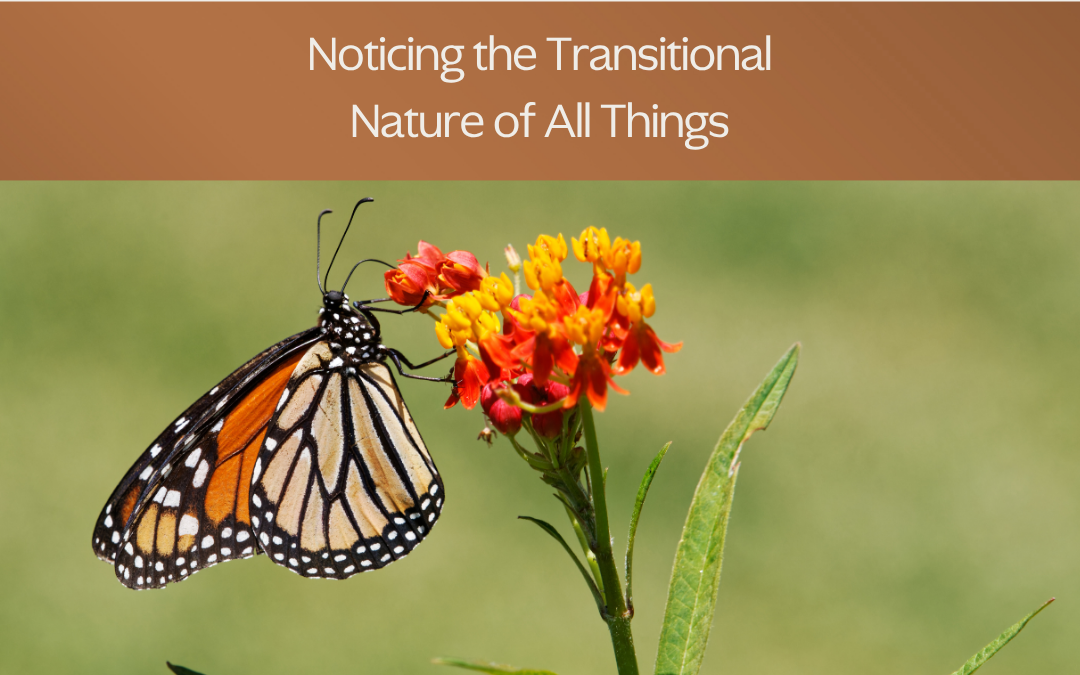
Practice originially written as part of the Shevet Reset, a Jewish meditation challenge for younger adults.
It was not. My body immediately rebelled—aching knees, itchy skin, endless shifting. I felt terrible at meditating. But eventually, with nothing else to do but practice, something shifted. One day I noticed a strong itch on my nose and, for the first time, I paused. I felt the urge to scratch. I stayed with the sensation. And then—without me doing anything—the itch passed. On its own.
That itch changed everything. After all, so much of my life was made up of itches I scratched without thinking, feeling powerless not to. Each time I felt lonely, I texted an emotionally unavailable ex. Each time I was angry, my fingers flew to a keyboard, typing faster than I could think, hitting send before I could change my mind. Each time I felt anxious, I would binge eat or drink tequila or shop for clothes I didn’t need, anything to put out the fire of discomfort or pain. If I could slow down enough to watch the life cycle of an itch, as well as the desire to scratch it, without reacting, then suddenly, my habitual ways of dealing with desire were fair game for pause and interruption. As Victor Frankl famously wrote, “Between stimulus and response there is a space. In that space is our power to choose our response. In our response lies our growth and our freedom.”
This is your invitation for practice. See, as best as you can, if you can slow down and notice the transitional nature of all things – your breath, the light, an itch. Pay attention to how everything is shifting and changing all the time. See if you can elongate the time between stimulus and response by paying attention to these moments of constant change and transition.
Reflection Questions:
What sustains us during periods of transition? Rabbi Jordan Bendat-Appell’s teaching on the meaning of the matzah during Passover invites us to explore these questions as we move out of the narrow place in search of liberation.

We are grateful to Rabbi Angela Buchdahl for speaking to us about her new book, Heart of a Stranger. Please enjoy the conversation recording below.
Rabbi Angela Buchdahl is a pioneering Reform rabbi and cantor and one of the most influential Jewish leaders in America today. She became the first Asian American to be ordained as both a cantor and a rabbi in North America when she was invested as a cantor in 1999 and ordained in 2001 by Hebrew Union College-Jewish Institute of Religion. As Senior Rabbi of Central Synagogue, she is nationally recognized for innovative worship that reaches large in-person congregations and a global livestream audience. She has been featured on the Today Show, NPR, and PBS, and was named one of Newsweek’s “America’s 50 Most Influential Rabbis.”
Her memoir, Heart of a Stranger, released in October 2025, became an instant New York Times bestseller. In it, she weaves personal narrative and Jewish teaching to explore identity, belonging, and the moral call to encounter the stranger with courage and compassion in a divided world.
Generous donors have offered to MATCH every donation between now and Passover to help pass Jewish mindfulness on to the next generation.
You’ll receive
Guided Mindfulness for Your Seder
as a token of our thanks!
There is a phrase at the heart of the Purim story: nahafokh hu, “it was turned upside down.” The very moment when destruction seemed certain became the moment of redemption. Everything reversed, inside became outside, and the hidden became revealed.
These days, we don’t have to stretch our imaginations far to feel the resonance of this theme — we can simply turn on the news. In our country and our world, so much feels inside out and upside down. Nahafokh hu— we know this feeling.
And yet, the story of Purim has some ancient and hard-won wisdom for us on finding joy and choosing life even when forces of chaos swirl around us.
Consider Queen Esther: she lives inside the palace of a volatile King, hiding her identity, navigating a world of power and danger. The wicked Haman has decreed the destruction of her people, and Mordechai tells us she must go before the king uninvited, an act punishable by death, to plead for their lives.
Esther hesitates, and Morchedai says to her, “U’mi yodea im l’eit kazot higa’at l’malkhut?”— “and who knows whether it was for such a time as this that you attained your royal position?” (Esther 4:14).
Who knows? Maybe you were made for this moment.
Hard times create a doorway into a deeper sense of courage and purpose that comfortable times simply do not require of us. Esther could have stayed silent to protect herself. Instead, she fasted for three days, gathered her strength, and stepped forward into her purpose. Perhaps the moments where we feel most tempted to hide are precisely the moments we were placed here to meet.
On a deeper level, Esther’s story is one about a human response to the experience of divine concealment. One of the most interesting things about the Book of Esther is that God’s name does not appear in it. The very name Esther is understood by the rabbis as connected to the Hebrew word hester — hiddenness. Hester panim, the hiding of God’s face.
And yet our tradition teaches that within this hiddenness, the divine is even more present. Perhaps this is because when God’s face is hidden, the opportunity is created for us to bring sanctity into the world, to intervene in profound acts of courage and love, and to create miracles among ourselves. In hard times, when the presence of God is difficult to perceive, we must find love and goodness within ourselves and share it with one another. We become the revelation.
This is why the mitzvot of Purim are so deeply relational. Mishloach manot— sending gifts of food to friends and neighbors. Matanot l’evyonim— giving gifts to those in need. These practices are the spiritual core of this holiday. When the world turns upside down, we take care of one another. We affirm that we are in this together.
And we affirm that life’s preciousness is worth protecting. As Shabbat departs each week, in the bittersweet moment of havdallah, we sing a line drawn from the Megillah itself: “LaYehudim haitah orah v’simcha v’sasson vikar” — “For the Jews there was light and gladness, joy and honor” (Esther 8:16). We sing these words as a reminder — even as the holiness of Shabbat seems to slip away, even as we return to the ordinary and sometimes painful world, these realities have not disappeared. They are still available to us. Light, gladness, joy, and honor are prophecies of a coming future. They are qualities we can invoke and embody right now.
To invoke light, gladness and joy in times of fear is not denial. It is courageous and sacred. When we feel plunged into distortion and chaos, when we feel that everything is upside down and inside out — let us remember this line. Let us remember the future. Let us open to the embrace of the wisdom traditions that have rooted and carried our people though many moments of chaos and upheaval — and will continue to do so.
This Adar, may we find our inner Esther. May we remember the presence of hidden holiness, and the importance of joy in resilience and resistance. May we take care of ourselves and one another with open hearts and hands. And may we have the courage to step forward into the purpose for which we were made.

Mi-shenichnas Adar, marbim b’simchah. When the month of Adar begins, one increases in joy.
Babylonian Talmud Ta’anit 29a
Mitzvah g’dolah l’hiyot b’simchah tamid. It is a great mitzvah to be joyful, always.
Rabbi Nachman of Bratzlov, Likutei Moharan II: 24
How do we nurture simchah through spiritual practice – especially in such challenging times, when joy seems hard, maybe even unjust, to access?
Nachman describes simchah as emerging from our capacity to develop greater awareness of the deeper truth of our lives, to “reveal” that which previously had been “concealed” from us:
At every stage in a person’s spiritual growth, there is an aspect of Torah and mitzvot which is ‘revealed’ to him – a level he can understand and practice – and then there is a higher level that is as yet ‘concealed.’ Through prayer, the level that was previously ‘concealed’ becomes ‘revealed,’ leaving an even higher ‘concealed’ level to aspire to. Simchah is when one constantly advances from level to level, turning the ‘concealed’ into the ‘revealed’.¹
For Rabbi Nachman, simchah/joy is not a sentiment synonymous with happiness, but rather a level of spiritual awareness, waking up to the underlying interconnectedness of all. This may help us understand the teaching of Ben Zoma in Pirkei Avot “eyzehu ashir? Ha-sameach b’chelko; “Who is rich? One who rejoices in one’s portion.”²
We can understand chelek/”portion” here to mean our unique perception of what is true in this moment, and understanding it as fundamentally connected to all other perceptions. When we surrender judgment and comparison, and simply attend to and “rejoice” in this breath, this thought, this feeling, this sensation, this moment, we are ashir/rich; we experience a sense of fullness and wholeness. We have everything we need in this moment.
Rabbi Nachman illustrates this kind of simchah in a tale about a shoemaker described as tam (“simple,” unperturbed by complexity and separation) who always rejoiced in every experience even though he was inexpert at his craft, made inferior products, and earned less money than his competitors. When his wife pointed out to him how much better the other shoemakers were doing, he replied, “What do I care about that? That is their work, and this is my work! Why must we think about others? … As long as I make a clear profit, what do I care?’ He was thus always filled with joy and happiness.”³
This kind of simchah/joy born of deep connection to self and others can transform the energy of challenging thoughts and emotions such as pain, anger, shame and guilt. The Ba’al Shem Tov is said to have taught a parable in which the anger of a king is dispelled when his beloved child comes into his presence:
For even if the king is in a state of anger, the very sight of his precious child brings him joy and delight. The anger dissipates of its own, and obviously never returns, all the time his son stands before him, as is human nature. The child, therefore, has no worries, and enters at any time he so wishes and exudes praise without end, for he knows that this brings the king, his father, joy and delight.
Why is it this way? Why do anger and fury disappear when joy and love enter? Where do they go? Yes, this is human nature, but nevertheless, we must try to understand how and why. But this is the power of love and joy: When they prevail, they cause anger and fury to ascend upward toward their root. This is part of the secret knowledge, that these forces of anger and strict judgment are mollified only when they reach their origin, since at its origin, all is pure goodness. It comes out that anger and fury are healed and mollified through love and joy.⁴
Mindfulness does not mean eschewing sadness or anxiety to practice simchah. To the contrary, it involves embracing challenging emotions, thought patterns and narratives with compassion, thereby transforming the energy within them to yield the spiritual state of simchah. Experiencing and cultivating a sense of deep relation to others and to ourselves helps relieve our constrictions and allow the chiyut/life force within them to shift and flow in its proper, more wholesome and holy direction.
We can assist in this process not by trying to compel ourselves to be “happy,” but by understanding our grief, sadness, and pain as portals to profound connection — what Rabbi Jay Michelson aptly describes as “unhappy happiness,”⁵ the simchah/joy born of a sense of spiritual connection.⁶ We don’t have to feel “happy” to experience “joy.”
In any moment of any day, we can choose to engage in “awareness practice,” stepping up, as it were, to the balcony of the mind and simply witnessing there, without judgment, the thoughts and feelings swirling below. From this “God’s eye perspective,” the narratives forming in the mind lose their power, and we intuitively “remember” the infinitely larger context in which we live and of which we are a precious, inseparable part.
As we move into Adar in these deeply unsettling and challenging times, may we find and nurture simchah in the essential, foundational truth that we are profoundly, inextricably connected in an unfathomable web of life energy through time and space.
¹ Likutei Moharan I, 22:9.
² Mishnah Avot 4:1.
³ “The Sophisticate and the Simpleton,” in Rabbi Nachman’s Stories, trans. Aryeh Kaplan (Breslov Research Institute: 1983), p. 168-173.
⁴ Tzava’at Harivash 132.
⁵ Jay Michelson, “What Rabbi Nachman and Pharrell Have in Common,” The Forward, August 16, 2014.
⁶ See David Brooks, “The Difference Between Happiness and Joy,” New York Times, May 7, 2019: “Happiness usually involves a victory for the self. Joy tends to involve the transcendence of self. Happiness comes from accomplishments. Joy comes when your heart is in another. Joy comes after years of changing diapers, driving to practice, worrying at night, dancing in the kitchen, playing in the yard and just sitting quietly together watching TV. Joy is the present that life gives you as you give away your gifts.”

When emotions are running close to the surface, IJS is here for you. Rabbi Josh Feigelson shares his reflections below.
by Laura Hegfield (Educators Cohort and JMMTT graduate)
Tu Bishvat, the Jewish “New Year of the Trees,” is the 15th day of the Hebrew month of Shevat — which this year begins the evening of Sunday, February 1 and continues throughout the day on Monday, February 2.
On or around that date, we invite you to engage in a beautiful tree-based contemplative practice led by Laura Hegfield, a graduate of the IJS Educators cohort and Jewish Mindfulness Meditation Teacher Training (JMMTT) program. She offers a short, guided embodied meditation based on taking a few moments to study the form of a tree, whether out in nature, or viewed through a window in your home or office.
Click here for the audio meditation, and click here for a transcript of the meditation practice.
For more information about Laura, visit her website at https://www.shinethedivine.com.
by Rabbi Rachel Barenblat (CLP6) and Rabbi Jeffrey Goldwasser (R2)
[T]he 15th day of the Hebrew month of Shevat, the full moon of the month, is the New Year of the Trees; we pause to mark the passage of time measured in their rings. The Talmud established this as the New Year’s Day for all trees, so that we could observe the commandment “When you enter the land and plant any tree for food…three years it shall be forbidden for you, not to be eaten. In the fourth year all its fruit shall be set aside for jubilation before Adonai; and only in the fifth year may you use its fruit.” (Leviticus 19:23-24.)
Jewish tradition uses trees as a symbol for life, learning and the divine. The Jewish mystical tradition reads a verse of Torah to say, “For a human being is a tree of the field” (Deuteronomy 20:19). Proverbs depicts the Torah as “a tree of life to them that hold it fast” (Proverbs 3:17-18). Jewish mystics also visualize God as a tree, whose crown is unknowable and whose roots spread into creation.
Today we follow the seder of the medieval Kabbalists of Tzfat. In this practice, Tu BiShvat is not only a New Year’s Day for earthly, material trees, it marks the renewal of the supernal tree in which God’s abundant energy flows from heaven to earth. On this day we participate in the renewal of that tree by traveling its length along the “Four Worlds” of Asiyah (making),Yetsirah (formation), Briyah (creation) and Atsilut (essence).
The seder is also a “tikkun” — a ritual of repair. By eating the fruits and nuts of the trees with special blessings and awareness, we repair our own spiritual brokenness and the brokenness of a world that is not yet as we and God most wish it to be. We drink four cups of juice or wine to represent the FourWorlds and the round of the seasons.
Our Tu BiShvat journey also reminds us of our obligations to the earth — “To till it and tend it” (Genesis 2:15), as God told Adam. Today, we are witnesses to many forms of environmental destruction — the erosion of the ozone layer, global warming, deforestation, species extinction, toxic chemicals, and runaway population growth. We see that the poor suffer disproportionately from these illnesses.
Amid the snow of winter, let us reconnect with the world of root and leaf, affirming our faith that spring will come.
Click here for the full text of this Tu Bishvat seder.
Rabbi Rachel Barenblat is a poet, liturgist, and serves as spiritual leader of Congregation Beth Israel in North Adams, MA. She blogs at The Velveteen Rabbi, and is participating in the current cohort of the IJS Clergy Leadership Program.
Rabbi Jeffrey Goldwasser serves as spiritual leader of Temple Sinai in Cranston RI, and is a graduate of the second rabbinic cohort of the Clergy Leadership Program.

We are grateful to Sarah Hurwitz for speaking to us about her new book, As a Jew. Please enjoy the conversation recording below. We have two versions of the recording available, with and without ASL interpretation, thanks to Lisa Pershan.
For nearly 15 years, Sarah Hurwitz built a career finding just the right words. She served as a White House speechwriter from 2009 to 2017, first as a senior speechwriter for President Barack Obama and then as head speechwriter for First Lady Michelle Obama. Sarah worked with Mrs. Obama to craft widely-acclaimed addresses and traveled with her across America and to five continents.
Sarah’s first book, Here All Along: Finding Meaning, Spirituality, and a Deeper Connection to Life—in Judaism (After Finally Choosing to Look There), chronicled her rediscovery of Judaism with the same clarity and insight that defined her political writing. The book was named a finalist for two National Jewish Book Awards and for the Sami Rohr Prize for Jewish Literature.
If you would like a copy of Sarah’s latest book, As a Jew, you can purchase it here.

Earlier this week we held a beautiful celebration of IJS’s first 25 years. Below is a recording of Rabbi Josh Feigelson’s speech from the event.
What a night! An Evening of Light was joyful, spiritual, and full of connection. Together, in the sanctuary at B’nai Jeshurun and across the country via livestream, we celebrated 25 years of the Institute for Jewish Spirituality, welcomed Hanukkah, and honored Dorian Goldman and Marvin Israelow for their extraordinary leadership and generosity.
The music, the reflections, and the energy in the room reminded us why this community matters — and how deeply we’re all connected by our shared pursuit of mindfulness, compassion, and light.
We invite you to watch the recording below:
Thank you to IJS Core Faculty, Kohenet Keshira HaLev Fife, for a beautiful teaching and intention setting for lighting the Hannukah candles this year.
Follow us on Instagram and Facebook to see our full series of practices for lighting your Hannukah candles with intention!