Shoftim 5785: First National Trust

Shoftim 5785: First National Trust

One of the most delightful parts of being a parent has been studying parts of the Mishnah with each of my children. With my older kids, who are now both in college, it has been a little while. But my youngest is still at home, and our synagogue recently began a new collective project to study two mishnayot (individual teachings) per day, with the goal of completing the entire Mishnah in five years. If we stick to it, Toby and I will finish before he graduates high school. In the meantime, the shul is incentivizing teenagers with the lure of a gift card for each tractate we finish. That was enough to whet his appetite.

I was on the road a couple of nights this week, but Toby and I Facetimed for 15 minutes each evening to study the tractate of Rosh Hashanah together. While the later chapters discuss the shofar (as one would expect), the opening chapters focus on the mitzvah of kiddush hahodesh, the sanctification of the new moon. In ancient times, the Jewish calendar—which remember, is lunar—depended on the monthly declaration of the new moon by the Sanhedrin, the rabbinic high court. In order for the court to proclaim the date of the new moon—and thereby establish the dates for the holidays and festivals, which had a significant effect on individual and communal life—the court had to receive testimony from two witnesses who saw the new moon. The opening chapters of Rosh Hashanah deal with the whole procedure.

The first teaching of the second chapter reads as follows:

Initially, the court would accept testimony from anyone. But when the Boethusians corrupted the process, the Sages instituted that they would accept testimony only from those they knew to be valid.

The Boethusians were one of the groups that opposed the Rabbis. Much of their disagreement centered on the notion of the Oral Law, the set of customs and interpretive traditions that particularly distinguished Rabbinic Judaism. In several places the Talmud (which was, of course, written by the Rabbis) relates stories of these disputes: Over the proper dating of Shavuot, for example, or over the way the High Priest was supposed to perform the rituals of Yom Kippur. This results in an emotional scene in Tractate Yoma, when the Rabbis make admonishing the High Priest part of the regular part of his preparation: the text relates that everyone cried at this, presumably because of the breakdown in trust that it represented.

Toby and I caught a whiff of that sad sensibility in this Mishnah too. The Boethusians, it seems, were not only committed to their version of ordering time, but went so far as to undermine the institution of testimony—that is, truth-telling that establishes a common reality—by sending false witnesses to the Sanhedrin. While the Rabbis would generally have been very expansive in trusting those who came to testify, they ultimately had to presume distrust, and limit testimony only to those whom they knew. We reflected together that it’s much more comfortable to live in a world where you feel like you can trust people, and it’s painful to feel otherwise. It’s kind of the bedrock of safety.

Parashat Shoftim begins with the commandment to appoint judges and magistrates, v’shaftu et ha’am mishpat tzedek, “and they shall govern the people with due justice” (Deuteronomy 16:19). Rashi, following the Sifrei, interprets: “This means, appoint judges who are expert and righteous to give just judgment.” The Torah expects a combination of both expertise and righteousness: Judges need to know the law—that is, they need to be experts—and, in the same breath, they need to understand how to apply the law with fairness and equity.

Why does the Torah feel the need to articulate this? Perhaps because a society ultimately depends on our collective trust that our judges and leaders know their stuff and will apply the law fairly, balancing the needs of individuals, society, and the law itself. Yet as the Mishnah reminds us, all of us are part of maintaining that trust. Even those of us who aren’t appointed leaders or judges have to be trustworthy to offer testimony. When any aspect of this collective trust begins to erode—whether our trust in our leaders’ expertise and ability, or our trust in one another as reliable narrators committed to the collective welfare—that is, at a minimum, an occasion for sadness and regret. At maximum, it jeopardizes our ability to live together in peace.

One of the greatest judges in the Bible is King Solomon. Famously, upon assuming the throne, he asks the Holy One to grant him a lev shomeah, a listening heart, “to judge Your people” (I Kings 3:9). In this season of spiritual attunement, and in this time of so much distrust—between communities and their leaders, between neighbors, between fellow Jews—may our spiritual practices help us to open our hearts, that we might be trustworthy to one another.

Re’eh 5785: Inch by Inch, Row by Row

Re’eh 5785: Inch by Inch, Row by Row

Ever since we moved into our home 12 years ago, we have faced a challenge whenever there’s a heavy rain: our backyard turns into a small pond. Thankfully the water has not posed an issue for our basement (though the presence of three sump pumps in the house tells me that it probably did for the previous owners). Mostly it has just been a wet inconvenience. Depending on the amount of rainfall, it can put our backyard out of commission for a week or more—and in the Chicago area, every day that isn’t winter is a precious chance to be outside.

We’ve looked into various solutions. The one that would most effectively solve the problem is regrading, but it’s expensive. So for years, every time there’s a big rain, I have donned my rubber boots and schlepped an electric pump that sends the water through a hose out to the drain in the street. Not pretty, not fun, but effective.

This spring we tried a new solution: We planted a rain garden. Our neighbor Ron runs a landscaping business that specializes in native plants. He came over and designed an L-shaped garden of beautiful flowering plants that are indigenous to this area of northern Illinois: Rose milkweed, white turtlehead, cardinal flower, brown-eyed susans. It didn’t take long for them to grow, and by the middle of summer there were beautiful reds, yellows, blues and pinks throughout, along with monarch butterflies and hummingbirds and even a pair of goldfinches.

Earlier this week the garden got its first real test: 2.5 inches of rain in the span of about 4 hours on Monday night. The next morning I was eager for the dawn so I could get a look. And lo and behold, while there was water in the garden, much of it had been sopped up by the plants—and it was much prettier to look at than the muddy pond that would have been there otherwise. Success!

“There shall be no needy among you” (Deut. 15:4) declares Moses as he explains the mitzvah of shemittah, which involves both cancelling debts every seven years—and continuing to lend to those in need, even with the knowledge that the loan will be cancelled. (N.B. This is what led Hillel the Elder to come up with the pruzbul, whereby debts could be sold to the Rabbinic court and carried over through the sabbatical year—thereby ensuring that those with capital would lend to those in need.)

Yet despite this categorical statement—”There shall be no needy among you”—just a few verses later Moses contradicts himself: “There will never cease to be needy ones in your land, which is why I command you: open your hand to the poor and needy kindred in your land” (15:11). The medieval commentator Abraham Ibn Ezra observes this seeming contradiction and suggests a resolution based on the language of verse 6: “For YHVH your God will bless you as promised: you will extend loans to many nations, but require none yourself.” Ibn Ezra says, “Moses knew that a generation will arise that will not be mostly meritorious. He therefore said, ‘For the poor shall never cease out of the land.'”

I would suggest an additional way of resolving the contradiction: Moses’s first statement is an aspirational one; his second is realistic. We should aspire to a society in which everyone has what they need. Yet we know from our own experience that our desire not to see need can lead us, through motivated reasoning, to overlook it altogether. Thus we hold the vision on the one hand while perceiving clearly and honestly on the other. Living in that tension between ideal and real enables us to make progress—however partial and incomplete it may be.

The rain garden isn’t going to stop the storms that will continue and intensify. As I found when the morning finally came, it’s not even going to soak up all the water. But it undoubtedly makes things better than they were, providing beauty for us to enjoy and a habitat for plants and creatures to live in their glorious interdependence.

In a casual line of conversation years ago, Rabbi Nancy Flam pointed out that “contemplative” means “with time.” I think about that observation nearly every day. These days I find myself thinking about how we who engage in and teach contemplative practices approach questions that seem to have great urgency: How do we end suffering right now? How do we bring about action before it’s too late? I’m still working on my answer to that. But I know that a key element is continuing the practice so that we can live in this tension between ideal and real, to plant and tend the garden as best we can.

Ekev 5785: Dance Like Nobody’s Watching

Ekev 5785: Dance Like Nobody’s Watching

I was at a wedding the other night when an elderly woman collapsed unconscious on the dance floor. It happened last Sunday.

The wedding was beautiful. My wife and all of our kids and I were there together. We sang and danced and celebrated at this wonderful simcha of a family who have been our collective friends for many years. As my father, may he rest in peace, said after our own wedding: “To make a wedding really festive, it helps to have great music—and a lot of young people.” This one had both.

Like so many of our people’s rituals, a Jewish wedding typically incorporates multiple and contradictory themes. There is of course the joy and hopefulness of a couple who have found each other and are coming together to build a home and a life. The language of the sheva brachot, the seven special blessings recited at a wedding, reminds us of this: “Bring great joy to these loving friends, just as You brought joy to Your creations in the ancient Garden of Eden.” A wedding is a rebirth, a renewal, the creation of something wholly new and wonderful in the world—and that’s a cause for celebration.

The counterpoint, of course, comes from our recognition that not all is or can be wholly joyful in a world so broken. The Talmud records that since the destruction of the ancient Temple, Jews have tempered the festivities at our weddings. Most famously, we do that by breaking a glass. At this wedding, as at many others, the glass-breaking was introduced by the singing of im eshkakhekh Yerushalayim, “If I Forget Thee, O Jerusalem,” (Psalms 137:5), as well as a prayer for the return of the remaining Israeli hostages in Gaza and an end to the war.

All of which is to say that we are used to the simultaneous presence of these major and minor keys. But this experience was a deeper lesson in holding it all.

I was standing just behind the woman as she collapsed. The band stopped playing. For a moment it felt like time stood still. I found myself shocked and momentarily paralyzed. The father of the bride called out, “Is there a doctor in the house?” Two people raced over. They determined she needed CPR. Someone called 911. I remembered that I had seen a defibrillator in the coat room and ran to retrieve it. By the time I came back, someone was doing chest compressions.

The rest of us moved out of the ballroom and into the foyer as we waited. Our festivity turned to worry and apprehension. Parents spoke to their young children about what was happening. And though I was one of many rabbis in the room, it occurred to me that this isn’t one of those scenarios most of us are taught to prepare for, or, thank God, encounter in our careers. I found myself praying, and accessing my own mindfulness practice to try to calm my anxiety.

After a few minutes, the police, followed by the paramedics, arrived. The woman had, thank God, regained consciousness. As she was wheeled to the ambulance, we all clapped. And then, because the mitzvah of bringing joy to the newlyweds was still the evening’s prime directive, the band struck up again, we set aside the heaviness for a moment, and danced again.

One of the big themes of Parashat Ekev is practicing anava, humility. Moses exhorts the Israelites not to be deluded into thinking that they have brought success upon themselves. “Remember that it is YHVH your God who gives you the power,” he says (Deut. 8:18). That’s the purpose of the mitzvah of birkat hamazon, reciting grace after meals; “When you have eaten your fill, give thanks to YHVH your God for the good land given to you.” (8:10) We cultivate an awareness that our food, like the rest of our lives, isn’t ultimately about “me, myself, and mine,” but part of a much larger whole.

Yet anava involves not just this act of self-limitation or even negation, but also self-affirmation. As Alan Morinis famously teaches, “No more than my space, no less than my place.” An unbalanced sense of humility can lead to a sense that “nothing is in my hands—it’s all in God’s—so therefore there’s nothing I can or should do.” And of course that’s not true. As I remarked when one of my children said, “Thank God” upon seeing the now-conscious woman wheeled out to the ambulance, “Thank God—but also thank the first responders.” (And, if you’re like me, let this be a reminder to renew your CPR certification regularly.)

One of our great challenges today is living in the gap between our feeling that we bear the weight of such large, heavy problems—on a national, international, and species-existential level—and the comparatively tiny amount of agency most of us actually have to respond to them. And while we undoubtedly have a responsibility to do everything we can to address those problems, this week reminds me not to lose sight of the ways each of us can and must be vehicles for making the divine Presence manifest in the world: in healing, in showing up in community, in dancing out our hopes at a wedding—even at a time of fear.

Vaetchanan 5785: That’s Why They Call It “The Present”

Vaetchanan 5785: That’s Why They Call It “The Present”

I think it’s safe to assume that you’ve heard of Yoda. If you’re not of a certain age, it may be a little less safe to assume that you’ve heard of another great animated spiritual master, Oogway. He’s a tortoise who appears in the Kung Fu Panda movies. But he has one of the best lines about spiritual practice in contemporary popular culture: “Yesterday is history, tomorrow is a mystery, but today is a gift: that’s why the call it ‘the present.'” As we say in the business: Gevalt.

It’s a heck of a quote because it cuts to the heart of mindfulness practice for many of us: Our attempt to stay present with what is happening now, in this moment, and then from moment to moment, while not getting caught in thoughts, judgments, or anxieties about what was or what might be. “Be Here Now,” as Ram Dass summed it up. For those of us who embrace such a practice, it indeed feels like a gift.

I think this approach, emphasizing sitting still and calm amidst the current of history, is one of the things that has attracted so many Jews to Buddhism in recent decades. Because Jewish history—especially in the last century, but stretching back considerably further than that—has been deluged by history, and we have been buffeted by it. Many of us carry, consciously and unconsciously, family histories, collective stories, and the residue of ancestral traumas. Practices like meditation and yoga offer us a way to be present in the moment, to re-ground in our actual lived experience rather than the realm of words and ideas—realms in which our people excels. That re-grounding and recentering offers healing. When framed and understood through the language of Torah and the ritual rhythms of our calendar, the result is a renewed relationship with Judaism.

This isn’t new, of course. Jewish mystical traditions, like other mystical traditions, offer something similar. And Hasidism in particular succeeded in offering an orientation of deep, present-moment spiritual significance in the words and practices of Torah. As Moses says in our Torah portion this week, ein od milvado (Deut. 4:35)—which the Hasidic tradition, based on the Zohar, understood not only as “there is no God but YHVH,” but that “there is nothing but YHVH.” Divinity is the substance of the universe, if only we can attune ourselves to that reality.

Yet, to quote the twentieth century Jewish poet Adrienne Rich, we frequently experience that, “The great dark birds of history screamed and plunged / into our personal weather.” Even as we are meditating and seeking to be present in the present, there’s a whole lot of history happening. Perhaps nothing testifies to this more acutely or painfully than the destruction of so much of Hasidic life, and so many Hasidic lives, during the Shoah.

Since I began the phase of my own spiritual journey involving Jewish meditation and a deeper lived relationship with the teachings of the Hasidic masters, two questions have nagged at me repeatedly: First, what is the place of history in this approach? Second, what is the place of tochacha (rebuke), and, more broadly, ethical and political speech and action? In reality, I think they’re two sides of the same coin, as they are both questions about what happens outside of the moments we’re in quiet contemplation. And, of course, they are both questions driven by dominant conceptions of Jewish life, conceptions that center knowledge and understanding of Jewish history on the one hand (Jewish Studies and much of liberal Judaism), and ethics and political activism on the other (other parts of liberal Judaism, along with the many political expressions of Judaism).

I will confess that I don’t have a neat synthesis to offer. I don’t think there is a single ethics or politics that flows naturally from this view. As Emory University anthropology professor Don Seeman writes in an essay entitled, “The Anxiety of Ethics and the Presence of God,” “To put it very bluntly… any religious phenomenology that is focused too closely on the immediacy of the Divine Presence will tend to undervalue the complicated human multiplicity that calls for balance and adjudication, that which might also be called ‘justice.'” That shouldn’t come as a surprise. The fact is that many folks who are committed Jewish spiritual practitioners wind up in different places politically, with different conceptions of history and different visions of the future.

Yet it bespeaks one of the most pressing and painful challenges for all of us in this particular moment: Our people is deeply, profoundly divided. We are living through a historical moment the likes of which we have scarcely, if ever, encountered in our many long centuries. It is a moment that raises what often feel like unprecedented questions about Jewish agency, sovereignty, peoplehood, and power—profound questions about our understanding of Torah itself, of ourselves as Jews, of what it means to serve the Holy One in this moment. Our responses reveal our enormous fractures, with large swaths of our people deeply feeling that other parts are not only wrong, but evil.

We have just observed Tisha b’Av, a day which marks our most profound divisions, on which we remember how our people’s baseless hatred for one another contributed to unfathomable pain and suffering and the exile of the Divine Presence from its home. The question I want to raise is not what our politics should be—many other good people are discussing that. My question is, How can we practice loving one another despite our deepest, most profound divides? And if love seems too strong, then at least goodwill. I think that’s a question to meditate on—literally.

As we turn from this low point on the calendar and begin the ascent towards our fall holidays, which ultimately culminates in the sukkah—a symbol of diversity and unity, of fragility and gentle strength—let’s not forget this foundational piece of our spiritual work. “Nachamu nachamu ami,” as Isaiah exhorts us: Extend comfort, extend gestures of goodwill, extend grace and compassion, even as we rebuke one another, even as we labor to make the Divine Presence more visible in the world.

Devarim and Tisha b’Av 5785: Language in Exile

Devarim and Tisha b’Av 5785: Language in Exile

If you’re a full-fledged grownup in a relationship with a younger member of GenZ (born mid-1990s to early 2010s) or GenAlpha (born since then), you may find yourself, like me, sometimes at a loss when it comes to language. Some of this is normal generational churn: words like “rizz” and “sus,” phrases like “no cap,” are just as foreign to me as the incessant interjection of “like,” or the casual use of “awesome” that characterized my childhood, were to my parents. (I have regular conversations with my kids about the correct linguistic deployment of “low key.” Alas, I fear I’m a hopeless case.)

But some of the intergenerational language barrier feels like it’s bigger than the normal way the generations naturally define themselves. The inundation of our society with screen technology, social media, and video reels has led to what seem like wholesale changes in not just what members of different generations say, but how they say it—and whether they (we) say anything at all.

And that’s to say nothing of the general sense that our political lives are taking place in different languages: not only do we not agree on facts, in some cases we can’t even agree on the meanings of words. It often seems that we’re living through a long cultural moment in which language itself is just breaking down.

This isn’t particularly new terrain for me. I’ve been writing about it since October 7, and probably before that. I have noted that it’s a particularly acute problem for Jews, because we believe so powerfully in the efficacy and importance of language: according to the Torah, the world itself was created through words (“And God said, ‘Let there be light,’ and there was light.”)

But recently I’ve been wondering if part of the vexing nature of this sensation of broken language might arise because, perhaps, we’ve actually over-invested in language.

What do I mean by that?

Over dinner with friends the other night, we were trying to imagine how our immigrant grandparents and great-grandparents would respond to the way we live our lives today—in particular the emphasis on words, labels, and identities that draws so much of our collective attention. We thought about how these ancestors—who overwhelmingly were not college-educated, and who we knew had survived all kinds of traumas—would respond to the way we process trauma today, much of which verbally—through words.

We considered the need so many of us have today to feel seen, heard, and valued. We talked about the expectation that that sense of belonging is conveyed through language, and the way the absence of the right words is sometimes (often) read as a failure to value people who feel like they need to read or hear it. To me, it seemed that this dynamic applied just as much to older folks today as to younger ones.

Our dinner group surmised that our ancestors would find it hard, if not impossible, to recognize much of this. I speculated that one of the reasons might be that our relationship with language itself has changed. There are many reasons why: the disproportionately large share of American Jews who, for generations, have attended universities, where so much of life takes place in words and ideas; the rise of psychotherapy and a broader therapeutic culture; the proliferation of media that was unimaginable a century ago.

What it all leads to is not just a belief but a lived experience that life itself takes place in language, that if we can’t narrate our experience or be identified by others with just the right words, then it’s as if we don’t fully exist.

I think a lot of people are exhausted by it—folks on both the left and the right, straight people and LGBTQ+ people, people identified in the culture as privileged and people identified as marginalized. I hear from folks on every end of the spectrum who are worn out from all this languaging.

And I think that exhaustion is one of the reasons so many folks today are trying to get off their social media accounts and are flocking to meditation, niggun (wordless song), yoga, hiking, farming, the gym, crafting, and other non-verbal practices. I think we know deep down that we have to get out of our heads, that we’ve put so much pressure on language that our minds and our collective lives—which we have constructed and maintained through words—are crumbling.

“Eleh hadevarim, These are the words that Moses spoke to the Children of Israel.” From these opening words of the book of Deuteronomy we derive the name of this Torah portion, Devarim: Words. It’s a paradox, of course: Earlier in his life, at the burning bush, Moses said of himself, “I am not a man of words” (Exodus 4:10). Yet by the end, he can produce an entire book of the Torah.

In her biography of Moses, Avivah Zornberg elaborates on the paradox: “From Moses’ own idioms, we understand that he experiences an excess of ‘feelings and thoughts,’ a kind of congested intensity, as sealing his lips… The irony is that Moses who cannot speak can articulate so powerfully a fragmented state of being… desire and recoil inhabit his imagination. An inexpressible yearning can find only imprecise representation. Language is in exile and can be viscerally imagined as such. This both disqualifies him and, paradoxically, qualifies him for the role that God has assigned him.”

This notion of “language in exile” finds acute representation on Tisha b’Av. The Book of Lamentations is an exquisite paradox of poetic expressions of desolation, of silence. Here is chapter 2, verse 10: 

Silent sit on the ground
The elders of Fair Zion;
They have strewn dust on their heads
And girded themselves with sackcloth;
The maidens of Jerusalem have bowed
Their heads to the ground.

The fact that each of the book’s chapters, save the last one, are Hebrew alphabetical acrostics only serve to heighten the irony: language is broken, language itself is in exile.

The day of Tisha b’Av itself is a day of this broken language. It’s the only day of the year when we’re not supposed to greet each other. We actively avert our gazes, consciously tear at the social fabric, to allow ourselves to sit and sense, and perhaps begin to reckon with, the pain that accompanies the destruction of the home of the Divine.

From Tisha b’Av, we can begin counting an Omer of sorts: seven weeks of consolation until Rosh Hashanah, 49 days until the broken language of exile is met with the whole-broken-whole blasts of the shofar—which are both before language and after it.

In an exquisite reflection on silence published last year at Tisha b’Av, writer Cole Aronson reflects on the tortured silences and words—the excruciating efforts at language—that arose in the wake of the Shoah. He concludes, “In Genesis 8:21, God laments that the tendencies of man are evil from youth. [God] doesn’t suggest a limit to the forms that evil might take. [God] says the capacity is ordinary to us. Experience shows that it does not, like a haunting menace, exceed our powers of resistance. It also does not, like an infinite being, defeat our powers of description. So we describe and lament.”

We have so much to lament this Tisha b’Av. Our language is so broken. Our people and our world are so broken. May our silence be deep and profound. May it awaken us to the words and actions of redemption.

Matot-Masei 5785: Sleepless Nights

Matot-Masei 5785: Sleepless Nights

If you’re a regular reader of these Friday reflections, you have probably noticed that, like a Law & Order episode, they follow a pretty predictable form: I start with an engaging personal story, pivot to a lesson drawn from the week’s Torah portion, and then bring it home with a message about how Jewish spiritual practice can help us lead a more meaningful life.

This week I feel a need to write differently. Even as I reach for the right story, I can’t find it, other than to tell you that I’ve found myself waking in the middle of the night thinking a lot about Israelis, Gazans, and Jews.

Now I’m not here to offer political commentary or analysis. Much as it’s tempting, that’s neither my expertise nor, frankly, my role. Even as I wade into this water, I’m clear that my purpose is to offer a personal spiritual reflection rooted in Torah which can, I hope, be of benefit to you in your own spiritual journey. As my rebbe, Avi Weiss, used to tell us in yeshiva: “I’m talking to myself and letting you listen.”

As I said, I’ve been waking up in the middle of the night. And I’ve found myself gripped with a series of questions that have been swirling in the writings and conversations of people around the world who I read and am regularly in conversation with: How is it that Hamas still hasn’t released all the hostages, and will they ever be able to come home? How is it that Israel, Egypt, and the international community, haven’t implemented a way for the people of Gaza to be fed and housed—whether in Gaza or somewhere else of their own choosing—without facing the prospect of a violent death while waiting for food? What does it mean, and what will it mean in the future, for the Israel Defense Forces and the democratically elected government of Israel to have been the instrument of so much devastation? What will it mean for Jews—in Israel, in America, and throughout the world? What will it mean for Judaism itself? The list goes on and on.

Before I go further, I want to pause and invite you to notice how you’re feeling after reading that paragraph. How’s your breathing? How’s your heart rate? Are there any thoughts coming up for you? Maybe you feel some judgment arising because of who I mentioned or didn’t mention, the order in which I mentioned them, or how I phrased something. Perhaps you’re feeling some aversion and don’t want to read further. And/or perhaps you’ve experienced some of these same questions and you’re feeling hopeful that I’ll offer some definitive, clear answer. (Don’t get your hopes up.) Just pause to notice and, I would ask, withhold any impulse to judge for the moment.

Every year I find that reading the double Torah portion of Matot-Masei brings up some very deep questions of home for me. This is, after all, the parashah that includes the story of the tribes of Reuben and Gad, who ask Moses for permission to live on the eastern side of the Jordan River—that is, outside the Promised Land proper. And so, every year at this time I find myself asking, “Why do I not live in Israel? Why am I still in America?”

My life experience conditions me to ask this question. I was raised in a Zionist home, by parents who lived in Israel with my older brothers for a year in the early 1970s (before I was born). We had books about Israel around our house, and I heard Israeli songs growing up. My oldest brother moved to Israel 35 years ago, married, raised a family, and built a life there. My own children have grown up with visits to Israel and, like so many kids who go to Jewish day schools and summer camps, have been educated with a sense that a relationship with Israel is a foundational element of contemporary Jewish life.

So I think it’s pretty natural that reading this Torah portion brings up this question: Where is home? Where should it be? And, especially given all that conditioning—not to mention the challenges we face in the United States today, as both Americans and Jews—what am I still doing on this side of the ocean?

At the same time, this Torah portion also contains one of the most challenging passages in our tradition: “And YHVH spoke to Moses, saying, ‘Avenge the Israelite people on the Midianites; then you shall be gathered to your kin” (Num. 31:1-2). What follows is the most organized military campaign the Israelites wage in the Torah, complete with officers and regular troops. This would seem to be precisely what the previous chapters were preparing them for: to become a nation capable of conquering, holding, settling, and successfully governing the land.

And yet, moral problems abound: What does it mean to engage in a war of vengeance? What does it do to a nation to slaughter so many? Is the Torah saying that this is the price of nationhood—and, if so, is that an answer we can or want to accept, either about ancient Israel or the modern state? What is the place of values like compassion, justice, forgiveness, and diplomacy in this scheme—in a life of Torah, and in our collective life?

Again, an invitation to check in. Pause for a moment if you feel the need. My aim is not to rile you up, but to offer some acknowledgement of questions that, certainly for me and perhaps for you, are often on a regular low simmer and, more recently, have been boiling to the surface.

Amidst the sharper edges of this Torah portion, there is one moment when some softer spiritual language appears: “You shall not defile the land in which you live, in which I Myself abide, for I YHVH abide among the Israelite people” (Num. 35:34). ‘Abide’ here is shokhen, as in Shekhinah, the Divine Presence. Rashi offers two comments. First: “Do not do anything defiling to the land so that you will make Me dwell amidst its uncleanness;” Second, “Even when the Israelites are impure, my Shekhinah remains amongst them.” As I read him, Rashi suggests that there is both a call to responsibility in the first comment, and, in the second, a reassurance of the abiding availability of the divine Presence, the ever-ready possibility of return, teshuva—even when we make mistakes, as we will inevitably do, individually and collectively.

This Shabbat begins the month of Av, leading us to the lowest point on the Jewish calendar, the 9th of Av, when we read Eicha, the Book of Lamentations, and are invited to experience our deepest sense of estrangement from the Divine Presence. Yet we conclude Eicha with the cry, “Return us, YHVH, to Yourself, and let us return; renew our days as of old.” At our most acute moment of feeling God’s absence, we move in the direction of return, the direction of presence.

What might that return look like? A return of the hostages to their homes and families. A return of the soldiers. A return of the hungry and homeless in Gaza to something better than the hellscape in which they live today. A return of all of us to a life, a community, a Judaism, and a world in which we can feel safe and strong enough to risk showing compassion, to turn toward one another in a peaceful, divine embrace of presence.

Chukat 5785: In(di)visible

Chukat 5785: In(di)visible

Earlier this week, my middle son and I woke up bright and early in order to beat Chicago rush hour traffic and make it to Champaign, Illinois in time for his orientation/registration day. While our older son is also a student at U of I, the new student process then was entirely online because of the pandemic. So this was a new experience.

Having grown up in another Big Ten college town (Ann Arbor) and spent much of my career in higher education, there was something reassuringly familiar about walking on the sleepy quad in the summer, entering the student Union building, and witnessing the beautifully diverse array of students and families on hand. At a time when universities have become sites of so much contention, this was a visceral reminder of their incredible positive possibilities.

[Related side note: Last year I published an article in the Shalom Hartman Institute’s journal, Sources, entitled, “American Jews & Our Universities: Back to Basics.” I’m pleased to share that it was recognized as the runner-up in the Excellence in North American Jewish History category of the Simon Rockower Awards for Excellence in Jewish Journalism. Shout-out in particular to the journal editor, my old college friend Dr. Claire Sufrin, for her excellent guidance.]

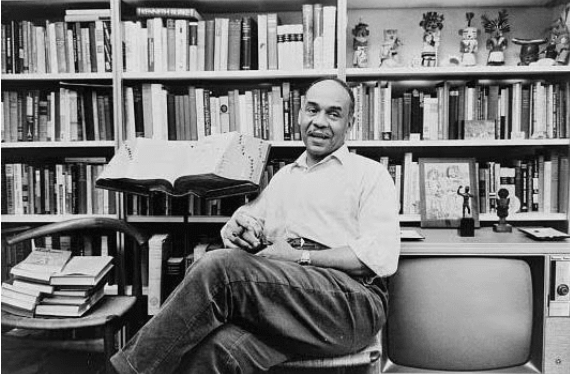
After a morning of the expected sessions (how to pay your bill, how to use the health center, getting oriented to your department/school), my son eventually went to register for courses. I waited in the campus bookstore (always on brand). As I perused the shelves, I came across a copy of “The Collected Essays of Ralph Ellison.” This was a delight, as Ellison is someone I’ve always wanted to read more of but for whatever reason have never gotten around to. I wasn’t disappointed.

For starters, I discovered that we shared some common interests: He too had studied music before embarking on a career as a writer and academic. Additionally—and perhaps related, or maybe not—Ellison and I share a preoccupation with questions about the nature of the American experiment, particularly the experiences of the minority groups with which we each respectively identify, while simultaneously claiming and holding fast to the label “American.” 

In 1970 Ellison published an essay in Time magazine entitled, “What America Would Be Like Without Blacks.” He observes that one of the enormous contributions of African-American culture to American life in general has been “to remind us that the world is ever unexplored, and that while complete mastery of life is mere illusion, the real secret of the game is to make life swing.” (The musician in me thrills to that metaphor.) Imagining an American history without African-Americans—an idea he dismisses as objectionable on both ideological and pragmatic grounds—Ellison observes that such a history would yield the absence of a “tragic knowledge which we try ceaselessly to evade: that the true subject of democracy is not simply material well-being, but the extension of the democratic process in the direction of perfecting itself.” And then he adds, “The most obvious test and clue to that perfection is the inclusion, not assimilation, of the black [sic] man.” 

There is much to say: About the meaning of democracy as including, but not limited to, material well-being; about the essential energy of American democracy as aimed at an ongoing, asymptotic quest to perfect itself as it expands to represent everyone it serves, ever more fully; about the striking resonance of Ellison’s notion of inclusion without assimilation with the experience of Jews—in America and, really, every place. (It’s also striking that the preface to this edition of Ellison’s essays was written by Saul Bellow, who, recalling a summer he and Ellison shared a rental house in Dutchess County, comments on some similar motions in the stories of African-Americans and American Jews.)

I’m writing all of this, first and foremost of course, because it’s July 4. We could leave it at that and it would be fine. But these reflections are also meant to explore connections between our lived experience and our never-ending exploration of the Torah. Which brings us to our Torah portion, Chukat, and particularly its very last line: “The Israelites marched on and encamped in the steppes of Moab, across the Jordan from Jericho” (Num. 22:1). 

The people have just come through several encounters with foreign nations, including military victories. They have taken possession of land on the eastern side of the Jordan, and they will stay there until the end of the Torah. This last sentence frames several events to come in next week’s Torah portion, including Balak’s engagement of Balaam to curse the people, and the violent episode involving the sexual/marital relationships between the Israelites and Midianites. 

Which is all to say that one of the animating questions of this entire section of the Torah is something like this: What does it mean to be an Israelite? How, if at all, can others join this group? How does the people relate to the other peoples around it—and how do those peoples relate to them? 

These are bigger questions than this space allows for. But by way of conclusion, I want to bring in a teaching of Rabbi Menachem Nachum of Chernobyl, the starting point of which is a verse from earlier in Chukat (Num. 15:14). Here’s what he says: “There are 600,000 letters in the Torah, against which there are also 600,000 root-souls… Therefore, each Jew is connected to one letter in the Torah… Each letter represents the divine element in each person. It is actually the very letter from which their soul derives. It is this letter that pours forth divine blessings and holy vital force.” 

What is so significant about this teaching to me is the notion that every one of us has a place in the Torah—a spiritual heritage, a home in the universe, despite even millennia of diasporic existence. That sense of spiritual groundedness is essential to any further discussion of political at-homeness—for Jews or anyone else. Perhaps the great American jurist Learned Hand put it best, in his short but essential speech from 1944: “Liberty lies in the hearts of men and women; when it dies there, no constitution, no law, no court can even do much to help it. While it lies there it needs no constitution, no law, no court to save it.” 

As I have written before, I believe our spiritual practices are what Tocqueville had in mind when he wrote about the “habits of the heart” essential to democratic life. We claim our spiritual inheritance, we live lives of Torah, in order to be both fully ourselves and fully human. That is the ground from which flows the rest of our lives, as individuals, as communities, as nations, and as humanity. May we renew ourselves in that practice, and help every image of God to find their place in the family of things.

Shabbat shalom, and a meaningful Independence Day to all who observe.


Korach 5785: Hit the Drum

Korach 5785: Hit the Drum

If you were in band class at Pioneer High School in Ann Arbor in the 1980s and 90s, you probably had Robert Albritton for a teacher. And if you had Mr. Albritton for a teacher, you probably remember some of his many colorful sayings. More than 30 years later, my brothers and I still find occasion to recite them to each other. One of our favorites was what Mr. A would occasionally say to a percussionist by way of encouragement: “Young man/woman, Hit the drum! I promise it won’t hit you back.”

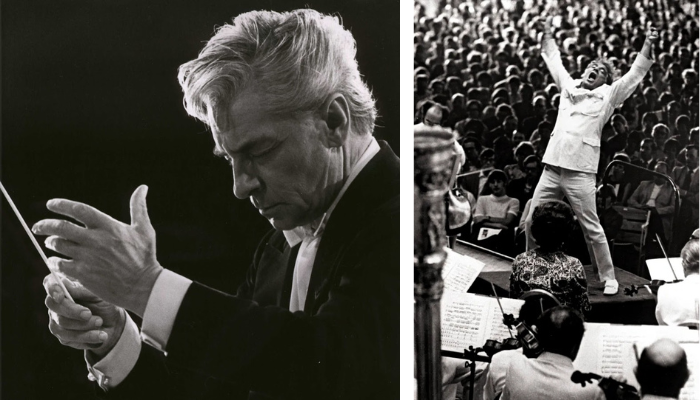
Naturally, this phrase came to mind the other night as I attended a moving performance of Giuseppe Verdi’s Requiem with the Chicago Symphony, led by Riccardo Muti. While the entire piece is one of the crown jewels of the classical repertoire, its most memorable section by a mile is the Dies Irae, a truly terrifying piece of music set to terrifying words about the “day of wrath” that will “break up the world into ash” and “how much trembling there will be.” The words are brought to life by the full orchestra, soloists, and double chorus, who perform music that feels like a freight train on a roller coaster at maximum volume, punctuated by the repeated thunderous booms of two bass drums and the tympani played as loud as humanly possible. Mr. Albritton would love it(And kids, I can testify with my own eyes: the drum did not hit back.)

While the piece contains many moments of beauty that offset this fire-breathing energy, theologically speaking the Dies Irae is pretty representative of the liturgical text of this requiem mass overall. The view of the Divine that Verdi presents here is not, on the whole, a comforting one: It’s a lot of Day of Judgment, prayers for salvation from a fiery fate and the like, concluding with the words of the Libera me, “Deliver me, Lord, from eternal death on that awful day. Deliver me.” While we have some of this kind of thing in traditional Jewish liturgy (most notably, perhaps, on Rosh Hashanah), on the whole the portrait of God presented here lands as a striking contrast to the gentler, more loving, less judgmental, and less angry conception that predominates much of contemporary Jewish theology—including the approach we teach here at IJS.

Which makes sense. I mean, today we can choose what kind of service we want to go to—or even make for ourselves. And while Verdi’s music is breathtaking, it’s hard for me to imagine many folks in my world vibing with a vision of the Divine as a terrible, destructive force. To put it crassly: that view of God just isn’t good for business.

And yet, as I write these words, there is terror and violence all around. A war has just taken place between Israel and Iran involving weapons whose destructive power were unimaginable in Verdi’s time. And that war comes on top of a war between Israel and Hezbollah, which of course came on top of the ongoing war in Gaza, with its enormously devastating toll. Which of course came on top of the October 7 massacre. And this is to say nothing of the terrors of ICE raids and deportations, or attacks on vulnerable minorities (including Jews) here in the US, or the fear and trembling at the destructive power of Mother Earth in the form of tornados and hurricanes and punishing heat waves, all of which we have managed to make even worse through our own collective action and inaction.

While we may listen to Verdi’s Requiem and think, “Well that’s not a very sunny view,” all we have to do is take a look at the news and we might find ourselves saying, “Maybe he wasn’t so wrong.”

Parashat Korach is not only about the story of a rebellion against Moses. At its heart lies the latent terror that can be present in the collective human encounter with the Divine, with the source of life—which is also the source of death. In this Torah portion we read of the earth swallowing people up and sending them down to she’ol, and a plague of Divine wrath that takes the lives of 14,000 people. At its core, perhaps, is the people’s anguished cry to Moses: “‘Lo, we perish! We are lost, all of us lost! Everyone who so much as ventures near YHVH’s Tabernacle must die. Alas, we are doomed to perish!” To paraphrase, perhaps: How are we supposed to do this—to live together with the Holy One in our midst, to trust our leadership and one another? We can’t seem to pull it off.

In response, the Torah offers us a system of social-spiritual order: The kohanim will be specialists in God-service, as it were, assisted by the Levites, so to that the whole camp can function without further risk of plagues and death. (Note: Ibn Ezra comments that this whole episode comes out of order, and in fact occurred before the people left the wilderness of Sinai.) In exchange for receiving special gifts from the people, God instructs that the Aaron that “you and your sons alone shall bear any guilt connected with your priesthood.”

This is a solution, of course, but it’s far from perfect. Leaders who are granted power and privilege then face their inevitable temptations—which can just lead to a repetition of the cycle that started all of this to begin with. This leads Rabbi Kalonymos Kalman Epstein (1753-1825) to interpret this charge to the kohanim this way: “You must always mindfully tend to the concern that you are doing this sacred service for your own glory and enjoyment. You must regularly engage in deep discernment as to whether your intention is aligned with that of the Creator.” And, being a Hasid, Rabbi Epstein sees this as not only the work of the kohanim, but, in the nascent democratic spirit of the age in which he lived, the spiritual labor of us all.

It seems to me that a good deal of that regular practice of reflection and discernment involves touching in with our fears and acknowledging them: fears of violence, death, destruction, and loss, or even of their less extreme expressions—fear of rejection, humiliation, not belonging. The embers of these fires are ever-present—that comes with being human—so we can show ourselves some compassion for having them. Yet I would suggest the work that we are called to do is to acknowledge those fears and then choose life-giving responses—in our words and our actions. I think that’s what Verdi did with his music, and I bless us all that we may do it with the music we make too.

Shabbat Reflection – Shelach 5785

Shabbat Reflection – Shelach 5785

A few months ago, my dear friend and synagogue rabbi Ari Hart delivered a sermon that opened with a critique of an aspect of some (perhaps a lot?) of contemporary mindfulness practice: nonjudgmental acceptance. Now, I hasten to add that Ari is a participant in our Clergy Leadership Program cohort that launches next month, and he was not offering this critique to knock Jewish spiritual practices grounded in mindfulness. He was pointing out something on which, frankly, I agree with him: The Torah and Judaism aren’t simply about accepting what is, but about changing our lives and the world to what they can and should be. If we’re going to practice mindfulness, it should be in the service not just of acceptance of what is, but bringing about what might be.

I don’t think that should be a controversial statement, yet I imagine it might prompt at least a moment of going, “Huh” in our minds. It should come as no surprise that as mindfulness practice has become commercialized it has emphasized the self-acceptance element—”You are absolutely perfect, just as you are”—and de-emphasized the self-improvement aspect—”with room for improvement,” as Shunryu Suzuki Roshi, founder of the San Francisco Zen Center, was known to teach. The former is good for sales; the latter, not so much.

Twenty years ago, when I was a freshly minted rabbi who just arrived in Evanston to work at Northwestern University Hillel, I came up with the idea of hanging a banner to advertise for the High Holidays. Intuitively, I decided to put a question on the banner, rather than just making an announcement: “What will you do better this year?” While the banner got a lot of positive response, one of the other staff members came to me with some concern: “I’m worried about the word ‘better.’ It’s kind of judgmental. It might push people away. What about ‘What will you do different this year?'” I responded, “It’s called the Day of Judgment. It’s okay to be judgmental.” (I was younger and brasher then.) Clearly this tension between non-judgmental acceptance of what is and gentle judgmental aspiration of what might be isn’t a new conversation.

A keyword in Parashat Shelach (Numbers 13:1-15:41) is the verb latur. “Send people to scout (latur) the land,” the Holy One tells Moses (13:1). He does so, and in his charge he elaborates on the mission of scouting: “See what kind of country it is” (13:18). The scouts are meant to take an honest look at the land and its inhabitants and bring back a report. They do so, of course, but famously they add their own commentary, full of judgmentalism and self-doubt: “The country that we traversed and scouted is one that devours its inhabitants. All the people that we saw in it are of astonishingly great size… We looked like grasshoppers to ourselves, and so we must have looked to them” (13:32-33). We know what comes next: the imposition of a 40-year period of wandering in the wilderness, so that the entire generation of the Exodus might die off.

Yet the word latur comes back at the very end of the Torah portion, in the mitzvah of tzitzit. By looking at them, the Torah says, v’lo toturu, we should be reminded not to follow after our hearts and our eyes “in your urge to stray” (15:39, JPS translation). Rashi, following the Midrash, connects this instance of latur with that of the scouts. As Rebbe Nachman of Bratslav puts it: “They are a method of self-rebuke, reminding us to fulfill the mitzvot and not simply follow the desires of our hearts and eyes.”

We can interpret these words harshly, as though they involve discounting and denying bodily sensations altogether. But I think that misses the point. The larger message here, it seems to me, is that our spiritual practice is meant to help us see clearly—both what is present in our mind-hearts and, gently, what of that which is present is not serving us well.

Thank God, we are created with desires generated by our bodies and our hearts. We have emotions, we have thoughts, we have imaginations, and we are able to experience an incredible range of feelings and sensations. The point of mindfulness practice in a Jewish idiom is to see all of these things clearly—so that we can make choices that reduce harm and suffering and, wisely and skillfully, bring about something better than what might be right now.

Beha’alotcha 5785: And/or

Beha’alotcha 5785: And/or

Like millions of people, earlier this spring I binge-watched the second and final season of Andor, the Star Wars TV series starring Diego Luna as the titular character: a reluctant, yet willful and highly effective agent in the growing rebellion against the Empire.

For many Star Wars fans, Andor is probably the greatest thing the 48-year old franchise has ever made. The quality of the scripts, acting, and production value is exceptional. And it’s unusual in the Star Wars universe: Over two seasons, we see not a single light saber, no Jedi, no Darth Vader (even though he is alive and kicking at this point in the timeline). Rather than tell the story of leaders at the highest levels of institutional power (emperors, lords, princesses), Andor mostly focuses on life at more mundane—but, it turns out, no less important—registers: bureaucrats who execute the Empire’s policies, soldiers conscripted into military service, farmers and businesspeople and retired mothers who just want to live their lives in peace.

You can read about all of this in other places, and of course you can watch the show yourself (with a Disney+ subscription). But one thing I have found myself wondering about is the name of the show and Luna’s character. My own read is that the name Andor should, perhaps, be read with a silent slash: And/or. Because I think that’s part of what the series is getting at: The coexistence of simultaneous truths and experiences, the possibilities and limits of our choices, the promise and peril of our agency. Some things in life are “and”—they’re just true, no matter what, though they may only become “and”s to us when we’re aware of them—and some things are “or”s: options, possibilities, things that could otherwise be true or not true, things we may bring about by our choices or that may be chosen for us. Part of the point of Andor (or, “And/or”), it seems to me, is to complicate what may feel like a simple story line of rebels (=good) versus Empire (=evil) by showing how all of these big concepts are made up of individuals and their manifold contradictions.

This brings us to Parashat Beha’alotcha, which, as much as any Torah portion, moves in this space of both-and. Famously, the parasha is divided into three sections: Before Numbers 10:35, after Numbers 10:36, and the two verses in between, which are bracketed and, according to the Talmud, counted as their own “book.” In the first section, the people make their final preparations to leave Sinai, and then journey forth “by the word of YHVH.” There is, seemingly, perfect alignment and attunement between the Divine and the entire Israelite camp.

In the third section, we experience what has always felt to me like a Bizarro version of the story: “The people took to complaining bitterly before YHVH,” it begins (JPS translation). “YHVH heard and was incensed: a fire of YHVH broke out against them, ravaging the outskirts of the camp. The people cried out to Moses. Moses prayed to YHVH, and the fire died down.” If there is an opposite to perfect alignment and attunement, this seems like it. And, of course, from here it’s one story of complaining, fighting, and suffering after another. It reads like a photonegative of the previous 10 chapters.

Yet perhaps take note of that little story (but, if we pause long enough, we may realize, not so little—it could certainly be an episode in a Disney series on Numbers) of the fire breaking out. Note what happens: “The people cried out to Moses”—not the Holy One directly—and “Moses prayed to YHVH and the fire died down.” Here is Rashi, quoting the Sifrei: “A parable: This may be compared to the case of an earthly king who was angry with his son, and the son went to a friend of his father and said to him, ‘Go and ask forgiveness for me from father!'” Rashi highlights the breakdown in relationship, trust, and communication that brings about this result that nobody really wants, as if the Israelites and the Creator have become middle schoolers reduced to passing notes. How far they have all fallen together.

Eventually, Moses himself unloads on the Holy One. In response, the Divine brings about a sharing of the burden. And here we get the seeds of another potential side-series off the central canon: “Two men, one named Eldad and the other Medad, had remained in camp; yet the spirit rested upon them—they were among those recorded, but they had not gone out to the Tent—and they spoke in ecstasy in the camp” (11:26). What was meant to be an ordination only to an authorized set of 70 elders winds up touching lives beyond the boundaries. The Divine spirit, it seems, cannot be fully contained. The story as it was meant to be is not the only story that winds up happening.

While that’s always true, it feels especially so today. Between the time I write this and the time you read it, the headline stories will likely have shifted. Wherever we live, violence may have broken out. Protesters, soldiers, bureaucrats, and regular folks may have confronted choices about reading their situation as “and” or “or,” and, concomitantly, dilemmas about whether and how to speak, act, be. As Andor reminds us, the work of making, unmaking, and remaking the world (or the galaxy) doesn’t only sit with those who hold institutional power—it is work that belongs to all of us.

The middle “book” in this parasha is a two-line poem about when the Ark would begin to travel and when it would come to rest. That is, it is about the constant going out and coming in, journeying away from home and finding our way back to it, a beating heart of the Torah and of our own lives. Perhaps it comes to remind us that you and I are constantly discerning between “and” and “or,” constantly dancing with the storyline of our individual and collective lives, constantly breathing out and in. Our spiritual practices can support us in navigating that journey of discernment. May they be that for us now, and may we support one another in mindful and courageous speech and action.

Naso 5785: “Zalman, what’s become of you?!”

Naso 5785: “Zalman, what’s become of you?!”

One of my favorite jokes in the (heilige/holy) Big Book of Jewish Humor is the one about a man from Warsaw who is in Chelm on a business trip. As he walks down the street, he’s stopped by Yossel the chimney sweep.

“Zalman!” cries Yossel. “What happened to you? It’s so long since I’ve seen you. Just look at yourself.”

“But wait,” replies the stranger, “I’m—”

“Never mind that,” says Yossel. “I can’t get over how much you’ve changed. You used to be such a big man, built like an ox. And now you’re smaller than I am. Have you been sick?”

“But wait,” replies the stranger, “I’m—”

“Never mind that,” says Yossel. “And what happened to your hair? You used to have a fine head of black hair, and now you’re completely bald. And your mustache, so black and dapper. What happened to it? You know, I don’t see how I ever recognized you. Zalman, what has become of you?”

“I’ve been trying to tell you,” the man replies. “I’m not Zalman.”

“Oy,” replies Yossel. “You’ve gone and changed your name as well!” 

Aptly, you can find this tale on the internet as a case study of the humor trope “thoroughly mistaken identity.” Part of what makes it such a successful joke (you have to admit it’s hilarious) is that, like most really effective humor, it touches a deep vein in our human experience. In this case, that vein is perhaps the profound contingency of recognition. While “Zalman,” who is already traveling, does not seem to experience dislocation, Yossel invests everything into making this man into someone he recognizes. He’s so committed to that story that he never gives it up, even when “Zalman” tells him, “I’m not Zalman!” That is, Yossel is so invested in this stranger being Zalman that he denies both the truth (he’s not Zalman) and the most logical explanation for the man’s claim (the problem is in his own perception).

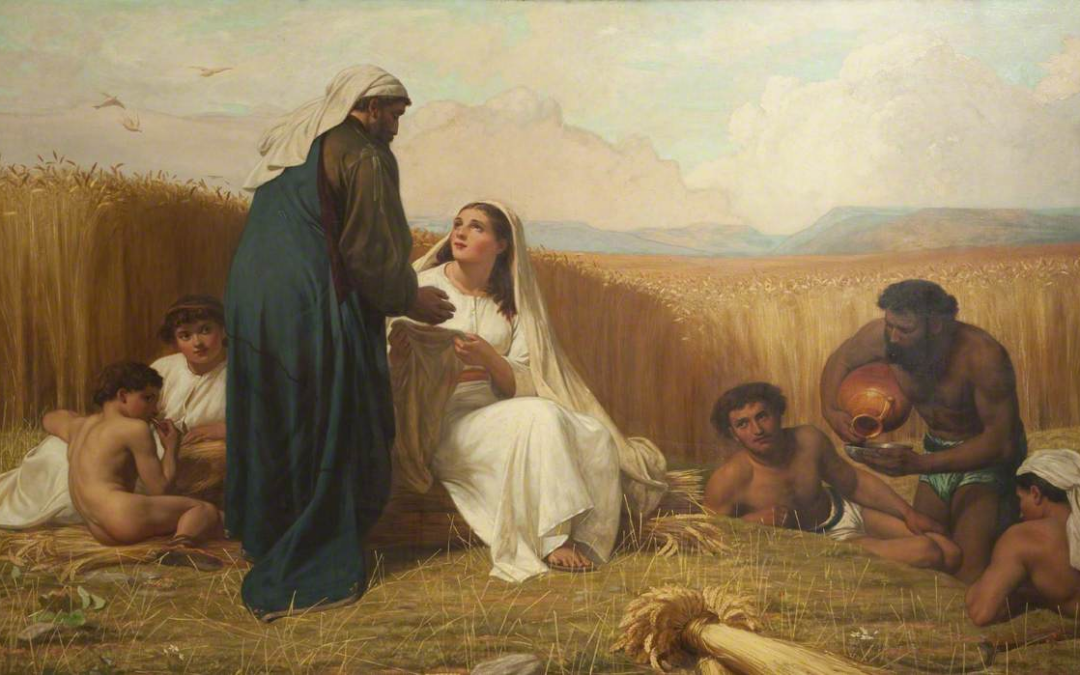
This issue of recognition came to mind earlier this week as I read the Book of Ruth over Shavuot. In the second chapter, Boaz spots a stranger gleaning in his field. This itself isn’t a problem–the produce that falls to the ground during reaping (leket in Hebrew) is specifically designated by the Torah for the poor. But when Boaz inquires of the young man supervising the harvest, “Who does that girl belong to?” he responds with more information than Boaz asked: “She’s a Moabite who returned with Naomi,” he tells Boaz. This immediately injects some tension into the scene, as leket is technically reserved only for the Israelite poor. (The Rabbis of the Talmud clarify later that the practice is to support the non-Jewish poor alongside the Jewish poor “for the sake of peace.”)

In one of the many moments of exemplary hesed in the book, Boaz tells Ruth that she is more than welcome to continue to glean in his field, that he has ordered everyone else to be good to her, and that she’s even invited to drink from the water that the workers have drawn. Ruth, seemingly overcome, falls on her face and says to Boaz, “Why are you so kind to me? You have recognized me even though I am a stranger!” (2:10) The English here doesn’t do it justice. The last three words of Ruth’s statement in Hebrew are pure poetry: l’hakireini v’anochi nochria. 

In many years of reading Ruth, I don’t remember these words jumping out at me the way they did this year. l’hakir—to recognizeand nochria—foreign woman or strangershare the same letters: nun, kaf, and yod. And while they may not be technically related etymologically, they are undoubtedly drawn together here to point up the deep intertwining between them. Because what is that makes or unmakes someone as foreign, strange, different? Recognition or lack thereof. A stranger is a stranger until we realize, or decide, that they aren’t. With the act of recognition, we transform the unknown into the known. Boaz, holding the power of recognition in his word, brings Ruth over a hidden but no less powerful border.

Reading Ruth on Shavuot always comes at the time we read Parashat Naso, which, like the larger opening of the Book of Numbers, is concerned with establishing boundaries and distinctions: In the camp, between the tribes, down to the intimate lines that delineate trust and distrust in marriage (see: Sotah) and the ways we can make ourselves, temporarily, into a different kind of social-spiritual being (see: Nazir). Yet the story of Ruth, Naomi, and Boaz lingers in the background, like an earlier movement in a symphony. As we consider all these ways that structure is imposed, that story might prompt us to be sensitive to the ways in which those structures–who is in and who is out, who is a stranger and who we consider known–are made and sustained, and how they are undone and refashioned.

Naso culminates in a twelve-day official parade, with each head of tribe bringing an identical offering of riches to fully inaugurate the altar of the Mishkan. We can imagine the newspapers of the day covering the pomp and pageantry. Similarly, Ruth culminates by situating its heroes in a grand genealogy that links its protagonists with their eventual descendant, King David.

Yet I think both Ruth and our Torah portion also call us to look far beyond the headlines, to the more quotidian levels on which we live our daily lives. They ask us to consider, mindfully and reflectively, some timeless and timely questions: Who do we recognize and treat with hesed, and who do we call a foreigner and treat more harshly? What does it take for us to trust, and to earn the trust of others? And what might we do to bring about a world in which we can all feel safe enough to practice the hesed of our exemplary forebears?

Shavuot 5785: Remembering Uncle Arthur

Shavuot 5785: Remembering Uncle Arthur

On erev Shavuot 1993, a Volkswagen van pulled up outside our house in Ann Arbor. I was finishing my junior year in high school, and we were preparing for the holiday. An unfamiliar older couple exited van and came to the door.

I honestly don’t remember the interaction that followed, but the long and short of it is that this was my father’s brother Arthur and his wife Kate. They had driven from their home in Montana. Art was dying and he wanted to see my father before he passed away.

My Dad was the youngest of three children. And while my brothers and I knew our Aunt Marilyn, who moved out to California early in her adult life, we didn’t hear much about our Uncle Arthur. I remember seeing a small black and white photo of a young Lou (i.e. Dad) and his much taller older brother Art, who was wearing a sweater with a big S on it—for Michigan State, but that’s about it. We never really learned the story. It had something to do with Arthur’s being 11 years older than our dad, living in Montana (even more remote than California), and (probably, given the known family dynamics) having married Kate, who wasn’t Jewish. Like many other Jewish families of immigrant parents at that time, that could be the cause of a tremendous rupture. Now, as Arthur was dying, there was an attempt at reconciliation.

All I really remember of the days that followed was awkwardness. Arthur came to shul, and I remember feeling a mix of befuddlement, dislocation, and annoyance—which, as a father, I can now see as totally predictable teenage behavior. I don’t remember having a real conversation with him or Kate, just practicing a lot of avoidance. And I don’t remember really processing any of it with my Dad after they left after a couple days. But looking back, and having experienced my Dad’s death 25 years later, I can appreciate that even the act of welcoming Art and Kate into our home was a big deal for all of them. I’d like to think some repair occurred, even if it wasn’t obvious to me how.

I’d also like to think it wasn’t quite an accident that this visit took place on Shavuot, which is imbued with such a melange of valences and impulses. There is, of course, the inclusiveness of Shavuot. It is the day we read the Book of Ruth, a paradigmatic story of chesed, the force of loving connection that sees beyond boundaries (in Ruth’s particular case, the boundary of her status as a Moabite who is prohibited by the Torah from joining the Israelite people—but who, of course, does and becomes the ancestor of King David and the messiah). And this is the day when we re-experience the revelation at Mount Sinai, when, according to the Midrash, every person heard the voice of the Divine in a way custom-tailored to them. It’s a day for celebrating the multivocality of Torah, a day whose central observance is no more and no less than delighting in the overflowing storehouse of riches of our textual tradition, our inheritance.

Yet revelation is not only a happy event. It can, perhaps even should, be an overwhelming one. “All the people witnessed the thunder and lightning, the blare of the horn and the mountain smoking; and when the people saw it, they fell back and stood at a distance. ‘You speak to us,’ they said to Moses, ‘and we will obey; but let not God speak to us, lest we die'” (Exodus 20:16). There is disorder here, synesthesia: “they saw that which should be heard — something which is impossible to see on any other occasion,” as Rashi explains. He adds, “Startled, they moved back twelve miles, a distance equal to the length of their camp.” Revelation is not simply a warm embrace. It is that—and, in the same breath, something that pushes us back, causes us to recoil because it is so beyond the capacity of our human senses. It is a moment of both speech and silence, when everything—everything—is expressed through the utterance of the vowelless, noiseless aleph of Anochi, “I am YHVH your God.”

It’s easy to allow maamad har sinai, the moment of revelation, to be an abstraction, an idea. We can play with it as an intellectual exercise. We can read our texts and experience the delight of our minds lighting up at the stimulation. But a fuller engagement and reckoning will move us on many more and deeper registers as we experience contradictory gestures: both chesed and gevurah (unnboundedness and limitation), netzach and hod (strength and flexibility), all the worlds through which we have journeyed these seven weeks of the Omer. That journey has served as preparation for our encounter on Shavuot.

Every year before Shavuot we start reading the Book of Numbers, which begins with an instruction to Moses to take a census, counting the Israelites b’mispar shemot, according to the “number of their names.” The medieval Italian commentator Rabbi Obadia Sforno suggests that this unusual formulation suggests that each Israelite was counted not only by number, but with a recognition of their unique individuality. Perhaps there’s a Shavuot charge there for each of us as well: To encounter anew, through this moment of Revelation, the fullness of our existence in relationship with the Divine, with life, with one another, with ourselves—and, in the process, to tend what is broken, heal what is in pain, renew and redeem our lives and the world.

Behar-Bechukotai 5785: Arriving Home

Behar-Bechukotai 5785: Arriving Home

Last Friday our family experienced a mini ingathering of the exiles: Our oldest came home for the summer, our middle one returned from nine months on a gap year program, our youngest didn’t have a classmate’s b-mitzvah to attend. And so, for the first time since last summer, our whole crew was around the table for Shabbat dinner. However briefly (I left on a business trip Sunday morning), we got to feel a special sense of at-homeness that can happen when all the chickens are in the coop.

Of course, having everyone at home isn’t all sunshine, rainbows, and lollipops. Everyone needs to eat, and everyone has different foods they like or don’t like, so the regular “Have you had any thoughts about dinner?” text exchange my wife and I have (we try to plan, we really do) becomes that much more complicated (and expensive). There are negotiations about who gets the car, who will do the dishes, who will mow the lawn. As others who have returned to their childhood homes as adults might have experienced, there can be a bit of reversion to senior year of high school behavior patterns—among both parents and children. And yet, as others who have welcomed home adult children may have felt, I find it’s a wonderful problem to have (for a little while—and then it’s nice when they go back out in the world and do their things).

I write and speak regularly about the basic definition of spirituality that I’ve developed: It’s our capacity to feel deeply at home in the universe. While Shabbat in the physical home where I live is always a significant spiritual moment, I experience an even richer sense of being at home when the people I care about most are there with me. And I think they do too.

Perhaps in anticipation of the journey toward the land of Canaan that the Israelites will resume soon after we begin the Book of Numbers, the closing chapters of Leviticus offer some of the most stirring reflections on what it means to be at-home—not only on an individual level, but on the level of society. This is where we are instructed about the sabbatical year, applying the practice of Shabbat not only to our individual homes, but to the larger collective home: letting the land itself rest, releasing indentured servants, cancelling debts (in the Deuteronomic version, at least).

In addition, every fifty years comes the yovel, or Jubilee year. “Count off seven sabbaths of years—seven times seven years—so that the seven sabbaths of years amount to a period of forty-nine years. Then have the trumpet sounded everywhere on the tenth day of the seventh month; on the Day of Atonement sound the trumpet throughout your land. Consecrate the fiftieth year and proclaim liberty throughout the land to all its inhabitants.” (Lev. 25:8-10) During this Jubilee year, not only does the land rest, and not only do the people rest, but something even larger happens: dror, liberty. Specifically, the Torah states, “It shall be a jubilee for you; each one of you is to return to his family property and each to his own clan.” Land sales are effectively cancelled, and everyone is to return to the plot of land from which their ancestors came. It is, in effect, pressing the reset button on society.

In his commentary on this passage, Rabbi Judah Loew (the Maharal of Prague, 1520-1609) explains why yovel is proclaimed not on Rosh Hashanah, as we might expect, but on the tenth of the month of Tishrei, Yom Kippur: “The Jubilee and Yom Kippur—the two are really one: For the Jubilee is the return of each individual to their original state, to be as it was in the beginning. And so too with Yom Kippur: everyone returns to their original state. As the Holy Blessed One atones for them, they return to their original state.” (Gur Aryeh Behar, s.v. “M’mashma”)

The Maharal highlights the idea that just as the Jubilee is a more potent version of the sabbatical—seven times seven years, a sabbatical of sabbaticals—Yom Kippur is also described (in last week’s Torah portion) as Shabbat Shabbaton, an even more concentrated version of Shabbat, as it were. What they share in common is that they are both moments of the deepest homecoming: Yovel in a physical and political sense, Yom Kippur in spiritual and social sense.

My colleague Rabbi Marc Margolius likes to say that Jewish mindfulness practice is about “microdosing Shabbat”—creating moments of pause and return-to-center not only every seven days, but every seven moments. I think that’s true. And, as we close the Book of Leviticus, I think the Torah reminds us that this practice is not only meant to help us feel at home in our bodies, minds, and emotions so that we can weather the storm; it’s ultimately directed toward a vision of social renewal and transformation in which all of us sense that we have a place, that we’re deeply at home in the universe, held in the embrace of the Holy One.

Emor 5785: Da Pope

Emor 5785: Da Pope

Last Thursday and Friday were, hands down, the best days in Chicago social media history. Why? Because, in the words of the ginormous headline in the Sun-Times Friday morning, the papal conclave had elected “Da Pope.” Robert Prevost, born on Chicago’s south side, became, overnight, Pope Leo XIV–and Chicago, where I live, was here for it.

The memes were flying: The Wiener Circle, one of Chicago’s many beloved (treif) sausage vendors, posted an image of their marquee: “Canes nostros ipse comedit” (translation: “He has eaten our dogs”). “Chicago produced a pope before a quarterback who throws for 4,000 yards” (a reference to the Bears’ long and miserable history of quarterbacks). “God bless Pope Leo XIV! Since he is from Chicago, I heard that of the 133 Cardinals that voted, he received 140 votes!” I saw an AI-generated image of the Pope wearing imaginary Chicago Bears-branded papal garments with the caption, “Popes from Chicago:1. Popes from Green Bay: 0. I rest my case.” It was spectacular.

While Chicagoans, understandably, are fascinated by the new pope (and fascinated isn’t the right word for it–it’s probably closer to the Yiddish term “schepping nachas”), I’ve noticed that people from all walks of life, whether or not they’re Catholic, seem to be really taken with the pomp and ceremony surrounding a papal election in general. The success of the movie “Conclave”–even many of the cardinals watched it as preparation, apparently–testifies to that.

Perhaps part of the fascination, for Jews at any rate, is that so much of the papal office seems to be drawn from our own kohen gadol, or high priest, as described in the Torah. Most notably, of course, he wears white all the time (even a white kippah!)–a white robe, a white sash, a white mitre. The office of pope seems designed to draw on the conception of the kohen gadol: the holiest person among holy people. So while we no longer have a high priest, my guess is there is something about seeing someone who taps into that same vein that touches us as Jews.

Parashat Emor opens with a description of some key rules for the kohanim in general, and for the high priest in particular: Who they can marry, how they have to cut their hair, who they’re allowed to bury (since, according to the Torah, contact with a dead body conveys ritual impurity). While regular priests are subject to pretty strict limits in all these areas, the high priest, predictably, encounters even greater constraints. Most notably, perhaps, the Torah instructs that the high priest “shall not go in where there is any dead body; he shall not defile himself even for his father or mother” (Leviticus 21:11). 

It seems important to point out right away that, in reserving this level of stringency for the high priest, the Torah throws into high relief that this is not an expectation for the rest of the Israelites, i.e. that we are not even remotely to think of ourselves as failures in comparison. If anything, I find myself experiencing some compassion for the kohen gadol at the idea that the ceremony of his office would prevent him from properly mourning for those he loves. 

Yet later in the Torah we find that there exists a mechanism where the rest of us can voluntarily take on some of these stringencies: the institution of the nazirite. The Mishnah notes the parallel: “A High Priest and a nazirite may not become ritually impure even to bury their deceased relatives. However, they become impure to bury a corpse with no one to bury it” (Nazir 7:1). While the Rabbis generally seem to frown on the practice of taking nazirite vows, the fact that the institution of the nazirite exists, and that it holds out a way for regular folks to experience the quasi-monastic life of a priest, seems like it’s meant to teach us something. 

Perhaps that something is the intuitive need we may experience for depth and significance in our spiritual practice. On its own, the way of the Torah is meant to be a meaningful spiritual path: we eat special foods (discussed later in Emor); we mark special time through Shabbat and the Jewish calendar (also discussed later in Emor); we hold our possessions lightly and share what we have with all who need it through the practices of tzedakah (the subject of next week’s Torah portion). When these practices become routine, though, we may feel a stirring toward something more, something deeper, something renewing. In ancient times, that may have resulted in taking the vows of a nazir; today it might lead us to go on retreat.

I wonder whether the collective fascination with the pope might reflect some of this too. Though our political leaders today might be a particular case study, I think it’s safe to say that such leaders have more rarely than frequently been our spiritual role models. Nor, for that matter, have many popes, or perhaps even high priests in their day. Yet we seem to have a natural thirst, a desire to project images of leadership that reflect holiness, sacredness, spiritual depth and significance. I think we do that because, deep down, a voice within us wants that for us. And I would suggest that the Torah reminds us that the act of projection may, in fact, be a distraction. As Moses himself reminds us at the end of his life: That spiritual significance we seek isn’t in heaven or across the sea–or, perhaps, in the guy in the white robes. “It is very close to you–on your lips and in your heart, that you may do it” (Deuteronomy 30:14).

Acharei Mot-Kedoshim 5785: Of Conductors and Rabbis

Acharei Mot-Kedoshim 5785: Of Conductors and Rabbis

My very favorite TED talk is by the Israeli conductor Itay Talgam. It’s called “Lead Like the Great Conductors.” In 20 minutes, Talgam shows clips of some of the greats of the twentieth century: Richard Strauss, Carlos Kleiber, Riccardo Muti (who is still alive and well, conducting here in Chicago and around the world), Herbert Von Karajan, and ultimately Leonard Bernstein, who was Talgam’s teacher and who he regards as an exemplar of leadership.

The talk closes with Talgam playing a memorable clip of Bernstein conducting the final movement of Haydn’s Symphony No. 88 using only his face. The lesson being: When you’re doing everything right as a leader, you should be able to simply get out of the way as the group does its work.

Along the way, Talgam draws a contrast with Karajan in particular, who was something of a rival to Bernstein—and something of a foil as well. Where Bernstein refused to change the last name that broadcast his Jewishness to the world, the Austrian-born Karajan joined the Nazi Party in 1934 to further his career. (Though we might also note that in 1942 he married a woman who was one-quarter Jewish.)

But the key difference Talgam highlights doesn’t have to do with their identity or politics, but with their eyes and hands. Talgam plays a clip of Karajan conducting Robert Schumann’s Symphony No. 3 with his eyes closed and with very fluid hand motions—which are hard to read if you’re a member of the orchestra. The message, as Talgam puts it, is this: “The real music is only in Karajan’s head. And you have to guess his mind. So you are under tremendous pressure because he doesn’t give you instructions, and yet, you have to guess his mind. So it’s… a very spiritual but yet very firm control.”

Talgam contrasts this with Bernstein, who conveys with his face, his hands, his whole body, that everyone—the composer, the orchestra, and the audience—is invited to share in the story and meaning within the music-making. Bernstein becomes a kind of conduit for all of that energy, not stopping it up with him, but letting it flow through him.

Now this binary is, of course, overdone. Bernstein was not a saint (see the Bradley Cooper movie), and Karajan is not a simple villain. But I find this basic message about leadership instructive.

There’s a story told about Rabbi Shlomo Hakohen Rabinowicz (1801-1866), founder of Radomsk Hasidism. At one point the rebbe traveled through the Jewish metropolis of Krakow, where he was greeted by a throng of the city’s Jews and its elders, including Rabbi Shimon Sofer, the chief rabbi of the city. They of course asked him to share words of Torah.

Rabbi Rabinowicz (also known as the Tiferet Shlomo, the title of his most famous work), said, “Any leader (tzaddik) who does not bring to their community a flow of blessing and material well-being is not a tzaddik, and is not fit to be a leader of the Jewish people… This was the sin of Nadav and Avihu: They only ‘brought their offering before YHVH,’ (Lev. 16:1, the opening verse of Parashat Acharei-Mot) but they didn’t create a flow of blessing and material well-being to the rest of the community.”

The story continues that Rabbi Sofer spoke up and asked, “Does the good Rabbi know what purpose Heaven may have had in mind in establishing a Chief Rabbi in Krakow?”

The Tiferet Shlomo paused to consider the question, then answered: “Does the Chief Rabbi think that he was appointed simply to answer questions about whether this or that pot is kosher? There are rabbis to answer such questions in every street and alley in Krakow. I will tell you: A Chief Rabbi was appointed in a great city such as Krakow in order to bring blessings, economic prosperity and good health to the community. That is what heaven wants.”

The crowd was silent, trembling at how their Chief Rabbi might respond. And then he did: “Thank God—now I am aware of a new duty of my office, one that hasn’t been written down in the legal codes, but that I will be mindful of from now on!”

Like the orchestra conductor, the Chief Rabbi confronts multiple approaches to leadership. I remember an interview in which the great violinist Isaac Stern said that a conductor should convey that she or he knows more about the score in their pinky fingernail than the entire orchestra does put together. That’s one way to do it: to lead through authority and intimidation. But, in Rabbi Rabinowicz’s formulation, that’s not a kind of leadership that is going to cultivate blessings—spiritual blessings or those of material well-being. A more elevated kind of leadership might be one in which leaders understand themselves to be temporary custodians of the responsibility to help those they serve to “secure the blessings of liberty,” as the United States Constitution puts it—to realize, individually and collectively, our potential as images of the Divine.

I would suggest this doesn’t only apply to leaders in positions of authority, but to all of us. As the great writer on education, Parker Palmer, writes: “What does it take to qualify as a leader? Being human and being here. As long as I am here, doing whatever I am doing, I am leading, for better or for worse. And, if I may say so, so are you.” All of us can and should strive to show up, to lead, in ways that increase the flow of blessing. It isn’t only the High Priest or the orchestra conductor or the chief rabbi who exercises leadership—if each of us carries within us a spark of divinity, then all of us are leading all the time.

Tazria-Metzora 5785: Eye of the Beholder

Tazria-Metzora 5785: Eye of the Beholder

In the weeks leading up to my physical this week, I was a little nervous. I had noticed a bit of pain in a sensitive area on my skin that’s not easy to see, and I couldn’t figure out what was causing it. There was nothing debilitating or life-threatening, but it was on my list of things to talk about with the physician.

But then I made what those of us who grew up watching “The Princess Bride” might call “one of the classic blunders:” I googled it.

I don’t need to tell you what happened next. I found out all the possible things that could be bothering me. Dr. Internet told me I could have various types of rashes, infections, cancers. My breath became shorter, my heart started racing. You know the drill. After a minute or two I recognized my mistake, closed the browser window, and took a deep breath. Just wait for the doctor’s appointment.

My physician asked me some questions and did some looking around. “Well,” he told me, “it looks like you have a tiny little abrasion here that’s probably causing the pain you’re experiencing.” Aha. He asked a few more questions, did a couple more checks, and then prescribed the very complicated remedy of… vaseline. “You just need to let it heal.”

Later the same day, I came across an article on The Atlantic by Helen Lewis about a recent appearance by the conservative writer Douglas Murray on Joe Rogan’s podcast. Murray seems to have provoked something of a firestorm in the “Roganverse” by going on Rogan’s show and questioning the host’s platforming of Holocaust-deniers directly to his face.

“This is the crux of the argument between Murray and Rogan,” Lewis writes. “Does the latter’s huge success and influence confer any responsibility or duty on him to patrol the borders of allowable discourse on his show?” She explains: “Instead of making the eminently supportable accusation that the media and the scientific establishment both make mistakes from time to time, Rogan now disparages expertise as a concept. In the episode, Murray… [said], ‘it’s pretty hard to listen to somebody who says: I don’t know what I’m talking about, but now I’m going to talk.'”

I couldn’t help but think of my physical earlier in the day, and the difference between “doing my own research” and visiting a board-certified, state-licensed physician. Who knows what I would have done had I listened to the unfiltered advice of the internet. But my physician is someone whose expertise and judgment is legitimated by multiple institutions, who is accountable to those institutions, and who I—and the rest of us—can therefore trust.

Tazria-Metzora opens with a memorable if slightly uncomfortable scene: “When a person has on their skin a swelling, a rash, or a discoloration, and it develops into a scaly affection on their skin, the person shall be brought to Aaron the priest or to one of his sons, the priests” (Lev. 13:2). It goes on to elaborate, in intimate detail, how the priest is to diagnose what he sees. But we can hover over this opening passage for a moment.

Abraham ibn Izra, the great 12th century commentator on the Torah, notes that the verse is directed at “a person,” which includes everyone, not only Israelites, because tzaraat, the skin disease in question, “is transmitted from the sick to the healthy,” regardless of their tribal identity. Further, he notes the Torah’s phraseology: the afflicted individual “shall be brought”—”with or without their consent.” Because, it would seem, this is not only a matter of individual health, but of general social well-being—what affects one may infect others.

As my own story illustrates—to say nothing of our collective experience of the COVID-19 pandemic—it’s not hard to imagine ourselves into this scene: You notice something on your skin, you wonder what it could be, you worry about what it could be—but also about what the consequences of “testing positive” might be for you (seven days of quarantine, maybe longer). You may have an impulse not to go to the authorities, to “do your own research” and make the decisions that you think are best for you—especially since the truth seems to be right in front of you, there on your little device.

Similarly, we can imagine authority could easily be misapplied (perhaps the priest proclaims a precautionary quarantine that has unintended significant adverse effects on mental health), how mistakes could be made (the priest misdiagnoses the case), or even how authority could be abused (the priest says, “How much is it worth to you for this rash not to be tzara’at?”). We can imagine that individual priests make mistakes or are indeed corrupt, and that the whole institution of the priesthood, our collective ability to place trust in the institution—which is what authorizes the institution to have authority over us in the first place—ebbs, fades, and erodes.

Lewis sums up the problem with this state of affairs: “Beyond decadence, this is nihilism.” Our ability to live together in society depends on our ability to trust one another, which is perhaps why the tradition understands such a strong link between the mysterious skin disease described in the Torah and lashon hara, unmindful and negative speech.

More than anything else, our worlds are made by our words: the words through which we communicate, make promises, and enact laws; the words through which a physician helps shape our reality by pronouncing a cut is a abrasion that needs vaseline and not a melanoma; the words through which an ancient Israelite priest pronounces someone is ritually pure or impure. And since all of us are images of the Divine and all of us hold a piece of the sovereign collective power, all of us have a responsibility to practice mindful speech, whether we are a podcaster with millions of followers, a physician examining a patient, or simply a citizen using their voice.

Shemini 5785: Be a Blessing

Shemini 5785: Be a Blessing

On Wednesday night I had to run to the drug store. We were out of antihistamine, and, being springtime, the air in Chicago is thick with stuff that makes me sneeze.

There’s a Walgreens around the corner from our house. As I walked up to the entrance, I saw a man holding a sign in Spanish, but headlined with “Please help.” He had three young children with him, the oldest appearing to be no more than 7 or 8.

The drug store was surprisingly busy—maybe a lot of us found our antihistamine supply was low that night?—and I saw a few people walk by the family: stiffly, uncomfortably, hands in pockets.

But then I saw one neighbor, a Jewish man, who walked up to them and asked, “What do you need?” “Food for the baby,” the eldest daughter said. “Ok.” He went inside and, as he shopped for other things, I saw that he bought a gift card for the store, which he gave to them on his way out. Inspired by his example, I did the same.

As I gave the card to the father, several things flashed through my mind at once: Questions, of course, about what led this family to be in this situation, begging outside a Walgreen’s after 9 pm. Questions about where they would sleep that night. Questions about their legal status and how governmental policies and actions were affecting them. Questions about whether in aiding this family my neighbor and I might, naively, be sticking our own necks out.

But what also went through my mind was something I took to heart years ago from Pope Francis, who died this week. Like other people, I find my mind often generates reasons not to give when I see someone asking for money on the street. I imagine they might spend it on something unwholesome, or that I’m being conned. But among the late pope’s most moving teachings was that if someone is asking, we should make it a habit to err on the side of giving. Simply put, giving to someone in need “is always right,” he said.

Parashat Shemini includes a horrible story. For weeks we have read about the Israelites’ construction and inauguration of the Mishkan, a long process that reaches its climax at the opening of the Torah portion. Aaron performs all the prescribed rituals just as they had been commanded. There is perfect alignment between the Divine and human will, between intention and outcome. It’s a scene of blessing, culminating in the people shouting for joy and prostrating themselves.

And then, of course, it all goes wrong. Aaron’s sons, Nadav and Avihu, go off script and lose their lives in the process. Aaron is bereft, silent. Moses, who we also imagine to be shattered at the loss of his nephews, becomes focused on the rules to be followed in this complicated case. In chapter 10 he channels his energy into articulating, in painstaking detail, exactly what sacrifices are to be eaten and where. When, in the course of all this, he “investigates deeply” (darosh darash), he finds that the burnt offering was eaten improperly, and he becomes angry with Eleazar and Itamar, Aaron’s surviving children, castigating them for their failure.

Aaron responds to Moses, “Look, today they brought forward their offense offering and their burnt offering before YHVH, and things of this sort befell me. Had I eaten an offense offering today, would it have seemed good in the eyes of YHVH?” Now it is Moses who is silent: “Moses heard, and it seemed good in his eyes.” Rashi, following other traditional commentaries, reads this as a dialogue about the complex halakhic status of Aaron, who is navigating both his responsibilities to the dead and his special role as High Priest. Robert Alter, whose translation I followed here, offers a more straightforward and, to my mind, compelling reading: “The grieving father asks his own brother whether God could really expect him to constrain himself to ingest meat in this moment of his grief”—that is, to follow the prescribed rules in spite of his natural, human emotional need—”and Moses concedes that Aaron is right.”

There is much we could say here—about regulations and emotions, about the duties of office and the duties and realities of personal mourning, about the varied ways we respond to enormous personal loss. As I reflect on my experience outside the drug store the other night, I find my ruminations hovering around the ways our religious practices can suppress or channel our heart-minds. Sometimes these dynamics can serve us well (for instance, if we’re angry at someone), and sometimes they can serve us poorly (if we excuse our not giving to someone in need by a rule-based tale we tell ourselves). In my own life and in the lives of many others, I have found the structure of Jewish law to be an enormously helpful anchor during the storm of grief. But, like all structures—which are expressions of gevura, limitation and boundedness—these rules can, if misapplied, smother our hesed, the holy font of loving connection.

One other thing went through my mind outside Walgreen’s on Wednesday night: It was the beginning of Yom HaShoah. In the current political environment, I found it hard not to imagine what could potentially befall this family—and what, perhaps, contributed to the banal, if slightly uncomfortable, indifference so many people seemed to demonstrate as they walked by a father and three small children with a cardboard sign that plaintively asked, “Please help.”

The lessons of the Shoah are too many and too numerous to discuss here, at the end of my weekly message. But drawing on the story of Aaron and Moses in our Torah portion, I would suggest that we all can and should be checking in with ourselves: As a people defined by a commitment to law and justice, and as citizens in a democratic republic who therefore each bear a portion of the collective sovereign power, are the laws we live by diminishing or enhancing the image of God? Do our actions, as individuals and as a society, cultivate cruelty or compassion? Are our hearts becoming harder or softer?

The high point of the inauguration of the Mishkan—the high point, perhaps, of the entire Torah—achieved just before everything goes so wrong, is blessing: “Moses and Aaron then went into the tent of meeting. When they came out, they blessed the people; and the glory of YHVH appeared to all the people” (Lev. 9:23). This is a fulfillment of God’s promise to Abraham: “And you shall be a blessing” (Gen. 12:2). The simple question we should ask ourselves all the time is: Is my action, is our action, a blessing in the world?

My Talk at the Central Conference of American Rabbis 2025

My Talk at the Central Conference of American Rabbis 2025

Last month I was honored to share some words of Torah during a plenary session at the convention of the Central Conference of American Rabbis in Chicago, alongside two wonderful colleagues: Rabbi Yael Vurgan and Dr. Claire Sufrin. The three of us were asked to spend 15 minutes each sharing a text that has helped us cultivate resilience over these recent difficult months. 

The text I taught came from Rabbi Menachem Nachum of Chernobyl’s Meor Einayim, along with a poem by Rabbi Rachel Barenblatt. You can view the sources here and you can watch my talk—along with the other two talks—at this link, using the password: ccar2025. My talk is first.

Passover 5785: Purity

Passover 5785: Purity

The other day I found myself thinking back five years, to the first Pesach we celebrated during the Covid pandemic. I remembered the strange feeling of loneliness and isolation. I remembered how families struggled to figure out whether and how they could do “Zoom seders” (and, frequently, how they would manage to get less tech-savvy relatives into the “room”). I remembered the unusual experience of cooking just for my family and no guests. Perhaps you remember that time, too.

I also remember that Pesach 2020 afforded new insight into what it might have felt like for our ancestors to seek protection inside their homes as a plague raged beyond the threshold. Home became even more of a refuge than it normally is, and in those early days many folks went to even more extraordinary lengths to keep their homes pure: Wiping down items from the grocery store before they came into the kitchen, keeping repair workers standing at a distance beyond the front door. While I had an academic sense of purity rituals before Covid, Pesach 2020 provided a deeper understanding.

Purity is, of course, a theme of Passover. In ancient times, in order to offer the Pesach sacrifice one had to be in a state of ritual purity (tahor). At the same time, offering that sacrifice was a sacred duty of every Israelite. So what happens if, through no fault of your own, you’re ritually impure at Pesach and can’t offer the sacrifice? In Numbers 9 we find the highly unusual provision of Pesach Sheni, a make-up opportunity: you offer the sacrifice a month later. No other communal observance quite compares. (If you were ritually impure for the make-up, then you’re out of luck. There’s a limit.)

While we don’t offer a Pesach sacrifice these days, the impulse toward purity remains a deep part of Pesach for many. Most prominently that shows up in the way we relate to chametz. In his very first entry on the laws of Pesach, Maimonides writes, “Anyone who intentionally eats an olive’s size of chametz on Pesach… is liable for karet, being spiritually cut off from the Jewish people, as Exodus 12:15 states: ‘Whoever eats leaven… will have his soul cut off.'” Likewise, he subsequently reminds us, it is forbidden to own or derive benefit from chametz on Pesach (though this prohibition doesn’t carry quite as high a penalty).

In many Jewish homes, including my own, all of this serves to make the atmosphere thick with a sense of purity and impurity around Pesach. Many Jews want to get the chametz out of their homes. Stories are told of Jewish mothers and grandmothers (permit me to gender essentialize for a moment—though in my own house this character would be played by me) who ruthlessly police the household for wayward children munching on a sandwich or a cookie after the kitchen has been kashered. The slightest trace of impurity is a threat.

All of which has, I think, given purity a bit of a bad rap. Certainly it can be misapplied. A focus on purity can, of course, lead to a heavy emphasis on policing the boundaries and thus to exclusion, persecution, and worse—see the Nazi racial purity laws, American laws against miscegenation, or Pharaoh’s own maniacal effort to eradicate Jewish baby boys, for textbook examples. Yet in the appropriate wariness to purity many of us have developed in response to these abuses, I think we may have left behind some good things.

In a recent talk at the Insight Meditation Center in Redwood City, Gil Fronsdal pointed toward what we might experience in a healthy approach to purity. After he first began meditating in a monastery, Gil shared, he “started feeling this amazing sense of purity within. And I could feel that if I had certain thoughts that were not so pure, how it was a kind of violence… that shut down this place of purity that felt so healthy and good, that felt like home in a way… I felt free from a lot of the kind of inner conflict, the way that greed and hatred were a kind of a loss of freedom because they become compulsions that are difficult to put down, they drive us. And so there’s a kind of freedom from living with a deep sense of virtue.”

As I listened to Gil’s talk, it struck me this kind of purity was akin to the deeper spiritual experience of the practices of purity and impurity that surround Pesach. Chametz, of course, is not only about the food—it’s about the inner chametz too, the inner compulsions that keep us from being truly free servants of the Divine. The practice of eating matzah can be understood as an invitation to “flatten” ourselves—to let go of ego and self-centeredness. Maimonides himself reminds us that the commandment to destroy and rid ourselves of all chametz in our possession is not simply a physical or legal maneuver, but ultimately involves the work of the heart: “What is the destruction to which the Torah refers? To nullify chametz within one’s heart and to consider it as dust, and to resolve within the heart that one possesses no chametz at all: all the chametz in one’s possession being as dust and as a thing of no value whatsoever.” (Laws of Chametz and Matzah 2:2).

While I have no desire to return to Pesach 2020, nor to descend into the oppressive potentialities of a discourse of purity and impurity, the tradition invites us into this richer spiritual experience of reclaiming purity as a form of recalibrating what we hold onto and what we let go of. My sense is that, in some communities at least, while observing the Seder ritual remains a central part of Pesach, for many folks this notion of giving up ownership of our chametz—either by giving it away or by selling it to someone who isn’t Jewish or doing the true heart-work of relinquishing our claim of ownership over it and thus its claim of ownership over us—is not as front of mind.

So this year, as issues of borders and possession and purity swirl powerfully around us in current events, I suggest we step into the challenge and invitation of our tradition—that alongside the physical work of preparation, we do the heart-work as well. For Jews, Liberation Day is not a political slogan, and it is not limited to questions of economic or political freedom. It should not be about nationalism or racism or other oppressive misapplications of purity. For Jews, Liberation Day is Pesach, the time when we see ourselves as once again leaving the political and spiritual constraints of the stifling confines of Egypt. To leave behind that constriction and step into our freedom—that is an experience of genuine, wholesome purity. May we experience it this year.

Vayikra 5785: I’m Calling to You

Vayikra 5785: I’m Calling to You

A few years ago I received an email from Joe Reimer, a professor emeritus of Jewish education at Brandeis, with a request: to be part of a small working group supported by the Mandel Center for Jewish Education at Brandeis that would focus on the teaching and learning of Jewish spirituality. Certainly because of the people who would be involved, and possibly because of my own predilection to say yes to good ideas too quickly, I happily decided to join.

The lens of the study ultimately became trained on the study of Hasidic texts in adult Jewish education settings. There were six of us in the group and we met on zoom for a year (I’m writing this before securing everyone’s permission to share names, so I’m keeping them private). In each session one of us took a turn sharing a reflection on our own experiences of teaching Hasidic texts, standing both inside the experience and on the balcony looking down on it. We practiced noticing and asking questions, and we started to develop a bit of shared language.

After a few months, Joe shared that the Mandel Center was interested in hosting a convening on the topic, and we started to think about a gathering. Then October 7 came, and we, like so many others, were thrown. Our sessions, which from the beginning included one Israeli, became a time to connect and to process the shared pain and grief of the world. We pushed back our plan for a convening by a year.

This week the convening finally happened, with 23 participants from various backgrounds, institutions, and communities. I was especially delighted that so many current and former IJS faculty members were among the group. (You can read more about it here.)

By design, the convening was a space for not only some incredible teaching of Hasidic texts by some of the most talented teachers I know, but also reflection on what’s happening when we teach those texts. And, straddling the worlds of academe and spiritual practice, it also included meditation, singing niggunim, and teaching modes like movement improvisation that helped us play with what we might think of as boundaries between disciplines or realms.

At one point, pulling me back into the real world for a moment, a participant asked me, “How do you justify this kind of thing to your board and your funders?” I honestly hadn’t considered the question that much, perhaps because the Mandel Center was able to foot the lion’s share of the bill. Still, we were making a significant investment in the time of our faculty, which is precious. So the question has been sitting with me.

“And the Holy One called to Moses, and God spoke to him from the Tent of Meeting, saying:” (Leviticus 1:1). Rashi’s first comment on this verse—his first comment on the Book of Leviticus—reads as follows: “Before every Divine speech act, before every utterance of the Holy One, before every instruction-invitation (tzivui, as in mitzvah—JF)there is a call, the language of affection, the language used by the Ministering Angels: ‘They call one to the other’ (Isaiah 6:3).”

I sometimes hear from Jews that it can feel weird to invoke the language of “calling” or “vocation” (which also means calling) to describe our relationship with the Holy One or the way we came to the professions or relationships to which we’ve dedicated ourselves. Particularly in English, it can feel Christian. And yet—with affection for, but not apology to, my Christian colleagues and friends—this is one of those things we Jews had first. The experience of calling is a central aspect of Jewish life, as suggested in the very name of the central book of the Torah: Vayikra, “And God called.”

Teachers, whether they work in public schools or at universities or in synagogues or at IJS, confront a unique set of challenges when it comes to calling. Those of us who teach texts, yours truly included, often start teaching because we love studying these texts and want to share our love of them with others. If we have some skill, and if we’re blessed to be in the right environment, we come to experience that innate desire as a calling, and we learn to help those we teach discern the voice of the Divine calling to them (you) in the course of Torah study.

Yet like so many other passions in a world that demands economic productivity, teaching can become more labor than love, and that flame of an initial calling can die to an ember if it isn’t tended. Which is why teachers, like all of us, need regular opportunities to renew their sense of vocation, to get quiet enough to hear the roar of the still small voice, to blow air on the embers and add fuel to the fire. In quotidian terms, we call that professional development. In the more majestic register of Torah, we might call it hitchadshut, an act of making new again. That’s my answer.

On one level, particularly as we approach the Passover seder, I’m tempted to say that we’re all teachers and we’re all learners—which is true, we are. But I also think it’s important to lift up the unique skills and talents and experience it takes to do particular types of teaching. Not anyone can teach a high school chemistry class, and not anyone can teach the Sefat Emet. It takes work and preparation, and most significantly it takes a sense of deep love and affection—a sense of calling.

Your call is different than mine. Each of us is on a particular path, which is part of what makes life rich and wonderful. Yet all of us can experience a calling—to forms of work, to types of service, to particular relationships, to Torah and mitzvot. Like many of my colleagues at the convening this week, a large part of the work I have found myself called to do is to help you and one another and as many people as we can to sense and renew their experience of calling through the extraordinary teachings of our tradition.

Pekudei 5785: My Career as a Shoplifter

Pekudei 5785: My Career as a Shoplifter

I’ll begin with a confession: I am a shoplifter.

Well, I was a shoplifter. As a little kid. My Mom and I were shopping at the grocery store. I saw a greeting card I really liked (I remember it being blue) and I wanted to buy it. For whatever reason, my Mom said no. I surreptitiously took it anyway and hid it inside my shirt. My Mom discovered it when we got home. After a serious talking-to about trust, we got in the station wagon and returned to the store, where I gave it back and apologized. Lesson learned.

Now, I’m proud to say that I have never shoplifted since, though I feel like that’s kind of a low bar. But perhaps the bigger imprint this event made on me had to do with trust—its importance and its fragility.

I have written about trust and trustworthiness here many times before. It’s one of my regular themes. In both my personal and professional relationships, maintaining trust and being recognized as personally trustworthy are a major focus for me—more than a focus, more like a preoccupation or a north star. (Plug: It’s why I’m proud that IJS has a 4-star rating on Charity Navigator and a Platinum rating on Candid.) That could come from being in the Boy Scouts or from the example of teachers and role models. But if I were on a therapist’s couch looking for my earliest memory dealing with trust, this incident with the greeting card would inevitably come up.

What’s clear is that the core animating issue, for me at any rate, was less the fact that the greeting card was someone else’s property (for fans of Les Mis: I’m not going to go all Javert on Jean Valjean for stealing a loaf of bread) as the effect of the action on the way my mother and others thought of me—and the way I thought of myself (i.e., this is more Jean Valjean singing, “Who am I?”). I feel deeply driven to be, and to be known as, a trustworthy person. I credit my parents in particular with helping to make me that way.

Yet I think this is a pretty core issue for all of us. As a parent I have witnessed that some of the most difficult emotional moments for my children when they were young were just like mine—when they were caught in a lie, when they knew they had violated someone’s (our) trust. And I would speculate that that’s because, at root, our entire world depends on our ability to trust: to trust ourselves, to trust other people. Betrayal is one of the very deepest and hardest things to heal from—and so most of us neither want to be betrayed nor to betray others. We want to be able to trust and for others to be able to trust us.

Taking the phrase pekudei hamishkan in its most literal sense, the Midrash imagines that the opening passage of our Torah portion finds Moses sitting and making a public accounting of the Israelites’ donations in front of the entire people. “All of Israel came and Moses sat and counted,” the midrash relates. But as he counted, he forgot about the 1,775 shekels of silver that were used for the vavei ha-amudim, the little hooks that enabled the posts to be held together. Moses became nervous. He said to himself, “Now the people of Israel will think that I stole from them!” Like young Josh, like any of us—well, any of us who have a sense of honor and shame—Moses began to fear that his integrity would be impugned.

At that moment, the Holy Blessed One opened Moses’s eyes so he could see the hooks. Thus Moses told the people, in what reads like a just-in-time afterthought, “And with the 1,775 shekels he made the hooks for the posts” (Ex.38:22). “In that moment,” says the midrash, “the Israelites were reassured about the integrity of the process of creating the tabernacle.” (Yalkut Shimoni 415:3; my thanks to Rabbi David Schuck for reminding me of this midrash)

The process of building the tabernacle is the work of our collective human creation. It is a mirror to God’s creation of the world. That is why Shabbat is mentioned so frequently in these Torah portions, and it’s why the language of Exodus 39 sounds an awful lot like Genesis 1. And just as we depend on the trustworthiness and reliability of the world that has been created for us, our capacity to work and live together—to build a home in which the Divine can dwell among us—depends on the trustworthiness and reliability of our shared public life.

I would be pulling my punches if I didn’t make the implicit at least a bit more explicit: The behavior of many of our public leaders today, in the United States and Israel and in too many other places, does not reflect these values. As Jews who seek to live lives of integrity, whose mission is to build a mishkan and make the world a place in which the Divine may dwell, we should practice so that our lives may be models of integrity. And we should expect that and more from our own leaders.

Vayakhel 5785: Reach Out and Touch Someone

Vayakhel 5785: Reach Out and Touch Someone

I’ve written here previously about my mother’s journey with Alzheimer’s disease, which officially began seven years ago but which has likely been going on longer than that. For me, the first visible sign was when she had a hard time reading a children’s book to our youngest son, who was then 3 or 4 years old. Since then, the path has taken her through, among other things, a gradual reduction in her ability to read, tell time, and call up words.

A couple months ago Mom reached the point where the care she was receiving in assisted living was no longer enough, and she needed to move to a memory unit. The progress of the disease since then has been quite visible: Her vocabulary is shrinking, her world is getting smaller. And that’s okay—which is to say, I’m at peace with it. It’s the path she’s on, and our aim is for her journey to be as free of unnecessary suffering as possible.

Through all of it, Mom continues to be one of the more remarkable Alzheimer’s patients I’ve known—and even that my wife’s uncle, a world-renowned neurologist, has seen. Her name is Happy, and as we say in Hebrew, k’shma ken hi—she is true to her name. If the disease can bring out a latent essence in a person, then hers really is grounded in positive energy. Even now, what most lights her up is meeting people she can greet.

At this point, the distinction between physical presence and talking on the phone seems to be getting a little blurry for Mom. And while she cannot perform most tasks that most of us would take for granted, she still has the muscle memory to use the speed dial on her cell phone. Add this to the point of the previous paragraph and the result is that I get about 15 calls a day from her—and so do my brothers. Her little red cell phone is a vital lifeline to the rest of the world, and she is not afraid to use it.

The content of these conversations is more or less the same, lasting usually no more than a minute: a little how are you, a few patches of words that don’t make a tremendous amount of sense, and then, “Ok, we’ll talk again later. I love you so much.” Which is really the point: to paraphrase the great rabbi, Stevie Wonder, She just called to say she loves me.

“Everyone whose heart was moved, and all whose hearts were moved, came and brought to YHVH an offering” (Ex. 35:21). Commenting on this verse, Rabbi Chaim Joseph David Azulai (18th c., land of Israel; known as Chida) observes, “We all know there is a great distance between thought and action, between our good intentions and making them happen. Many good impulses evaporate before they come out into the world. Many people carry within them the burden of thoughts generated by the goodness of their hearts, but which have never been made manifest. Thus the Torah relates that, in the case of the construction of the Mishkan, no one suffered in this way—’everyone whose heart was moved,’ ‘whose spirit was moved,’ made an offering. That is, everyone had an impulse to give—but even those who might normally have found that that impulse remained just an impulse were able to bring their thought into action.”

Accompanying my Mom on her journey has afforded me some new insight into the Chida’s beautiful teaching. Unsurprisingly, the rabbi’s words align with one of my Mom’s own maxims that I remember from childhood. “If you don’t have anything nice to say, don’t say anything at all,” was a phrase Mom remembered growing up with. But as a parent, she also added her own inversion as a corollary: “And when you have something nice to say—say it!”

Taken together, I experience both these teachers as reminding me that part of my avodah nowmy spiritual and human calling, is to help my Mom express her loving impulses into action—and to do the same for myself. I find that isn’t so much a technical issue as much as it’s about an orientation, a way of approaching her and her journey: Attuning myself to the opportunities and gifts, challenging as they may be at times, present in each moment, each interaction, each one of those many phone calls during the day.

While there may be a particularly localized and intensive dimension to this form of avodah in my relationship with my Mom, I would suggest that it can be a way to understand our general spiritual mission in the world. As much as anything else, this work of enabling the expression of loving impulses through words and deeds, is what building the Mishkan was all about—and it remains our work today.

Purim & Ki Tissa 5785: A Caress, Not a Grip

Purim & Ki Tissa 5785: A Caress, Not a Grip

Our family dog, Phoebe, is a 50ish pound Plott Hound (the official state dog of North Carolina, it turns out). Plotts are hunting dogs, and Phoebe certainly likes to be active. She requires at least two long walks a day, and often more. And she will frankly take as much stimulation as we can offer.

Sometimes I play a game with Phoebe: I dangle a rope in front of her, just out of her reach. She jumps at it and I tug up just in time, so that she can’t reach it. We do this a few times (this may well be related to years of my older brothers playing monkey in the middle—where I was said monkey) until eventually I let Phoebe get the rope and we do a little tug of war.

Now, I could just let Phoebe get the rope on the first try. But I’m not so interested in that (since I want to help her get some energy out) and I don’t think she’s terribly interested either (she likes the play of it). But I often feel a little bit of guilt around it, like I’m taunting her. At the same time, I recognize that as soon as Phoebe gets hold of the rope, we’re at the beginning of the end of our game. The adventure here is in the chase, the Quixotic quest for the rope. Once she has the rope, it gets a lot less exciting for both of us.

This is, of course, a conundrum as old as literature, perhaps best summed up by Mandy Patinkin’s Inigo Montoya at the end of The Princess Bride after he has finally fulfilled his life’s mission to avenge his father’s death: “It’s very strange. I have been in the revenge business so long, now that it’s over, I don’t know what to do with the rest of my life.” It also goes to a much deeper set of questions about attaining, possessing, and having.

Writing about the study of Torah, the contemporary French rabbi and philosopher Marc-Alain Ouaknin observes a similar dynamic in our ability to make meaning, to understand. “The Text can never be attained,” he writes. “One could say that it is caressed. In spite of the analysis undertaken, in spite of the research, the bursting open, the laying bare, the text slips out of our grasp, remains inaccessible, always yet to come. It reveals itself only to withdraw immediately. The text is both visible and invisible at the same time; ambiguous, its meaning twinkles, it remains an enigma” (The Burnt Book, 63).

Making meaning of a text—in this case, Torah—is like my game of rope with Phoebe: As soon as we think we’ve grasped it, the game is over, and the dynamism in our relationship with it fades away. What makes the study of Torah—or our relationships with people, or our experience of the world—interesting, generative, and life-giving is when there is play, a healthy amount of openness and possibility, a caress rather than a grip.

Parashat Ki Tissa provides the Torah’s most forceful lesson in this teaching, as the Israelites, unable to bear the indeterminacy of an ineffable divinity, create a golden calf. Ouaknin quotes Catholic theologian Jean-Luc Marion: “What the idol tries to reduce is the gap and the withdrawal of the divine. Filling in for the absence of divinity, the idol brings the divine within reach, ensures its presence, and, eventually, distorts it… The worshipper lays his hand on the divine in the form of a god; but this taking in hand loses what it grasps… The idol lacks the distance that identifies and authenticates the divine as such—as that which does not belong to us, but which happens to us.”

If this kind of French philosophy isn’t your thing (I’m a fan, but I get it if you’re not), here’s my summary: Like the ancient Israelites, we too are frequently tempted by the spiritual seductiveness of idolatry. It springs from our natural human desire for certainty, for control, amidst the profound challenge of living in a world of indeterminacy. The challenge the Torah sets before us is to mindfully respond to that uncertainty and our resulting drive for control: to pursue meaning, to seek truth, and yet to hold it lightly, to caress it. In our ability to caress rather than hold tightly, perhaps, lies our capacity to live peacefully with ourselves and one another.

Purim offers us a particularly rich opportunity to live into this challenge, as it is our holiday most explicitly infused with the world’s indeterminacy (even in its very name, Purim, from the lots cast by Haman). When confronted with the potential for annihilation, Esther’s first reaction seems to be despair—which is, perhaps, its own form of idolatry in the way it holds tight to the notion that the story as intended is the story that must inevitably unfold. With Mordechai’s help, Esther musters her courage to loosen her grip on that narrative—or perhaps, the narrative’s grip on her. In that psycho-spiritual gap, she finds the space to take action and change the story.

Twice a day—even on Purim—our liturgy calls us to remember the Exodus from Egypt. The Hasidic masters understood that our enslavement in Egypt was not merely a historical or political fact, but an ongoing spiritual reality. The constriction, the tightness, the idolatry of Egypt is something that haunts and calls to us all the time. Just like our ancestors, from Moses to Esther, we have the capacity to leave that spiritual Egypt in every moment. One might even say—lightly, with a caress—that that’s what our entire tradition is about.

Tetzaveh 5785: Truth, Peace, and Hypocrisy

Tetzaveh 5785: Truth, Peace, and Hypocrisy

While social media is, generally speaking, a wasteland of toxic drek, there are still some moments when its original hopeful potential glimmers beneath the surface. One such moment occurred for me in recent weeks, as I began to engage with an old acquaintance from my youth whose politics are pretty different from mine. He had posted something about the hypocrisy of political leaders. I couldn’t understand what he was getting at with his post, and, genuinely trying to practice curiosity rather than conviction, I reached out to him privately to ask him to explain it to me.

We had a couple of rounds of exchange, all of which were friendly. (A good lesson here is to do this kind of work in private messages, rather than in public comments.) What I came to understand through our conversation was this issue of hypocrisy was really important to him. He recognized a tendency of conventional political leaders to engage in what he viewed as hypocritical speech, and that really seemed to touch a nerve in him. Like many other Americans, he sees the current president as someone who does not engage in the hypocrisies of conventional political leaders—someone who speaks plainly and says what he means. In my friend’s view, the rest of the political class are phonies, while Trump is authentic.

While I imagine some readers identifying with that view, I suspect the vast majority probably don’t. And if you find yourself gasping for a moment—”But what about… ?!”—I would ask you, in my best meditation teacher voice, to set down your judgment and conviction for a moment, and try to practice open curiosity. (If you’re anything like me, you can, and almost certainly will, come back to the judgment later.)

I found this new learning to be tremendously helpful, because it gave me insight into how someone I know to be a good and decent person could hold political positions I frequently find to be anathema. It caused me to reflect on how I relate to authenticity and hypocrisy, and to consider what my own deepest motivations are in supporting leaders, parties, or policies.

Because of course authenticity is something we think about a lot in Jewish mindfulness practice. So many people find this Torah in a search for healing and wholeness, often brought about by a feeling that their insides and outsides are not in alignment, that they weren’t being true to who they really were meant to be. They (perhaps you) are trying to live a life that looks like the Holy Ark described in last week’s Torah portion: our golden insides match our golden outsides.

Yet I don’t get as worked up about hypocrisy from political leaders. Maybe that’s because I’ve long internalized the leadership theorist Ron Heifetz’s observation that “leadership is letting people down at a rate they can absorb.” Or it’s because I’ve come to believe that no two human beings can ever fully understand each other; only God can fully understand us. Or it’s because I’ve been married for a long time, and somewhere along the way I realized that if I told my spouse everything I was thinking in the moment I was thinking it, I probably wouldn’t stay married for very long. Is that hypocrisy? If so, I’m happy to be called a hypocrite.

Or perhaps I want to be called a peace-maker. “Hillel taught: Be like the students of Aaron: Love peace and pursue peace; bring peace between one person and another, and between a married couple; love all people and bring them closer to Torah” (Avot d’Rebbe Natan 12:1). Aaron, who is the central character of Parashat Tetzaveh—the only Torah portion from Exodus onwards that does not mention the name of his brother Moses—is our tradition’s paradigm for peace-making.

Whereas Moses’s watchword is emet (truth), Aaron’s is shalom (peace). In associating the brothers with these two virtues, the tradition seems to acknowledge a tension that exists between them. If we’re really serious about it, it can be profoundly difficult to arrive at a shared understanding of truth. And yet our ability to live peacefully with one another—whether within the walls of a home or the borders of a nation—depends on both the degree to which we share a version of truth, and on the degree to which we are willing and able to tolerate the reality that the truth we know might be slightly different than the truth of our spouse, our neighbor, or our political opponent.

I hope this isn’t misunderstood as a call for moral relativism. That’s not what I’m trying to suggest. Rather, I’m seeking to invite you and me and my friend on social media to do some serious inner reflection on what we understand to be true and how we hold it: tightly, lightly, something else?

Because that question of how we hold it—that, I believe, is a key to navigating this built-in human tension between truth and peace. I’ll have more to say about that next week. In the meantime, I hope all of us can lean into our practices to help us to both discern what is true and, without sacrificing truth, be disciples of Aaron: lovers and seekers of peace.

Terumah 5785: On My Honor

Terumah 5785: On My Honor

Regular readers will know that the Boy Scouts were a big part of life in my family growing up. My grandfather became an Eagle Scout in 1924. My father, two older brothers and I were all Eagle Scouts too. It was through Scouting that I learned formative lessons about life and leadership, camping and hiking, citizenship and first aid.

But more than anything, I think Scouting helped instill in me a deep sense of duty and responsibility. “On my honor:” these are the opening words of the Scout Oath. Speaking them, an eleven-year old Tenderfoot is immediately confronted with a word that signifies an inner-directed sense of virtue. While honor can be related to shame, which has a significant public dimension, in Scouting as in life I learned that honor is ultimately much more a sense that springs from within, and that honorable people are those who don’t need others watching them in order to do the right thing.

That sensibility of honor animates the first of the twelve points of the Scout Law: “A Scout is trustworthy.” We might be able to trust someone because we know they are being held in check by other forces—the threat of consequences if they violate our trust, for instance. But genuine trust is the kind that emerges because we know someone to be honorable: We can have faith that they won’t abuse our trust, simply because to do so would be wrong.

Society cannot exist without trust, and law cannot really function without honor and virtue. Yes, the threat of punishment can keep bad actors in check. But, just as the Talmud recognizes the category of a naval b’reshut hatorah, one who acts within the law but is nonetheless a scoundrel, all legal systems ultimately require that those enforcing the laws, much less those obeying them, be honorable people.

Parashat Terumah opens with the stirring words of the Holy One to Moses: “Speak to the children of Israel and take for Me an offering—from every person whose heart is moved shall you take the offering to Me” (Ex. 25:2). Reflecting on why this Torah portion comes just after Parashat Mishpatim, which was focused so heavily on civil and criminal laws, Rabbi Baruch Halevi Epstein (1860-1941) suggests that the placement is intentional. “It is to teach you that only an offering of things acquired justly and legally are desirable by the Holy Blessed One. Not so for an offering acquired through robbery and extortion—these are unacceptable.”

We often look to these words about the stirring of the heart as the touchstone for our Torah of spiritual practice, and with good reason. We don’t want to perform rituals, or live our lives more generally, as automatons. Much of our teaching of Jewish spiritual practice reflects that: we often focus less on concepts like duty and obligation (some might even blanch a bit at them), and much more on voluntary action. From that perspective, Rabbi Esptein’s words might even strike us as superfluous: Do we really need to be reminded of the importance of living ethically and honorably?

And yet. Today, as much as ever, we live in a moment when all of us, individually and collectively, should expect honorable behavior of ourselves, of others, and of those we entrust to lead us. Yes, it should be a prerequisite for our practice—but it should also be its goal. If our spiritual practices aren’t leading us to greater ethical behavior, to a deeper sense of our own honor and dignity and that of every image of God, to higher levels of trustworthiness—then what are we doing? Put another way: If observance of the law without manifesting its spirit is rote performance, then isn’t observing the spirit without manifesting justice rote performance too?

Nine centuries ago, Rabbi Bachya ibn Pekuda titled his great work of Jewish ethics and spirituality Hovot Halevavot: Duties of the Heart. Then as now, our heartwork is a responsibility of our personhood—and it must be deeply interwoven with our efforts to live honorably, to be trustworthy, and to maintain a just society under the rule of law.

Mishpatim 5785: Mufasa, The Lion Rabbi

Mishpatim 5785: Mufasa, The Lion Rabbi

It was cold on Presidents Day, and many of our friends had gone to warmer places for the long weekend. So my son Toby and I wound up at the movies. We saw “Mufasa,” which tells the backstory to “The Lion King:” how the orphaned Mufasa (this is a Disney movie after all—gotta have your orphan story) is adopted by a new family and emerges into a great leader. Love, betrayal, all the the usual ingredients, including some new songs by Lin-Manuel Miranda (far from his best work, but fine). I’d give it a solid B.

Despite the familiarity of the storyline, nevertheless I couldn’t help but be moved when the stronger moral moments emerged: when characters showed great bravery, when homecoming finally occurred, when all the animals recognized Mufasa’s integrity and instinctively started kneeling to him and calling him “Your Majesty,” crowning him their brave, wise, and benevolent king. While the Disney tropes may be tired, they’re still quite effective.

I’ve written in this space before about social psychologist Dacher Keltner’s research into awe. As a tear came to my eye towards the end of “Mufasa,” I heard Keltner in my head reminding me that one of the ways we can experience awe is by witnessing moral beauty: seeing people do selfless, courageous things; witnessing people offer comfort and solidarity (like many others, I expect, I teared up again Thursday morning watching Israelis lining overpasses and interchanges as the vehicles carrying the bodies of Oded Lifschitz and Shiri, Ariel, and Kfir Bibas traveled on the highway from Gaza to Tel Aviv). These touch deep chords in our hearts. They activate something deep inside, a sense, perhaps, that we’re observing the Divine Presence at that moment.

Another familiar trope founded on moral beauty is the person willing to do what’s right even when it comes with great risk. Think of “Twelve Angry Men,” or “Mr. Smith Goes to Washington.” Such stories inspire us. We see courage, virtue, integrity: all the things that the animals—and we—see in Mufasa. If you’re like me, you might experience a swelling of the heart at such stories.

Yet those stories invite us to certain questions: How do we discern what’s right? How much is acceptable to risk, and under what circumstances? And, perhaps most of all for people who live in a democracy (or a polity that aspires to be one), when do we accede to the will of the majority—even if we think they’re wrong?

Political theorist Danielle Allen reminds us that “of all the ritual relevant to democracy, sacrifice is preeminent. No democratic citizen, adult or child, escapes the necessity of losing out at some point in a public decision.” (Talking to Strangers, 28) Democracies function on the twin practices of a) losing minorities to sacrifice by recognizing the will of the majority; b) the system’s ability to distribute sacrifice equitably, such that everyone is losing out at a roughly equal rate and no one constituency is always winning.

But sometimes the majority is actually wrong. Parashat Mishpatim invites us into such a case: “Thou shalt not follow a multitude to do evil; neither shalt thou speak in a cause to decline after many to wrest judgment.” (Exodus 23:2) This is the verse that undergirds the whole story in “Twelve Angry Men:” Even when—no, especially when—the majority is about to do something wrong, we are commanded to speak up.

In an unusually long gloss, the normally laconic Rashi takes issue with an interpretive tradition that emerged around this verse which understood its application to be limited to rather particular cases within the rabbinic court system. In an unusually animated voice, Rashi counters: “There are regarding this verse Midrashic interpretations by the Sages of Israel; but the language of the verse is not explained by them in its proper way… ‘Thou shalt not follow a multitude to do evil’ means, if you see wicked men perverting justice, do not say, ‘Since they are the majority I shall follow them;’ ‘Neither shalt thou speak in a cause to decline after many to wrest judgment’ means, if the defendant asks you concerning that judgment, do not answer him regarding the dispute anything which inclines after that majority to pervert justice from its truth, but tell him the judgment as it should be, and let the collar be hung around the neck of the majority.”

The picture Rashi paints is one of a judge—or, in a democratic society, I would suggest, a juror, government official, or citizen—who is fearless in the face of the majority’s pressure to conform. Not only is such fearless righteousness morally inspiring, it is also Biblically commanded.

Easier said than done, of course. If it were easy to do, Disney wouldn’t make movies about it.

Which brings us to the question of practice. I have observed many times before that I see a relationship between Tocqueville’s notion of “habits of the heart” that lie at the core of democratic life and the Talmudic phrase avodah shebalev, “service of the heart,” which the Rabbis used to describe prayer. So many of the capacities required of citizens in a democracy are spiritual ones: the capacity to sacrifice, as Danielle Allen describes; the capacity to understand clearly our own motivations and those of others; the capacity to speak and act courageously, even when powerful forces are arrayed against us. These are not dry legal ideas confined to treatises by Hobbes and Locke. They are the heart and soul of the sacred task of sustaining a society in which every human being can live and be recognized as an image of God.

Yitro 5785: The Vanishing Line

Yitro 5785: The Vanishing Line

The beginning of this month marked five years since I began working at IJS. Half a decade later, I am grateful that I continue to wake up every day and get to do this amazing work with these amazing colleagues—including our professionals, our volunteer leaders, and the thousands of people who participate in our community in one way or another. That includes you, as a reader of these reflections. So I begin with gratitude: Thank you for the opportunity to be part of your life, and to hopefully do some good.

While by this point I feel genuinely comfortable in my role, when I first started it wasn’t necessarily obvious that that would be the case. Among other things, I am the first man to lead IJS. And (not unrelated) I’m also the first of our leaders who doesn’t hail from the liberal Jewish community. My ordination is from YCT Rabbinical School, a modern orthodox institution—with a feminist and often liberal bent, no doubt, but still.

So I’ve observed moments over these five years when the part of the world I’m working in and the part of the world I come from operate with different sensibilities. For instance, most of the people I work with and serve don’t observe Shabbat or practice keeping kosher in the same way as I do. Our communities have different orientations around the liturgy of the prayer book. They have different cultures of text study and language. The encounter of these worlds inevitably produces tension for me—tension which Jewish mindfulness practice has helped me to manage. And most of the time, I find that tension is a productive one, like a passing storm that yields a gentle rain—for me, at any rate, and hopefully for others too.

Yet sometimes the storms can be, well, stormier. Such a case happened this past week, as I watched how these two worlds responded to the president’s announcement that he intends for the United States to redevelop the Gaza Strip and, in the process, aid in or force the relocation of the area’s millions of residents. Much of the liberal world responded immediately that this was wrong: It amounted to ethnic cleansing. Much of the orthodox world responded that not only was Trump’s idea not wrong, it was right: To oppose the opportunity for Gazans to relocate was immoral, as was the status quo, which would consign Israel to perpetual warfare with Hamas.

My own first instinct was closer to my liberal friends: Of course I’m against ethnic cleansing. I likewise believe the people of Gaza should have freedom to leave if they wish, and I also believe Israelis and Gazans alike should be able to live free of Hamas’s rule.

But my point here is not so much to espouse a political position (there are plenty of columns that do that) as to take note of this phenomenon I experienced in straddling the worlds that I do, and the way my own practice has aided as I’ve done so (there are far fewer columns that do so).

One of the benefits of my job is that I don’t have to make excuses to meditate—I, like, literally get paid to do that. So I found myself deepening my own practice this week, and really trying to stand on the balcony and observe this Bizarro phenomenon: Two views of right which appear to be diametrically opposed—and with enormous practical, political, historical, strategic, and moral stakes. I tried to resist the urge to react, and just sit with this profound, quite jarring phenomenon.

As I did so, what arose for me was a midrash about the miraculous nature of the revelation at Sinai, which we read in this week’s Torah portion: Each person heard according to their own voice—women heard the Divine voice in the voice of a woman, men in the voice of a man, etc. Or, as the Talmud puts it, “Moses would speak and God would answer in a voice”—in what voice? In Moses’s own voice (Brachot 45a). I understand this interpretive tradition as an attempt to answer a bedrock conundrum, or series of them: How is it that we each can relate to the Divine Presence uniquely, and yet we can agree that all of us encountered the Divine Presence? How is it that I can have my own experience of reality, which is inherently different from yours, and yet we can both acknowledge that we share a reality?

The philosophical, social, and legal questions proceed from there: How do we communicate, since my experience of language and your experience of it are always going to be different on the most intimate levels? (One is reminded of George Bernard Shaw’s quip: “The single biggest problem in communication is the illusion that it has taken place.”) How do we agree on the meaning of a promise, or a law, and that we are each bound by it? How do we come to a shared understanding, and what happens when we don’t? How do we know that others are operating in good faith—or even that we are doing so ourselves?

As I observed these questions coming up for me, I found myself arriving at the other end of the Torah’s socio-political spectrum, which is summed up in the sentence: “Each person did what was right in their own eyes.” This is a catchphrase of the Book of Judges, repeated over and over again to illustrate what can happen when a society is not bound by a shared commitment to authority, and setting the stage for the establishment of centralized government in the Book of Samuel. Yet what I realized as this verse arose in my mind alongside the midrashim about revelation that I shared above is that the line between these two experiences is, perhaps, vanishingly thin: When Ploni (Hebrew for John Doe) was standing at the foot of Sinai and heard God speaking in the voice of Ploni, was he hearing God’s voice or his own? How did he know? How would he know? And how would others trust that judgment—or their own? It doesn’t take long before the philosophical knots proliferate.

Revelation, recognizing the Divine voice and discerning the truth of the moment, is not easy business. It can be messy and contradictory and really hard—not only to discern what is right and true, but to live in community with others with a shared language of what is right and true. We are living through a period when, in my lifetime at any rate, as both Jews and Americans, we are being challenged on these most fundamental levels in ways we’ve never been challenged before. As individuals and as a collective, now is a time to lean into our practices even more, to resist the impulse to react with words and, instead, take the time to be quiet, to listen, and only then to speak—with more compassion, with greater wisdom, with deeper trust.

Beshallach 5785: Don’t Make It Worse, Make It Better—Maybe

Beshallach 5785: Don’t Make It Worse, Make It Better—Maybe

I don’t have much occasion to go in the backyard during the winter. For starters, January is pretty cold in Chicago, and the dog is perfectly fine if we just let her out the door to do her business and then run back in.

But the other day it was a little warmer, and Phoebe seemed like she would enjoy playing fetch. So I bundled up and took her out.

After a few rounds of catch and release with a stick, my eye noticed a large ice formation on the side of the house—under an outdoor faucet. Channeling my inner Moses, I thought, “How wondrous is this sight.” So I went to look.

Turns out we had a leak that, drip by drip, had built up into quite a large piece of work over the weeks.

Like a lot of homeowners, we have a membership to a service that supposedly vets and rates professionals to come to your house and fix stuff. While we had someone there, I figured they could also repair another outdoor faucet in our side yard that wasn’t working properly. I knew that the expensive plumbing service we’ve used for major repairs in the past would take a week or more to come (they’re popular), and there was an offer from this online outfit to send someone the next day for a good price. So I took it.

Lesson learned (again): You get what you pay for. The guy was nice enough, but he didn’t have the right parts, so he went and found some cheap PVC plastic spout that would take care of the leak and would also fix the other faucet.

Which it did—until the next day, when I arrived home from a walk with the dog to notice a giant puddle forming on our driveway. I went to investigate, and the workman’s cheap fix had exploded. The side yard faucet was now gushing water, and the backyard faucet had sprung a leak too—worse than the original!

I turned off the faucets from the basement to stop the gushing (something the repairman had neglected to do), and then I called the expensive plumber. They’re coming next Thursday. The online outfit gave me a refund when I told them I’d cancel my membership.

As I reflected on this story, I found the words of Gil Fronsdal ringing in my ears. Gil, who I’ve mentioned in this space before, teaches a wonderful short maxim of mindfulness: Don’t make it worse. We may not always be able to make things better, at least not right away. But generally we can try to avoid taking action, in word or deed, that makes it worse. As my case illustrates, good words to live by. Oops.

Now you might say, “Don’t make it worse” seems like a low bar. It’s not exactly the prophet exhorting us to “break every yoke and let the oppressed go free” (Isaiah 58:6). But, shifting into some other registers, I find that it’s often a very high bar indeed. As a partner or a parent, it’s not unusual to find myself trying to discern whether and how best to communicate a thought or feeling: Say the wrong thing at the wrong time, and I can definitely make things worse. The same goes with relationships at work, in friendships, with my neighbors, or as a citizen. And as a (very minor) public figure, it’s a question I think about all the time: Are the words or actions that I’m contemplating going to improve things, or make them worse?

And on a deeper level, this is a two-step I think we do all the time. It’s reflected in the rhythms of Shabbat: Engage in the world for six days, withdraw from the world for one. Or, as my colleague Rabbi Marc Margolius teaches, engage for six minutes or six seconds, withdraw for one. (This is microdosing Shabbat, as Marc says.) This reflects a feature, not a bug, of the human condition: a little higher than my dog, who is constantly engaged with the world; a little lower than the angels, who exist on another plane.

“A person must consider himself as nothing, forgetting himself completely and praying only for the good of the Divine Presence,” teaches the Ba’al Shem Tov. “Then he can attain a level that transcends time – the world of thought, where everything is equal: life and death, ocean and land. This is the meaning of the Zohar: ‘Why do they cry to Me?’ (Exodus 14:15) – ‘to Me’ specifically, for the matter depends upon Atik, that part of the Divine that is beyond all duality and difference.’ The Israelites had to abandon themselves completely and forget their own danger in order to enter the World of Thought, where everything is equal.”

This is a lofty teaching from the Besh”t: If we can withdraw from, or transcend, the physical world, then we might behold the infinitely deeper reality that lies beyond its appearance. That’s what happened when our ancestors crossed the sea.

Yet consider this teaching of Rabbi Kalonymos Kalmish Shapira on the very same words, from two centuries later: “The Blessed Creator cares more about the dignity of the people of Israel than God’s own dignity… And since Moses prayed before the Holy One for God’s honor, God responded, ‘Why do you cry out to me?!’ Which is to say, ‘Why do you cry out to me for my sake? Rather, speak to the children of Israel and tell them to move!’ More than I care about my own dignity, I care about the dignity of my people.”

Rabbi Shapira would seem to push against the Ba’al Shem Tov: In a moment of such dire worldly concerns, God doesn’t want our self-abnegation and transcendence—God wants our action, our very physical engagement with the world.

Both readings are true, of course, and one may be more true than the other depending on the circumstances. Both can be, and probably are, even true simultaneously.

An essential part of our practice is discerning the circumstances in which we find ourselves, determining whether this is a moment for engagement or withdrawal, action or rest, speech or silence. We do this all the time—in our relationships, our work, our citizenship. We aim to hold, simultaneously, in our minds, hearts, and hands, the goal not to do harm and actively repair the world.

This a difficult practice. But it is one we are invited to engage in every cycle of Shabbat and the workweek, in the unceasing flow of moments of engagement and withdrawal, Shabbat and chol. May we be blessed to practice it and manifest it in our lives today.

Bo 5785: The Age of Unsurance

Bo 5785: The Age of Unsurance

“Insurance is one of finance’s great gifts to mankind. Through the statistical magic of risk pooling, an individual can obtain peace of mind and protection against devastating loss.”

A perhaps unexpected opening sentence to a Shabbat reflection from yours truly. But the article it comes from, by Wall Street Journal writer Greg Ip, really grabbed my attention. I had always kind of assumed that, if legislators couldn’t figure out how to address climate change, then ultimately the insurance market would do it for us, as the rising risk of disaster got priced into our insurance premiums. Ip shows why that assumption doesn’t actually work out, and I found it illuminating.

Now, of course, I am neither a climate scientist nor an economist. My interest here is more in the social, psychological, and spiritual dimensions of risk. Note Ip’s description of what insurance does: It can help us “obtain peace of mind.” Now he’s speaking my language. (And, incidentally, he’s casually invoking the name of a book by Rabbi Joshua Loth Liebman that spent 58 weeks at #1 on the New York Times bestseller list in 1946-47.)

Where does peace of mind come from? For most of us, safety is pretty crucial for that. We want our borders to be safe, our homes to be safe, our schools and vehicles and children to be safe. When something is safe, it means there’s minimal risk associated with it. And when risk is minimized, we generally feel less anxious and more peaceful in our minds. That reality is reflected in the very word insurance, which provides a level of surety. We can feel more sure, more secure, more safe.

Today, though, I feel like we’re living in an age of unsurance: We’re not sure what the next day, or even the next hour, may bring. The weather has changed and will continue to do so. Disasters are striking in places like Asheville, NC, where no one thought a hurricane could wreak the kind of destruction they experienced last fall. The Federal government, under the new administration, is rapidly changing many large sectors of policy–and doing so in a disorderly, chaotic fashion. For me, and perhaps for you, peace of mind feels harder and harder to come by.

With Parashat Bo, we reach the highpoint of the Exodus: the end of the plagues and the moment of liberation after centuries of enslavement. We remember the instructions Moses gives the Israelites: Before the final plague passes through Egypt, the Israelites are to paint lamb’s blood on their doorposts, which will keep out the Angel of Death, and to hold the very first Passover Seder–while they are still slaves in Egypt.

But it’s unclear: Which side of the door is the blood supposed to be painted on? Does God really need a visual reminder to know not to enter a particular home? Commenting on Exodus 13:13, “And the blood shall be a sign for you,” Rashi explains: “It shall be a sign for you, and not for others. From this we may learn that they put the blood only inside their houses.”

This is a significant detail. The blood on the doorpost is not some kind of lock that keeps out the forces of destruction and ensures safety. Rather, as the 13th century French commentator Hizkuni ben Manoah observes, “It is a symbol that you have observed the divine instruction,” that you have been able to live with trust and faith even as the swirl of destruction and uncertainty rages outside. (Gratitude to my brother Aaron for reminding me of this gloss this week.)

We are living in the age of unsurance. And that is certainly something to mourn, because pooling risk through insurance and mitigating risk through wise policies and governance contribute so much to physical, psychological, and spiritual safety. But that doesn’t mean we are out of tools–indeed, we have an enormous array of them. They can be found in our Torah, in our spiritual practices, in our mitzvot–the opportunities to connect with and be supported by the Divine Presence and one another. We’ve been doing that for 3,000 years, and we can do it today.

What a Week: Vaera 5785

What a Week: Vaera 5785

What an intense week it has been.
 
Yes, yes: I’ll get to the new administration in a bit. But there was much more to this week too.
 
For me, the week began with clearing out my mother’s apartment and visiting her frequently, as we moved her into memory care. Not a simple thing, of course. It’s definitely the right move for this moment in her life, and she is adjusting to it with her customary good humor. But Sunday and Monday were both physically and emotionally draining.
 
While making arrangements and going through items in the apartment, on Sunday I was also feverishly refreshing my phone for updates on the ceasefire between Israel and Hamas, and to see pictures Romi Gonen, Emily Damari, and Doron Steinbrecher, the three Israeli women who returned alive to their families.
 
And then, before dawn on Tuesday morning I boarded a flight to the west coast for a series of meetings–some with IJS foundation funders, but the central one with Gil Fronsdal, the longtime head teacher at the Insight Meditation Center in Redwood City,  California. Over the last 18 months or so, Gil has become something of a rebbe for me: I listen to his guided meditations many mornings sitting at my kitchen table (or when I’m on an airplane), and I listen to his other talks frequently when I’m walking the dog.
 
A couple of months ago I emailed Gil, in a sort of cold call way, and told him how much I have appreciated the clarity and wisdom of his teachings, and asked if he might be open to meeting. He responded warmly with an offer to meet on Tuesday afternoon, and I built my trip around that encounter.
 
There was a meeting wrapping up at the center, and it was a beautiful day outside–and 60 65 degrees warmer there than in Chicago–so when Gil asked if I wanted to walk and talk, I happily agreed. We walked slowly–you might call it mindfully, or simply with presence. And we got to know each other, sharing our stories and asking each other questions. As a general rule, Judaism as it has developed eschews monasticism, and I told him one of the things I appreciate about his teaching is that it’s really designed as what the Buddhists might call a householder practice–what we might call a practice for ba’alei batim, householders–rather than monks or nuns.
 
We talked about the implications of that, and many other things, and eventually, after a stop at coffee shop along the way (he had tea, I had an oat latte–both on brand), we made it to the meditation center. He gave me a tour, I helped him set up tables and chairs for a board meeting they were having, and then he let me use their conference room for a meeting on zoom before he left.
 
I arrived home Thursday. night just as our dear friend Sarah-Bess Dworin (who is married to my IJS colleague Rabbi Sam Feinsmith–they live in our neighborhood) pulled up with a U-Haul to take some of the furniture we had cleared out from my mom’s. SB, as everyone calls her, works with schools to promote nonviolent conflict resolution, and she took the sofa and desk and chairs for a “peace room” at one of them. I literally got out of the taxi and helped SB and my wife Natalie to load the items into the van. We’re all grateful they will be put to such good use.
 
And yes, there was the inauguration and the new administration and Elon Musk’s arm and the pardons and the executive orders and… all of it. I thought about the philosopher Emil Fackenheim, who coined the notion of the “614th mitzvah:” not to grant Hitler a posthumous victory, and thought that perhaps there’s a 615th for these days: not to let anyone, Donald Trump or otherwise, live rent-free inside your head.
 
Parashat Vaera opens with some of the most beautiful and sweeping language in the Torah: “I have now heard the moaning of the Israelites because the Egyptians are holding them in bondage, and I have remembered My covenant. Say, therefore, to the Israelite people: I am YHVH. I will free you from the labors of the Egyptians and deliver you from their bondage. I will redeem you with an outstretched arm and through extraordinary chastisements.  And I will take you to be My people, and I will be your God. And you shall know that I, the Eternal, am your God who freed you from the labors of the Egyptians. I will bring you into the land that I swore to give to Abraham, Isaac, and Jacob, and I will give it to you for a possession, I YHVH.” (Exodus 2:5-8).
 
Sweeping stuff, inspiring. If I were scripting it as a movie, this would be the pre-game locker room speech followed by the Israelites roaring and putting on their helmets. But what do we get next? “Yet when Moses told this to the Israelites, they would not listen to him, for their spirits were crushed by cruel bondage.”
 
Rashi comments on the language of crushed spirits, kotzer ruach, which might be more literally rendered, “constricted breath”: “If one is in anguish their breath comes in short gasps and they cannot draw long breaths.”
 
Which reminds us of something we know from our practice: While there is much we cannot control, there is also much that we can. And that can start with our breathing. We can focus on this breath. And then another breath. And another. We can be present with the breath in this moment, and another moment, and another. With each one of those breaths, with each one of those acts of mindful attention and presence, we exercise our own freedom and agency.
 
If we practice regularly, we might shift our consciousness enough to recognize that no one gets to live rent-free inside us: whatever the external conditions in the media or on the ground might be, we are imbued with a divine essence, an ember which can provide light and warmth when we give it the air of breath and awareness.
 
This has been a week. For me, and perhaps for you, it has been a really long week. Yet, with the help of my own practice of Jewish mindfulness, it has been a very full week too, one in which I have felt alive and present, in which I’ve been able to do some important and wonderful mitzvot–honoring my mother, learning from a great sage, giving meaningful tzedakah. As we enter a new/old era with all of its unknowns and challenges, our practice is as important as ever. The story of our ancestors reminds us that it is the touchstone of our freedom.