

Earlier in the summer, I went to Roosevelt Island. There is a red tram that takes you from the east side of Manhattan, up, over the Queensboro Bridge and the East River and then down to the island. It’s great fun.
I was early to meet my friend and so I waited at the tram depot on the Manhattan side for a while. The little plaza by the station was one of those strange places that for some reason attracts pigeons by the hundreds. My eye was caught by a sign that the New York City Department of Parks and Recreation posted on a fence: “Feed a Pigeon. Breed a Rat.” (And just for the record, I did indeed spy a rat, roughly the size of a pigeon, scurrying beneath the rose bushes.)
The sign reminded me of a classic teaching story that I first heard from Sheila Weinberg. A Native American elder is teaching a group of children, sitting at his feet. He says, “There are two wolves. One is filled with rage and hatred and blame and fear. The other is filled with compassion and forgiveness and peacefulness and faith. These two wolves are fighting. And they are inside me.”
One of the children asks anxiously, “Which wolf will win?”
The elder solemnly replies, “Whichever one I feed.”
In my experience, my more negative thought patterns are very similar to feeding rats and pigeons. I have no desire to feed the rats. But pigeons are innocuous. I find them 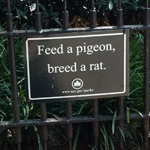 dirty and slightly menacing in a weird way, but they’re certainly not on the same level as rats. In the same way, I don’t intend to hold on to things that make me angry, hateful, fearful or judgmental. But I certainly can find myself nursing small grudges or injustices that seem innocuous.
But in fact, they are not. The New York City Department of Parks and Recreation is exactly right. Feed a pigeon, breed a rat. Cling to that grievance and it inadvertently may shape my thoughts towards something much darker and unwanted.
Of course, there is a place in the world for all kinds of animals, even those we call pests, and anger, fear and hatred are unavoidable – and occasionally even useful – human experiences. It’s a question of appropriateness and discernment. Perhaps the first place we can stop “feeding the pigeons” is with ourselves – by bringing compassion, forgiveness and faith to our mind’s endless capacity for holding on when we might let go.