

Questions of Boundaries – Part II (Noach 5787)
For reasons that aren’t worth getting into, this week I found myself on the phone for 30 minutes with an insurance broker. It was time for new home and auto policies. In the age of automated everything, talking on the phone with my new friend Brad felt positively quaint: we kibbitzed a bit, he talked about how different insurance companies work, we commiserated about a terrible weekend for Chicago sports teams. All the stuff you don’t get from a chatbot. It was nice. In order to prepare a quote with comparable coverage to what we have now, Brad asked me about our existing policies. Thank God, these aren’t documents I have really had much occasion to look at. Upon inspection, I was struck...

Questions of Boundaries (Bereshit 5787)
On a fairly regular basis, I engage in a mundane but profound practice of home-making. In these moments, I find I am highly aware of boundaries—what is inside my home territory and what is not. Aware of that boundary, I am also aware of when I may have stepped over the line, when I bend the line or even dissolve it as an act of generosity. And, as I return to my home from this practice, I find myself feeling both refreshed and in need of a glass of water. I’m talking about mowing the lawn. Both the eastern and western boundaries of our house are shared with neighbors. While on the southern half of our house the boundaries are demarcated by a fence, on the northern side (the front yard)...
Beyond Burnout: What Clergy Need to Lead and Last
On Tuesday, May 14, Rabbis Benjamin Ross, Josh Feigelson, Jenny Solomon, and Cantor Julia Cadrain, held a candid and timely conversation about the burnout crisis. Josh and Benjamin's recent joint report, Holy Work, Human Limits, Communal Potential, captures the gravity of this issue, and together they shared the findings and open a dialogue about where we go from here.
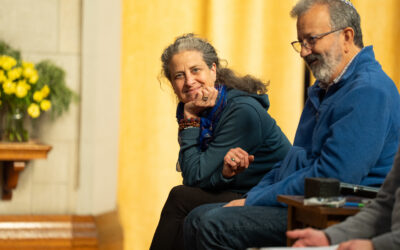
The Concept of “Ani” and the Separating Partition
Session Opening and Thematic Context Rabbi Nancy Flam: Let’s just rest in ourselves for a minute or two. Allow everything else to just be what it is. And just just I invite you to rest in yourself. Sitting for a minute or two. So, we're in a progression in our meditation instructions and practice over this retreat preparing ourselves to experience what revelation might be. So in a way the...

Torah from the Mountain, Torah from the Well: Attuning to the Kol Demamah Dakah (The Subtle, Silent Murmur)
In this video teaching, we begin by contrasting the earth-shaking revelation at Sinai in Exodus 19 and 20 with the subtle, silent murmur of I Kings 19. This distinction serves as a map for our meditation, guiding us past the noise of the ego toward a sanctuary of inner quietude. Here, we connect with the source of divine wisdom to receive a fresh transmission of inner Torah—revealing that the...
A Fateful Talk With a Doctor: Practicing Sh’mirat haDibbur, Mindful Speech
We are heading into the seventh and final week of the Omer period, associated with the sephirah (Divine emanation) of Malkut (Sovereignty), which in Jewish mystical tradition is connected with holy speech. The focus of our practice this week is sh'mirat hadibbur, mindful speech. How might we channel all the middot, the sacred traits we have cultivated over the Omer period, so they inform how we...
Turning 50 (Behar-Bechukotai 5786)
Happy birthday to me! I’m in the midst of turning 50. My birthday on the Jewish calendar was last week, my birthday on the Gregorian calendar is next week. As my teacher Rabbi Dov Linzer remarked when I saw him the other day, “Some people refer to that as chol hamoed,” the intermediate days of the festival. Thank you in advance for all your good wishes. Having a birthday in mid-May has long...

I Have Some Feedback (Emor 5786)
One of the challenges of writing a weekly essay on the Torah portion along with a weekly podcast script while also serving as the CEO of a growing organization is that there’s not much time for other writing. My first—and to date, only—book came about entirely because I wrote each chapter for IJS’s annual Text Study program in 2020-21 (and I wasn’t yet writing these weekly reflections). In...

Home & Interdependence (Acharei Mot-Kedoshim 5786)
If you haven’t yet listened to the recent two-part debate between Rabbis Sharon Brous and David Ingber on the podcast “Being Jewish with Jonah Platt,” I want to suggest that you do. In addition to being a model of civil disagreement, their dialogue also expresses a debate taking place within much of the American Jewish community, particularly about our individual and collective relationships...
Practicing Netzach: Despite It All, We Persist
We are moving into the fourth week of the Omer, the seven-week period between Passover and Shavuot, traditionally a time for spiritual reflection and growth as we move from freedom towards revelation.¹ This fourth week of the Omer is associated with the kabbalistic sephirah (Divine emanation) of Netzach (“victory” or “endurance”). A middah (spiritual/ethical trait) associated with Netzach is...
Noticing the Transitional Nature of All Things
Practice originially written as part of the Shevet Reset, a Jewish meditation challenge for younger adults.When I first learned to meditate on retreat, the instructions sounded simple: sit still, follow the breath, and when discomfort arises, notice it before reacting. Easy, right? It was not. My body immediately rebelled—aching knees, itchy skin, endless shifting. I felt terrible at meditating....

Carpe Diem—or Not (Tazria-Metzora 5786)
One of the most enduring Torah lessons I ever learned came from a 19-year-old college student named Joey. He was interviewing for a campus "engagement" (i.e. outreach) internship when I was the Hillel rabbi at Northwestern. As part of the interview, we asked the applicants to read Hillel's famous three questions (in English) and comment on them: "If I am not for myself, who will be for me? When...

Home (In)Security (Shemini 5786)
In a normal week, I typically send these reflections to Andrew, our wonderful senior operations associate here at IJS, on Wednesdays. Andrew formats them and gets them all set to arrive in your inbox Friday morning (hence the name, “Josh’s Friday Reflections”). Natalie, one of our other wonderful team members, puts them on our blog. And then our communications & marketing team puts them out...
Gametime (Shabbat Hagadol 5786)
My youngest child recently celebrated his bar mitzvah and thereby became an adult in the eyes of Jewish tradition. And, right on cue, he has also hit his developmental stride as a teenager: he is much more interested in hanging out with his friends than with his parents. (As a dear family friend once put it, the essence of parenting at this stage might be described as being around so your child...
What Sustains Us?
What sustains us during periods of transition? Rabbi Jordan Bendat-Appell's teaching on the meaning of the matzah during Passover invites us to explore these questions as we move out of the narrow place in search of liberation.
The Speed of Trust (Vayikra 5786)
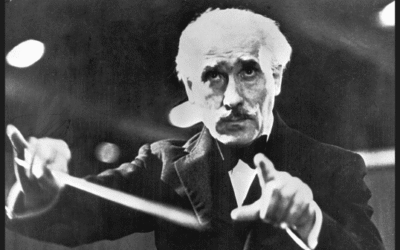
Thirty years ago, in my junior year of college, I fulfilled a childhood dream: not only to conduct an orchestra one time, but to be the orchestra's regular conductor. It wasn't the Chicago Symphony or the New York Philharmonic, of course—it was a student ensemble, the Berkeley College Orchestra (Berkeley is one of the residential colleges at Yale). At the time, Yale boasted more than half a...

Making Plans (Vayakhel-Pikudei 5786)
“It’s hard to make plans these days.” In the years preceding her Alzheimer’s diagnosis (perhaps in a sign of things to come) I remember my mother saying these words regularly. I’m sure there was truth to it: the effects of aging on the body made it harder to know how she or my father would feel about traveling, or even just going someplace, when the time came. It was harder to make plans. I’ve...

Limitless (Ki Tissa 5786)
I can remember a period of my life when the melancholy of a waning Shabbat afternoon really hit me hard. This was in my early twenties. I was single, just back from a year studying in yeshiva in Israel, and most often spending Shabbat with friends on the Upper West Side (in a desire to end my singlehood and find a partner). As the sun would sink into the western sky and the shadows of those...

Book Talk with Rabbi Angela Buchdahl
We are grateful to Rabbi Angela Buchdahl for speaking to us about her new book, Heart of a Stranger. Please enjoy the conversation recording below.Rabbi Angela Buchdahl is a pioneering Reform rabbi and cantor and one of the most influential Jewish leaders in America today. She became the first Asian American to be ordained as both a cantor and a rabbi in North America when she was invested as a...

Role Playing (Tetzaveh 5786)
Three of my happiest moments as a parent have come at our local men's clothing store, as I have taken each of my sons to find a suit for his bar mitzvah. For starters, the trip strikes a deep chord of familiarity, as I remember shopping for a suit or a sport coat with my own father at the long since closed Ann Arbor Clothing. That's a warm memory. For another, it has generally marked a...